Obsessive Vehicle Attachment Disorder–Do You Have It? by Christina Knowles

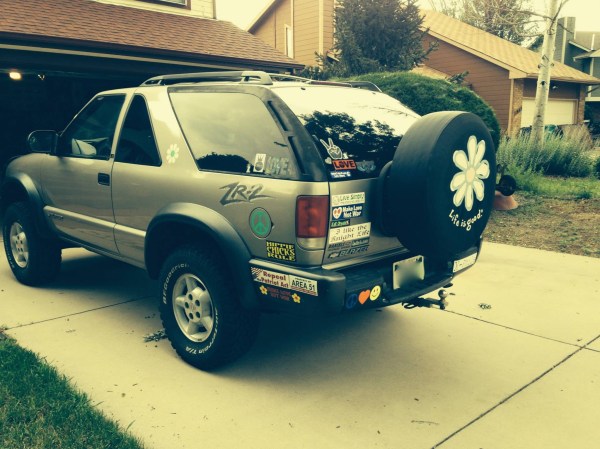
flower (1)O.V.A.D. Obsessive Vehicle Attachment Disorder. I have this condition. I have it badly. While some people revel in the thrill of trading in their cars every few years for something more modern, with less miles, and less repair headaches, I have owned the same vehicle for the past eleven years, and it was used when I bought it. You may think I am just being frugal or practical. No, that’s not it. I have poured thousands of frivolous dollars into my 2000 Chevy ZR2 Blazer just because I love her obsessively.

Maybe it’s because I paid hard earned cash for her when I was first striking out on my own after finally getting up the nerve to abandon a terrible relationship. Maybe it represented my independence in ways besides the ability to go where I wanted or the financial freedom of having no car payment. I already had a car that was paid for when I bought Flower (Yes, that is her name). I think she may have represented independence because I had just found my independence and was making a fresh start. I was flowering, and as I did, I projected those feelings on to my car by covering her in bumper stickers of which no one in my previous world would have approved. I decorated her with daisy embroidered seat covers, put a fabulous stereo in her, and bought her thousand dollar tires. I drove her like I was shouting to the world who I really am for the first time. I mean she really is a rolling billboard of my values, my hobbies, and my political views. I was discovering who I really am and announcing it to whomever would slow down long enough to read my opinions.

Needless to say, my sixteen-year old car needs a lot of love and attention these days. Love is no problem, but the attention she needs costs money and time in the local autoshop, and even though I love her, the realization that no matter how much money I spend, she isn’t going to last forever has finally settled on me. And although Flower drives as good off-road as she does on, makes it through any blizzard conditions safely, and is as fun to drive as she ever was, I made the decision to buy a new vehicle after the last $1100 repair bill.

I sulked for a few days after bringing my new car home. Everyone kept asking me if I was excited for my new purchase—a 2015 Nissan Juke, but they didn’t understand that I was grieving for my old one even though I still have it. I suppose I’ll have to sell it soon. Forcing myself to accept my new ride, I bought some new daisy seat covers, some controversial bumper stickers, and am planning on checking out car stereos in the near future. Suddenly, my little Juke started growing on me. Maybe she will represent a new era in my life. I’m not sure what this era will be—we never know that for any era until it’s over. But I think she has the potential to be my next car obsession.IMG_4842

Flower wasn’t the first vehicle I was too attached to. When I was twenty, I bought a 1978 AMC Concord for $800, named him Watson, and drove blissfully for six years before sadly giving him up for a newer car. But I haven’t been attached to every car I’ve owned. I’ve heard it said that some cars have souls and some are just machines. I think we just love the ones that we can easily project ourselves onto—the best sides of who we are, of course—who we want to see ourselves as. That’s why we have trouble letting them go. And if they’ve been good and loyal to us, it’s even harder. I think I may be moving into the acceptance stage of grief, but I still have my days when I want to say never mind, I’ll pay the repair bills; take the new car back. But then I think I would already miss Daisy. Yes, my little Juke already has a name. I think it may be too late. I admit it. I have O.V.A.D. and there’s no treatment.—Christina Knowles

10 Mind-Bending Epiphanies That Changed My Life by Christina Knowles

“Yes, whenever my worldview shifts and things become clear and my life changes as a result, I consider my mind bent. “

Source: 10 Mind-Bending Epiphanies That Changed My Life by Christina Knowles

10 Steps to Joy and Balance by Christina Knowles

balance_1212130
via barevitality.com

For the past few years, I’ve been struggling to find balance and contentment in the midst of my busy life of responsibilities. A couple of years ago, I wrote a blog describing my struggle called, Balance, Yeah Right, basically feeling lost regarding making significant changes. Well, since then, much to my surprise, I’ve actually made real progress. I feel happier and more relaxed than I have in years. No, I did not quit my jobs—any of them. I still teach college, high school; I still write my blog—in fact, now I have two. I’m publishing a collection of poetry, working on a short story collection, and writing another suspense thriller. So, what’s different? How can you takes steps to a happier, more balanced life too? Well, here’s what I did. Maybe it will work for you too.

  1. Separate work and home. First of all, I set boundaries between work and home. I do all my grading and planning at work and don’t let it invade my free time. The only exception is when I get an unexpected day off in addition to my normal weekend, and even in this case, I limit my work to a couple of hours. In fact, I have developed such a habit of not working at home that I can barely force myself to do even this.
  2. Get help and scale down. I resisted this for the longest time. I didn’t want someone else coming into my house, cleaning it in a way that was different than I do it. I didn’t want to spend the money either, but I finally gave in. It came down to the fact that I was tired of spending my only day off cleaning the house, grocery shopping, doing laundry, and cooking. The only time I spent with my husband was cleaning together or shopping together. I started dreaming of spending a day with him and my dog, walking through the streets of quaint Old Colorado City, going to the dog park, hiking, visiting a museum, or curling up together to read a suspenseful novel. That’s all it took.

We hired a trustworthy, bonded maid service to come when we aren’t home, we cut our grocery shopping down to every other week, and I gave up cooking all single ingredient homemade organic meals. We still eat healthy foods, but now I buy a few easy-to-prepare organic foods like premade sauces and deli-made meals or something similar. Not cooking everything from scratch has given me my life back! We had to compromise a little, but we still make sure we are eating healthy, natural foods, and I still make the homemade stuff, but only when I feel like it. What’s more is I actually enjoy cooking again!

I had to relax and be okay with the fact that my house may not be cleaned exactly as I would do it, but they still do a great job. Only shopping every two weeks has saved us money as well, so it kind of balances out, and that’s what it’s all about.

  1. Say no. This was a hard one for me. Have you ever been secretly relieved when someone cancelled plans with you, even though when you made them you really wanted to participate? I still find saying no difficult, but I’m getting better at turning things down when I know I’m overwhelmed. With that said, make sure not to isolate yourself by saying no to everything. Dump the responsibilities for a few hours, see your friends and loved ones, and nurture the relationships that enrich your life, but stay home and do nothing when you really want to.
  2. You can say no at work too. In the past, I thought I had to do whatever I was told even if it didn’t fit my job description or if it was impossible to do within the time allotted during my work-day. I finally had to stand up for myself and say that it wasn’t okay to ask me to work extra hours for free and allow work to invade my free time. I work my butt off without even taking a lunch break at work in order to get all my duties done at a stellar level during my working hours, but if it doesn’t get done, it doesn’t get done. No one has the right to expect the impossible. I guess I’ve had to lower my standards, but it’s the best thing I ever could have done for myself, and the strange thing is, I don’t think it’s lowered the quality of my work at all. On the contrary, everything seems to work better than ever before. Maybe it’s my happy, no-longer-abused attitude working to my advantage, allowing me to concentrate on the essentials of my job without stress.
  3. Make a practical and realistic plan. Every day I make two lists—one for work and one for home. I write down everything that needs to be done, and then star the most important things that are non-negotiable. I get the most important things done first, and then do the lesser things when I’m done. Whatever doesn’t get done, goes on tomorrow’s list. I always get the non-negotiables done. I also get a great deal of satisfaction crossing things off my list.
  4. Realize that some days it’s okay to throw out the plan altogether. I don’t do this often, but there’s nothing better than just ignoring the list altogether and doing what you want sometimes. By the way, there should always be at least one day a week when there is never a list at all.
  5. Fit little moments of relaxation and fun in wherever you can. I like to take 15 minutes in the morning after getting ready for work to read or work on a puzzle I’ve been putting together. I listen to fun, adventurous, or suspenseful books on CD in my car whenever I drive. This makes me feel like I haven’t neglected all the books I want to read, it makes me look forward to going to work or driving anywhere, and it has the surprising effect of making even rush hour traffic peaceful and enjoyable. I have actually wished that I could be stuck in traffic longer just so I can finish a book. I also keep an adult coloring book nearby to pick up whenever I need a few minutes of relaxation (not in the car!). I have a Kindle book on my phone at all times, so I can enjoy a few minutes of escapism whenever I have to sit and wait for anything. I get some sunshine and fresh air whenever I can by reading outside or walking my dog or meditating under a shade tree. These little moments are more than stress reduction. They make me feel like I have dozens of happy things in my routine that make every day feel like a joy.
  6. Do what you love, and it won’t seem like work. Everyone says this, but it is so much easier said than done. I know not everyone can just quit a secure job and change careers at the drop of a hat, but if you really hate your job, you need to make a plan for a change. However, you may not need to do anything that drastic. Once you make some changes in what you are willing to do and what you are unwilling to do, you may start loving that old job again. It’s amazing what setting limits can do to your attitude at work. You may start looking forward to working once you feel like you are no longer being taken advantage of. If not, then it might be time to look for something else.
  7. Realize that you don’t have control over most things. This can be tough, but realizing that there is nothing you can do about some things, and that you can’t control the outcome all the time is really quite freeing. Know that if your plans don’t work, it’s not the end of the world. You are going to be okay. Life is full of making little adjustments. Keep adjusting your course in ways that add joy, and before you know it, you’ll wonder why you ever bothered to be unhappy in the past.
  8. Finally, be content within yourself, and you will be happy most of the time. If we love who we are, take care of ourselves, and treat ourselves with respect, then we will be content and joyful almost all the time. Happiness is a fleeting thing, and when tragedies strike, of course, we will grieve, but we can experience moments of joy more and more often when we are accepting of who we are and take the time to nurture ourselves.

So, this is what I’ve done and what is working for me. I’m no life coach, but I know what it is like to struggle with stress, busyness, and discontentment, and I also know what it feels like to be free, joyful, to love my job and home life, and to finally feel relaxed. I hope you find this same contentment in your life. Peace. –Christina Knowles

Life-Lessons from The Shawshank Redemption by Christina Knowles

The-Shawshank-Redemption1            In 1982, while still in high school, I first read Stephen King’s “Rita Hayworth and the Shawshank Redemption” in a short story collection called Different Seasons and have been hooked on King ever since. Then came the movie version: Frank Darabont’s The Shawshank Redemption, starring Tim Robbins and Morgan Freeman, two of my favorite actors. It has been my favorite movie since the first time I saw it in 1994. If you haven’t seen it, where have you been? A movie about hope, friendship, and the indomitable human spirit, it’s still the highest rated movie of all time according to the IMBD. If you haven’t seen the movie, you need to stop reading and watch it now. Get ready to “get busy living or get busy dying.”

Synopsis: The Shawshank Redemption, set in a harsh 1940s prison, is about two prisoners, Andy and Red, one innocent and one guilty, who become true friends behind bars, share hopes, dreams, and the cares of daily life in the system. Andy, wrongly imprisoned for the death of his wife and her lover, will not allow his spirit to be broken. Red, who killed a man when he was young and angry and a very different person, has a broken spirit but is not beyond the healing reach of Andy’s eternal optimism.

*SPOILER ALERT* If you’ve never seen it, you might want to stop here.

The movie is slightly different than the short story. In the story Red is an Irish guy with graying red hair, there are a few different wardens during Andy’s incarceration, and the last one is forced to retire instead of getting busted and committing suicide. Tommy, who had new evidence of Andy’s innocence, was bribed with minimum-security prison instead of getting shot, and Brooks played a slightly more minor role in the story than in the movie. Also, the story ends with Red getting ready to go meet Andy instead of arriving in Mexico. However, minor differences aside, Darabont held closely to King’s original story and was true to the integrity of the characters. Even many of the lines from the movie are dialogue taken directly from the story. This story is so poignant, so profound, and so universal that I don’t know anyone who sees it without feeling like they just got schooled on life and how to live it. The basic premise is that prison is a metaphor for life and, no matter what life gives us, how we handle it makes all the difference. But there are so many life-lessons in this movie that it’s worth taking a closer look at them.

The Lessons: One of the first things I get from this movie is that life is just not fair. Just get used to it—bad things happen to good people all the time. Not only did Andy’s wife cheat on him, but he is blamed for her murder as well as her boyfriend’s. He got two consecutive life sentences, and he didn’t do anything. Life’s not fair, but Andy did not let even that ruin his life because not only can suffering be endured, you never know when things will suddenly turn around. Time is going to pass anyway. Will it be good time or bad?

Andy went through some serious suffering at the hands of the “sisters” in prison as well as at the hands of the guards and the warden. But Andy doesn’t let anything in he doesn’t want in. We see that the body can be broken but not the spirit. No one can take away what is inside you. The human spirit cannot be contained within the walls of any prison if you don’t let it. We have control over our inner life, and no one can affect us in any significant way unless we let them.

Andy always had hope, which is the main theme of the movie, but not only did he have it, he shared it with everyone around him. Hope is essential to human endurance. A lot of long-term prisoners at Shawshank didn’t have a lot of hope. Red said hope was a dangerous thing, but Andy didn’t see it that way. He thought losing hope was more dangerous. Hope kept him going when he didn’t think he had the strength and hope led to action. He was willing to take the biggest risks because of hope. Andy also gave hope to Red, who might have ended up like Brooks if not for him.

Brooks, another inmate and friend, had become institutionalized and committed suicide after trying to make it on the outside. The thing that struck me about Brooks was how we can so gradually get used to the way things are, even if they’re terrible, that we become immobile from fear of change. When Brooks was released after serving over thirty years in prison, he couldn’t take it on the outside. He lost hope because he let fear paralyze him.

Red didn’t want to become like Brooks. He learned to take risks from Andy. What did he have to lose? When Andy had had enough, when he decided he couldn’t take it anymore, he took a risk, and it paid off. There was no point in playing it safe because time was passing rapidly, and if you just play it safe, you’re just waiting to die. Andy said, “Get busy living or get busy dying,” and taking risks is part of living. Time is going to pass either way, so we may as well spend it living. He successfully taught this lesson to Red because when the time came, Red was willing to take a risk to jump parole and take a bus to join Andy and start living rather than ending up like Brooks.

But before Andy ever took this biggest risk, he planned ahead and used his skills that he already possessed. Before Andy went to prison, he set up an account under a pseudonym with some money in it. He hid a fake passport and ID under a rock in the middle of a field under an old oak tree—just in case. It was there waiting for him when he needed it. When he was in prison, he used his skills with accounting and his knowledge of tax law to become a valued and necessary person in the prison. Eventually his skills led him to successfully escape. He was also educated and intelligent. His cleverness led to his freedom, but along the way he shared his knowledge with others and showed them how important knowledge and ingenuity is to survival. He had self-worth and persistence as well. No one could make Andy feel like he was worthless or take away his belief in himself. He endured, knowing he deserved better, and set about to make it happen. The squeaky wheel gets the oil, as the saying goes, and Andy wrote letters every week to the prison board until they funded his new prison library.

Eventually his persistence led to his freedom too. If you chip away at a problem a little at a time, it will yield big results. Andy picked away at the crumbling concrete walls of his cell for years, hiding his work behind a series of pin-up girl posters, smuggling the powdered remains out into the yard on a daily basis. He took his time (he had plenty) and kept up the pressure. Eventually, he had his path to freedom. He never could have gotten away with it if he tried to do it all at once or had given up because it was taking too long.

Andy always had purpose. Immediately upon arriving at Shawshank, Andy took up hobbies. He collected rocks, carved figurines, built up a great library within the prison, and got a job doctoring the books for the warden. He even tutored a fellow inmate, helping him pass his GED. Keeping busy, whether in prison or in life, makes the difficult times go faster, gives us purpose, and can even be enjoyable.

He noticed beauty even in prison, and it made his time go easier. He read books, carved beautiful figurines, appreciated his pin-up girls, and let awe-inspiring music take him away from the prison in transcendent bliss. Beauty would be easy to ignore in a place like Shawshank, but Andy let it help him rise above his surroundings.

Andy made friends and took care of them. He helped Tommy get his GED, he was a loyal confidante to Red, he finagled a deal to get beers for his work crew, he brought culture and beauty to his fellow inmates, and he offered his help in financial matters to several people at the prison. As a result, Andy was well-liked, respected, made real friends, and put himself in a position to accomplish his goals. But the most important thing he did for everyone was to remind them that the human spirit can never be imprisoned. He genuinely cared for others, rejoiced in their successes, and was loyal and kind to those who earned his friendship. He realized that people need to feel free and have dignity and respect. If we have this, we don’t need much else. When Andy got the guard to buy his work crew beer, and they sat on the roof enjoying the suds on a summer afternoon, it was like all of them had been set free for just a little while.

Andy teaches us that sometimes you just have to take a stand for what you believe in. When Andy found an old record album of beautiful opera, he locked himself in the office and broadcasted the beautiful music over the loudspeakers, so that all the inmates could experience a moment of beauty. He knew he would be punished, but it was worth the cost.

Andy shows us that we might have to be willing to go through some shit to get what we need. Andy knew that freedom meant wading and crawling through 500 yards of sewer to get to the other side, so he bucked up and just did it. The lesson here: Suck it up and do what’s necessary.

Next, we learned that transformation is possible. People can change if they learn how. Andy changed a lot of lives, but he probably had the biggest effect on Red. He changed Red’s outlook, and he taught Red not to be institutionalized and to have hope. Red also was rehabilitated. He was a different person than the brash young man who entered Shawshank.

Being real is another theme. Red sat in front of the parole board time and time again, giving them the stock answers about how he was rehabilitated, not a threat to society, had learned his lesson, and he was always denied release. When Red didn’t care enough anymore to say what he thought they wanted to hear, he was just honest. He talked about the young man he was when he committed his crime, he talked about what he’d learned through the years, about his regrets, and about how he wished he could go back and talk to his younger self. Recognizing his sincerity and his true rehabilitation, the parole board finally approved his release.

Another important lesson from Shawshank is not to be bitter. In the end, Andy claims responsibility for driving his wife away, and even feels bad for putting her in the position she was when she was murdered even though he spent more than twenty years in prison, paying the penalty for a crime of which he was innocent. He wasn’t bitter. Instead of dwelling on others and things he could not control, he reflected on himself and how he could learn and change and be a better person.

And finally, we learn that it’s good to take a rest. Andy headed to Mexico to live a better life. He earned it, he deserved it, so he took it. He didn’t spend the rest of his life regretting his mistakes. He forgives himself and the universe and moves on. At the end, we are left with the impression that Andy is going to spend the rest of his days living out the hopes and dreams of his long and unjust incarceration. He isn’t going to punish himself, living in fear or anger. He’s going to “get busy living.”

So, I apologize for going on so long on this topic, but this story is so rich with meaning and deeply insightful that I just couldn’t help myself. That’s why it’s my personal favorite, and why I consider King, who has an intuitive understanding of the human condition even in its most degraded state, the Charles Dickens of our era. So, what will it be? Good time or bad? Will you get busy living or get busy dying?—Christina Knowles
Date Your Wife, Not Your Daughter: Avoiding the Electra Complex by Christina Knowles

It’s mid-January, and that means Valentine’s Day is just a month away, and with that comes something I dread—social media flooded with pictures of daddy-daughter dates and the ultimate gross-out, the father-daughter dance. These don’t always happen in February, but the fact that this seems to be the most common time for these activities, adds to my revulsion.

Now before you get too offended, I know that the fathers who take their daughters to father-daughter dances and on “dates” have the best intentions. I’ve heard the explanation that these dates teach your daughter what to expect from the men in her future—that she should be treated gently and with respect. Unfortunately, many psychologists disagree with this logic, and I think we intuitively know that. Just think about it for a minute.

Your daughter probably watches Disney movies where the princess wins the prince, often after competing with another female character. Little girls in our culture are predisposed to think they have to compete for male attention. Your daughter may know you love your wife, and she sees you dress up and go out together. She idealizes you, and if your relationship with your wife is good, she may envy it. She may want to win you from her mother. This is a normal stage of development, but should not be encouraged to linger. If she thinks she has a chance, this can cause an unhealthy dynamic between all three of you. When the daughter becomes confused about her place in the relationship, this phenomenon is called the Electra Complex.

According to educational psychologist, Kendra Cherry, “The Electra complex is a psychoanalytic term used to describe a girl’s sense of competition with her mother for the affections of her father. It is comparable to the Oedipus Complex” (Cherry). Wikipedia defines it this way, “In Neo-Freudian psychology, the Electra complex, as proposed by Carl Gustav Jung, is a girl’s psychosexual competition with her mother for possession of her father” (Wikipedia). The origin of the phrase (coined by Carl Jung) comes from Greek mythology. Electra conspired to kill her mother after discovering her mother was plotting against her father. As an allusion, the term has come to generally mean a woman whose love for her father is inappropriate, and therefore, unresolved, so she transfers these feelings to other men, thus harming her ability to have healthy relationships with others, often dating older or unavailable men to unconsciously resolve the desire for her father.

It is my contention, and I think this is common sense (I don’t pretend to be a psychologist), that dating your daughter, especially the formal father-daughter dances, confuses the relationship between parent and child, may cause competition between mother and daughter, and may result in resentment towards the mother, possibly leading to the daughter trying to resolve these issues in future relationships. This is the opposite of the message you are trying to send to her.

If you don’t see how this practice is romanticizing the father-daughter relationship, think about the connotations of the terms we use. Most men would never say they were taking their son on a father-son date. They just “hang out” with their sons. Why the confusing romantic terminology when it comes to daughters? Face it; it’s creepy.

Do you really want to create friction between your daughter and her mother? Do you think it’s healthy for your daughter to romantically idealize you and resent the attention you pay her mother? To be in direct competition with her mother for her father’s attention? You don’t have to agree with Jung or Freud on everything to realize that this is not only unhealthy, it’s actually kind of gross.

If the goal of dating your daughter is to teach her to expect gentlemanly behavior and respect from a man, then the best way to teach her this is to simply treat your wife that way in front of her. Date your wife, not your daughter. Treat your wife like a princess, and your daughter will learn the lessons you want her to without all of the confusion and conflicted emotions.

It is not confusing for her to see you treat her mother romantically. She will have more respect for her mother, and she will desire the type of relationship you have with her, but she won’t be fantasizing about you being her prince. You have to admit that the idea creeps you out a bit. At least I hope it does.

Listen to that feeling in the pit of your stomach; listen to your intuition. Date your wife and hang out with your daughter.—Christina Knowles


Sources:

Cherry, Kendra. “What Is the Electra Complex?” About Health. Updated 16 Dec. 2014. Web. 15 Jan. 2016.

“Electra Complex.” Wikipedia.org Updated 15 Jan. 2016. Web. 15 Jan. 2016.

Father-daughter photo. Finding justice.org [http://findingjustice.org/father-daughter-dance-violates-the-law/]

Year End Reflections by Christina Knowles

Once again I sit here reflecting on the year that is coming quickly to a close. As all years do, 2015 brought its share of joys, heartaches, and problems, and with them life-lessons and growth. Looking back on this year, the things that stand out to me most are the tragedies and illnesses of those close to me, and though these stories are not mine to tell, I have learned from them. I’ve learned about the value of love, loyalty, and to prioritize time with loved ones above all else. With that in mind, I’ve had my own issues with which I have dealt.

The biggest personal event in my life this year was probably experiencing a stress heart attack last summer. It was minor, and I have been given a clean bill of health, but nevertheless, it was the catalyst for making several changes that I knew I needed to make for some time, but like most people, I had to come face-to-face with my own limitations before accepting them.

As a result of this event and of the tragedies and illnesses of those close to me this year, I have finally “lightened up.” I no longer work every night at home on schoolwork. I grade almost all my papers at school, I do most of my planning at school, and I simply eliminated anything that was not essential or directly related to my students’ success and learning. I work my butt off at work, and I still work my butt off at home, but it’s different work. It’s my work—creative work that I choose. I spend my time doing what I think is important because my time is not guaranteed to last.

So often, it seems, that we imagine we will have time to be happy later, time to relax and do what we want some day. Maybe we are waiting for retirement, but sometimes retirement never comes. Maybe we are waiting for a new job to make our lives more bearable, a new schedule to give us time to spend nurturing relationships, or to make more money to make our lives more enjoyable or less stressful, but what we don’t realize is that waiting will never end unless we just stop. Just stop waiting to be happy. Happiness can be found right now in every day.

So instead of detailing all the things that happened this past year, I’ll just say that some of it was good and some of it was not, but I learned from it all, and what I learned is that my life is in my control, and I don’t need a specific set of circumstances to start living it the way I want to.

All in all, I am happy with how this year turned out, happy with what I did with the time allotted, and that’s a good feeling. This year I learned to prioritize my life, find more balance than I ever had before, and do things that give me and those I love the most benefit from the time we have. Time won’t slow down, and I probably won’t either, but I can decide what is worthy of the minutes of my life. And the funny thing is that all of those things that I was waiting on to change, don’t even need to change anymore because I have changed. I love my job again. I love my home-life. I love where my career is going in both teaching and writing. I love my life again. I’m not waiting for anything to get better ever again. I’m making what I have better and enjoying every minute of it. Happy New Year!—Christina Knowles

Bad Neighbors by Christina Knowles

'Normally I'd be optimistic that we could work out a little problem like this.'

We’ve all had that neighbor, the neighbor that makes us want to immediately put our house on the market and move. I’ve lived next door to this neighbor for the past seven years. They let their weeds grow, they do stupid, weird things like instead of fixing the fence, they nail brand new boards to the broken down posts, adding more weight to something that already could not support the weight it had—even after we offered to go in with them, paying for half of it ourselves. They park rusted RVs that don’t run in their driveway for 6 months at a time. In the summer, they have parties in their backyard that start at 3 AM and go until about 7 AM—loud parties. But I can live with all of that without complaining. What bothers me is how they treat their dogs—and the fact, that I can never get a good night’s sleep in my own bed because of them.

They have several big dogs. At times there are up to five of them, but usually I only see two or three. I think the owner shares custody with her ex-husband, so they come and go. They have a large fenced backyard, but the dogs have to stay in about one quarter of the yard in a dog run. Within the dog run, there is a smaller caged area. I’m not sure what that is for, and thankfully, I’ve never seen any of the dogs in it. The dogs can run back and forth, but it looks really boring and not of adequate size for big dogs. In the dog run, there is a big plastic shed that takes up a lot of the space, and they do have a dog house for shelter. The ground is dirt, and there is no grass to roll in or trees for shade. In the summer, the people take them on a walk about once a week. I think the dogs are pretty bored and neglected, so I’m not blaming them, but at least one of them barks continuously all night.

My bedroom window is right next to their backyard—the side with the dog run. These dogs are out even on the coldest nights. Sub zero temperatures? They are out and bark even more, probably trying to stay warm.

At first, I politely went to their door to talk to them during the day. They did not answer, after clearly peaking through the window at me. Then I would ring the doorbell in the middle of the night in my bathrobe while the dogs were ferociously barking in the backyard. No answer, but the dogs would mysteriously disappear inside for about an hour. Then I escalated to ringing their doorbell over and over, ringing it perhaps twenty times in a row in the middle of the night. No answer. Next, I called the police, standing in my backyard, making the dispatcher listen to a chorus of five barking dogs at 4 AM. The police arrived, rang the door bell, the dogs mysteriously disappeared into the house. No answer—even for the cops. The police told me that since the barking had stopped, they couldn’t do anything about it. The dogs were released back into the yard twenty minutes after the police left and continued to bark all night. Next, I called the Humane Society when the dogs were barking all night in sub zero temperatures. They said if the dogs had a dog house, there was nothing they could do. I took to going over to their house as soon as my alarm went off in the morning at 4:45 AM to ring their doorbell twenty times whether their dogs were barking or not. This is what bad neighbors reduce you to—pathetic and childish retaliators, obsessed with revenge for lost sleep and neglected dogs. I didn’t like what I had become. Helpless anger has always been my most despised emotion.

I’ve had many suggestions; one that sounds great—shaming them publicly, which I guess I’m trying to do right now. The only problem is that I won’t reveal who they are or their address because I worry that if they end up getting harassed, then there may be legal ramifications for me—oh, the injustice! Also, giving out their address makes mine public by extrapolation. Despite my filling the internet with my personal business, I do appreciate some privacy. What to do, what to do?

My only weapon has ever been words, specifically the written word. I am going to write them a letter, detailing their crimes, and how these have affected my life. Specifically sleep! The lack of, by the way, my doctor has blamed for a recent stress angina I suffered. I should sue them! But, I will just make my case in written form, appealing to their common decency and educating them on the need for warm shelter for the other victims of their crimes—the poor dogs, who obviously are not content suffering through the winter in their stark, freezing, and boring dog pen. I wonder if they will care. Will they even read it? Perhaps, if I leave it on their doorstep on Christmas Eve with a plate of cookies, after ringing the doorbell thirty or forty times, of course.—Christina Knowles

Cartoon by Carpenter, Dave

Grateful by Christina Knowles

garden_of_the_gods_by_jawahunter003-d4p9tfg
by jawahunter003

It’s that time of year, hopefully not the only time of year, when we take stock of all the good things in our lives and express our gratitude. Well, this year has been a difficult one, and it would probably be a lot easier to list all of the things that went wrong, but that makes engaging in this type of positive reflection even more important. Realizing how good I really have it is most critical when it seems like everything is going wrong. So here are a few things for which I’m very thankful.

  1. My husband. I am lucky to have married a kind and gentle man, who is genuinely a good and ethical person.Randy and me He’s compassionate and sincere. My husband is a true artist, a musician, who feels deeply, sees deeply, and thinks deeply. He also makes me laugh every day. When I feel lost and alone, he’s there to let me know that he’s always on my side. He’s loyal and understanding, and he never expects me to be anything other than what I am. He doesn’t need to be in charge or have everything his way. He respects my independence with no macho bullshit, and his easy-going personality makes our home a peaceful refuge from the harsh world.
  2. Family. My brothers and sisters are very close.

    We don’t agree on everything, but we always love each other. They are the kind of people you can always count on to drop everything and be there when you need them. My sisters and I get together often for movie nights and scrapbooking days. We are so different from one another, but it never matters when we are laughing and talking, sharing stories from our individual lives.

  3. Health and well-being of those I love.morganfamily I am thankful that my children are healthy and are passionately pursuing things they love. ValerieI’m thankful for the medical science that has given my grandson the opportunity for a vibrant and happy life, and I’m thankful that my other grandson is full of joy and enthusiasm for life.


4. Home. I appreciate my cozy home. ChristmasWith all of its needed repairs and upkeep, my home is a beautiful refuge for me, and I love coming home to it every day. I love spending time with my husband and dog in front of a cozy fire on a cold day and planting flowers in our jungle of a yard in the summer. I love puttering around in my art studio, writing on my computer, or curling up in our family-room-converted-to-library, reading a book. It’s pure peace and relaxation.

5. Friends. I am thankful for my close friends, old and new. FriendsSome I see all the time, and some I see a few times a year, but I love them all. I am grateful that my friends do not engage in typical “friend drama.” They are mature and above that nonsense. Old friendsThey are trustworthy. I can tell my friends anything and everything, and I do. My secrets are safe with them. I am safe with them. I can be myself without any pretense, and I am still loved and accepted. They make me laugh and think. They are silly, bold, caring, intellectual, and fun. I am lucky to have them.


6. Employment. This has been a good year at work, at all of my jobs. English DepartmentTeaching high school is wonderful if you do it right. This year I’ve set boundaries with how much work I will do at home. I work my butt off all day, stay late if necessary, and barely touch it when I go home. My students are sweet, smart, and amazing, and they make it rewarding. I have a great team this year in the English department too. We really enjoy each other, and the wide-range of personalities has made lunch and meetings a lot of fun. My administration is the best I’ve ever had. They respect us and are reasonable, and they’re just good, real people.

Moonlighting at the college, teaching writing has been really fun. I enjoy the diverse interaction, the freedom, and the academic atmosphere. The extra money is good too. Of course, writing is my passion, and I am thankful for this blog, where I am free to express myself. Writing my blog is so fulfilling and freeing. Writing makes me understand myself and the world better. This year I’ve written tons of poetry and am working on a new suspense thriller as well. I have also enjoyed creating the cover for my new book. Signs of Life jpegThis is the first time I have ever taken a design from concept to completion all by myself. It was challenging and fun. I can’t wait to do it again.

7. Dog. I am grateful that I come home each day to a sweet little guy named Chacho.IMG_1456 He fits in with us so well. He’s laid-back and gentle. His personality is quite human. Chacho is sensitive and gets his feelings hurt easily if he is slighted in some way, but he forgives easily as well. He is independent and doesn’t need a lot, but he does need love, some cuddling, yummy food, walks around the neighborhood, and trips to the dog park. Chacho deserves all this and more. He is so easy to take care of—he never chews up our things, he doesn’t have accidents in the house, he makes us laugh and smile, and he loves us.

8. Colorado. GogI am so thankful that I get to live in one of the most beautiful and pristine places in the world. Colorado has so much of what I love—great weather, snow, snow, snow, but it’s hardly ever bitterly cold. We get wonderful fluffy snowstorms, and then the snow melts, and we have mild temperatures again. It never gets too hot in the summer. Colorado has gorgeous mountains and clear, clean air. Colorado Springs is in the foothills of Pikes Peak, and we are surrounded by forests, jutting red rocks, crystal clear lakes, and snow-covered mountains. Garden of the godsThere’s a reason why so many Christmas movies are set in Colorado. We have bike trails, dog parks, river-rafting, skiing, and the cozy little tourist towns everyone loves—the kind that seem like they came right out of a Hallmark movie. We have hippies, hipsters, and cowboys, and we usually get along together. I love my Colorado.


9. Community groups. I am grateful for community groups like the Pikes Peak Atheists and Freethinkers of Colorado Springs. These groups organize charity work, fundraisers, toy and clothing drives, and generally are there to help people who need it in our community without any ulterior motives. They are humanists who desire to create a better world, to increase the well-being of humans (and often animals). They are also a fun and intellectual group. We have lots of get-togethers and social activities as well. They are a wonderful support group for non-believers who live in a very religious city.PPA I am really thankful I found them and that they’ve been so kind to me.

10. Progress. I am thankful that even though the world seems like a crazy and dangerous place oftentimes, we are making progress in so many ways. As a people, we are becoming more open-minded, critically thinking, and accepting of diversity and human rights than ever before. We have made wonderful advances scientifically, morally, and intellectually. Perhaps, this contrast between progressive ideals and religious dogma is one reason why some of these tensions are escalating. Some people don’t want to see progress, but progress will win, and for that, I am thankful.

Human-Rights
accessinfo.org

So, as I suspected, reflecting on the things for which I am grateful has made me realize that things are not so bad. Sure, life is difficult, and bad things happen. Sometimes just getting through the day is hard. The world is filled with tragedy and unexpected hardships. Surviving it takes a lot of energy, but there is a reason we keep at it. There are always things that make it all worthwhile. Things that make it more than bearable. Things that are downright beautiful.—Christina Knowles

Generation Z: Is There Hope for the Future? by Christina Knowles

Generation Z Generation Z. We’ve heard a lot about them. And a lot of it is true. They are glued to their phones and computers, they prefer snapping pictures of the board to taking notes, and generally they would rather Google answers instead of reading a book. They are realistic and question the system they’ve been brought up in. They question tradition and think for themselves. And they are the sweetest, most compassionate, and socially conscious generation I’ve ever encountered in my teaching career.

My students realize what kind of world they live in, and they don’t accept the failed solutions of previous generations. They are cynical about bureaucratic systems, but they are idealistic about the world. They know they need to make money, and they usually have a plan of how to make it, but they want to make it while changing the world for the better.

They want to do something meaningful with their lives; they want to serve the community with their careers. Not like the Peace Corp hippies (which I love, by the way) of the past, but through their innovation and creativity.

Generation Z-ers are looking for ways to create the next big thing, the next big thing that will make them lots of money, and the next big thing that will slow climate change, feed the poor, and feed them organically. They want to cure cancer and AIDS. Or maybe invent the next trendy technology, and then donate a portion of the proceeds to a charity like some of their favorite socially conscious companies—Be Good, Fair Trade Winds, and Toms. Somehow, they learned to care about others even with their noses in their phones, maybe even using those phones to learn about what needs changing.

They are accepting of other people more than any generation I’ve ever seen. For the last couple of years, I’ve seen a change in the classroom—students who are kind to people who are different, students who have compassion for the developmentally and physically challenged, who have understanding and respect for their LGBT neighbors, and kindness for the socially awkward. Of course, there is a bully or a bigot here and there, but these kids are the most socially sophisticated people I have ever met. They discuss differences in civilized tones, make friends with people completely different than themselves, and stand up to these few bullies that rise up around them. This gives me hope for our future.

So, these kids may live at home with their parents a little too long, they may lazily Google their homework, they may decide college is too expensive after weighing the costs, and they may question everything I tell them (I love that, by the way), but our future is safe in their hands, and we definitely can rest in the knowledge that this group won’t simply cast aside the previous generations as useless because they are way too nice for that.

We can also trust them to find solutions to environmental problems, stand up for animal rights, fight for the rights of every oppressed group, they will raise their hands when they disagree with us, and jump up to help the transgendered kid who dropped his books. They will politely quote a philosopher they discovered on Reddit, Vine, Medium, or whatever social media site they are currently using. They will throw out our old ideas along with our misconceptions of their inability to take care of themselves and prove us right when we say, “Kids these days—there really is hope for the future.” –Christina Knowles

Failing at Meditation? No, You’re Not by Christina Knowles

Hippie girl in nature Recently I’ve returned to practicing meditation. I only stopped because I thought I was a failure at it. I thought I had to empty my mind and think of absolutely nothing, and I never could accomplish this. I thought I had to feel nothing but calm, and if I could not think of nothing, then I had to focus on just one image. Well, after succumbing to a stress-related heart attack, I decided I needed to give meditation another shot. This time I joined a meditation group that meets on weekends at one of our many beautiful and natural parks in Colorado Springs. The one where we met the first time I attended, was in a large mountainous park, full of rocky cliffs and pine trees, dirt trails, and wildflowers. We sat in an open pavilion in the shade and let the cool breeze flow over us. We wrote down our worries on pieces of scrap paper and ceremonially put them in the Universe Box to symbolically let the universe take on these problems for us. Then we went inside ourselves, eyes shut, quiet, breathing smoothly, and let our thoughts float in and out. I felt the breeze, I listened with gratitude at the birds chirping, and I went deeper into me. It was like my unconscious mind woke to put her arms around me. Occasionally I’d hear a dog bark or a siren in the distance, but it would gently float in one ear and out the other, not even disturbing the serenity I felt. It was like I was one with everything, a part of each thing happening around me, yet above being affected by it.

What happened next was somewhat unexpected. My mind gently drifted to images that I call my “happy place.” Usually my favorite happy place image is a wintry Christmas scene in a room only lit by the softly blinking lights of a small Christmas tree and the warm, crackling of a fire. Looking through the window into the night sky, I see big fat snowflakes falling slowly and gently, no wind to divert them from their path. The light from the moon illuminates them just enough to be clearly seen through the glass. My hand rests on my dog’s back. She is lying next to me with her head resting on my lap. I look down at her, and it’s my beagle, Mulder, who passed away several years ago. She looks up at me with love in her soft brown eyes. I notice that the gifts piled haphazardly under the tree, the tree with homemade and personalized ornaments from my childhood, are all wrapped in old-fashioned Christmas paper, reds and greens with pictures of kids dressed in snow gear that look like they’re from the 1950s. All around me I feel love, not just any love, but the love and wonder of my childhood. I felt like I was me back then. I just sat and let the love and memories wash over me until tears streamed down my face, happy, poignant tears; the coolest thing was I felt such love for me—that little girl. I thought, Is this what they mean by visiting your inner child? At that moment I had an epiphany, that child, her feelings, her hopes, her fears, her personality, they are still me. This was profound to me because I usually feel like such an adult, not in touch with what I always considered my old self. Just realizing that this was still me, that I am still she, gave me a strange kind of understanding of how to take care of myself, how to live a life that I need to live for my good. It was so beautiful. I went home feeling lighter and filled with pure joy.

When I told my meditation group leader about the experience, he told me that what I did was meditation, and it was just fine. I hadn’t failed. I didn’t need to blank out my mind. I can just let my mind drift, go deep, and let my unconscious tell me what I need to know. This was so freeing, and now I am excited each day to visit myself, which ever part of me that decides to show up, and relax, be comforted, and learn whatever I need to learn or let go of. It has been so much easier to make time for my meditation each day. It has never been just like this first experience again, but it is always good. It centers me and I let my mind drift to anything positive it wants to, gently pushing away any other distractions. Sometimes it is just sweet images, sometimes it’s only the sound of nature, or the feeling of a fan blowing on me, but every once in a while, the little girl me, will make a small appearance just to remind me she is still there, we need each other, we love each other.

I’m still working on giving things to the universe, but I’m getting better and better. It’s not like I’ve become a spiritual person though. Well, I guess it’s how you define spirituality. I don’t believe there is such a thing as a spirit—I mean the kind of thing that survives death and somehow contains my personality and essence of who I am. I believe these things, things that make me me, live in the brain, and the brain does not survive the death of the body because it is part of the body. But if you want to call the essence of who I am, the sum total of my experiences, feelings, and personality, maybe even the unconscious or subconscious mind, spirit, then okay. I can deal with that. Meditation for me is getting to the heart of who I am and visiting this calm place where I can be with the inner me in a totally intimate way, a way that I can’t be in touch with myself during the busyness and chaos of the day.

Being exactly who I am on every level and loving that person despite my flaws through meditation has been a freeing experience that I never imagined. I’ve never had a problem with self-esteem, but it’s a different thing to really feel love for who you are, fully acknowledging every flaw. I’m not talking egocentricism, but just really loving and accepting yourself despite not being perfect and not caring if you are perfect to anyone else. Through meditation I understand who I am and can completely accept myself without the pressure of any performance. During those 15 minutes, the world disappears, and I am just a being, worthy of love and tenderness, with no expectations at all. So when I return to the world of constant demands, the responsibilities seem lighter. I am refreshed, rested, and ready to set boundaries to protect the value of myself as a being on this earth, a being with an expiration date. I won’t let that time be used to harm me anymore. So if you think you are failing at meditation because it doesn’t fit some description in a book, don’t listen. If it helps you, if it calms you, or benefits you in any way, you’re doing it right. Do it however you need to do it. Your subconscious you knows what you need. Peace—Christina Knowles

Photo snagged from aquarian.es

Blog at WordPress.com.

Up ↑