Those of you who are Jon Stewart fans, like I am, know where this line comes from. At the end of every show, Jon would show a clip of something unbelievable, ridiculous, or ironic that reveals a not-so-surprising truth, at least it shouldn’t be surprising. Well, my personal moment of Zen came a few weeks ago when I had stress-induced angina at the end of a long day of stress, work, dehydration, and lack of sleep—during the summer break when I should have been having fun and relaxing. It’s ironic because I’m the youngest in my family, the one who eats organic, does yoga, and exercises every day, and the only one who has had any heart issues. It was not-so-surprising because I was a workaholic perfectionist. I say “was” because this epiphany-causing event has changed my focus from work to living my life.
With that said, this is not an instant fix for my workaholism. Like any addiction, working too much and trying to make everything perfect are things that are not easy to give up. Having started the school year, I am bombarded with opportunities and requests to work around the clock that have to be ignored. This is not easy for someone like me. I have a list of things to do that seem urgent and could never be accomplished in the workday, but I’m trying. I have to constantly put my list out of my mind and do something purposefully peaceful and get to a place where I feel comfortable doing what I want to do with my free at-home time.
According to my list, this weekend, I have to create leveled reading groups for two classes, grade sample writing, create some unit modules for my website, look over and record pre-tests, and fill out some teacher evaluation goals and self-evaluation stuff. All of these things seem urgent. Ideally, they would be done by Monday, but I worked very hard all week, and I need to relax and have fun as prescribed by my doctor—I’m not kidding. Besides that, if I die next week, will I rather have had fun with my husband, or have gotten my “goals” written for the state evaluation, which are not really my goals, but what I think they want to hear anyway? I know what I want to do today and it’s not that.
In a few minutes, I’m going to meet some friends in nature to meditate and drink coffee—not at the same time, of course. Then I’m going to hang out with my husband and go see an art/photography opening by a friend of his. Later, we will do something with our dog. It’s his birthday month, so we’re celebrating our little guy. Maybe I’ll do a little reading later, and if I feel like it, I might do one thing for school—probably create those leveled reading groups. Then I will go back to focusing on my actual life until Monday.
I have to keep reminding myself that work doesn’t own me; it rents me from 7 am to 3 pm and occasional evenings. It’s just what I do when I’m not home, living my real life. I love it, but it is not who I am; it is does not define me. Who I am is here with my friends and family and experiencing the life I want to live. That is my Zen, and I will go on reminding myself of this until it comes naturally. Peace.—Christina Knowles
I’ve wanted to write a favorites list for a while now, but I haven’t until now for two reasons: 1) I am no authority on movies. I just love them, and 2) I didn’t know how I would be able to narrow it down to a reasonable number in which to write about. But everybody likes to read about good movies, and chances are some of my favorites will be yours too, and even if they aren’t, maybe it will make you think of the movies you love and why, and that’s good too. I decided I could narrow it down to my top twenty favorite movies, and then just list some honorable mentions with no detail. I am not trying to judge these movies on any criteria other than that I loved them. There may be better movies, but either I haven’t seen them, or these just had a bigger emotional impact on me. Here they are:
#20: The Minority Report: (2002) Directed by Steven Spielberg, starring Tom Cruise, adapted from the short story of the same name by Phillip K. Dick.This is a film exploring the theme of free will versus determinism as well as the social/political theme of the power of the state. In the future, “precogs,” who see the future, report crime and citizens are arrested before they break the law in order to prevent crime. The main character, a pre-crime cop, is the next reported for a murder he has not yet committed. This movie is intense and thought-provoking with edge-of-your-seat action.
#19: The Crucible: (1996)Directed by Nicholas Hytner, starring Daniel Day-Lewis and Winona Ryder. The film was written by Arthur Miller and based on his play of the same name. This is the story compiled from actual historical research and the diaries found in Salem, Massachusetts regarding the witch trial hysteria of the time. Daniel Day-Lewis portrays the dynamic character of John Proctor powerfully, revealing a very human, flawed, but good man who wishes to be better than he is. He stands strong in the end, revealing a deep character growth. I love this version of Arthur Miller’s play because it is accurate to the original, except for the final scene, which has an even bigger impact than the play.
#18: Mother: (2017) Directed by Darren Aronofsky, starring
Jennifer Lawrence, Javier Bardem, Michelle Pfeifer, and Ed Harris. This is a movie you either love or hate, and I loved it. I literally watched it six times the month it hit streaming services, each time noticing things I didn’t quite catch the first time. On the surface, it’s about a moody and arrogant poet, his neglected and pregnant wife trying to restore their beautiful old house, some crazy fans, and some disrespectful house guests. But it quickly becomes clear it’s an allegory of the entire history of Earth from a biblical perspective. I’m not religious, but I loved how Aronofsky uses the genre of horror to create an allegory about an arrogant god, a loving but helpless mother, and a dying Earth struggling to survive its crazed and entitled inhabitants ruining the planet. This movie will keep you riveted to the end but may leave you feeling exhausted.
#17: Titanic: (1997) Directed by Richard Cameron, starring Leonardo DiCaprio and Kate Winslet. This movie is an epic disaster film and a fictionalized account of the sinking of the ship, Titanic. Some may find this movie cheesy, but no can deny its cinematic beauty, intense suspense, and dramatic love story. I love this movie because of how this incredible tragedy is depicted in excruciating detail. One of my favorite things about this movie is when the orchestra continues playing as the ship sinks with people dying all around them. I also appreciate its depiction of how the wealthy were treated versus the third class travelers. This movie makes me cry every time I see it, and I love a good cry.
#16: The Matrix: (1999) Directed by The Wachowski Brothers, starring Keanu Reeves. This film is set in a future where people, who are actually acting as a power source for the fake world around them, think they are living in the real world. What they see is actually a computer construct of a world similar to ours. The actual world is a desolate and barren place destroyed by wars and pollution.
This movie is often seen as an allegory for the “real” world and the spiritual world, implying that the spiritual world is more real than the world we live in. The Matrix works on so many levels though. It is also a comment on how we are willing participants in our own deception. We need to wake up and see things how they really are. This movie is a masterpiece of filming and special effects, but what I love most about it is the philosophical wisdom dispensed throughout the film, mostly by Morpheus (Laurence Fishburne) and its references to famous philosophical and religious works. The Matrix is more than an action film. It is a deeply thoughtful movie, which will open your eyes to the realities of our culture’s systems of mind control.
#15: Crash (2004) Directed by Paul Haggis. This movie is a drama with a huge ensemble cast, wherein, seemingly unrelated people and incidents all seamlessly coincide or “crash” into each other in an intricately woven story about racial prejudice in Los Angeles, California. This movie is an intense, at times hard to watch, movie that explores the origins of hate, mistrust, and ignorance, and poignantly shows that we are all flawed, and the same person capable of extreme cruelty one moment, can, in the next, be capable of heroism and selfless compassion.
#14: TheLord of the Rings Trilogy. Directed by Peter Jackson, ensemble cast. I couldn’t separate these movies in my mind, so I lumped them into one selection. Based on the novels by JRR Tolkien, these three movies are better than the books, in my opinion. While Tolkien is a genius of story-telling, he tends to go on and on with details of setting, which are necessary to the creation of this world. However, obviously in a film, we can instantly see this detail and get straight to the action and story, which is amazing. I love this series because it explores good versus evil through the archetypal hero’s journey or quest for a higher cause, ideals of friendship, loyalty, selflessness, overcoming evil, and finishing strong. This series will inspire you to face evil and adversity.
#13: Forrest Gump (1994) Directed by Robert Zemeckis, starring Tom Hanks, Robin Wright, Sally Field, and Gary Senise, and based on the novel by Winston Groom. This epic movie about a developmentally challenged man, who is accidentally present at numerous important historical events, often inadvertently influencing them, is a touching story of the beauty of life and overcoming obstacles. This movie is funny and poignant. I can’t remember how many times I’ve seen this movie, and still, whenever I am flipping channels and run across it, I have to stop and watch.
#12: Life is Beautiful. (1997) Directed by Roberto Benigni. This is an Italian movie with English subtitles about a Jewish man during the Nazi occupation, who protects his son from the horrors of a concentration camp with humor and make-believe scenarios. I love this movie because it shows the power of attitude and love. If this man can make the best of a situation like a Nazi concentration camp just to make things better for his son, then who are we to complain about anything? This movie will make you laugh and cry and celebrates this beautiful life.
#11: Les Miserables (1998 and 2012) I still can’t decide which version I love more–the 1998 version starring Liam Neeson or the 2012 musical starring Hugh Jackman. Both of these wonderful movies, based on the amazing book of the same name by Victor Hugo, are absolutely beautifully acted and have a life-altering quality about them. These movies are about a man imprisoned for stealing bread, Jean ValJean, and an investigator obsessed with justice, Javert. It is a story of change, compassion, justice, the desperation of poverty, mercy, and forgiveness. Many people see this story as an allegory for Christianity. Jean ValJean receives mercy that changes his life, and he in turn, shows that mercy and forgiveness to others. Javert, on the other hand, is unable to accept mercy and doesn’t believe in forgiveness, but believes only in justice. In the end, he cannot even accept mercy for himself. Both of these movies are superbly acted, and make the viewer look at the juxtaposition of justice and mercy in a new way. Life-changing with a huge emotional impact.
#10: A Walk in the Clouds (1995) Directed by Alfonso Arau, starring Keanu Reeves, Aitana Sánchez-Gijón, and Anthony Quinn. In this movie, a young man returning from the service in WWII meets a pregnant woman on a bus, who is afraid of returning home to her father’s vineyard unmarried. The man agrees to pose as her husband with a plan to stage an argument and leave her, so that her Old World parents from Mexico will not expel her from their home. Of course, they fall in love for real, but the beautiful thing about this movie is the depiction of the depth of love for family, tradition, and the need for a home. The man not only falls in love with the woman, he falls in love with her family, her home, their traditions, and their lives. The acting is superb, especially that of the father, Don Pedro Aragon, played by Anthony Quinn. This movie is beautiful and poignant.
#9: Sommersby (1993) Directed by Jon Amiel, starring Jodi Foster and Richard Gere. “Set in the south of the United States just after the Civil War, Laurel Sommersby is just managing to work the farm without her husband Jack, believed killed in the Civil War. By all accounts, Jack Sommersby was not a pleasant man, thus when he returns, Laurel has mixed emotions. It appears that Jack has changed a great deal, leading some people to believe that this is not actually Jack but an impostor. Laurel herself is unsure, but willing to take the man into her home, and perhaps later into her heart…” (Murray Chapman, IMDB). This is a romantic drama with a mysterious twist. I love this movie because what it is really about is choosing to become the kind of person you want to be, even if it costs you everything. Grab several boxes of tissue to watch this film.
#8: It’s a Wonderful Life (1946) Directed by Frank Capra, starring Jimmy Stewart and Donna Reed. This movie needs no synopsis. If you haven’t seen this movie, you live under a rock or are very young. A Christmas classic, I love this movie because it makes you realize how perception is everything. Lessons from this movie: Appreciate what you have, know you have value, and know that if you have people who love you, you are the luckiest you could ever hope to be. Oh, and stand up for the common man, help your neighbor, and money is not all that important. I could watch this movie a million times.
#7: National Lampoon’s Christmas Vacation (1989) Directed by Jeremiah Chechik, starring Chevy Chase and Beverly D’Angelo. A bumbling father insists on going to extreme measures to have a wonderful Griswold family Christmas even though everything is conspiring to ruin it. Another Christmas classic. I watch this one every year, and although it may seem a little out of place on this list, it made it into my top ten because this movie makes me happy. Everyone needs a good belly laugh from time to time, and this one makes me laugh out loud to the point of snorting, no matter how many times I see it. Slap-stick at times, extremely quotable, and even a little heart-warming, this movie is a Christmas staple.
#6: Psycho (1960) Directed by Alfred Hitchcock, starring Anthony Perkins, Janet Leigh, and Vera Miles. Norman Bates goes “a little crazy sometimes” in this classic horror film with heart. Norman Bates is probably the most likable psychotic serial killer in film history. I love this film because Norman is a sympathetic character in this story that explores the psychology of multiple personality disorder and the trauma of childhood abuse and mother fixation. Very Freudian, but wonderfully intense.
#5: Big Fish (2003) Directed by Tim Burton, starring Ewan McGregor and Albert Finney. This beautiful and surreal story told through a series of tall-tales by a dying father to his son, not only teach the son about his father, but about life itself. Full of symbolism, this movie explores forgiveness, understanding, dreams unfulfilled, and a host of other important themes. It is deeply meaningful, funny, fantastical, and imaginative. Love it!
#4: Dead Poets Society (1989) Directed by Peter Weir, starring Robin Williams, Robert Sean Leonard, and Ethan Hawke. A quirky prep-school English teacher inspires his troubled students with literature, and breaking all the rules, he teaches them to “seize the day” and live lives worthy of being remembered. As an English teacher, I think it is a requirement that I adore this movie, but anyone who loves insightful and poetic words, philosophy, and high ideals will appreciate the inspiration of the literary greats quoted in this film. And, of course, everyone loves an inspiring teacher who cares more for his students than for staying out of trouble. In addition to exploring the Transcendental themes of “sucking the marrow” out of life, this movie does justice to showing the realities of realizing these ideals in the midst of expectations and responsibilities. Deeply moving and inspiring.
#3: Magnolia (1999) Directed by Paul Thomas Anderson, starring Tom Cruise and Julianne Moore as well as a huge and famous ensemble cast. This masterpiece of filmmaking, like Crash, threads the separate lives of many different characters together, connecting them in surprising ways. However, this movie explores fate, coincidence, regret, compassion, loneliness, forgiveness, love, death, acceptance, abuse, and grief in strange and symbolic ways. I won’t even try to give a synopsis because there are too many different stories going on in this film, but I will say that the characters are realistic, flawed, beautiful, and complex. I loved almost all of them, and even the one I didn’t, I felt something for. I love everything about this movie and am left sitting stunned and in awe every time I see it. The acting is superb, especially by Phillip Seymour Hoffman and Tom Cruise. In my opinion, this is absolutely Tom Cruise’s best acting. He convincingly goes from a despicable, disgusting pig to a hurt little boy that we want to hold and comfort in the course of 189 minutes of perfection in filmmaking.
#2: Braveheart (1995) Directed by Mel Gibson, starring Mel Gibson and Angus MacFadyen. “When his secret bride is executed for assaulting an English soldier who tried to rape her, a commoner begins a revolt and leads Scottish warriors against the cruel English tyrant who rules Scotland with an iron fist” (IMDB). The story of William Wallace is one of courage, loyalty, and freedom, but the character that had the most impact on me was that of Robert, the Bruce. My favorite scene in the movie is when after the Bruce has been convinced to betray Wallace and it has led to tragedy, the Bruce confronts his evil father and states, “I don’t want to lose heart. I want to believe as he does … I will never be on the wrong side again.” To me the most important themes are tied up in this character and in these lines. This movie asks you what you believe in, what you are willing to do to stand up for that belief, and challenges you to decide, once and for all, if you will have the courage to stand on the right side, regardless of the cost. This movie makes me want to be a better person. The acting is superb, especially by Angus MacFadyen, who plays the Bruce. This movie is highly quoted because it is filled with high ideals and pearls of wisdom. I love, love, love this movie. “FREEDOM!”
#1: The Shawshank Redemption (1994) Directed by Frank Darabont of TheWalking Dead fame, starring Tim Robbins and Morgan Freeman, adapted from the short story by Stephen King, “Rita Hayworth and the Shawshank Redemption.” My all-time favorite movie ever, this film is the only film that has actually done justice to King’s work. I loved the story when it was first published and couldn’t have been more pleased when it was made it into this fabulous film, starring two of my favorite actors.
The Shawshank Redemption, set in a harsh 1940s prison, is about hope, perseverance, friendship, redemption, and the indomitable human spirit. Two prisoners, Andy and Red, one innocent and one guilty, who become true friends behind bars, share hopes, dreams, and the cares of daily life in the system. Andy brings hope, culture, and humanity to the prison inmates, and teaches Red that there is always hope, that the spirit can’t be crushed if you won’t let it, and that life isn’t fair, but there is always beauty to be found. This movie is profound, moving, funny, and leaves you with the feeling that no matter what, everything is going to be okay. Strength comes from within, and no one can take away what is inside of you. This movie deserves a million stars. I never get tired of watching and feeling uplifted by it. It gives me hope, and that is why it is my favorite movie.
Now, for some honorable mentions, although I am sure I will leave some important ones out:
Other Great Movies or Movies I Just Love Watching (in no particular order):
The Book of Eli, Terms of Endearment, Gattaca, Coma, Marnie, They Live, Cloud Atlas, The Stepford Wives, The Best Grand Budapest Hotel, The Silence of the Lambs, Prince of Tides, Fargo, Argo, Platoon, In the Land of Elah, Schindler’s List, U-571, The Fugitive, Vertigo, Awakenings, Rebecca, The Shining (1997 mini-series), A Time to Kill, The Devil’s Advocate, Pulp Fiction, The Notebook, Message in a Bottle, A Christmas Story, Homeward Bound, My Dog Skip, The Breakfast Club, Gun Shy, K-Pax, Bladerunner, Star Wars Trilogy (original), Star Trek II: The Wrath of Khan, The Godfather, This Boy’s Life, What’s Eating Gilbert Grape, Raiders of the Lost Ark, Hush, Hush, Sweet Charlotte, Signs, The Sixth Sense, Whatever Happened to Baby Jane?, A Streetcar Named Desire, Rebel Without a Cause, Creator, Casablanca, To Kill a Mockingbird, Shutter Island, Young Guns, Inception, The Goonies, Ladyhawke, Deep Impact, Fatal Attraction, Legend, The Princess Bride, Ferris Bueller’s Day Off, The Time Traveler’s Wife, 12 Monkeys, The Terminator, The Book Thief, Clue, Life of Pi, and The Grey. And hundreds more I don’t have room to mention.
I apologize for the length of this blog. If you read to the end, thank you, and please leave me some suggestions if I left your favorite movies out. Happy movie viewing!–Christina Knowles
Philosophy was one of my favorite subjects in college, and still remains so today. And although I enjoy reading Descartes and his Meditations on First Philosophy, wherein, he proclaims his existence as well as God’s, it is odd to hear these same 17th century arguments still in use in our modern era. Many people say they just know God exists, and although I understand that this is evidence to them, it does not affect me at all. These arguments are remarkably popular, and although they cannot be disproven, they can certainly be shown to be fallacious and illogical.
In Meditations on First Philosophy, René Descartes claims that he knows he and God exist because he clearly and distinctly perceives this to be the case. He states that because he is able to think about his existence, he must exist. Descartes believes that because he is not perfect, but is able to think of a perfect thing (God), this idea must not come from him, but from God. Descartes also claims that God must exist because he has a clear and distinct perception of him. Another argument Descartes introduces as evidence of God’s existence is that it is God’s essence to exist. He claims that he can only be certain that he and God exist because he can only clearly and distinctly perceive this and this information is innate in him. Descartes’ argument about knowing that he exists because he is able to think about it, is sound. His arguments for the existence of God and for his belief that he can only know for certain that he and God exist are valid, but not true, and therefore, are not sound.
Let me explain. Descartes believes he exists because he realizes that doubting he exists is a form of thinking. If he is thinking, he is doing something, which means he must exist. If this argument is looked at as conversion, then it would not be valid, but I think it can be understood as valid this way: If (p-I think), then (q-I am doing something). If (q-I am doing something), then (r-I must exist). Therefore, if (p-I think), then (r-I must exist). This is a hypothetical syllogism and is a valid argument. It’s premises are true; therefore, it is sound.
However, Descartes also argues that God exists. One reason he believes in the existence of God is that he is imperfect, but he can think of a perfect thing (God). He claims that an idea of a perfect thing could not come from him because of his imperfection. Because of this, he believes the idea must have come from a perfect thing (God). Therefore, God must exist (Descartes, 46). This is valid, first using modus tollens and then disjunctive syllogism: If (p-I were perfect), then (q-I would not doubt). But (not q-I do doubt). Therefore, (not p-I am not perfect). (modus tollens). I can think of a perfect thing. Either (p-it comes from me) or (q-it comes from something external to me). (Not p-it does not come from me). Therefore, (q-it comes from something external to me (God). God must exist. (disjunctive syllogism). These arguments are valid in that their logical organization is not flawed; however, probably not true because their premises are probably not true; therefore, they are not sound. Descartes gives no evidence that an imperfect person cannot think of a perfect thing without an outside influence. There may be other explanations for someone thinking of a perfect thing. I can think of a perfect man, but that does not mean one exists.
Another argument Descartes uses for the existence of God is that he clearly and distinctly perceives God; therefore, he must exist. This can be understood as valid in this way: If (p-I clearly and distinctly think God exists), then (q-God does exist). And (p-I do clearly and distinctly think God exists). Therefore, (q-God does exist). (modus ponens). This may be valid, but it is not logical. Causes of his thinking may be more complex. There may be other reasons he clearly and distinctly thinks that God exists. For example, he may be insane. I may clearly and distinctly think I am Marilyn Monroe, but that does not make it true. He may just be wrong. I have thought wrong things before, but that did not make them true. Descartes’ thoughts are not necessarily facts.
Finally, Descartes argues for the existence of God by saying that it is the essence of God to exist. He states that it is impossible to think of God separate from existing (p. 90). To test the validity of this argument, we can put it in the form of a hypothetical syllogism. If (p-I cannot think of God without thinking he exists), then (q-God and existence cannot be separated). If (q-God and existence cannot be separated), then (r-God must exist). Therefore, if (p- I cannot think of God without thinking he exists), then (r-God must exist). Although this argument is valid in form, it is not sound because it contains a fallacy known as ‘begging the question.’ It is assuming what it is seeking to prove. In order for God to have the essence of existence, there is already the assumption that he exists. Because it is fallacious, it proves nothing and is not logical.
Although Descartes makes a case for his own existence, which is not terribly difficult to do, he fails to prove God exists only because he can clearly and distinctly perceive him and based on his unfounded belief that he cannot think of a perfect being without external influence. Strangely, Descartes believes everything else is to be doubted because it cannot be perceived in this same manner (p. 80). He believes that this perception is innate, but if it is innate, then why is it not innate in everyone? And even if it was, it could be caused by other influences, such as an innate evolutionary need to explain the unknown. He also believes that he can only know that he and God exist and no others, but does he not perceive that others exist as well? Perhaps, he believes that he can perceive others because he perceives himself, so it could come from within him. However, his argument is not sound because it is based on his previous assumption of God’s existence, which is based on his clear and distinct perception of him. It is also contradictory because Descartes mentions other things he clearly and distinctly perceives, things that have no reason to be only internally perceived. If Descartes removes all fallacies upon which his arguments are based, he can only be certain of his own existence, and he fails to prove God exists.
Certainly, everyone has the right to perceive, believe, and feel within his person the truth or existence of anything, and this, indeed, may be sufficient evidence for the individual who experiences this certainty within himself, but this is not a sound argument with which to convince others. Clearly, these are interesting topics of conversation and not everything felt or believed needs to be proven, or even true, for that matter, but one should not be surprised if this line of thinking fails to impress those around him. It is interesting to analyze our own thinking, and writing this makes me wonder what things I accept as true, simply based on a feeling or a perception. Probably a great deal, and that might not be such a bad thing, as long as I don’t expect others to base their beliefs on my feelings.—Christina Knowles
Sources
Descartes, René. Discourse on Method and Meditations on First Philosophy, 3rd ed. Trans. Donald A. Cress. Indiana: Hackett Publishing Co, 1993. Print
Photo: “Human-Perception.” nabeelafsar.com. Web. 12 June 2015.
With all the changes in the public education system, with all the increased time demand and responsibilities, with all the blame and disrespect aimed at educators today, some people ask me why I still teach, especially because I actively speak out about problems in the educational system. The truth is I continue to teach for a lot of reasons, but the simple answer is that it’s who I am. When I am in the classroom, I love it. I think I even need to do it. Even if I won the lottery, I would continue to teach at least one class. I don’t speak out because I hate teaching, I speak out because I love it, and I hate what people outside the classroom are trying to turn it in to. I speak out because somebody has to stop the damage before it is too late, too late for current students, and too late to stop good teachers who love teaching from leaving the profession. But this article isn’t about that. It’s about why I do it anyway. What is it about teaching that keeps me coming back for more, no matter what unreasonable working demands are placed on me by the state? I can’t speak for other teachers, but I suspect we have some of these things in common.
Surprisingly, I never intended to be a teacher. I went to college and majored in English Literature because I loved to critically read—everything, the classics, contemporary fiction, non-fiction, poetry, drama, political commentary, philosophy, everything . . . and I wanted to be a writer. I didn’t feel confident in my skills, so I thought I needed an education. In addition, I believe a well-rounded liberal arts education is good in general. A liberal arts education helps a person look at the world with new eyes, not only critical and informed eyes, but with appreciative eyes. I went on to earn my Master’s degree in Creative Writing with the intention of being a novelist and screenwriter.
However, along the way, I sort of fell into teaching, looking for more “time” to write while still earning a living. That’s quite funny to me now. I’ve never worked so many hours in any other career. But anyway, I entered the classroom at a private school that did not require a state teaching license with zero experience teaching and not even one class in education under my belt. Nervously, I faced my students that first day with an idea in mind of what I wanted them to learn, and then I just started talking, talking about my favorite subject, English. I loved it! All of it—the literature, the grammar, the writing, the reading, the speeches, the debates, and the critical discussion. And I adored my students. I loved getting to know them, listening to their ideas, hearing their dreams, their problems, and inspiring them to learn. I couldn’t believe I was getting paid to share what I was most passionate about all day, every day. I even enjoyed grading papers. I loved reading, encouraging, and advising students about how to make their work creative, interesting, organized, and purposeful. To this day, I have to force myself to limit my comments on work to realistically grade it all because, left to my own devices, I would write an essay on each essay.
Teaching seemed to come naturally to me. I think I am good at it. Like many good teachers I know, I frequently get comments from students that they understood something for the first time in in my class, or saw something in a completely new way. I keep in touch with a lot of former students, and I am always touched by comments from those who say I was a major influence in their lives, students who are now doctors, lawyers, grad students, writers and aspiring writers, and future politicians. This is the most rewarding thing about teaching.
So after a couple of years, I went back to school and majored in Education: Curriculum and Instruction, obtained my state licensure, and began teaching public school, which has been even more rewarding from the standpoint of reaching a more diverse population of students. I’ve been teaching for 15 years and don’t realistically see myself ever completely leaving the classroom, although I do wish I had more time to write—that will always be my first love. But this love of writing, I believe, makes me a better teacher as well.
One thing that motivates me to continue to teach is that I am a serious academic at heart. I think about everything in excruciating detail. I analyze, deconstruct, reassemble, interpret, compare, contrast, and relate to my life and the world everything I read, hear, or see. I just can’t stop. I frequently get the question, “Can’t you just enjoy it [movies, books, art] without thinking about it so much?” The answer is that I do enjoy that; it’s why I enjoy watching movies, reading, and art, and because I’m married to a musician, I’m starting to do this with music as well. I hope that my enthusiasm for my subject helps my students to connect to literature on a deeper, more critical level, which in turn, will make them more critically thinking individuals in every aspect of their lives.
Teaching English is good me for another reason as well. I am somewhat introverted with people out in the “real” world, but teaching gives me the much needed intellectual conversation that I am often unable to attain in social situations. I know it sounds like a contradiction that someone who talks all day is actually an introvert, but it is quite common. Introverts spend a lot of time thinking and have trouble engaging with what they see as unimportant or trivial “small talk.” It takes a lot of energy to talk about nothing. However, talking about something deep and intellectual is energizing. The problem is that people don’t typically jump into these types of conversations, and by the time I’ve awkwardly engaged in several minutes of small talk, either I’m exhausted from the effort, or they are. Although I know they are just trying to be polite, I actually dread attending events where I know I will be asked the usual teacher questions: “How’s school going? Are you ready for break? How are the kids this year?” I don’t think they really want to know, and I certainly don’t want to talk about it. I don’t think they realize how many times a day I have to answer these same questions.
Conversely, intellectual conversation fuels my thought-life. Discussing literature and writing organizes and clarifies my own thoughts as well as sparking new ideas. I learn things and get new ideas from my students all the time. I get to have important conversations that many people don’t seem to want to engage in outside of the classroom. I get to have interesting conversations with people from all kinds of backgrounds and interests, from different races, cultures, and life-experiences. This excites me.
It’s true, I have numerous friends and family, including my husband and my book club friends, who are always up for some meaningful and intellectual conversation, but as a teacher, I get to engage in this all day long! I love this so much that teaching alone is not enough. I am involved in several discussion groups with adults from book clubs to philosophical discussion groups, the Diversity Forum to cultured interest groups. My new favorite thing is teaching at the community college, where we take diversity of experience and worldview to a new level. After teaching high school all day long, I teach night classes at the community college—two in a row, and it actually gives me more energy. If my entire job consisted of nothing but time in the classroom, no one would ever hear me complain.
So when you hear a teacher complaining once again about how difficult his job is, or how he must deal with increasing pressures from every direction when all he really wants to focus on are his students and their needs, don’t assume he hates teaching or think he’s a bad teacher.
And if you run into me, please, don’t ask me how school is going, or you may get one of two responses: the stock “fine,” or a tirade on the evils of Common Core testing twice in two months. Instead, ask me what I’m reading, what I think of Nietzschian philosophy, or my thoughts on whether or not The Patriot Act should be renewed, but only if you really want to hear the answer. But most of all, please don’t tell me that “dealing with all those teenagers must be horrible” because that is the best part of teaching. And if I deteriorate into complaints about the Department of Education, lack of funding, or having 500 papers to grade by Monday, don’t assume I take it out on my students. I wouldn’t dream of it. They make all the bad stuff go away, one fabulous paper, one sincere thank you, one inspired dream, and one great discussion at a time.—Christina Knowles
Everyone wants to be happy, right? Well, at least most of us do. A few months ago, I published a blog called, “How to Be Happy,” which has been something I’ve really been considering lately. When I first decided to write a blog about being happy, I just went with my own life experiences and gut feelings, but recently I’ve been reading books, articles, research studies, and watching lots of documentaries on the subject, and I’ve learned about some things that make a lot of sense.
In my last article, I mentioned things like being part of a community, being grateful, not getting angry over insignificant things, doing meaningful work, being humble, laughing, being honest and thoughtful, enjoying time alone, eating right, spending time in nature, enjoying the arts, giving to charity, loving animals, and cultivating relationships. After studying the subject in more depth, I found that many of these things I noticed that made me happy were found to be true in cultures around the world, but there were also some things I didn’t mention that I think are quite profound. For one thing, things like our job, income, and life situations have little to do with how happy we are. As long as we have enough to eat, a warm shelter in which to live, and have moderate security, external sources have little lasting effect on happiness. But there are some things that we can do, in addition to what I wrote in my last article, that can have a great impact on our happiness. Here is what I found:
Do something different—Studies show that people, even the ones who think they like routine (like me), benefit from changing things up and doing something completely outside what they normally do (Happy). Novelty and experiences make us happy, and are often the source of our best memories. I really do need to work on this one.
Help people—In my last blog on this subject, I mentioned giving to charity, which does make you happy, but now I am talking about doing something more tangible. Instead of merely giving money, which is helpful, physically do something to help someone. I think it makes a person even more happy because giving money is too easy, but getting your hands dirty feels like you did something bigger, something personal. Helping people always makes you feel good, but only if you don’t expect anything in return. Expectations lead to disappointment and bitterness. But knowing how you made someone feel because you were willing to give up actual time to help him always leads to happiness.
Do things that create flow—Flow is that elated mental state caused by letting go of the mind and just experiencing an almost unconscious state of action that seems effortless (Happy). It’s that feeling of being in “the zone.” Runners experience this as “runner’s high” when they reach a point where they feel they can’t go on, and then endorphins kick in, and they feel like they could go on forever. I’ve experienced runner’s high and a similar feeling while figure skating. I also felt this while writing my novel. After hours of writing, it seemed like the book began writing itself. It was effortless. I’ve heard chefs on the line experience this flow. Anything that you enjoy and do for an extended period of uninterrupted time can become like a zero-point focus, totally absorbing, and all worries and conscious thoughts seem to let go, and you become completely at peace. Apparently, many people achieve this through meditation, but I’ve never been able to properly meditate. Maybe someday.
Exercise—Exercising releases endorphins, making us healthier and happier over all. Exercise often leads to experiencing flow. It makes us healthier, which also adds to contentment, and it can be fun—at least, I’m trying to convince myself.
Sleep—Everyone knows that lack of sleep makes you irritable and unhealthy, but getting enough rest makes you mentally healthier. Some psychologists believe that dreaming is necessary to sanity, but it is commonly known that a lack of sleep can cause depression, weight gain, emotional instability, and an inability to think clearly. Having enough sleep is important to maintain health and happiness. I could definitely use more sleep.
Don’t work too much–This is the hardest thing for most of us, I think. I know I work almost all the time–days, nights, weekends. There have been numerous studies that show countries whose people work 30 hours or less per week, have the most happy citizens, or Gross National Happiness. According to the latest studies, Japan is now the least happiest country due to overwork. They are literally working themselves to death (Happy). I’m sure Americans are not far behind. If you think about it, this one issue can affect all the rest. If we are busy working, trying to pay to keep up a lifestyle that will never make us happy, then we don’t have time for community, volunteering, exercise, sleep, relationships, etc. We won’t have time to do the things that will actually make us happy. But we have to work 40 hours just to survive. For many of us, our jobs require unpaid hours at home just to keep up. It’s a conundrum.
Realize that everything and everyone is connected—Whether we believe we are connected transcendentally, spiritually, or just through energy and commonality as Einstein realized, we affect each other and everything around us (I Am). When we war with each other, hate, steal, treat animals with cruelty, destroy our environment, we are doing this to ourselves. The same is true when we do good. If we realize this connection, we are less likely to harm each other. This makes everyone happier.
Don’t believe in artificial constructs—like the economy, success, and competition. I mean really, what is the “economy?” It’s something we created that seems to enslave most people and elevates a few. Money, the stock market–it only exists because we made it important for survival. It is completely artificial in itself. Success is defined by marketing companies, television and movies, corporations, and school boards. And competition? Isn’t it natural? Doesn’t it provide motivation? Make us feel happy when we win? Not really. Don’t buy into the idea that these constructs are natural and good, and that these are the things we should be most concerned with. People who do, often live with regret and waste most of their lives. Sure, we have to live in the world in which we were born, we have to survive in this system, but we don’t have to buy into the idea that these are the primary areas in which to strive. These things never lead to happiness.
Don’t compete—Human beings are always better off sharing, cooperating, and quite often, compromising. It makes us happier, so why are we so competitive? Our personal selfishness is always reinforced in our culture, as is standing out, being number one, and crushing the competition. But competition leads to stress and disappointment most of the time. It always leaves someone feeling bad.
But standing out—or better put, feeling special, is usually pleasant. Well, the best way to feel special is to be loved, and competition is not good for loving relationships. According to Thom Hartmann, author of The Last Hours of Ancient Sunlight, in Aboriginal and indigenous cultures, cooperation is given a much higher value than competition and “competition beyond certain boundaries is considered mental illness” (I Am). He studies cultures and animals to determine what is natural to us and what is a societal construct. He asks if democracies or hierarchies are more natural. He found that not only do animals rely on cooperation to survive, nature never takes more than it needs, or it dies off, as Darwin also realized. I think there is certainly a lesson for us in this. Even Darwin talked more about love and cooperation among mammals than “survival of the fittest.” Often the fittest is the one who will cooperate. Darwin also said that sympathy is one of the strongest impulses of humans (I Am).
Be empathetic and compassionate—We all share the ability for empathy. When we witness heroism, something touching, or empathize with someone going through something particularly emotional, we experience “elation” (I Am). We recognize this feeling of innate compassion for fellow beings as love and as good. This feeling makes us happy even while at the same time, we may be sad. This altruistic impulse is natural and inborn in every human, and the evidence overwhelmingly shows this tendency in other mammals as well within their own social groups, and sometimes even outside it. I prefer this “human nature” to that of the ruthless competitive “nature” that began as a flaw in childhood and was reinforced by our society. Compassion even makes us healthier, while competitiveness makes us sicker in the form of stress-related illness.
Think and be positive, and act positively—I’ve always scoffed at “positive thinkers.” I’ve never believed that we could change physical matter merely by thinking it into existence; however, more and more scientists are exploring this as a potentiality. I’ll wait for the evidence, but even if positive thinking cannot alter a physical situation, it certainly has an effect on how we perceive it—whether we take it as good or bad, and of course, our emotions in dealing with it. Acting positively will affect how others act toward us, which can positively alter our circumstances as well.
Finally, live in a way that causes the least harm to anyone or anything—If, every day, in every interaction, we consider what harm we may cause and choose the least harmful, the whole world would be a better place. We cannot avoid harm—just by existing, we cause harm to our environment. We eat plants and some of us eat animals, we live in houses, we drive cars, and produce waste. We get careless, and we say hurtful things or treat others with unkindness. However, we can choose the least harmful in every interaction with our world. We can plant gardens and use natural ways to keep pests away, we can refuse to consume meat that was raised inhumanely, we can use environmentally friendly materials and not take more than we need, we can conserve, and not waste. We can be responsible and kind. If we lived like this, how could we not be happy?
I’ve heard that our purpose, if we have one, on this planet is not to “be happy” and maybe it’s not, but it seems that we are driven to pursue it. What if being responsible, kind, and loving human beings was our purpose, and precisely because it is our purpose, it also makes us happy? Not the fleeting excitement of a new toy-kind of happiness, but joy, the deep, soul-contentment of being who we should be, who we are capable of becoming. —Christina Knowles
Sources
Happy. Wadi Rum Films, 2012. Film.
Happy Photo. yhponline.com. Web.15 May 2015.
Purpose Photo. Hippie Peace Freaks. Facebook. Web.15 May 2015.
I Am. Tom Shadyac. Flying Eye Productions, Homemade Canvas Production, and Shady Acres Films, 2010. Film.
Today it has been two years since my father passed away. It feels funny even using the word father because he was a “daddy” in the truest sense of the word. Even my mom referred to him as Daddy. I’ve been wanting to write about him for some time, but where do I begin?
I could tell you he was a war hero. He served in World War II as a Marine in the South Pacific. He was a disabled veteran. He was proud of this fact. He was proud of America’s role in freeing the Jews from Nazi oppression and torture. He was proud of avenging the attack on Pearl Harbor and protecting America from invaders and defending freedom, in general. He was idealistic in his views of freedom for all, and I’ll always remember this about him, but this was not the main thing about him to me.
To me, he was so much more than that. Again, where do I begin? He loved guns, boxing, and reading about war, which is so ironic because he was the most peaceful, gentle man I’ve ever known. He was loving, kind, peaceable, forgiving, accepting, friendly, engaging, and intelligent. He was a friend, a confidante, a sage giver of advice, a comedian, a protector, and a role model.
A lot of people are afraid of their dads—if not fear of punishment, then fear of disappointing them. I never was. My dad was not much of a disciplinarian, but we knew how he felt about things, particularly about being kind and honest. And it’s not that I didn’t care if he was disappointed in me, but he was so understanding that it was really hard to feel his disappointment. He expected us to make mistakes. I mean this in a good way. He just knew we were human. I did feel his pride, however, throughout my entire life.
I think what I respected most about him were his morals. My dad had high standards of morality for things that mattered. He believed in fairness, justice, but also kindness and mercy. He hated bullying, and he told us stories of standing up to adults, especially teachers, in defense of someone who was the target of unfairness or cruelty, particularly those who were weak or poor. He did not tolerate unkindness or cruelty in anyone, and I grew up with a strong sense of standing up for right even when the odds were against me. Rooting for the underdog is also something that I got from my dad.
My dad was a family man. He devoted his life to being there for his wife and children. He enjoyed family life, and he liked to teach us things, do things with us, and just talk to us. He loved antiquing, and he would take anyone who would go with him, but he especially liked to go with my sister-in-law, Lisa, because she shared his love of wandering through antique shops. He was the best father-in-law anyone could ask for because he accepted every one into the family and loved them like they were his own.
He really loved his children. He was so proud of my brother, Larry, for his natural intelligence and the way he could take anything apart and fix it. My dad encouraged each of us to pursue our passions, and he introduced Larry to one of his—ham radios. Larry was his firstborn, and he was so proud of him, his career, and his family.
When I was a teenager, my brother, Dave, moved to Colorado and stayed with us for a while. My dad loved this. He loved target shooting with my brothers, and when Dave was around, they did a lot of this. He and Dave were like best friends, doing everything together, including having a small moving business for a short time. They were so close that my dad was the best man at Dave’s wedding.
He loved teasing and joking with everyone, but especially my sister, Patricia. He’d get the biggest rise out of her, and thus, the most pleasure. Toward the end of his life, he came to depend on her the most as she and her husband, Bruce, were always there to pick up what he and my mom needed at the store or to do anything else they needed done, including taking them to appointments or visiting every day. He told me how much he loved and appreciated his sweet girl.
My dad was super-proud of my sister, Connie too. He always talked about her with such admiration because she’s a scientist, and basically good at whatever she does. Connie was also always there for my mom and dad, seeing to their daily needs and just being company for them in their old age. My dad was not an educated man, but he was smart, and he respected that in my sister and admired all her accomplishments. He bragged about her to everyone he knew. She was his first little girl, and he loved to tell everyone how she grew up to be a brilliant scientist and worked at a university.
As for me, I probably put my parents through the most of any of their children, but my dad always acted like I was everything he wanted in a daughter. No matter what, he would always talk to me, tell me stories, discuss politics and social issues. Most teenagers don’t really like to talk to their parents that much, but I loved to talk to my dad, and his advice was always wise and realistic. I will always think of him as one of the wisest people I ever knew. I was the baby of the family, and I think to him, I was the baby, no matter how old I got.
My dad absolutely loved dogs, especially our family dog, Inky. He was so crazy about this dog that I don’t think he ever got over losing him. Even in his old age, he would reminisce and tell funny stories about his beloved friend and get a tear in his eye. He also told us stories about his childhood dog, Ol’ Blue. Blue was loyal till the end, and my dad was loyal to him, recounting his adventures for the next 70 years. I can see why my dad loved dogs so much. They share a lot in common. Dogs are noble creatures, loving, loyal, dependable, and congenial, just like him. I inherited the same love for dogs.
My dad loved kids, which explains why he was such a good father. Every time I saw him as an adult, he would ask me about my life and about my kids. He loved all his grandkids, and his grandkids always loved to play with him. He could always make them laugh so hard, especially when he would chase them through the house with his dentures half out of his mouth. He was always hilarious and joking around. At least when he wasn’t telling us stories.
He loved to talk about the war, but never the bad part. He never talked about death or killing. He talked about the way he and his platoon joked around and the fun they had. He’d tell us about the places he’d been, but not the horror he’d seen. But that’s what he always did. He focused on the good; he had fun, and so did everyone else who spent time with him.
The only time my dad would ever get really mad was when someone was picking on someone else. Like I said, he hated bullies. One of my fondest memories of him was when I was in the first grade. I had a really sadistic teacher, and she used to call me to the front to work out math problems on the board because she knew I didn’t understand them. We did not have a lot of money, and I was the only one in the class who brought my lunch in a brown paper bag. In fact, I reused the bag until it was soft and wrinkled and practically falling apart while my classmates had metal lunch boxes depicting the latest popular TV shows. Well, one day my teacher made fun of me in front of the whole class about my worn out lunch bag and its contents, which unlike my classmates, contained no pre-packaged Doritos or Twinkies, but modest homemade food. I denied it was mine, and when we were released for recess, I ran home and told my dad that we got out early. A short time later, the teacher called home and told my dad I’d left without permission. I told my dad how she made fun of me, and he was very angry at her. He told her that I would not be returning to school that afternoon because he was not going to subject me to her anymore that day. He made me my favorite lunch, and we sat side-by-side on the couch watching cartoons the rest of the afternoon.
That’s the kind of person he was in a nutshell. The kind of person who cared about people’s feelings, who stood up for those who’d fallen, who made everyone feel better, who made everyone know that they were special and valued, just for being themselves. I never knew a more kind and loving man.
He loved my mother. And my mom was wild about him. My dad was a pretty laid-back kind of guy, but when anything was wrong with my mom, he worried. If my mom was sick, my dad could think of nothing else until she was well again. When my parents were old and living in a nursing home, my dad’s health would plummet every time my mom would have a health issue, just from concern.
He was a man of faith, a Christian, and he looked forward to being done with the pains of old age. He was ready to go long before my mom would let him. My brothers and sisters and I are convinced that he lived only because she needed him. He hung on for her—because she told him to. And when she finally gave him permission to go, he did, entrusting her to us for just a little while. My mom passed away in November of 2014.
So that’s who he was, and if you didn’t know him, thank you for reading all about him. You would’ve liked him, and most likely, he would have liked you, unless you are a bully, of course.
I got the best of who I am from him, and I am so grateful to have had the pleasure of being raised by him—my dad, Harold R. Pitman (August 7, 1925-April 17, 2013). I love you, Daddy.—Christina Knowles
Turning 50 is supposed to be some kind of milestone, right? I should be feeling down about crossing over the threshold of another decade. But I’m not—at all. On the contrary, I have never felt better about myself. And it has nothing to do with how physically fit I am (LOL). It has everything to do with being comfortable with who I am and where I am in my life.
I have heard many women say that getting older is very freeing, and I find it to be so true. I have never cared less about what other people think about me. I mean this in the best possible way. It’s like I just don’t have time for bullshit anymore. I am who I am, and I am more and more unwilling to act like I’m anything else. I say my opinion, and if you agree, fine. If you don’t, I respectfully don’t care.
I am getting some gray hair, my wrinkles are taking up more and more space on my face, and I have put on a few pounds since last year. I, personally, think I look great. I am healthy and happy. I like me.
I recently started teaching college; I have left my comfort zone to teach things I have never taught before this year, and I am ROCKING it. My professional life is progressing in wonderful directions. I am planning the publication of my second book this year, a book of poetry, I’m working on a short story collection, and I have an absolutely fabulous novel in progress. I have many more plans in the works professionally as well. There’s a certain respect, which I enjoy, now that I have years of experience under my belt as well.
I am completely in love with my husband and couldn’t be happier in that realm. I look forward to growing old with someone with whom I can be completely myself. My relationship with my daughter has blossomed into the adult friendship of love and mutual respect I always hoped it would. I have numerous interests and enjoy so much about my life.
I have the most amazing friends and enjoy many adventures and fun times with them. Getting older really allows for much more satisfying friendships because I don’t have time for bullshit in that realm either. My friends and I share our lives on an honest, bullshit-free level with no drama. This is the way friendship should be.
I know who I am, what’s important to me, and the way I want to live my life. My philosophy, beliefs, and my political opinions are well-established. I’m done worrying over such things or caring about what other people think about my views.
And the weird thing about getting older, which is also very cool, is that with the exception of this straightforward feeling of freedom about who I am, I still feel like who I have always been. I still feel like the excited little girl opening her birthday presents, the little girl who can’t sleep late on Christmas morning because she is too excited to open presents, and the little girl who loves to walk barefoot in the damp grass, picking daisies to put in her starting-to-gray hair. That will always be me, and I’m glad.—Christina Knowles 🙂
This week I was confronted with the fact that numerous girls from the age of 16-18 hold views of gender equality, or should I say inequality, that are more akin to what I expect from their male counterparts of the same age. I teach in a somewhat, okay, very conservative high school, but still, these students have embraced openly homosexual and transgendered students with fairly open arms. Yet these same students hold the view that women should be submissive to men, that it is a good idea to stay home and let husbands take care of them, and that many jobs traditionally held by men should continue to be held by men to the exclusion of women.
It seems that no matter how prevalent racism is, no matter how discrimination still subsists against the homosexual community, and no matter how much prejudice remains against those who practice certain religions or no religion at all, the final holdout will likely be biases based on gender. It makes me wonder with all the racist comments directed against our first black president, who happens at least to be a man, what kind of degradation will a future female president be made to endure. I have to ask myself, Why?
Well, here’s my theory. America is a country where, according to a Pew Research Poll (2012), 73% identify as Christian (PewResearch). And although sexism is a factor in many religions, including Judaism, I often hear many comments about Islam’s blatant sexism, which I don’t deny, but the sexism inherent in Christianity is a much more subtle, and therefore, easier to ignore type of oppression, and with 73% of Americans theoretically accepting the bible as God’s word, I wondered if this is the root of our tenacious American version of sexism.
Of course, the bible condemns homosexuality, and yet, there seems to be a trend to accept that as a lifestyle more and more. Still, being raised in the Christian religion myself, I know, firsthand, the views of women’s roles according to “God.” I have heard from the pulpit of at least a dozen churches that women are to be submissive to their husbands, should not rule over a man, that woman was made for man, women were created to be man’s helper, and that a woman is to keep the home, stay silent in church, and ask her husband if she has any questions.
Of course, all of this is biblical. This archaic message continues to be heard from thousands of pulpits today, even in the 21st century. It really is quite shocking—yet, many Americans aren’t shocked at all. Why?
I believe that women are complicit in their own sexist treatment as a result of being subtly conditioned by a predominantly Christian culture to find sexist treatment desirable, flattering, sexy, and even loving. Again, from the pulpit I’ve heard ridiculous explanations of the stories in the bible twisted to make the degradation of women seem acceptable. I’ve heard a pastor say that Adam only ate of the forbidden fruit because he didn’t want Eve to be condemned without him. Sure, that is a much more romantic way of blaming Eve for the downfall of mankind. And everyone’s heard the feel-good twist on the creation of Adam and Eve. The real bible story goes that Adam was created first, and then Eve was made from his rib to be his “helpmate” because it was “not good for man to be alone.” The modern version of this story is that Eve was taken from Adam’s rib to symbolize how she walks next to him—not in front of him, not behind him, but equal to him.
I guess someone should have told this version to Paul. This is what he has to say on the subject in I Timothy 2: 11-15: “Let a woman learn in silence with all submission. And I do not permit a woman to teach or to have authority over a man, but to be in silence. For Adam was formed first, then Eve. And Adam was not deceived, but the woman being deceived, fell into transgression. Nevertheless she will be saved in childbearing if they continue in faith, love, and holiness, with self-control” (Biblegateway.com). Apparently, Paul, and God by extrapolation, believe that because Eve came after Adam and was first to be deceived, women now and forever after must keep their mouths shut, be submissive, know their place in the church and at home, and if they do their job of birthing children, there may still be hope for them. So much for walking side by side in equality.
And, of course, there is always the “Chivalry” justification. I’ve heard from the pulpit that women, as the “weaker vessel” are to be treated like a priceless vase or precious fine china. They need the protection of a man, and this, unfortunately, means protecting them from doing really hard stuff like having authority over a man. Where was all this delicate treatment when women had to marry their rapists or were being offered up to be molested in the place of angels in Sodom and Gomorrah, by a man who was deemed “righteous” in God’s eyes? Naturally, there is an “explanation” for this as well.
Gotquestions.org is a popular site dedicated to answering the unanswerable questions and contradictions in the bible. This is what they have to say about Lot’s righteousness: “Based on what is revealed about Lot’s life, one might wonder if he was righteous. However, there is no doubt that God had declared him to be positionally righteous, even during his time in Sodom . . . At some point Lot had believed in the coming Messiah, and that faith resulted in a righteous standing before God. It is likely that Lot’s uncle, Abraham, had passed this truth down to him” (Gotquestions.org). So he was only considered righteous because he had once believed in the coming Messiah, which contradicts numerous teachings regarding apostates who “turn from the faith” and are commonly thought to never have been converted in the first place. My point is that our culture seems to accept every despicable treatment of women justified by religion as long as we sugarcoat it.
But the absolute craziest thing I’ve heard lately came from a conversation I had with a local bible guru who hosts a Christian radio question and answer show in Denver, Colorado. This talk show host actually used the “protection” reasoning to justify polygamy as being superior to homosexual marriage. Now, I’m sure he would deny that he was justifying polygamy. However, he claims that there are times and cultural demands that present polygamy as the only viable option for women to live safely and be protected. He says, for example, in the bible, that God allowed polygamy for the protection of women. He states that sometimes, in a certain culture where men hold the power and status, and there are not enough men to go around, women would be on the street without polygamy. He says it isn’t God’s ideal plan, but God allows it because the culture requires a redefinition of marriage. Yet he denies that we can redefine marriage to include same sex marriage based on our changing culture. It also seems the double-standard never works in favor of women because when I asked him if the reverse would be true—if a culture dominated by women existed, wherein women held the power, the status, the jobs, and there were fewer men than women, if women should have more than one husband to protect the men, he declined to answer, and instead, changed the subject.
It is no revelation that sexism is rooted in traditional religions. However, it is the subtle acceptance of this legitimatized sexism among mainstream and nice people that makes it so insidious and pervasive. According to a study published by Psychology of Women Quarterly, the effects of what psychologists, Burn and Busso, call Benevolent Sexism, wherein women are complicit in their own oppression due to the religious and cultural reframing of said oppression, biblical literalism is at the root of this problem. Burn and Busso find that their studies “do suggest that religiosity is correlated with BS [Benevolent Sexism]. Thus, a consideration of the various forces that contribute to women’s lower power and status should include religion. Religion is frequently a central part of a culture and many religions communicate to their followers that men’s greater power and status relative to women is appropriate and acceptable. Although this perspective is presented ‘benevolently’ rather than ‘hostilely,’ the net effect is still to support gender inequality—especially because women as well as men tend to endorse it. Not only does BS justify traditional gender roles but it also pacifies women’s resistance to gender subordination by masking gender inequality with the cloak of chivalry (e.g., men need women and should protect and cherish them” (Glick & Fiske, 2001a, 2001b). “BS rooted in religion may be a significant obstacle to gender equality when it is rooted in literal scriptural interpretations and is essentially nonfalsifiable because there is no arguing with the word of God” (Burn, Busso, p.6). Burn and Busso quote Anwar’s 1999 study “Theological alternatives to religious fundamentalism” that states “common features of religious fundamentalism include a belief that society needs to be rescued from secularism, a commitment to the authority of the ancient scriptures, and the idealization of a past where gender spheres were separate and women were modest and subordinate” (Anwar, qtd in Burn and Busso, p. 1).
The churches I grew up in and have attended at various points throughout my life claim not to be fundamentalist, just bible-believing, but they would all fit the above criteria. I don’t deny that there are many factors involved in the lingering and acceptable sexism persistent in the American culture besides religious justification and the “dressing up” of gender stereotyping and behavior. However, I do believe that a culture that teaches women that it is God who demands a subordinate role, and that this role is righteous and good, will continue the “benevolent” oppression of women, and that this acceptable oppression will not confine itself to benevolent acts and innocuous sexist views of women, if there is such a thing. As our culture moves beyond stereotypical assignments of roles to various people groups, the advancement of women as equal human partners in the modern world requires an abandoning of this acceptance of literal interpretations of the bible and of the adherence to ancient biblical writings as divine law that should be imposed on a modern society. As long as religious leaders use the divinity of scripture as justification for the subordinate treatment of women, effectively blaming God for their prejudice, and as long as they condition and pressure women to accept this treatment as the will of God, gender inequality will continue to exist in our society.
If, indeed, there is a god, I am sure this god is very disturbed at the thought of men using an ancient book written by men as a justification to inflate themselves and to persecute half of creation in his . . . or her name. –Christina Knowles
Sources:
Burn, Shawn Meghan, and Julia Busso. “AMBIVALENT SEXISM, SCRIPTURAL LITERALISM, AND RELIGIOSITY.” Psychology of Women Quarterly 29.4 (2005): 412-18. Digital Commons @ CAL POLY. Web. 6 Mar. 2015. <http://digitalcommons.calpoly.edu/psycd_fac/32/>.
Recently, my husband, Randy, and I decided our house needed a name. Why not? After all, lots of homes have names: Tara, Downton Abbey aka Highclere Castle, Wuthering Heights, Pemberly, and, of course, Manderley, to name a few. But we don’t live in a castle, a plantation house, or a seaside mansion, so why does our house need a name?
The British seem to have started this tradition of house-naming when wealthy landowners named their manor houses, country homes, and castles. However, the idea caught on and quickly spread through the middle classes and commoners. Before house numbers as addresses, there were house names. So it is not completely without precedent that my husband and I decided that our simple, middle class home of the past six and a half years should finally be given a proper title.
This seemed a simple enough task—but that was before I realized that there is a certain psychology behind the naming of one’s home. There really is, at least, this is my theory. I sat down to make a list of choices. I thought I would come up with some ideas, show them to Randy, and we would eliminate the ones on which we could not agree, compromise, and choose one which we both liked. Simple.
As soon as I started my list, suddenly it seemed so important to get it right. I mean, we couldn’t go around calling our house something ridiculous like Shady Acres or ostentatious like Knowles Manor. It would be embarrassing. The name should reflect who we are and the way we like to live.
That’s when I realized that naming has a lot to do with psychology, and, in fact, the house we choose to live in and the way we decorate it reflects what’s important to us, who we are, or how we want to depict ourselves to others. More than just reflecting it, it reinforces what’s important to us, and what we want to focus upon.
Think about it. Is your house sparse with a large piece of exercise equipment in the living room, or a bike parked in the dining room? Is it elegant and aloof? Is it warm and cozy? Inviting? Covered to the ceiling in art? Filled with souvenirs of adventures and maps covered in pushpins? Is it sleek and modern? Tasteful?
My husband and I are homebodies. He is a musician, a composer, and I am a writer and an artist. Our house reflects our lifestyle. It’s on the small side, warm and cozy. It’s filled with books, art to the ceiling, and music gear everywhere. It has comfy furniture, a fireplace, and lots of fuzzy blankets. Outside, there are flower and herb gardens, vegetable gardens and berry bushes. There are stone paths and wild flowers. We like to spend time at home, and our home reflects this. Our home reflects us. We couldn’t just name it anything. Talk about first world problems.
Nothing seemed right. Still, I made a list:
Serenity Hall
Haven Hall
Meadow Muse
Artist’s Haven
Melody Muse
Poet’s Haven
Peaceful Gardens
Hollyhock Chalet
I ran them by Randy. “Hall” was pretentious and implied big. He also wanted to eliminate anything that was specific to just one of us, so we struck from the list anything to do with music, art, or poetry. So, we ended up with this:
Hollyhock Cottage
Hollyhock Chalet
Hollyhock Place
Meadow Muse
Serenity Cottage
Serenity Haven
We couldn’t make a decision of this importance quickly, so we waited. The more time that went by, the more the name Hollyhock began to resonate with me. In the summer time, we have huge hollyhocks that tower over our fence. They grow beautiful and huge each year, and every summer they seem to bloom in different vibrant colors than the year before. Also, our house reminds me of an English cottage on the outside, so finally, we chose Hollyhock Cottage as our home’s name, and this summer we plan to plant hollyhocks in the front yard and put our house’s name on a little sign.
It was Hollyhock Cottage that said what we wanted it to about us—a simple cottage with a beautiful wild flower that grows enthusiastically and strong, even with little pampering. It stands up proud and tall, but is not grandiose. It’s a little ragged around the edges, but still lovely. It’s tenacious. Hollyhocks last all summer and struggle to survive even after the first snow falls. It comes back new and resilient every year. Just like us.
It reminds us that we are regular people with extraordinary dreams; we have purpose, we are persistent, and we ardently embrace each season of our lives. So, in the end, naming our house was astonishingly difficult and strangely enlightening. I highly recommend it.—Christina Knowles
1) I’ll never be all caught up. Getting caught up in getting caught up is like a hamster running in a wheel. It’s pointless, so stop trying so hard. Now I make a few daily goals, but getting done with everything is no longer on the list. Knowing it is impossible sets me free to just stop and relax once in a while.
2) Pain is our friend. Whether it is physical pain or emotional pain, it is a signal that we need to do something different. It is the catalyst for change. Embrace it.
3) To some extent, you are already doing what you want to do, or you wouldn’t be doing it. Let’s be honest for a second. We can’t make ourselves do anything we don’t want to do for any length of time. Otherwise, we’d all be thin, healthy, and adept at meditation. So, the fact that I’ve been a teacher for 15 years must mean that some part of me actually wants to be a teacher. The same is true for all the rest of my habitual behavior.
4) I’ve believed lies most of my life, but because of this, I don’t know if my current beliefs are also lies. We grow up listening to and believing everything our parents or authority figures tell us. Then we find out that much of what we learned and believed is not true. We read, discover, and form our own ideas and teach them to other people who grow up and realize that much of what we taught them is not true. Who really knows the truth?
5) Marriage doesn’t have to be work, and shouldn’t be. People who tell you how hard marriage is and how much effort you have to put into it have bad marriages, so don’t listen to anything they say. Who would want to be married if it made your life more difficult? Evolutionarily speaking, the whole point of marriage is to make life easier. Don’t fight nature. Marry someone who is easy to be married to.
6) You don’t have to worry—I’m serious, you really don’t. Worrying is a choice. Sometimes we unconsciously begin to worry, but as soon as we realize we’re doing it, we can choose to stop. I know it’s cliché, but worrying never changed anything except your mood and physical health for the worse. There’s no point, and I’m too busy for pointless things. Whenever I start to worry, I allow myself to imagine the worse thing that can happen. It’s pretty ridiculous and funny, so it snaps me out of worrying pretty quickly, which leads me to number 7.
7) The only people who are stressed are people who care too much. I love the saying, “I don’t know about my bucket list, but my fucket list is getting pretty long.” The quickest way to stress-free living is shockingly not meditation—I’ve tried that. It’s saying, “Fuck it.” If something is going to cause my stomach to turn to knots, I realize that it must be something over which I have very little control, so I choose to not care about it anymore. I realize this is not possible in every case, especially when it comes to the health of loved ones, but as I understand number 6, there’s nothing I can do about it anyway.
8) We can love or hate anyone, regardless of what they are like. Almost 50 years of life has taught me that loving or hating someone is more about me than it is about them. I have learned that I am capable of loving the most unlovable person once I learn enough about them to understand their perspectives, what made them like they are, what is important to them, what they fear and for what they hope, and see them as they see themselves. Conversely, I can despise wonderful people if I choose to see them only through their faults, mistakes, or little annoyances.
9) Everyone is mentally ill, but then mental illness is normal, so no one is mentally ill. It seems like everyone has some sort of neuroses, depression, or anxiety today, so much so, that it’s hard to find someone who is not depressed, bi-polar, who does not have OCD, ADHD, addictive behavior, or some nervous disorder. It’s like allergies. Almost everyone has one. So doesn’t that make it the norm? And if it’s normal to have these brain malfunctions, then are they malfunctions? I’m not talking about serial killers here—serious sociopaths. I’m speaking of all the little idiosyncrasies that are now so common. Didn’t we always have them? We just didn’t label them and medicate them in the past. Get over it; you’re normal.
10) Death is not a big deal to the person who is dead. As a person who has serious doubts about the existence of an afterlife, I’m not worried about it. When I’m dead, I won’t know it, so what’s the big deal? Bury me, cremate me, throw me in a ditch. Who cares? I’m not there anymore. Sure, my life will be over along with all my potential, all my hopes and dreams, but again, I won’t know it, so what’s all the fuss about?
11) We choose friends in whom we see what we like about ourselves. People say that when we dislike something in another person, we are really seeing something in them which is negative about ourselves. I don’t know if that’s true, but the converse is most assuredly true. We really do choose friends in whom we see what we like about ourselves. We like them because we have these things in common, and because of them, we notice the best in ourselves.
12) People continue to lie when the best thing in the world is to be known, known by self and others, truly known. In an effort to be accepted, they never can be, and they are subconsciously preventing their own happiness.
Yes, I can count. I said there were 10 epiphanies that changed my life, but then I wrote 12. Well, as a person about to turn 50, I refuse to be constrained by a number. I am a rebel, and 10 sounded better than 12 in the title. But seriously, when I realized each one of these things, it changed my whole outlook on life, for the better, I’d like to think. So mind-bending? Yes, whenever my worldview shifts and things become clear and my life changes as a result, I consider my mind bent. —Christina Knowles

 Those of you who are Jon Stewart fans, like I am, know where this line comes from. At the end of every show, Jon would show a clip of something unbelievable, ridiculous, or ironic that reveals a not-so-surprising truth, at least it shouldn’t be surprising. Well, my personal moment of Zen came a few weeks ago when I had stress-induced angina at the end of a long day of stress, work, dehydration, and lack of sleep—during the summer break when I should have been having fun and relaxing. It’s ironic because I’m the youngest in my family, the one who eats organic, does yoga, and exercises every day, and the only one who has had any heart issues. It was not-so-surprising because I was a workaholic perfectionist. I say “was” because this epiphany-causing event has changed my focus from work to living my life.


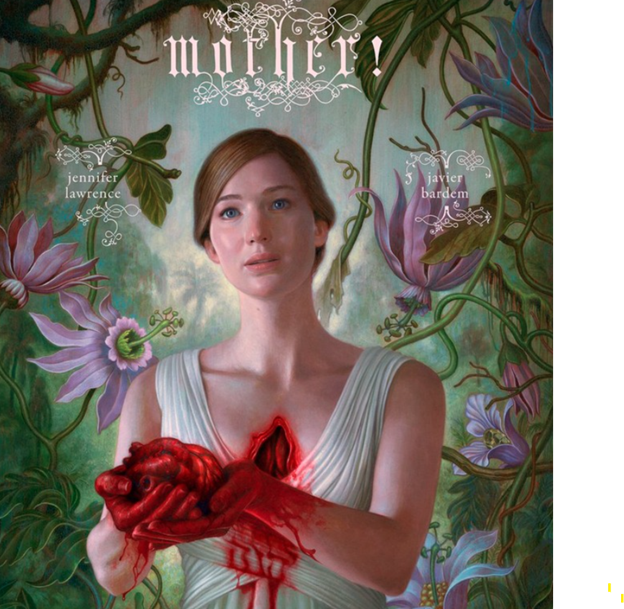



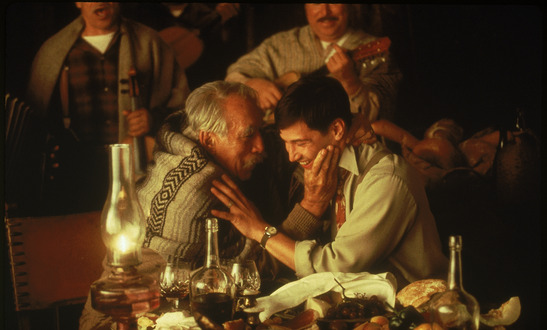
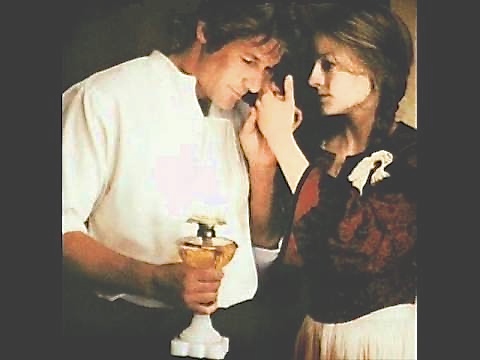


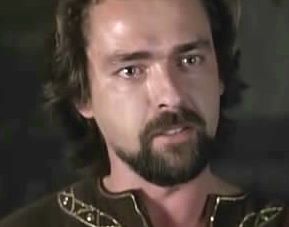
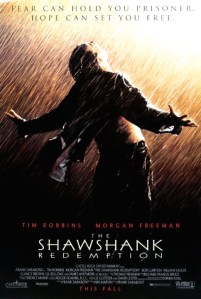 #1: The Shawshank Redemption (1994) Directed by Frank Darabont of The Walking Dead fame, starring Tim Robbins and Morgan Freeman, adapted from the short story by Stephen King, “Rita Hayworth and the Shawshank Redemption.” My all-time favorite movie ever, this film is the only film that has actually done justice to King’s work. I loved the story when it was first published and couldn’t have been more pleased when it was made it into this fabulous film, starring two of my favorite actors.

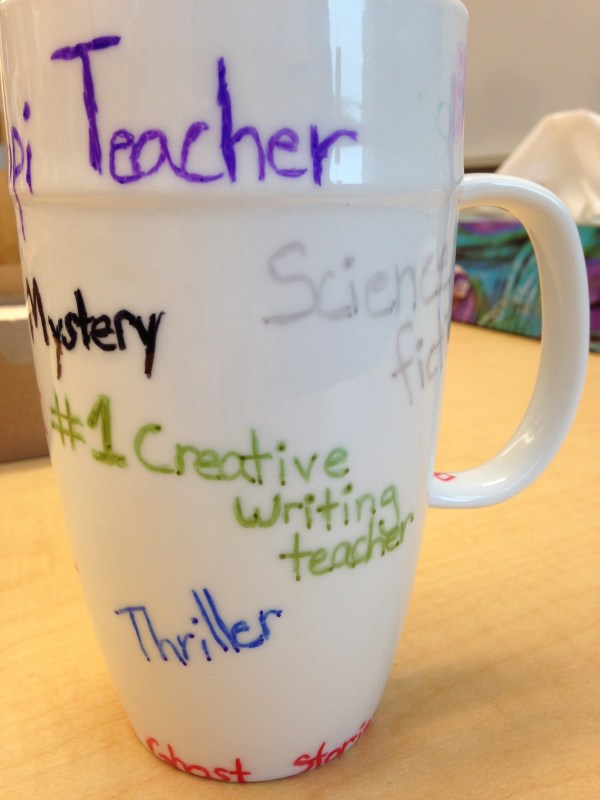





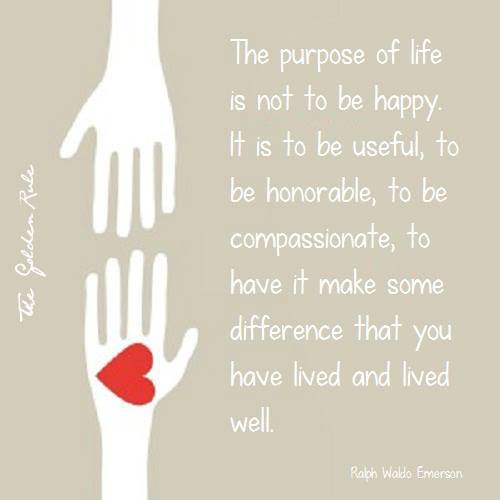

 Today it has been two years since my father passed away. It feels funny even using the word father because he was a “daddy” in the truest sense of the word. Even my mom referred to him as Daddy. I’ve been wanting to write about him for some time, but where do I begin?
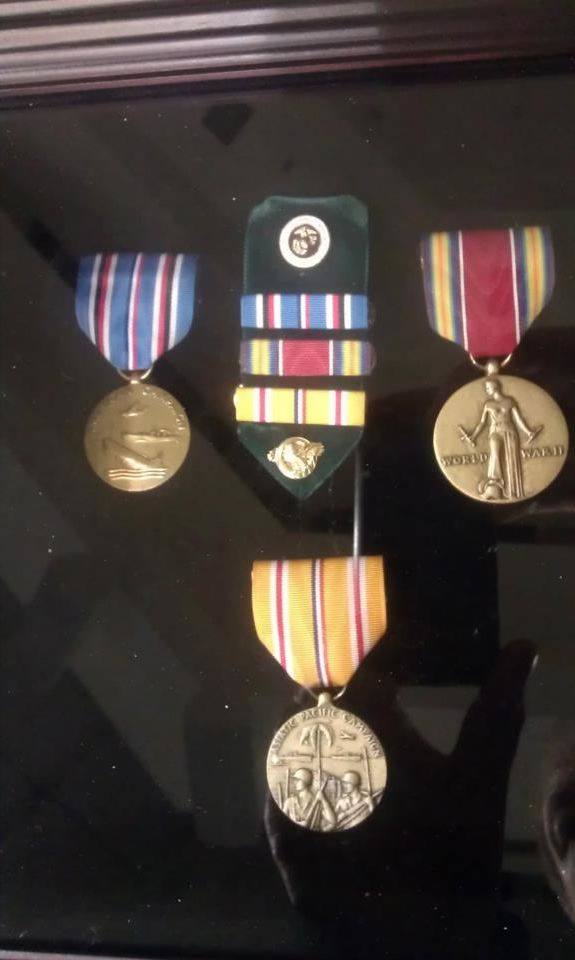

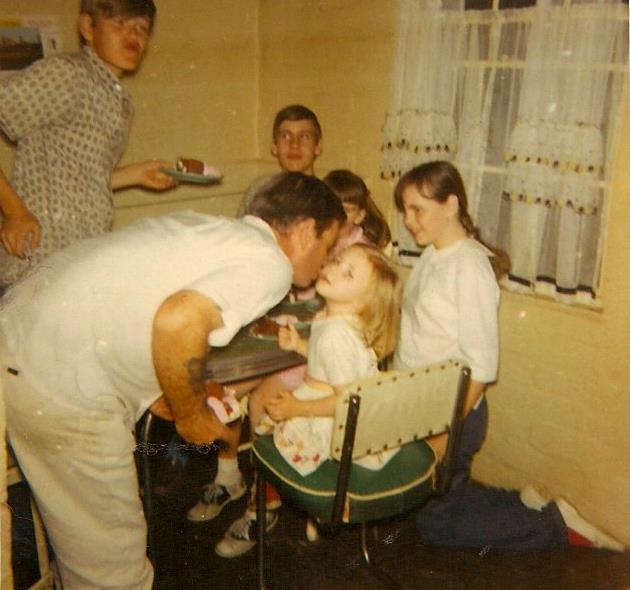
 He really loved his children. He was so proud of my brother, Larry, for his natural intelligence and the way he could take anything apart and fix it. My dad encouraged each of us to pursue our passions, and he introduced Larry to one of his—ham radios. Larry was his firstborn, and he was so proud of him, his career, and his family.



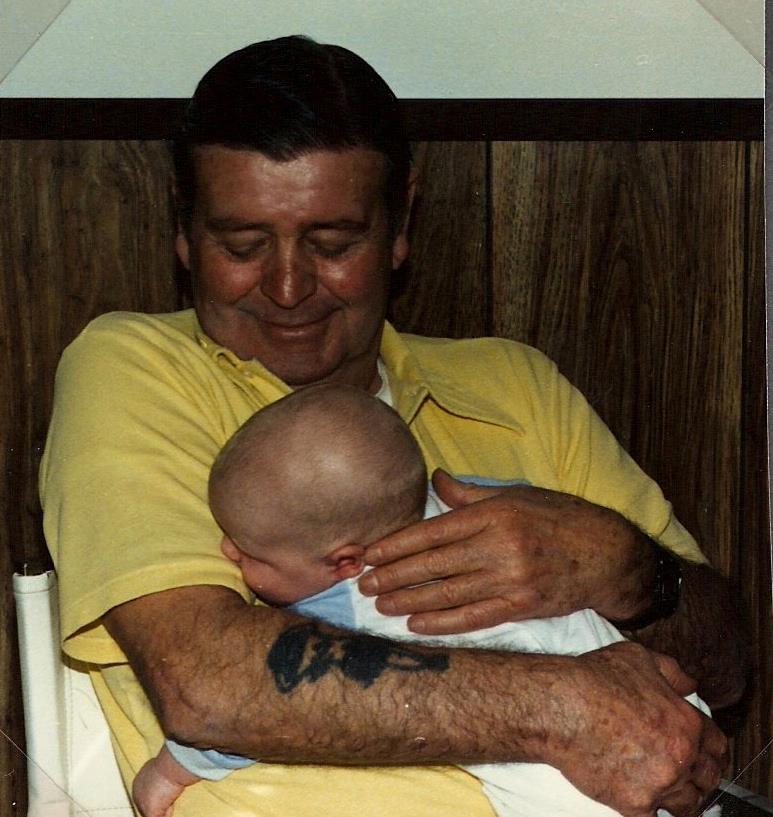



 I still feel like the excited little girl opening her birthday presents, the little girl who can’t sleep late on Christmas morning because she is too excited to open presents, and the little girl who loves to walk barefoot in the damp grass, picking daisies to put in her starting-to-gray hair. That will always be me, and I’m glad.—Christina Knowles 🙂
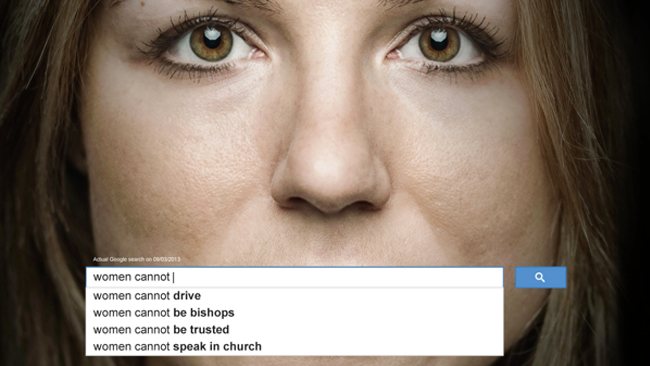


 Disturbing the Universe
Recent Comments