I consider myself an open-minded person who values diversity and respects the feelings of others, but I am beyond annoyed at today’s expectation that we must filter everything we say through a screen of politically correct speech. This concept emerged from good intentions—the idea that we should treat others with differing ideologies, lifestyles, and religions with respect. Not necessarily respect for the beliefs, but respect for the person. But it has grown from an innocuous courtesy into full-blown censorship, an inability to engage in intellectual debate that muffles free expression and reduces communication to near meaningless small talk. Politically correct censorship is one more nail in the coffin of intelligent civil discourse. I fear the death of civil discourse will also be the death of critical thinking.
Take our public schools for example. The primary job of a teacher is to guide students through the process of learning, and that begins with critical thinking. But nowhere else is critical thinking stifled more than in the public school classroom. We have a million rules against it, beginning with “Don’t offend anyone,” “Don’t discuss anything potentially volatile,” and “Respect everyone’s beliefs.” I’m all for trying not to offend people, and I think we should always respect each other, but our definition of respecting beliefs has become an insistence upon accepting all as equally valid, regardless of how they may be based in ignorance or logical fallacy.
Before anyone misunderstands, let me say that I am not suggesting we disparage a person’s faith, cultural norms, or political ideologies, nor am I suggesting that we try to change them. I’m simply asking what happened to good old fashioned discussion? We seem to be going through an age of anti-intellectualism that is resulting in the dumbing down of our youth. Sure, they know how to play nice, but can they think? In my opinion, we are discouraging independent, critical thought, and unbelievably, they are going along with it.
I have always encouraged students to voice their opinions freely in my class. I have never considered it wrong or inappropriate for students to educate me and the rest of the class on aspects of their religion, regardless of which religion it is. I have enjoyed hearing their political evaluations, their suggestions for change, and listened respectfully to their views on just about every subject. My students have always felt safe doing this, knowing they would not suffer any negative recriminations for whatever their thoughts were or how they may differ from mine or anyone else’s in the class.
I’ve let students write on their experiences of coming out of the closet as homosexuals. I’ve let a student recount a beautiful memory of a childhood Ramadan celebration. I’ve welcomed students’ presentations on heroes of their faith, Christian missionaries who were martyred for their beliefs, and I’ve allowed students to do book presentations on everything from the Bible to the Wiccan Rede. I cannot fathom how talking about what you believe can hurt anyone, at least short of hate speech. I would not allow any speech that sought to single out for criticism a specific group or disparage another people, so I guess I do believe in some censorship, but the expectations of self-censorship is reaching levels of hilarity, except I’m not laughing. I’m afraid.
This year, for the first time in my teaching career, my classroom debates were a complete disaster. Why? Not because someone said something offensive, hateful, or shocking, but because students were so overly concerned with political correctness that they would barely speak at all. They hedged around every issue, and when their opposition posed a blatant fallacy, in some cases completely wrong information, the opposing team would not point it out. And I know they noticed it, but they would simply change the subject rather than critically discuss an issue.
This generation has been conditioned since their early childhood to be nice, respect all beliefs, and not rock the boat so much so that they are almost incapable of confronting an illogical argument on a topic for fear of offending a classmate. Perhaps, you may think this is a good thing. Well, I don’t believe it is good for anyone.
First of all, we should all have our ideas challenged. It’s good for us. For one thing, we need to know how to defend what we think. Defending our ideas helps us to define why we believe what we do, to look at our beliefs critically, and to see if they stand up to scrutiny. If they do, this only makes us stronger in our beliefs. Additionally, it teaches us how to defend our beliefs logically to others, rather than relying on fallacious arguments. But possibly most important is the growth we attain in our ability to think, judge, and to avoid being fooled by Machiavellian word play. Finally, we learn to communicate effectively—listening, synthesizing, analyzing, and evaluating first, and then returning discourse in an intelligent way that seeks common ground, or at least understanding rather than manipulation. But most of all, when we learn how to confront flawed arguments, we aren’t stifling our reasoning to passively sit in agreement with whatever enters our ear, quietly feigning acceptance.
Everyone needs to learn to evaluate the validity of ideas for themselves without fear of upsetting someone simply for disagreeing. It seems like today, we aren’t allowed to have differing opinions that deviate from the popular view, but instead of fearing attack or retaliation, we fear upsetting someone. Should that really be so devastating? What’s wrong with a little healthy disagreement? We seem to consider every oppositional comment hate speech.
The other day in class, I literally had to stop the conversation and change the topic three times because students were afraid to discuss a topic or point out glaring logical fallacies. In AP Language, one of our main learning objectives is to understand rhetoric, identify claims, appeals, and fallacies, and to counter them with sound reasoning and solid support. Try to teach that in a classroom where everyone is afraid to point out that a girl’s facts are in error when she stated, “The majority of scientists believe the earth was created in seven days because they’ve proven this to be true, while evolution is just a theory; therefore, only creation science should be taught in school,” or another one who said, “Just because the right to bear arms is guaranteed in the Constitution doesn’t mean we can have guns now. Those rules are out of date.” Another stated that everyone would rather play video games than read books, so teaching literature in school should no longer be required. Not one student had the nerve to call these students out on their lack of factual information or ludicrous logic. The class just sat there in stunned silence until the group moderator suggested moving on to the next topic.
I sat there in dumbfounded silence because the only thing going through my mind was that intellectual thought had just died, right there in front me, all because we have been conditioned to think that it is taboo to say, “Wait, that makes no sense,” or “I believe your facts are in error.” Why? Because it would be seen as attacking religious or political beliefs when, in fact, it is merely confronting an invalid justification. We see this in the general public’s avoidance of mentioning the word “Islam” in the same sentence as terrorist, as if we are somehow embarrassed for law abiding Muslims, which has the effect of an artificial non-communication dynamic that, instead of solving problems, only hides them, and I fear, has a much more insidious result. We have become our own thought police, co-conspirators in our own re-education, creating a Newspeak to prevent saying what we really think, and in the process, killing our critical thinking skills.
I think we all need to toughen up a little. Go ahead and disagree with me. I can take it.—Christina Knowles
As we start a new year, most of are thinking of new beginnings, fresh starts, or making changes of some kind. Why? Most of us just want to be happy. That got me to thinking about the times I have been really happy, and what makes the difference between those times and times of discontent. I noticed some things, many of which you may already do, and others you may want to try. As for me, I’m going to remind myself of these often.
Don’t get upset at insignificant things; save your anger for righteous causes: Most things don’t really merit the damaging side-effects of anger. Learn to blow things off, unless they truly deserve anger. Righteous anger over injustice or cruelty can make a difference in the world. If it isn’t going to make a positive difference in the world, let it go. One way to mitigate anger is to change your perspective by putting yourself into the metaphorical shoes of the people making you angry. When you understand where someone is coming from and what motivates him, it’s a lot easier to let go of anger.
Do something nice for someone when it is completely not your responsibility: A generous act of kindness means the most to others and to you when you know that doing it is in no way your responsibility. Cooking dinner when it’s your turn—you’re supposed to do that. Cook dinner when it’s someone else’s turn, and it means something. It also creates a pleasant feeling. But make sure you do not expect or even want something in return. That kind of destroys the whole concept.
Be grateful for what you have. The old saying goes: “It’s not getting what you want; it’s wanting what you get.” It’s so easy to be discontent when you think of all that you need or would like to have—even non-material things like a relationship or more time. Try to stop yourself when you think of these things and focus on what you now have that you didn’t have before. Notice how far you’ve come and realize you will probably have those things someday anyway.
See yourself as a member of a community: Everyone needs to feel like she belongs to something bigger than herself. For some this is a church family; for others it is a local charitable organization. Still others join book clubs or Cosplay groups. When you connect to people with similar interests, you develop meaningful friendships that can alleviate loneliness, add meaning to your life, and give you a break from stress as well as something to look forward to.
Spend time each day doing something you enjoy: Don’t wait for the weekend to have some fun. Take a little time, even in the busiest day, to treat yourself to something you love. It may be taking the time to get in a workout, reading a chapter of a good book, watching a favorite TV show or movie, or taking a quick nap. Never get so busy that you neglect taking a moment to relish your life.
Do meaningful work or make your work meaningful: Face it. You probably spend most of your time at work. With this in mind, you need to make your work matter. You will enjoy it so much more if you believe the work you do is important—and not just for paying the bills or important for improving the company’s bottom line. If your work is meaningless, either find a way to make your work improve the lives of others or find work that does.
Don’t think you are more deserving than someone else: The quickest way to unhappiness is to become bitter and jealous, thinking you deserve what someone else has. Don’t compare yourself to others or elevate yourself over anyone. Be humble. Humility leads to gratitude and gratitude to contentment.
Realize that everything changes and look forward to it: You can’t stop change. Embrace it and know that every change is a chance to make things even better.
Find something to laugh at every day: Laughter is good for your health and state of mind. Don’t take things so seriously, and find something that makes you really belly-laugh often.
Don’t just laugh: Express yourself emotionally whenever appropriate. Don’t hold in your feelings. Cry when you need to and express anger and disappointment in kind, thoughtful ways. Show love when you feel it. Feeling your emotions gives depth and beauty to life.
Think about what you say and how you will say it before speaking: Few things cause such damage as careless words. You can save yourself a lot of heartache with a few carefully chosen words or deciding words are not necessary at all.
Don’t lie—ever: Yes, easier said than done, but lying is not only unethical, it can cause a lot of stress. If you make a habit of not lying, you never have to worry about it coming back to haunt you or about it having unintended consequences. Also, when you are totally honest, you are allowing people to really know the real you. Being known by another person, and being accepted anyway, is necessary to happiness.
Don’t gossip: Even innocent and seemingly harmless gossip can end with serious consequences. Your gossip will come back to burn you when you least expect it, and it hurts people you probably never meant to hurt.
Truthfully compliment someone every day: Consciously notice good things about others, including those you may have conflicts with, but especially those you want to keep loving, and then let them know that you noticed these good things. Not only does this make those you compliment feel good, it makes you like them more. When we look for the good in others, we will find it, and we will realize their value more often. It also makes us happier to see the good in others, rather than focusing on their faults.
Spend some time in nature as often as possible: Even city lovers benefit from listening to nature’s sounds, breathing in fresh air, and feeling the earth beneath their bare feet. Connecting to the earth can be a spiritual experience for some, creating inner peace, calming stress, and lowering blood pressure. Spending at least twenty minutes a day in the sunshine helps prevent cancer and lifts the mood as well.
Take care of yourself: Mind and body. Eat delicious, nutritious foods, exercise your body, get plenty of sleep, and use your brain. In addition to physical exercise, exercise your mind by reading, solving puzzles, riddles, or problems. Learn something new or memorize a favorite quote or poem. Keep a vocabulary list of definitions of interesting new words and use them daily. Being healthy, mind and body, contributes to happiness.
Enjoy the arts, even if you aren’t talented: Read and write poetry, watch dance or dance yourself, view and make visual art, go to a play or act in a local theater production, listen to music or make music yourself. The arts make life more beautiful, and creating anything artistic naturally leads to joy.
Give to charity throughout the year: We often think of donating at the end of the year either for tax benefits or because everyone is having their end-of-the-year drives for contributions, but organizations need help all year long. Giving is much more meaningful if we research and support organizations that represent our personal convictions and passions. As an animal lover, I find it rewarding and important to give to no-kill shelters and animal rescues. I also like to give to organizations that help the poor in my own community, such as the Springs Rescue Mission, the Salvation Army, and the local Red Cross shelter. My husband and I support National Public Radio as sustaining members because its presence and content is important in our lives and that of the community. We also give to various charities that help the community and to fundraisers we find worthy. Giving throughout the year, helps others, makes you a part of a larger community, gives a sense of belonging, and reinforces the values you claim as your own. Charity gives a sense of identity that corresponds to the ideals you hold dear, makes you more of the person you aspire to someday be, and gives you a sense of joy seated in the idea that hope continues to exist in the world, despite the tragedies and pain you also endure.
Love an animal: Few things imbue such a sense of satisfaction and tranquility as sharing your life with an animal that loves you in return. Giving and receiving love from an animal actually makes your heart bigger and kinder. Caring for an animal has been shown to create empathy in sociopaths, purpose in the elderly, and kindness and gentleness in bullies. Personally, I can’t imagine being truly happy without a dog or a cat to share my home.
Cultivate meaningful relationships: We are social beings and not complete without relationships. Make time to develop at least one or two relationships with people you value. Even though we can have friends who remain dear without proximity, to have a life-enhancing, close relationship with a person requires time together on a regular basis. Choose just a few people who are important to you and devote some time to them at least a few times a month. The time is well-spent. True friendship brings a great deal of happiness. Don’t be fooled into thinking that you don’t have the time to cultivate at least one relationship. In your old age, these relationships will be what you fondly cherish, and you will likely wish you spent even more time on them.
Enjoy your own company: One thing is certain—you will always have yourself, so it is imperative for happiness that you enjoy time alone. You need to love and like yourself. If you don’t, you need to figure out why and fix it. Time alone can refresh you in important ways; it allows an opportunity for introspection, self-expression, self-improvement, and lets you know who you are, so that you can identify what you need to be happy, and when you know who you are and what you need, you can more easily share that with others, not only for your benefit, but for theirs. Truly knowing and accepting yourself gives you a strong foundation that can keep you from sinking in the shifting sands of change and even tragedy. Liking yourself and enjoying time alone can be the basis for happiness that comes from the inside out.
I’m not saying that happiness should be the most important thing we aspire to. I’m sure there are loftier ideals; however, the same things that are good for the world—other people and animals—are the same things that tend to make individuals happy, so why not? Go ahead, be happy. –Christina Knowles
I believe it’s our experiences, good or bad, that make us change and grow. Overcoming conflict, enduring pain, learning to adjust to new circumstances, and coming out the other side stronger and more compassionate are the points to human existence. Whether or not it is our “purpose” bestowed upon us by a divine orchestrator or not is irrelevant. How we handle these struggles gives our lives meaning. Well, it’s that time of year again. The time when we stop and take stock of where our lives have been and where they are going to see if we need to redirect or to set new goals if our old ones no longer represent who we have become since last we did this.
So at the end of every year, I reflect on the major events in my life for the past twelve months and decide on a course correction for the next twelve. As usual, this year was packed full of change, tragedy, joy, and life lessons. This year my son and his wife moved to Florida, taking my two little grandchildren far away, which has been difficult. At school I started teaching AP classes, creating stress and an even greater workload challenge, but it has also refined my teaching skills. But the three major life events this year that have affected me in the most profound ways are, in chronological order, definitely not in order of importance, publishing my first novel in paperback, leaving the Christian faith again, and my mother’s death.
I started 2014 by publishing The Ezekiel Project in paperback. Publishing and marketing a novel has made me grow in ways I never anticipated. It was a huge milestone to accomplish, and it really solidified my need to pursue writing as my life’s ambition. It’s what makes me happy and fulfills my need to express myself. Publishing my novel was an intimidating thing, putting something out there for all the world to see and judge. I remember the day of its release, I had a free digital promotion and 18,000 copies were downloaded. The idea of people out there reading my novel, either loving it or hating it, judging me as a writer, possibly even as a person, was terrifying. I felt more vulnerable than I had ever felt in my life.
But after the initial fear waned, I felt more confident and willing to put myself out there without worrying about getting the approval of others. They like it or they don’t, but I need to do it. Acceptance aside, publishing my novel has caused me to focus on my passion and has given me joy. But beyond that, it made me develop as a person. I faced a fear, overcame it, and now I’m less afraid to take risks. I realize how many years I wasted fearing rejection or criticism.
Publishing my novel was not the only goal I had for this year. Having struggled with my faith since 2008, I decided to get serious about my spiritual growth. I took a class on how to study the bible and started attending a small group bible study. However, the more I read the bible, the further away from spirituality I got. I thought I must be doing something wrong, so after reading about strengthening my faith, I committed to ninety days of devotions, which included studying the bible, praying, worshiping, and journaling. It seemed to backfire.
Before too long, I realized that I didn’t believe the bible at all, and if it was true, I wanted nothing to do with the twisted morality I saw in it. This led me to begin questioning the whole basis for my belief in God and the foundations of faith. It turns out I don’t really have any faith and could not continue in my practice of the Christian religion. But I’m okay with that. I don’t need a god to get through life, I don’t need to believe in an afterlife for comfort, and I don’t need religion to be a caring, moral person. I rejoined my secular humanist group, consisting primarily of atheists and am enjoying their thoughts and views on the world, which are much more in line with my conscience anyway. Of course, I do have to deal with upsetting my family, and particularly, my Christian husband. But while it may be disappointing to them, it does not affect our love for each other or the way we get along, and we respect each others’ beliefs.
I guess you could say my lack of faith was tested when my mother passed away in November, causing some people to think I would return to my faith for comfort. Losing my mother was probably the hardest thing I’ve ever had to deal with. It has been a roller coaster ride of hospital visits and close calls for the past few years. Each time she would bounce back and recover, so it was a bit of a shock when she finally let go and went to her rest. I had the privilege of saying goodbye, holding her hand as she passed away. I loved my mother with all my heart, and she was very strong in her Christian beliefs, but still, I felt no stirring of faith or belief return.
Instead, I realized that I had the strength within myself to endure this tragedy, to accept the grief, the pain of losing my mother without any divine help. In fact, I resented the implication that somehow non-believers “grieve with no hope” as the bible states. I don’t need the hope of an afterlife to make me feel better. This life is full and beautiful and quite sufficient.
My mother’s death confirmed to me that I am strong enough to endure tragedy and resilient enough to carry on. My mother’s passing was very difficult, and I loved her. There is nothing quite like losing a mother. I will always think of her, miss her, and need her, even though I’ll have to go on without her. She was proud of me, and I was a good daughter, so I am at peace knowing that. She knew I loved her very much, and I was there for her till the end. Losing my mom made me even more determined to live my life in a way that would have made her proud, but I can’t believe what I don’t. However, I can make the most of this life, helping others, being kind and compassionate, and not letting fear block me from chasing my dreams regardless of obstacles. I am determined to not waste time, to love freely, be myself, accept others for who they are, and to “live fully and die full.” My mother lived life according to her beliefs and conscience, and I intend to do the same. They just happen to be different from hers.
So as this year ends, and I look forward to the next, I intend to stretch myself, take risks to follow my dreams and focus on what is important and to cast aside what’s not. I will prioritize life by loving those around me, touching the lives I can, and I will try my best to not worry about what I cannot change. I want to be kind, adventurous, gentle, and to remember that the world can be a beautiful and good place, to notice that good on a daily basis and do my part to make it even better. That will encompass all my New Year’s resolutions for the coming year. So even though there have been hardships and pain this past year, I am grateful for 2014 and all it has taught me. Happy new year!—Christina Knowles
Everyday I am stunned by another friend getting a divorce. Sometimes it’s a good thing, but more often than not, it is a tragedy that could have been prevented. I’m all for leaving oppressive, abusive relationships. I can even concede that once in a while a couple has grown apart to the extent that there is no reason to put it back together again. What I don’t get is how someone can walk away from someone they once loved without really trying to make it work, especially when there is still love, when hearts will be broken, and when there are children who will be irrevocably damaged.
We all walk down that aisle with high hopes and idealistic predictions, but how do we prevent our own relationship from deteriorating into just another statistic? There are hundreds of thousands of books written on the subject, some by marriage and family counselors, some by psychologists, and others by theologians and pastors, all giving their warnings, advice, and wisdom. It would seem someone who had been married for years and years would have some good suggestions from experience. I’ve been told you have to have a regular date night; you have to keep romance alive. I’ve heard many of them say, “Love is a choice,” and “You have to commit to stay even when you don’t want to,” and my personal favorite (insert sarcasm into the narrative voice in your head), “Marriage is hard work.” Yeah, that sounds like fun.
Before I embarked on my second marriage, I read all the books, talked to old successfully married couples, and even went to pre-marital counseling. I was ready for the struggle. But it never really came. True, I have not been married for that long—a little over eight years, but isn’t there supposed to be trouble around year seven? Another little tidbit I picked up somewhere. But certainly I would hesitate to give advice this early in the marital scheme of things, and yet, we are doing something right. I mean my husband and I have endured a lot of things since we first married, but our love has only gotten stronger, and I can honestly say that being with him has been the easiest part of my life ever since we got together. It’s never been difficult. Of course, we’ve had disagreements, even a few fights, but we quickly got over it, and they were nothing that caused any damage at all. Honestly, I was really surprised how easy marriage could be.
Maybe because we’d both been divorced, we made our expectations clear, or maybe it is all the ground rules we established. Maybe it’s our work schedules or just our personalities. When we got married, we set certain rules in place to protect our marriage. One of the things we established is that neither one of us would have close friends of the opposite sex in whom we confided. Hanging out with friends of the opposite sex would be limited to group settings, preferably with our spouse present. We even have social media rules for Facebook in particular. We do not friend anyone whom we previously dated. If we are friends with single people of the opposite sex on Facebook, we encourage our spouse to friend them too. We don’t ever cathartically complain about our spouse to a friend of the opposite sex. We share our passwords, so we have access to each other’s emails, texts, and Facebook page. It’s not that we don’t trust each other. But things could change. Knowing we have no secrets from each other gives us security and keeps us from making foolish mistakes. And it isn’t just about preventing jealousy or cheating. By limiting emotional intimacy to your partner, it keeps the emotional intimacy where it belongs, in the relationship. I have only one confidant who knows all my innermost feelings and fears. Doing this creates complete trust and deepens the level of attachment. Which brings me to honesty, the most important trait of a good marriage.
Without honesty, we’re just strangers. I want my husband to know me. I want to know him. I want to share the embarrassing, the unflattering and humiliating mistakes that I don’t want anyone to know about me. Because when he loves me despite them, I am experiencing true acceptance, and we grow even closer together. And being this transparent with another individual creates the truest form of intimacy I can imagine. It also means that we don’t store up resentments. We talk about something as soon as it bothers us. We solve it and move on.
We also try to put each other’s needs before our own. It is almost impossible to not love someone who treats you better than they treat themselves, when they care more about your happiness than their own. Which means we never stoop to name-calling or lashing out in anger. The one thing that is okay to hold back is words spoken in anger. No matter how mad you get, be careful what you say. When you are putting someone before yourself, his feelings are more important than your need to vent your anger.
One piece of advice sticks with me. I think it was Benjamin Franklin’s wise little aphorism that states, “Keep your eyes wide open before marriage, half shut afterwards.” When you’ve chosen your life partner, don’t look for things to drive you crazy. Purposefully ignore them. Tell yourself that in the scheme of things, they don’t even matter. I remember once hearing a story of a woman who was so disgusted by the little hairs her husband would carelessly leave in the bottom of the sink after trimming his mustache. She always nagged him about it, and they’d even had some fights over it. After he passed away unexpectedly, she would cry every time she looked down at her clean sink.
Which brings me to that piece of advice that says, “Love is a choice, not a feeling.” Well, I think it is definitely a feeling, an emotion, and it should be, but it is also a choice. I choose to love my husband. That means overlooking his flaws, looking for the best in him, recognizing his highest qualities, being careful with his heart, and being willing to share all of myself with him, and accept all of him in return. And if we keep this up, we won’t grow apart. We will change, but the change doesn’t have to distance us if we share all the minuscule changes along the way.
My husband and I have been through the death of four parents, estrangement from family members, depression, illness, job stress, and several changes in core religious beliefs on my part, but we have only grown closer together. Leaving him now would mean ripping a part of myself in two.
But we do give each other space. We both enjoy being alone and doing our own things. I write, read, paint, and do many other solitary activities. He writes music and plays guitar. We are not threatened by time alone. It makes us that much more anxious to be together. When we are together, we really enjoy it. We look forward to it—just like when we were dating, except without all that nervous excitement. Now it is a peaceful, comforting feeling, but it’s actually better than when we were dating. It’s richer, deeper. The butterflies in my stomach have been replaced with something else—a swelling in my heart that feels, at times, like it will burst with how much I love him. That’s the only difficult thing about being married to him—realizing what it would feel like to lose him. He feels the same about me, and so we protect our marriage in every way we can.
So, I’m not saying we have it all figured out, or that we are some kind of experts on marriage after eight years, but these things work for us—love and a few ground rules.—Christina Knowles
Lately I have been so discouraged by the sentiments expressed by people around me regarding those in need. I consider myself a liberal, but I find myself feeling more like a moderate in some ways when I hear the views of those around me. It seems most people I am around are either much more liberal in their views of the causes and plight of the poor or much more conservative and cynical in their views than I am. It occurs to me that that is the fundamental difference between conservatives and liberals—conservatives are too cynical and liberals are too idealistic. I think I’d rather be idealistic.
Often at work, surrounded by conservatives, I hear the poor discussed with such contempt. They say those who utilize social programs, who depend on government programs, are lazy and expect others to take care of them without lifting a finger to help themselves. This infuriates me. Do they realize how easy it is to lose everything and become homeless? How some people don’t have a support system in place if trouble arises through no fault of their own?
But then I went to a community discussion group comprised mostly of liberals and heard the opposite extreme, that it is never their fault, that no one chooses to live off of welfare, that everyone would rather work and take care of themselves. They have no responsibility for the hand life has dealt them. And I find myself annoyed with this thinking as well.
I think that it is often through no fault of their own that people fall on hard times and cannot pull themselves up and out without help, but I also think there are people who take no ownership of their problems and who would rather not work, but collect a check instead of working hard for inadequate wages they cannot live on anyway.
It seems to me that to really put a dent in the problem of poverty and homelessness in America, we have to decide what kind of people we want to be, reevaluate our values. This was once a country that promoted the idea that regardless of the circumstances of one’s birth, everyone had the same opportunities to succeed and raise his station in life. It has always been a myth that we have the “same” opportunity, but at least there was an opportunity. The truth is that every year, it becomes harder and harder to move up to a higher income class if not impossible. But forget moving up. We are struggling to stay in the one we are in. Every year we lose citizens from the middle class to the poor. We aren’t raising our stations; we are lowering them. Most of us are one catastrophe or illness away from poverty.
Look, I work hard to earn a living when I would rather stay at home and write poetry, so I know what it feels like to resent seeing someone standing on the corner collecting money for nothing. I know what it feels like to not be able to afford to go the doctor because I didn’t have enough in my account for the co-pay, but I made too much money to qualify for any assistance. For years I gave an extra few dollars on my utility bill to contribute to their Low-income Energy Assistance Program (LEAP), but one month, when I was a single mom and couldn’t afford to pay my utility bill, they refused to help because I made too much money. I don’t begrudge help to those who are truly in need at all, but we need to do more to stop the middle class from sliding into that position. Sometimes it is easier to give up and be indigent and qualify for aid, rather than struggle as the working poor with no help.
When we get past the idea that poverty could never happen to us, then we may be more willing to support social programs to help others. When did we become so selfish? We won’t even help others unless we believe that we may need help someday. Of course, that is a gross generalization, but why such disdain for the poor among conservatives? I think it is a mixture of cynicism and a love for rugged individualism.
I also get really tired of hearing that liberals just want someone to take care of them. Well, I’m a liberal who hasn’t been out of work in almost thirty years. I am the hardest working person I know, putting in hours and hours of overtime every week with no compensation. That’s right, I’m a teacher, and I have never in my entire life expected something for nothing. In fact, I can’t stand the idea of someone else supporting me. I want my independence, and I like knowing I can pay my own way. But I also realize that life happens. I am not immune to the misfortunes of this world. I could get sick, unable to work. I could get laid off and be unable to find another job. I could lose my house and be out on the streets. I could get in a position where I couldn’t take a shower or get a clean set of clothes to even look for a job. When you’re homeless, what do you even put down for an address or a phone number on your application?
If you don’t have a support system in place, like family and friends who could give you a place to stay until you get on your feet, what would you do? I can hear the conservatives now. “There are shelters, resources, places to help them out.” Every time I hear this, Ebenezer Scrooge’s voice comes to me, “Are there no prisons? Are there no workhouses?” Sure there is help, but do you know what it would take for a homeless person to take advantage of them? We have no decent transit system, and all these services are separate and far apart. How would you even find out about them? Pull out your iPad and Wi-Fi? I hear the response, “They could do it if they wanted to. They have to help themselves.” I kind of agree with this, but on the other hand, if you’ve been beat down by the system and life in general, will you even have the wherewithal to take on such a task? It would seem overwhelming.
Sure, I think, if it was me, I would pull myself out of it, but no one really knows how bad it is, and how we would react until put into that position.
So it seems to me that conservatives are overly harsh and cynical about the poor, and liberals are overly magnanimous and idealistic about them. What if there is an in-between? What if we expect them to help themselves, but we provide the jumpstart for them to do it? What if we made it more profitable to work even an unskilled, dead-end job than to collect welfare? But conservatives don’t even want to raise the minimum wage. They’re asking for people to go on welfare.
I am a Democratic Socialist, so most people think that means that I want everyone to have a free handout, take what you earned and give it to someone else. That couldn’t be further from the truth. In Socialism there are no free rides, no sitting back, doing nothing and collecting a check. Everyone works or they don’t get to participate in the system.
Here’s a scenario: I lose my job as a bookkeeper because I am no good at math. I don’t want to get kicked out of my house, and I like to eat, so I look for a job. The only experience I have is as a bookkeeper, but all my references say I’m not suited to this kind of work. No matter where I apply, no one will give me a job. I apply for government assistance. I qualify and am given a work assignment in a clothing factory that provides clothing to prisoners and orphans. I discover that I am good at sewing. I do a good job and my boss is happy, but I only make the government assistance minimum wage. I can live on it, but I’d rather make my old income and in a nicer environment, but at this kind of job that I like and am good at. My boss gives me an excellent reference, and I am hired by a trendy art-nouveau-type clothing manufacturer at the same pay I made as a bookkeeper. Why the same exact money? Because the hours of one human being’s life is equal to another’s. We want to believe that our pay is based on how hard we work, but do you really believe that? No, it is the profitable value we place on the service you provide. It has nothing to do with how hard you work. If it did, teachers would be the best paid people on the planet and corporate executives would make much less than cooks.
I hear the conservative voices in my head once again saying, “But what would be their incentive to work if not to make more money?” The incentive would be 1) to keep a roof over your head because you could still get fired if you don’t do your job well, and if you like your job, you want to keep it rather than exchanging it for something you may not, and 2) you would choose your job according to your natural talents or passions rather than how much it paid—this is the best reason to do it. If people get to work all day at what they love, they tend to put their heart and soul into it. Would you rather have a surgeon who had a passion for science and medicine and wanted to help people, or one who just wanted money and social position?
Oh, and you wanted to know who was just lazy and who really needed help? Well, here’s your solution. If they refuse to take the work assignment, they don’t get any assistance. In true Socialism, the community matters, not just the individual. The individual does well if the community does well, so there are no freeloaders. Now if someone is developmentally or physically disabled, they are given a job that they are able to do. The only people who would be exempt from a work assignment but could still get assistance would be the severely physically or mentally ill.
Socialists don’t want to take what’s yours. They want everyone to do their part, and care for each other when they need it. We want people to be valued as human beings instead of a bank account or earning potential. We think a street sweeper should have just as much respect as the executive of a bank or a doctor, and his life and his time are just as valuable and shouldn’t have a monetary value placed on them. If a person works 40 hours per week, then he should be able to live as comfortably as anyone else who works 40 hours a week. But I think Americans work too much anyway. Thirty to thirty-five hours would be healthier and more productive.
And education should be free, so those who are apt to achieve academic success can do so without being drowned in debt for the rest of their lives. They can give back to the community by serving as doctors, scientists, and teachers because they love it, not for money but for passion. Socialism isn’t about everyone being the same and not standing out, just equally valued. Free education would truly level the playing field so that regardless of the circumstances of your birth, you would have the same chance to follow your dreams as anyone else. Only your motivations and natural abilities, or lack thereof, would affect your achievement.
Sure, no one would be rich and no one would be poor. Money never made anyone happy. In excess, it is only used to control and oppress others anyway. But this would never happen in America anyway. Democratic Socialists don’t advocate for forced, all-or-nothing change. We can balance things without completely ridding the world of Capitalism. We can support workers, small businesses, and create a safety net that is good for everyone and still be the land of the free, still celebrate entrepreneurship and personal innovation.
The conservative voice in my head asks, “But isn’t that Totalitarianism? Weren’t the Nazis Socialists?” No, actually they were Fascists and just called themselves Socialists. At most they were a distorted dictatorial socialism. It’s true that in Socialism, the government plays a large role and has to regulate many things, taxes would be higher, and the money collected would pay for many of things we need but cannot now afford like complete and continuous health care coverage, education, and public recreation and transit. But in Democratic Socialism, the people are the government. We would need a true democracy to pull it off—none of this republic rubbish, where those we elect do not represent us at all. We would decide how to spend our money. The popular vote would suffice for most things, but before the conservative voice tells me that the 49% can be enslaved by the 51%, understand that constitutional protections of civil liberties would make that impossible. Civil liberties should never be up for popular vote.
But even if Democratic Socialism isn’t your thing, let’s at least admit that Capitalism breeds greed and encourages contempt for the poor. I believe Capitalism causes poverty, at least our crony capitalistic plutocracy does. It doesn’t create jobs; it creates indentured servants and gradually worsens their conditions, hoping they won’t notice, and finally sends their jobs overseas to those who cannot afford to refuse them. We are undoing everything that the labor movement fought to improve for some fantasy ideal popularized by Ronald Reagan and his “trickle down theory.” I think after waiting thirty-plus years for it to work, we can try something else now. In fact, Reaganomics pretty much caused the banking crisis and the bailout of the banking system by deregulating them in the eighties as well as increasing the deficit by practically eliminating the corporate tax burden. Yet, he is lauded by conservatives as a great president because he could deliver a patriotic speech with sincerity. And I do believe he was sincere, but that doesn’t mean we have to continue his failed policies forever.
In 1931 James Truslow Adams coined the term The American Dream when he wrote “The American Dream is that dream of a land in which life should be better and richer and fuller for everyone, with opportunity for each according to ability or achievement. It is a difficult dream for the European upper classes to interpret adequately, and too many of us ourselves have grown weary and mistrustful of it. It is not a dream of motor cars and high wages merely, but a dream of social order in which each man and each woman shall be able to attain to the fullest stature of which they are innately capable, and be recognized by others for what they are, regardless of the fortuitous circumstances of birth or position.” This original version wasn’t bad, but it has evolved into much worse. When I ask my students to tell me what the American Dream is, they usually respond with “To get rich,” or the more realistic ones say, “To have a house, a good job, and provide comfortably for a family.”
But we have moved past the image of a middle class home with a white picket fence, two cars in the garage, two children, a pet, and a retirement account. Today in the light of a struggling economy and tough job market, the dream may look more like affording a decent apartment. having health insurance, and worrying about the future later.
Although Adams coined the phrase, the ideals behind the expectation of life for Americans have been around since the Declaration of Independence was signed, or maybe even since the Mayflower landed in Plymouth Rock. All those who come to America have certain expectations and dreams. Those born in America seem to have expectations, but they are more unconscious, and therefore, even harder to attain.
It’s time we redefined the dream and our values along with it. We need a definition of the American Dream that we can be proud of, one that embodies valuing people instead of profit margins and defines happiness and contentment as success rather than fat bank accounts. How would you define the American Dream for modern times? I have an idea for how I’d like to define it:
1) A land where every person, regardless of race, country of origin, gender, religious belief or lack of it, regardless of sexual orientation, and regardless of political or philosophical view 2) would have the same opportunities available to them should they choose to grasp them. 3) They would only be inhibited by their own natural skills and abilities and by their own inclinations and motivations, 4) and their social class at birth would have no bearing on their chances of success 5) to pursue happiness in any way they saw fit that 6) did not infringe upon the rights of others to do the same and did not endanger society or the people therein. 7) A land wherein such people would have guaranteed civil liberties under a constitution of their own design, 8) and all other issues arising, not considered civil liberties, would be subject to a popular vote.
This is how I see the American Experiment. This seems like what America should care about, and it’s very similar to the ideals of our founding fathers whom my conservative friends are so apt to quote. Isn’t this the heart of their intentions? Certainly not the worship of money and the subjugation of the poor. If they were here to see their precious experiment in self-governing torn asunder by corporate lobbyists and super PACS, they would probably redefine it too.
And to my conservative friends, stop acting like you are against big government involving themselves in our lives when you support controlling a woman’s body, forcing religious views on the non-religious, and entering every conflict around the world. Your definition of government seems to be of the corporation, for the corporation, by the corporation. Democratic Socialism encompasses the true intentions of the our forefathers by embodying the ideals of the people, not corporations, as the government.—Christina Knowles
Lately I’ve been reading a lot of life advice on Facebook, and a huge majority of it centers on living for yourself, doing what you want, letting people go who don’t improve your life, forgiving others in order to move on with your own life, and not letting others determine how you live your life. It seems selfishness is the new black. Of course, all of this can be good advice under certain circumstances, but it struck me that taking this literally as a mantra by which to live your life is a good way to be alone for the rest of your life.
There is nothing wrong with being alone if that’s what you choose, and if you really feel like you can’t compromise in the details of your life, then it’s probably a good choice. But if you happen to fall in love, you may need to rethink the whole “living for yourself” thing.
I am a very independent woman, who does not like to be told what to do. I consider myself a feminist. When I divorced my first husband, I reveled in the freedom to do whatever I wanted, make choices without considering what anyone else thought, and being able to completely change my life if I wanted without worrying about how it affected someone else. I was happy, and I vowed never to tie myself down with anyone again. And that is a valid choice. It didn’t make me selfish or shallow. However, “living for yourself” while in a relationship is selfish and shallow and is guaranteed to end in disaster.
Even before I met my current husband, I realized that the secret to a good relationship with anyone is unselfishness. When I fell in love with him, I decided I would always consider his needs above my own because I love him. Of course, if he did not respond to me in the same way, we would have had problems, and eventually, I may have felt differently about him because of it. But he does put me before himself. I believe that when someone you love puts you first, it’s a natural reaction to reciprocate in kind, and when this happens, both people’s needs are met and both people feel loved and valued. In contrast, acting out of self-serving motives and without considering the needs and desires of your mate leads to arguments, resentment, and eventually a break-up. When someone who is supposed to love you, cares more about himself, you feel unloved and unimportant, and then the tendency is to react by protecting yourself, becoming selfish in response. When you protect yourself from someone you love, you lose intimacy, and eventually love.
Sometimes it is necessary to act selfishly. Sometimes it is survival. As I said above, under certain circumstances, taking care of yourself first is good advice, but it is never good advice for making a relationship work. Sometimes you need to leave people behind, let them go, but adopting a permanent attitude of self-protection and complete independence means choosing to be alone or in constant conflict.
As far as forgiving others so that you can move on, I think this is terrible advice. If you merely forgive others for your own sake, you probably haven’t really forgiven them at all. You’ve just moved on, and put whatever they’ve done to you out of your head. Forgiveness should always be a gift to someone out of love. You love who hurt you more than you dislike what they’ve done, and you love them enough to give them a clean slate. You love them enough to be vulnerable to the possibly of them hurting you again in the same way. You don’t hold it against them, expect them to repeat the mistake, or ever bring it up again. If you can’t risk it, don’t forgive them, but let them go and forget about it. You don’t need to forgive them for you; they need it if they want to stay in a relationship with you.
When I fell in love with my husband, I knew I had a choice to make. I knew I had to give up making all the decisions myself; I had to give up the freedom to do whatever I wanted, whenever I wanted. I decided that what I was gaining was better than anything I was giving up, and I’ve been lucky because being unselfish is easy with him. He treats me with such concern, such unselfish love, that I automatically care more about his needs and desires than my own. Sure there are times when I want my way, and it’s not the same as his, but all we have to do is realize how important something is to the other, and then it’s easy to compromise. That is love, and love is unselfish.
So I don’t think I’ll be utilizing any ten-second psychology from Facebook any time soon. These sage-sounding aphorisms make good memes, but not good relationships. There is enough selfishness in the world; I don’t want it in my relationship with my husband or anyone else I care about.—Christina Knowles
We buried our mother today, my family and I. She was a wonderful mother—loving, strong, kind, principled, and dedicated. I don’t know what I’m going to do without her.
Losing a mother is a unique kind of pain. It’s different than losing a father, a spouse, a sibling, or a child. I’m thankful that I haven’t experienced all these different types of devastating loss, but I just know that it has to be different. I’m not saying it’s worse, just different. In fact, I’m pretty sure losing a child would be the worst.
But losing a mother is the ultimate severing of the umbilical cord. When you lose a mother, you feel lost, insecure. I haven’t depended on my mother for many years, but I guess I knew she was always there if I needed her. Knowing she is gone makes me feel all alone in the world even though I know I am not. I feel a primal need for her. I wake up in the middle of the night calling for my mommy, and I don’t care that I am a grown woman, a grandmother even. I want my mommy.
Losing a mother makes a person grow up instantly. You are no longer the child, and having already lost my father, I am no longer anybody’s child. That’s a strange feeling. I am the mother now. I feel this more now than ever, even though I have been a mother for 26 years. Not being someone’s child is a lonely feeling. It makes me want to pour myself into being a mother to my children. Unfortunately, they’ve grown and left home, and I don’t see them as often as I’d like.
Being without a mother makes me feel different. I am different. My husband warned me that losing parents changes a person, but I didn’t really understand before. Losing a mother leaves a void that nothing else can fill. Really losing anyone you love does, but to whom will I go for advice? Who will be proud of me for absolutely no reason? Who is capable of unconditional love besides a mother?
That’s what’s really missing. It’s knowing I will never be loved unconditionally by anyone again. My husband loves me almost that much, but I know I could make him lose his love for me if I tried. Of course, I won’t. My brothers, my sisters—that’s close. They have loved me through everything so far. My kids—I’d love to think that they love me unconditionally, but even though some part of them may need me or love me no matter what, it’s just not that same I’d-die-for-you kind of love. I know this is true because the only people in the world that I would love under any circumstances are my children, the only ones I could forgive anything.
My pain sounds so selfish. It’s all about what I will no longer have. But isn’t that what grief usually is? We miss the people we lose; we will no longer enjoy their love, their presence. My mother was a wonderful person. She left the world a much better place than she found it. But even if she didn’t, today I would still be an orphan. I suppose her goodness just intensifies it.
So today I said goodbye to my mother and to a love I will never experience again. At 49 years old, I just grew up.—Christina Knowles
It seems that everyone in America continues to be in an uproar about The Affordable Care Act or as it is derogatorily known, ObamaCare. Especially, now that the Republicans control Congress, there will surely be an attempt to overturn it once again, and if not repeal it, at least modify it as drastically as possible. I, personally, do not care for much of the healthcare law myself—as far as being affordable, it is a disaster. The free preventative care visits and the mandate against exclusion for pre-existing conditions has undeniably been the most beneficial aspect of this healthcare act, but overall, it does very little in addressing the problems of medical care today. We are in dire need of healthcare reform, and I believe that means instituting a single-payer national system and regulating healthcare costs.
Socialism, you cry? No more than free K-12 public education, which we are all, parents of school-age children or not, required to pay for through our tax dollars.
Yes, yes, I know, the government has made a shambles of the education system. Won’t they do the same to the healthcare industry? Yes, probably, if they are allowed to make the rules. Just like teachers should govern education, doctors, nurses, and other healthcare professionals should govern healthcare.
But first, let’s discuss the absolute necessity of having affordable healthcare. Of course, there are the homeless, jobless, and the working poor who frequent emergency rooms. Let’s get real for a moment. If a homeless man gets hit by a car and taken to the emergency room, he’s probably going to get treatment. The costs are then absorbed by the system, which passes it on to us in higher cost healthcare as well as draining an already in-debt Medicaid/Medicare system. We pay for it anyway. The whole idea behind everyone having coverage is that at least most people will be paying something of their share, and if they have access to preventative care, there will be less high-priced emergency room visits, saving money and lives in the long run.
The problem is that we can’t force people who cannot even pay their rent to buy expensive medical insurance, and the tax credit is a joke. How does that do them any good now?
But it’s not just the poor who have to worry. I know a woman who has worked her entire life in a professional but middle-income job. She has never been irresponsible with her money. She has a small savings and her house is more than half paid off. She drives an old car. She planned on retiring soon, and has put in more than enough years to do that, but after attending a retirement benefits meeting and looking into buying her own private health insurance, she now has to work years longer, just to get to the age to go on Medicare because she can’t afford to quit or be without insurance. The astronomical costs of healthcare are causing middle-income Americans to work until they die of old age. Is that what we really want?
The notion that a single-payer nationalized healthcare system means lower quality care is a myth if it is managed correctly. The idea that American healthcare is superior to any other first world country is also a myth. According to The Commonwealth Fund, America’s healthcare is nothing to brag about. They report that “given the absence of universal coverage—people in the U.S. go without needed health care because of cost more often than people do in the other countries. Americans were the most likely to say they had access problems related to cost” (Davis, et al).
They go on to say that the “U.S. ranks last overall with poor scores on all three indicators of healthy lives—mortality amenable to medical care, infant mortality, and healthy life expectancy at age 60. The U.S. and U.K. had much higher death rates in 2007 from conditions amenable to medical care than some of the other countries, e.g., rates 25 percent to 50 percent higher than Australia and Sweden. Overall, France, Sweden, and Switzerland rank highest on healthy lives” (Davis, et al).
Their final conclusion was that the “U.S. ranks last of 11 nations overall. Findings in this report confirm many of those in the earlier four editions of Mirror, Mirror, with the U.S. still ranking last on indicators of efficiency, equity, and outcomes” (Davis, et al).
One major problem with our “premiere” healthcare system is the superfluous promotion of expensive preventative testing suggested at specific ages as if we were automobiles ready for our 75,000 mile flush. An example of this is the colonoscopy. How many times have we heard that we must have this test as soon as we turn fifty and every ten years thereafter? According to John McDougall, MD of the McDougall Newsletter, a medical research publication, colonoscopies are an extremely dangerous procedure that is not even very accurate in detecting cancer and does not warrant the risks. The most common result of a colonoscopy is that it detects polyps, the polyps are then removed, and this is also a dangerous and useless procedure because removing precancerous polyps can spread the very cancer they are trying to prevent. He goes on to say that cancerous polyps make their appearance most commonly in people over fifty-five, and then usually take twenty years to metastasize. Do the math. You will probably die of something else before that anyway. But the real problem with our preventative testing is that there is a much cheaper test done on stool samples that is much more effective in detecting cancer and poses no risk to the patient. But that wouldn’t be as profitable, would it? And don’t even get me started on the greedy and irresponsible pharmaceutical companies peddling drugs with side effects much more dangerous than the maladies they seek to treat.
Then we have the opposite extreme–greedy insurance companies who put saving money above patients’ needs by denying necessary, life-saving preventative testing because it costs too much–and the costs are exorbitant. I have a family member with a rare form of aggressive cancer who absolutely requires a PET scan. The insurance company denied it as unnecessary because it costs upwards of $7000, so a CT scan would have to suffice. Well, this form of cancer spreads through the body quickly, and the microscopic cells cannot be detected on a CT scan. The scan could come back normal, and the doctor would have no idea where it spread until it grew into another tumor that the CT scan could see. Scientific progress is available, but even with insurance, we are denied it. But here, have a colonoscopy.
The other major problem with our healthcare system is blatant and obvious corruption in the industry in the form of Medicare fraud, millions of dollars each year paid for bogus claims and criminally inflated bills. This is another are where we need to focus our attention to lower healthcare costs.
An unintended consequence of this upheaval of the insurance industry has also been the shameful actions of employers, choosing to reduce full-time employees to part-time, choosing to stop covering employees altogether, or refusing coverage of family members, attempting to pass the costs on to their already underpaid and struggling-to-stay-in-the-middle-class workers while unethical insurance companies and medical and pharmaceutical companies continue to roll in the profits. And for some unfathomable reason, people blame the honest attempts of healthcare reform for the greed and lack of compassion of the medical industry, insurance companies, and employers. Obviously, these companies don’t care, and this is why we must go to a single-payer, coverage for all model. And if you think this will lower our already terrible quality of care, you need to do some more research on countries that have this model that score much higher than the United States in quality and effectiveness of care.
Regardless of how we choose to deal with it, health care must be reformed if we are to have any kind of quality of life or security in our old age. Instead of coming up with half-measures like The Affordable Care Act or dumping healthcare reform altogether, we need to apply ourselves to finding a realistic solution that does not cower before the dictates of the greedy for-profit corporate healthcare raiders. Our very way of life is threatened in a way that is more tangible than any terrorist threat to which we are so willing to forever indebt ourselves. Let’s drop the partisan B.S. and embrace the necessity of the situation. A professionally run single-payer healthcare system won’t make us any more Socialist than the public school system did.—Christina Knowles
Sources:
Davis, K. Stremikis, C. Schoen, and D. Squires, Mirror, Mirror on the Wall, 2014 Update: How the U.S. Health Care System Compares Internationally, The Commonwealth Fund, June 2014.
Last night was my monthly book club meeting. And by meeting, I mean getting together with great friends, sampling delicious cheeses and different kinds of wine, sitting down to a beautiful meal, catching up on our personal lives, teasing, laughing, participating in a deep philosophical conversation, and oh yeah, discussing the book we read. I love my book club. We meet once a month and sometimes in between club meetings to go to a movie, attend a lecture, go out for tea, or even spend a day at the hot springs or a weekend in a mountain resort. I have come to love my book club ladies. I look forward to seeing them, and I never miss a meeting, even if I didn’t finish the book. We are all teachers, or former teachers. My book club ladies are very intellectual and wise, and I have gained a lot of insight about life from them, but most of all, they have become the best kind of friends anyone could have. We all fit together so well even though we are quite diverse in many ways. We range from various denominations of Christian to Atheist to New-Ager, and we encompass all the political parties, including Socialist. I’ve often wondered why we work so well as friends, and I figured out we share some very important qualities besides a love of books. Here’s what I came up with:
We are open-minded. We not only listen, but we consider each other’s opinions and value our differences. We respect each other’s thoughts.
We share ourselves. We don’t just share the flattering things that most people would want others to know about themselves, but we really let each other see our true personalities—our quirks, our insecurities, our flaws, our confusion. We really know who each one of us is. I can tell my friends anything, and I do.
We like each other anyway. The more I know about my friends, the more I respect them and care about them. Knowing their problems, insecurities, their frustrations, and the mistakes they make, allows me to see things through their eyes and not get upset at them when we have disagreements or don’t see eye to eye—and we don’t. As I said, we have varying political, religious, and philosophical ideologies, but we completely accept each other anyway.
We can trust each other. This is a rare gift. We have been through a lot together and have been friends for many years. We’ve shared secrets, and our confidences have never been betrayed. Our friendship has been tested and passed with flying colors.
We listen to each other. Not only do we share ourselves, we are interested in what’s going on in the lives of each one of us. We take turns talking and make sure we all get a chance to tell about what is going on in our lives. We may offer advice, but we don’t judge. I always leave book club feeling completely accepted and listened to. In the past, I’ve had many friends who only want to talk and never listen. Even if I am having a serious problem, they turn it around and make it about them. Not these ladies. My book club friends are sensitive to knowing when someone needs a friendly ear.
We can count on each other. I know if I had a problem, they are only a phone call away—a ride to the airport, help moving, a place to stay; we aren’t fair-weather friends.
We are honest. We tell each other how it is and call each other out when necessary. I think I have been told, to my face, that I am full of shit by these ladies more than by any other people I have ever known. But that’s okay because we can say that to each other without getting angry, and then go on having a lovely evening. But we take each other seriously as well, so if one of us says we are full of shit, we take the time to consider whether or not they are right.
We challenge each other. Like I said, we are very different people. We have different views, different ways of looking at things, and different ways of doing things. We give advice and kick each other in the butt when necessary.
We encourage each other. Even though we call each other out when necessary, we are the first to offer words of encouragement, truthful compliments, and uplifting advice right along with our criticisms. Besides my husband, I feel like they are my most enthusiastic cheerleaders.
We inspire each other. I have often heard horror stories of women who constantly fight, are jealous, or in competition with each other. I am lucky to never have experienced this in my friendships (I’ve had many wonderful girl-friends throughout my life and am still friends with them today), and it couldn’t be further from the truth with these ladies. We support each other in every endeavor, share ideas, and help each other succeed. When I published my book, they were right there to share in my joy. They read it, helped me with editing, came to my book signing, and helped me promote it. Two of the women in my book club are writers as well. We read each other’s writing and do whatever we can to promote the success of all of us, whether it is a new job, a new relationship, or a writing project. We share genuinely in the joy of each other’s success.
We don’t have to be perfect for each other. We welcome each other into our homes even when they aren’t clean or we haven’t showered. We walk in without knocking. We are the kind of friends who have keys or garage codes to each other’s houses in case we show up before the owner arrives. We’ve stripped naked to change or take a dip in the hot springs without worrying about cellulite or being judged. We are comfortable with each other, and that is nice.
We don’t have to feel bad when we don’t see each other for a while. Many of my book club friends travel frequently. We may go a couple of months without seeing each other certain times of the year, but nothing changes. Whenever we get back together, it’s like we never left. We pick up right where we left off. We are not needy or demanding with each other. If we can make it to something, we do. If we can’t, we understand. No pressure.
But we are thoughtful. We bring each other thoughtful gifts for no reason sometimes. The other day, one of my friends brought me a vegan cookbook because she knows I am interested in changing my diet along those lines. When one of us goes on vacation, we often bring back a souvenir for the rest of us. We may show up at each other’s house with a bottle of wine or a homemade loaf of bread just because.
We make each other laugh. We always have the best time when we’re together, often giggling uncontrollably. Once two of us went to the movies and had no idea what we were seeing. It turned out to be a very stupid and vulgar teenage boy-type thing. Being teachers, we slid down in our seats, unable to control our laughter while trying desperately not to be seen by any of our students. We’ve laughed at each other and with each other, but I would feel equally comfortable crying with them. In fact we have while attending too many funerals of former students who died way too soon.
I am a little bit of an introvert. I’m somewhat of an intellectual, I’m a bookworm, and I’m way too serious. But this group of friends brings me out in a way for which I am so grateful. We never need to make meaningless small talk, which I despise. For an introvert, it is highly important to feel comfortable and accepted in order for me to be my natural self. I think this is why I never miss an opportunity to hang out with them if possible, while I turn down other social engagements all the time. The best kinds of friends are the kind that let you be completely you without worrying about it. And more than just putting up with you, they actually enjoy being with you. We should all have friends that make us more of who we really are instead of less, and I am so grateful for mine. And the books and wine are bonuses.—Christina Knowles
I have purposefully never read Fifty Shades of Grey, but I did watch the movie, 9 1/2 Weeks starring Mickey Rourke and Kim Basinger, which to my understanding is basically the same story of sexual manipulation and submission. Rourke’s character is even named John Gray. However, 9 1/2 Weeks alludes to the fact that this type of relationship is ultimately damaging to the parties involved, whereas Fifty Shades of Grey does not. I have seen the repulsive previews of the movie version of Fifty Shades of Grey and listened to my friends and co-workers rave about the books. The fact that this book series is popular with women is disturbing to me in so many ways. I am shocked and disgusted with the idea that women think this is sexy or romantic. In Christian Grey’s own words, “I don’t do romantic.” You’ve got that right, Christian; you certainly don’t.
However, I have heard numerous women say that the books are romantic. I believe these books portray the ideal relationship as dangerously abusive, patronizing, and dehumanizing, which should not be a romantic ideal for women, yet women are being brainwashed into thinking that being treated like a sex object, devoid of all identity and independence, is romantic as long as your partner is completely obsessed with you. This is a common idea in every Harlequin and Silhouette romance novel I ever had the misfortune of reading as a teenager, perpetuating the idea that obsession equals love; it is ludicrous. Yet many women believe this, and apparently not just as teenagers. If you were to ask them if they wanted a relationship characterized by submissiveness, low self-esteem, and having no identity of their own, they would say, “Of course not.” However, that is exactly the kind of relationship idealized in these books.
In Fifty Shades of Grey, Christian demands that Anastasia sign a contract to exercise a certain number of days each week, eat only what Christian tells her to eat, and take a form of birth control, so he doesn’t have to wear a condom during sex, implying that her physical appearance and not having a child with her are his greatest concerns. Does this say love to you? Romantic? How about sexy? Christian Grey is a sociopathic control freak, and Anastasia is in danger, not only physically, but also from losing all sense of self and independence. Christian does not care about Anastasia as a person at all. He basically owns her as a sexual object, and he doesn’t care about her feelings or her well-being. So is it the danger that is sexy? It is true that some people are sexually excited by danger, but is this ever considered healthy or loving? Something for women to daydream about? Sounds more like a male fantasy to me, a stereo-typical and unhealthy male’s fantasy. So why do women love it?
Surprisingly, some feminists find that Fifty Shades of Grey supports “traditional family values,” values which many women have worked hard to overcome, values advocating for the submissive role of women in marriage and the dominant aspects of male authority. According to feminist writer Carey Purcell of The Huffington Post, ideals promoted in Fifty Shades are not only damaging to women and relationships, but are archaic and patriarchal in nature, “Early marriage to one’s first sexual partner, having a baby even when saying neither of the partners is ready to be a parent, and submission to one’s husband as the head of the household are all aspects of life that feminists and progressive thinkers have worked to move beyond. Anastasia and Christian’s relationship is not romantic. It is abusive” (Purcell). In fact Christian’s first observation after saying his wedding vows is that now Anastasia unequivocally “belongs” to him, and he doesn’t mean this in the mutual or metaphorical sense. He is now free to require anything he desires from her. One might ask in the 21st century, when will we be done with oppressive gender roles for women? This, in my opinion, is just another patriarchal subversion designed to brainwash women into thinking that they want to be subjugated and objectified.
Of course, sadists are not all men, and masochists are not all women; however, for the purpose of the romance novel, this is usually the case. Sadomasochism is about annihilating self—the persons in submission have their identity and will annihilated. It is not about love, but killing the will of the other person. However, once the will is dead, the oppressor will often move on to a new victim, someone who still has a will to remove because this is where the pleasure for the sadist originates. The victim is left with the shattered pieces of her life to try and patch back together.
Many people will argue that role-playing and sadomasochism are just lifestyle choices and should be viewed as healthy among consenting adults. Ask anyone who has broken free of this lifestyle and see if this is how she sees it. But let’s see what the experts have to say. According to psychologist, Michael J. Formica, “In a relationship driven by power and control, rather than compassion and cooperation, one partner becomes ‘parentalized’ and the other ‘infantilized’. . . When the underlying dynamic shifts to one of compassion, cooperation and communication from one of push and pull, the cycle ceases, or at least recedes into the background, and the stage for authentic relationship is then set” (Formica). In other words, to have an authentic relationship consisting of compassion and cooperation, the cycle of sadomasochistic abuse must end.
Not only does this book series promote practices that destroy healthy relationships, but it stands to reason, that the mainstream acceptance of these ideas as “normal” will increase the danger of violence against women in the form of date rape, stalking, and even rape by strangers with the idea that women secretly desire this behavior, even if they don’t know it. So why are women attracted to this nonsense? I believe the only women who find these sadomasochistic scenarios sexy, are women who have either never been in a controlling relationship or are still caught in the destructive cycle of abuse.
One theory about the popularity of these types of relationships is that these women, like Anastasia, have “daddy” issues; they long for the love of a controlling parental figure because they have felt the lack of it at an early, developmental age. But I know too many women for which this is not the case. My theory is that we, as women, are conditioned from childhood to think our main source of self-esteem is derived from our attractiveness and appeal to men. If men find us irresistible, attractive, desirable, then we are worthy, and we will not end up alone, which we are taught to believe is the ultimate curse, and that we will find “true” love if our male counterparts are obsessed with us sexually. Magazines such as Cosmopolitan give women sexual advice to hold a man, reinforcing this as our primary value to the opposite sex. Women are taught that if a man is insatiably obsessed with them, this equals everlasting love. At the same time we are being taught this, men are being taught to be sexual animals even in greater degree than biology dictates. Men are taught to take what they want in order to be a man, they are told that women are attracted to “bad boys,” and that strength and violence are attractive. Being who we are is never enough, we must play games, dress up, role play, and be someone else, which inevitably lowers our self-esteem because we realize we are not good enough as we are.
Women are taught from youth that love means sacrifice and putting others first, even when it costs them their very lives and identities. And being willing to do anything sexually is the ultimate power over men. Women are considered desirable and valuable only because they are willing to do whatever a man desires sexually, even if it is degrading to them as people. This ideology turns the entire relationship into a “game,” while in reality, love and true intimacy require the absence of game-playing. For a healthy, successful relationship, a couple needs to know their communications, interactions, and sexual intimacy are authentic. Therefore, the type of “romance” in these novels is not only destructive to the psyche of both parties, but true intimacy and love can never exist within this framework.
I believe, once a woman experiences this type of relationship, she either mindlessly continues seeking this type of relationship as each ends in a vain attempt to succeed where the others failed, or if she is lucky, she will emerge from her conditioning, realize she is valuable just the way she is, and then she will no longer need a relationship to make her whole; she will know she is fine by herself, and will then only enter into a relationship if it is a healthy partnership, wherein both parties can be totally themselves with complete honesty and no unhealthy game-playing. When both people are healthy, each one caring for each other and themselves, neither person needs to control the other, and sex becomes just another way to communicate love, respect, and intimacy. It puts sex in its proper place and removes it as a means of subjugation and humiliation, which is a healthier and ultimately more satisfying place for it.
So, I refuse to participate in society’s patriarchal attempts to condition me to equate my value as a human being with the sexual gratification and the controlling desires of men. I am not a prude, but I sincerely believe women need to actively judge for themselves what it means to be loved or even desired in a relationship. Do you want to be re-made into an object of degrading fantasy, or do you want to be seen as worthy of love and respect the way you actually are, and have your sexual relationship be about expressing that value in the most intimate way? Don’t send the wrong message to men. Subjugation, humiliation, and physical control are not sexy or manly—and not what we want from them.—Christina Knowles
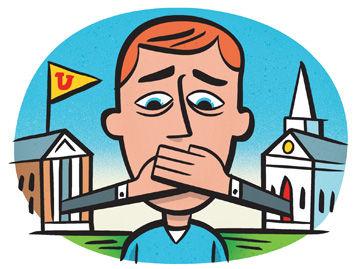












 Disturbing the Universe
Recent Comments