Stand Up and Take a Knee by Christina Knowles

Take a Knee
(Thearon W. Henderson/Getty Images)

I’m an American. I tear up over Pearl Harbor footage, I swell with pride reading the Declaration of Independence, I am fiercely independent, and I believe freedom is the highest good. But I still don’t get it.

I’m referring to the disturbing Nationalism sweeping our country, the dangerous Nationalism encouraged and flouted by our own president. I’m talking about the sacralization of our National Anthem and our flag.

Certainly, everyone does seem to be in an uproar over, first, the fact that some NFL players, beginning with Colin Kaepernick one year ago, were “taking a knee” during the National Anthem in protest over police brutality, specifically aimed at African American men. Next, people were incensed over Donald Trump stirring up his base in true Trump fashion, suggesting that we would just love it if one of these NFL owners said, “Get that son of a bitch off the field right now. Out! He’s fired! Fired!” (Criss).  Of course, Trump could not help tweeting on Saturday, “If a player wants the privilege of making millions of dollars in the NFL, or other leagues, he or she should not be allowed to disrespect….” and “…our Great American Flag (or Country) and should stand for the National Anthem. If not, YOU’RE FIRED. Find something else to do!” (Criss).

And now, some Americans are furious that several NFL players locked arms in solidarity during the anthem at yesterday’s games.  In true American rebel fashion, #TakeaKnee became an instant trending hashtag across social media because, as all Americans know, when someone tries to interfere with your freedom, particularly your freedom of speech, you respond by doing exactly the opposite of what the presumptuous offending party told you to do, especially when he’s an authority figure. Nothing could be more American.

So, why do so many other Americans have a problem with this response? Apparently, this is a common symptom of Nationalism, and a result of sacralizing our symbol of freedom. By sacralizing our symbol for freedom, we condemn the very freedom we say we love.

Let’s back up for a second. Our flag is a symbol for our country, which embodies many ideals, most commonly freedom, independence, and determination. We feel pride when flying our flag, not because the flag has actual value, but because it represents something we believe is real—something about American character and values. When we say that soldiers died defending our flag, this is a metonym for our country’s ideals and way of life. It is a piece of cloth. It is not actually our country.

Yet, when we transpose all of our feelings of what we love about our country on to this piece of cloth and elevate it to the sacred, we do ourselves and our country a disservice. Once sacralized, we can no longer look at it reflectively, with an unbiased eye, with a view to grow and improve. It becomes a dangerous form of Nationalism through which, as opposed to ordinary patriotism, we are unable to see ourselves clearly and with an objective eye. It (the National Anthem, our flag, our country, our ideals) is perfect and can never be questioned. To question it, would be to defile it and be, in essence, blasphemy.

But, not everyone sacralizes the National Anthem or the flag, or even the actual America. To many, it is the ideals behind them that are held in high esteem, and when the realization of those ideals is in question, the flag, the Pledge of Allegiance, or the National Anthem is an obvious symbol to which we turn in order to draw attention to these contradictions between what we say we stand for and what we actually do. It’s a logical connection, and it in no way indicates that we are not patriotic or that we do not love and appreciate our country, and it certainly has nothing to do with disrespecting soldiers. We fly a flag at half-mast when we are grieving; we fly it upside down to signal distress. We do not stand for the anthem or pledge our allegiance when we see a discrepancy in the ideals we say we represent and in the reality of what our country, or our leaders, in most cases, shows that we actually represent. This is clearly Colin Kaepernick’s thinking when he explains, “I am not going to stand up to show pride in a flag for a country that oppresses black people and people of color… To me, this is bigger than football and it would be selfish on my part to look the other way. There are bodies in the street and people getting paid leave and getting away with murder” (Gillespie).

According to Jonathan Haidt, social psychologist and author of The Righteous Mind: Why Good People Are Divided Over Politics and Religion, conservatives tend to sacralize symbols and traditions like the flag and the anthem, while liberals tend to sacralize other things, such as compassion and human rights (Haidt). They aren’t disrespecting soldiers who gave up their lives fighting in a war; they are making a logical connection between what we say we stand for and what we will stand for.

And while we’re at it, let’s stop referencing the rules for flags and NFL players. It is completely irrelevant what the rules are, or even the laws, for that matter. The most effective protests throughout history have been illegal. It’s called civil disobedience. If protestors concerned themselves with whether or not they were allowed to do something, women would still be unable to vote, and Rosa Parks would never have sat in the front of the bus. It’s effective precisely because it is not allowed. The risk of consequences demonstrates the level of commitment and the intensity of the desire for change.

I submit to you that those who refuse to stand for the National Anthem or the Pledge of Allegiance, whether it be to protest the president encouraging the squelching of free speech, or the systemic racism endangering the lives of black Americans, are the most patriotic of citizens. These protestors recognize what the flag and the anthem, and indeed, our country, are supposed to stand for, and refuse to settle for anything less than the ideals that form this great experiment. Truly, standing to honor that which fails to live up to all we mean it to be is dishonoring to America itself at its very core. As historian Howard Zinn once said, “Dissent is the highest form of patriotism.” So, show us how much you love America, and take a knee.—Christina Knowles

Originally published in 2017

Sources:

Criss, Doug. “A president shouldn’t tell an NFL team what to do, Trump tweeted … in 2013.” cnn.com. Updated 25 Sept. 2017. Accessed 25 Sept. 2017.

Gillespie, Nick. “Donald Trump Should Stop Telling NFL To Fire Players for Anthem Protests” 23 Sept. 2017. Accessed 25 Sept. 2017.

Haidt, Jonathan. The Righteous Mind: Why Good People Are Divided Over Politics and Religion. Vintage Books, 2013.

Is There Hope for the Human Race? by Christina Knowles

Snagged from www.vox.com
Snagged from http://www.vox.com

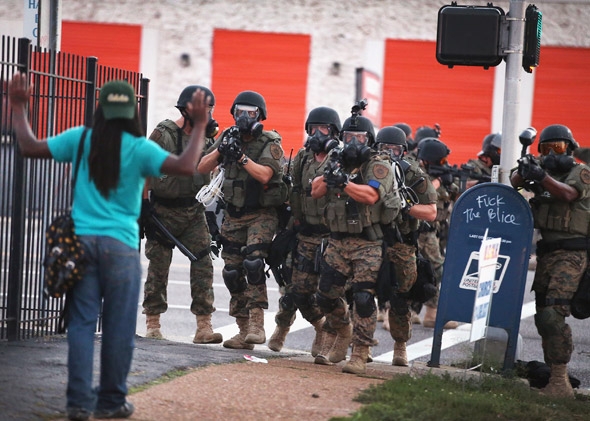
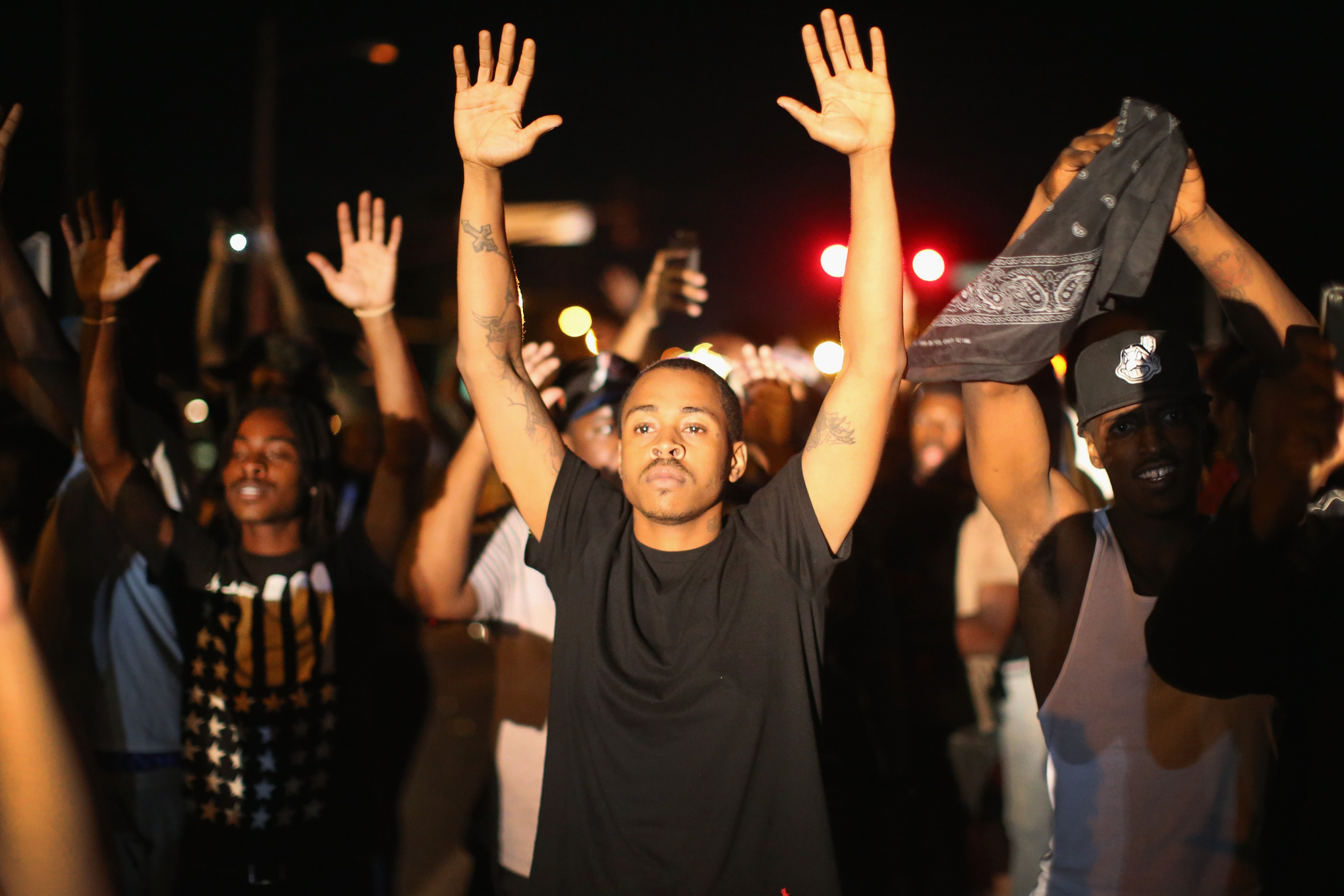
It has been a depressing week. Refugee children from South America continue to suffer, the Israeli-Hamas conflict is far from over, even though they are experiencing a temporary ceasefire, the Ebola virus is spreading across many African countries, tensions are rising as the radical Sunni threaten the Kurdish region, Robin Williams tragically committed suicide, Lauren Bacall died as well, and protests and riots erupted in Ferguson, Missouri after the unarmed Michael Brown was shot by the police, and then the militarized police force moved on protestors with armored vehicles, assault rifles, and tear gas. And that’s just what I can think of off the top of my head. Like I said, a very depressing week.

Snagged from www.vox.com.
Snagged from http://www.vox.com.

One might wonder if there is even any hope left for the human race. This week I asked myself that question. It would seem, if one were listening to the news, that everything is spiraling out of control, and we are on a fast trip downward toward annihilation. But is everything really getting worse? Or is this just the perception we have from an ever-increasing saturation of instant news coverage via cable news, Twitter, and Facebook? Although I am thankful for social media for its ability to provide a platform for the average person to report what they see, rather than relying on our somewhat (understatement) biased news sources, are we letting our access to hastily reported news prejudice us against our own futures? Perhaps.

Snagged from www.vox.com.
Snagged from http://www.vox.com.

Let’s look at history to get some perspective. According to longevity expert, Sharon Basaraba, “From the 1500s to around the year 1800, life expectancy throughout Europe hovered between the ages of 30 and 40” (Basaraba). Today our life expectancy has more than doubled since that time. Obviously, advances in medical care and hygiene make our world a better, safer place. We have vaccines, regulated hospitals, and most developed countries enjoy clean water. We also see improvements in food and environmental protections. Prior to the 1950s, corporations could dump toxic waste without fear of penalties, poisoning fish and water sources, as well as the surrounding agriculture. Since then food inspection and labeling has advanced, and even twenty years ago, people didn’t take the idea of avoiding GMOs and eating organic seriously, but today it is widely accepted. Okay, but what about all the violence and terrorism in the world?

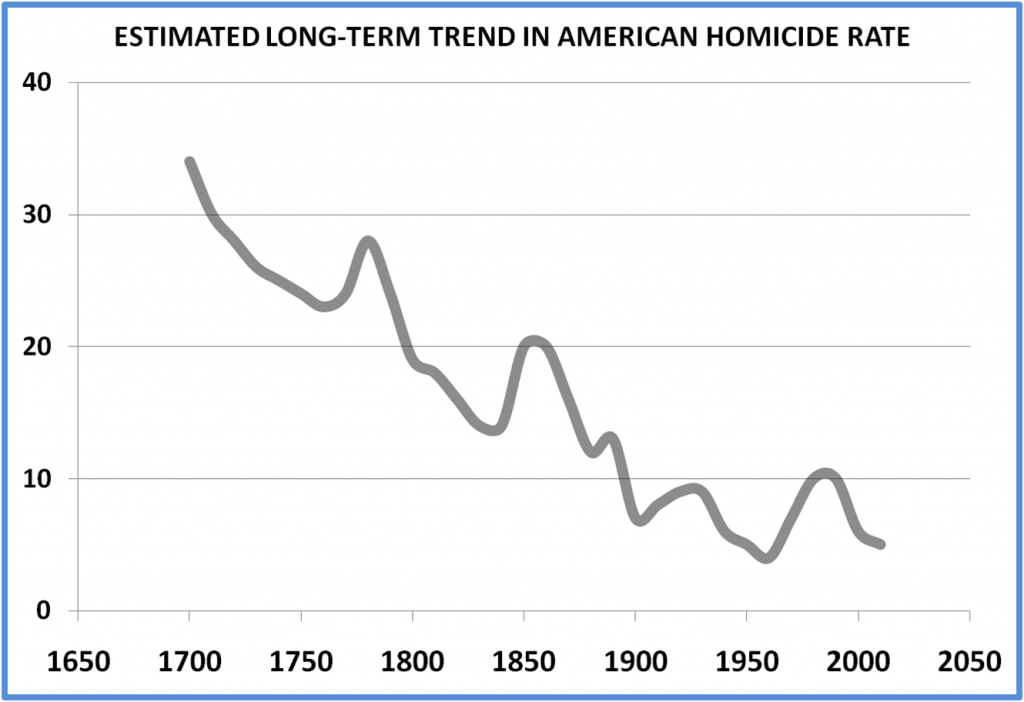
According to a 2011 Huffington Post article, statistics show violence is down worldwide, despite global conflicts. “The rate of genocide deaths per world population was 1,400 times higher in 1942 than in 2008.

Snagged from marginalrevolution.com

“There were fewer than 20 democracies in 1946. Now there are close to 100. Meanwhile, the number of authoritarian countries has dropped from a high of almost 90 in 1976 to about 25 now. Rape in the United States is down 80 percent since 1973. Lynchings, which used to occur at a rate of 150 a year, have disappeared.

“Discrimination against blacks and gays is down, as is capital punishment, the spanking of children, and child abuse” (Seth Borenstein). But despite the data, most people I know believe violence is at an all-time high. Why? Because we hear about it, see it in graphic detail on the evening news and on our Twitter feed.

And what about civil rights? Although there are human rights violations daily all over the planet, more countries now have civil rights laws than ever before. Minorities and women in our country enjoy much more freedom and less prejudice than in the early 20th century although there is obviously a long way to go. Accommodations for the disabled have come very far. We’re seeing the right to marry for homosexuals granted in more and more states all the time. Working conditions are better thanks to unions and the 40-hour work week, there are no more sweat shops, at least in most developed countries, and there are child labor laws to protect the young. There are fewer injuries on the job and education is more available than 100 years ago, although rising costs of college are beginning to turn the trend back the other way. But weren’t people just happier in the past?

Not necessarily. Some people argue that we are in a recession, and people tend to be less happy in economic down-cycles. However, other research shows that people today are more likely to follow their dreams and opt for an emotionally fulfilling career over money, as long as they are somewhat secure. Perhaps because not many jobs today are secure, there is actually more perceived freedom to follow your dreams. Another reason people may be happier is because they are healthier or because they have more freedom to be themselves. Shana Lebowitz reports that a study in 2013 by The National Institute on Aging found that people are indeed happier than the same people were when they were younger, probably because people tend to get happier as they age. The study also found that people born after the Baby Boomers are happier than the Baby Boomers themselves (Lebowitz). As an English teacher, I read a lot of old books, and people do just seem nicer, more sensitive now, than portrayals of people hundreds of years ago. I have noticed that children seem less respectful; however, children also have gained more freedom and autonomy, which would explain a greater freedom to express themselves, especially in negative ways.

So are we truly spiraling the drain? Or is it just our perception?

I guess I am trying to say that although things seem horrible—and they are sometimes, as bad as it is, we do seem to be learning something. We are progressing even though we don’t hear about that on the evening news. All it takes is a little research to put things into perspective. I know we all expected to be driving hover cars and colonizing the moon, while reading about eradicated disease and something called war in the history books, but change is slow and we can’t see something grow while we are staring at it. So chin up—there is hope for the human race after all.—Christina Knowles

Sources:

Basaraba, Sharon. “Longevity Throughout History: How has human life expectancy changed over time?” April 21, 2013. Available: http://longevity.about.com/od/longevitystatsandnumbers/a/Longevity-Throughout-History.htm Accessed: August 15, 2014.

Borenstein, Seth. Huffington Post. “World Becoming Less Violent: Despite Global Conflict, Statistics Show Violence In Steady Decline” October, 22, 2011. Available: http://www.huffingtonpost.com/2011/10/22/world-less-violent-stats_n_1026723.html Accessed: August 15, 2014.

Hoegen, Monika. “Statistics and the quality of life: Measuring progress – a world beyond GDP.” Edited by Thomas Wollnik. Available: http://www.oecd.org/site/progresskorea/globalproject/44227733.pdf Accessed: August 15, 2014.

Tabarrok, Alex. “Long Term Trends in Homicide Rates” June 1, 2011.Available: http://marginalrevolution.com/marginalrevolution/2011/06/long-term-trend-in-homicide-rates.html#sthash.JQAecZHp.dpufhttp://marginalrevolution.com/marginalrevolution/2011/06/long-term-trend-in-homicide-rates.html Accessed: August 15, 2014. 

Blog at WordPress.com.

Up ↑