Author of the suspense novel, The Ezekiel Project and Signs of Life: A Memoir in Poems
Biography
Christina Knowles lives in Salem, Oregon with her musician husband, Randy Knowles, their dog, Walter, and their cat, Pyewacket. Christina also writes novels, short stories, poetry, and screenplays.
I believe it’s our experiences, good or bad, that make us change and grow. Overcoming conflict, enduring pain, learning to adjust to new circumstances, and coming out the other side stronger and more compassionate are the points to human existence. Whether or not it is our “purpose” bestowed upon us by a divine orchestrator or not is irrelevant. How we handle these struggles gives our lives meaning. Well, it’s that time of year again. The time when we stop and take stock of where our lives have been and where they are going to see if we need to redirect or to set new goals if our old ones no longer represent who we have become since last we did this.
So at the end of every year, I reflect on the major events in my life for the past twelve months and decide on a course correction for the next twelve. As usual, this year was packed full of change, tragedy, joy, and life lessons. This year my son and his wife moved to Florida, taking my two little grandchildren far away, which has been difficult. At school I started teaching AP classes, creating stress and an even greater workload challenge, but it has also refined my teaching skills. But the three major life events this year that have affected me in the most profound ways are, in chronological order, definitely not in order of importance, publishing my first novel in paperback, leaving the Christian faith again, and my mother’s death.
I started 2014 by publishing The Ezekiel Project in paperback. Publishing and marketing a novel has made me grow in ways I never anticipated. It was a huge milestone to accomplish, and it really solidified my need to pursue writing as my life’s ambition. It’s what makes me happy and fulfills my need to express myself. Publishing my novel was an intimidating thing, putting something out there for all the world to see and judge. I remember the day of its release, I had a free digital promotion and 18,000 copies were downloaded. The idea of people out there reading my novel, either loving it or hating it, judging me as a writer, possibly even as a person, was terrifying. I felt more vulnerable than I had ever felt in my life.
But after the initial fear waned, I felt more confident and willing to put myself out there without worrying about getting the approval of others. They like it or they don’t, but I need to do it. Acceptance aside, publishing my novel has caused me to focus on my passion and has given me joy. But beyond that, it made me develop as a person. I faced a fear, overcame it, and now I’m less afraid to take risks. I realize how many years I wasted fearing rejection or criticism.
Publishing my novel was not the only goal I had for this year. Having struggled with my faith since 2008, I decided to get serious about my spiritual growth. I took a class on how to study the bible and started attending a small group bible study. However, the more I read the bible, the further away from spirituality I got. I thought I must be doing something wrong, so after reading about strengthening my faith, I committed to ninety days of devotions, which included studying the bible, praying, worshiping, and journaling. It seemed to backfire.
Before too long, I realized that I didn’t believe the bible at all, and if it was true, I wanted nothing to do with the twisted morality I saw in it. This led me to begin questioning the whole basis for my belief in God and the foundations of faith. It turns out I don’t really have any faith and could not continue in my practice of the Christian religion. But I’m okay with that. I don’t need a god to get through life, I don’t need to believe in an afterlife for comfort, and I don’t need religion to be a caring, moral person. I rejoined my secular humanist group, consisting primarily of atheists and am enjoying their thoughts and views on the world, which are much more in line with my conscience anyway. Of course, I do have to deal with upsetting my family, and particularly, my Christian husband. But while it may be disappointing to them, it does not affect our love for each other or the way we get along, and we respect each others’ beliefs.
I guess you could say my lack of faith was tested when my mother passed away in November, causing some people to think I would return to my faith for comfort. Losing my mother was probably the hardest thing I’ve ever had to deal with. It has been a roller coaster ride of hospital visits and close calls for the past few years. Each time she would bounce back and recover, so it was a bit of a shock when she finally let go and went to her rest. I had the privilege of saying goodbye, holding her hand as she passed away. I loved my mother with all my heart, and she was very strong in her Christian beliefs, but still, I felt no stirring of faith or belief return.
Instead, I realized that I had the strength within myself to endure this tragedy, to accept the grief, the pain of losing my mother without any divine help. In fact, I resented the implication that somehow non-believers “grieve with no hope” as the bible states. I don’t need the hope of an afterlife to make me feel better. This life is full and beautiful and quite sufficient.
My mother’s death confirmed to me that I am strong enough to endure tragedy and resilient enough to carry on. My mother’s passing was very difficult, and I loved her. There is nothing quite like losing a mother. I will always think of her, miss her, and need her, even though I’ll have to go on without her. She was proud of me, and I was a good daughter, so I am at peace knowing that. She knew I loved her very much, and I was there for her till the end. Losing my mom made me even more determined to live my life in a way that would have made her proud, but I can’t believe what I don’t. However, I can make the most of this life, helping others, being kind and compassionate, and not letting fear block me from chasing my dreams regardless of obstacles. I am determined to not waste time, to love freely, be myself, accept others for who they are, and to “live fully and die full.” My mother lived life according to her beliefs and conscience, and I intend to do the same. They just happen to be different from hers.
So as this year ends, and I look forward to the next, I intend to stretch myself, take risks to follow my dreams and focus on what is important and to cast aside what’s not. I will prioritize life by loving those around me, touching the lives I can, and I will try my best to not worry about what I cannot change. I want to be kind, adventurous, gentle, and to remember that the world can be a beautiful and good place, to notice that good on a daily basis and do my part to make it even better. That will encompass all my New Year’s resolutions for the coming year. So even though there have been hardships and pain this past year, I am grateful for 2014 and all it has taught me. Happy new year!—Christina Knowles
Everyday I am stunned by another friend getting a divorce. Sometimes it’s a good thing, but more often than not, it is a tragedy that could have been prevented. I’m all for leaving oppressive, abusive relationships. I can even concede that once in a while a couple has grown apart to the extent that there is no reason to put it back together again. What I don’t get is how someone can walk away from someone they once loved without really trying to make it work, especially when there is still love, when hearts will be broken, and when there are children who will be irrevocably damaged.
We all walk down that aisle with high hopes and idealistic predictions, but how do we prevent our own relationship from deteriorating into just another statistic? There are hundreds of thousands of books written on the subject, some by marriage and family counselors, some by psychologists, and others by theologians and pastors, all giving their warnings, advice, and wisdom. It would seem someone who had been married for years and years would have some good suggestions from experience. I’ve been told you have to have a regular date night; you have to keep romance alive. I’ve heard many of them say, “Love is a choice,” and “You have to commit to stay even when you don’t want to,” and my personal favorite (insert sarcasm into the narrative voice in your head), “Marriage is hard work.” Yeah, that sounds like fun.
Before I embarked on my second marriage, I read all the books, talked to old successfully married couples, and even went to pre-marital counseling. I was ready for the struggle. But it never really came. True, I have not been married for that long—a little over eight years, but isn’t there supposed to be trouble around year seven? Another little tidbit I picked up somewhere. But certainly I would hesitate to give advice this early in the marital scheme of things, and yet, we are doing something right. I mean my husband and I have endured a lot of things since we first married, but our love has only gotten stronger, and I can honestly say that being with him has been the easiest part of my life ever since we got together. It’s never been difficult. Of course, we’ve had disagreements, even a few fights, but we quickly got over it, and they were nothing that caused any damage at all. Honestly, I was really surprised how easy marriage could be.
Maybe because we’d both been divorced, we made our expectations clear, or maybe it is all the ground rules we established. Maybe it’s our work schedules or just our personalities. When we got married, we set certain rules in place to protect our marriage. One of the things we established is that neither one of us would have close friends of the opposite sex in whom we confided. Hanging out with friends of the opposite sex would be limited to group settings, preferably with our spouse present. We even have social media rules for Facebook in particular. We do not friend anyone whom we previously dated. If we are friends with single people of the opposite sex on Facebook, we encourage our spouse to friend them too. We don’t ever cathartically complain about our spouse to a friend of the opposite sex. We share our passwords, so we have access to each other’s emails, texts, and Facebook page. It’s not that we don’t trust each other. But things could change. Knowing we have no secrets from each other gives us security and keeps us from making foolish mistakes. And it isn’t just about preventing jealousy or cheating. By limiting emotional intimacy to your partner, it keeps the emotional intimacy where it belongs, in the relationship. I have only one confidant who knows all my innermost feelings and fears. Doing this creates complete trust and deepens the level of attachment. Which brings me to honesty, the most important trait of a good marriage.
Without honesty, we’re just strangers. I want my husband to know me. I want to know him. I want to share the embarrassing, the unflattering and humiliating mistakes that I don’t want anyone to know about me. Because when he loves me despite them, I am experiencing true acceptance, and we grow even closer together. And being this transparent with another individual creates the truest form of intimacy I can imagine. It also means that we don’t store up resentments. We talk about something as soon as it bothers us. We solve it and move on.
We also try to put each other’s needs before our own. It is almost impossible to not love someone who treats you better than they treat themselves, when they care more about your happiness than their own. Which means we never stoop to name-calling or lashing out in anger. The one thing that is okay to hold back is words spoken in anger. No matter how mad you get, be careful what you say. When you are putting someone before yourself, his feelings are more important than your need to vent your anger.
One piece of advice sticks with me. I think it was Benjamin Franklin’s wise little aphorism that states, “Keep your eyes wide open before marriage, half shut afterwards.” When you’ve chosen your life partner, don’t look for things to drive you crazy. Purposefully ignore them. Tell yourself that in the scheme of things, they don’t even matter. I remember once hearing a story of a woman who was so disgusted by the little hairs her husband would carelessly leave in the bottom of the sink after trimming his mustache. She always nagged him about it, and they’d even had some fights over it. After he passed away unexpectedly, she would cry every time she looked down at her clean sink.
Which brings me to that piece of advice that says, “Love is a choice, not a feeling.” Well, I think it is definitely a feeling, an emotion, and it should be, but it is also a choice. I choose to love my husband. That means overlooking his flaws, looking for the best in him, recognizing his highest qualities, being careful with his heart, and being willing to share all of myself with him, and accept all of him in return. And if we keep this up, we won’t grow apart. We will change, but the change doesn’t have to distance us if we share all the minuscule changes along the way.
My husband and I have been through the death of four parents, estrangement from family members, depression, illness, job stress, and several changes in core religious beliefs on my part, but we have only grown closer together. Leaving him now would mean ripping a part of myself in two.
But we do give each other space. We both enjoy being alone and doing our own things. I write, read, paint, and do many other solitary activities. He writes music and plays guitar. We are not threatened by time alone. It makes us that much more anxious to be together. When we are together, we really enjoy it. We look forward to it—just like when we were dating, except without all that nervous excitement. Now it is a peaceful, comforting feeling, but it’s actually better than when we were dating. It’s richer, deeper. The butterflies in my stomach have been replaced with something else—a swelling in my heart that feels, at times, like it will burst with how much I love him. That’s the only difficult thing about being married to him—realizing what it would feel like to lose him. He feels the same about me, and so we protect our marriage in every way we can.
So, I’m not saying we have it all figured out, or that we are some kind of experts on marriage after eight years, but these things work for us—love and a few ground rules.—Christina Knowles
Lately I have been so discouraged by the sentiments expressed by people around me regarding those in need. I consider myself a liberal, but I find myself feeling more like a moderate in some ways when I hear the views of those around me. It seems most people I am around are either much more liberal in their views of the causes and plight of the poor or much more conservative and cynical in their views than I am. It occurs to me that that is the fundamental difference between conservatives and liberals—conservatives are too cynical and liberals are too idealistic. I think I’d rather be idealistic.
Often at work, surrounded by conservatives, I hear the poor discussed with such contempt. They say those who utilize social programs, who depend on government programs, are lazy and expect others to take care of them without lifting a finger to help themselves. This infuriates me. Do they realize how easy it is to lose everything and become homeless? How some people don’t have a support system in place if trouble arises through no fault of their own?
But then I went to a community discussion group comprised mostly of liberals and heard the opposite extreme, that it is never their fault, that no one chooses to live off of welfare, that everyone would rather work and take care of themselves. They have no responsibility for the hand life has dealt them. And I find myself annoyed with this thinking as well.
I think that it is often through no fault of their own that people fall on hard times and cannot pull themselves up and out without help, but I also think there are people who take no ownership of their problems and who would rather not work, but collect a check instead of working hard for inadequate wages they cannot live on anyway.
It seems to me that to really put a dent in the problem of poverty and homelessness in America, we have to decide what kind of people we want to be, reevaluate our values. This was once a country that promoted the idea that regardless of the circumstances of one’s birth, everyone had the same opportunities to succeed and raise his station in life. It has always been a myth that we have the “same” opportunity, but at least there was an opportunity. The truth is that every year, it becomes harder and harder to move up to a higher income class if not impossible. But forget moving up. We are struggling to stay in the one we are in. Every year we lose citizens from the middle class to the poor. We aren’t raising our stations; we are lowering them. Most of us are one catastrophe or illness away from poverty.
Look, I work hard to earn a living when I would rather stay at home and write poetry, so I know what it feels like to resent seeing someone standing on the corner collecting money for nothing. I know what it feels like to not be able to afford to go the doctor because I didn’t have enough in my account for the co-pay, but I made too much money to qualify for any assistance. For years I gave an extra few dollars on my utility bill to contribute to their Low-income Energy Assistance Program (LEAP), but one month, when I was a single mom and couldn’t afford to pay my utility bill, they refused to help because I made too much money. I don’t begrudge help to those who are truly in need at all, but we need to do more to stop the middle class from sliding into that position. Sometimes it is easier to give up and be indigent and qualify for aid, rather than struggle as the working poor with no help.
When we get past the idea that poverty could never happen to us, then we may be more willing to support social programs to help others. When did we become so selfish? We won’t even help others unless we believe that we may need help someday. Of course, that is a gross generalization, but why such disdain for the poor among conservatives? I think it is a mixture of cynicism and a love for rugged individualism.
I also get really tired of hearing that liberals just want someone to take care of them. Well, I’m a liberal who hasn’t been out of work in almost thirty years. I am the hardest working person I know, putting in hours and hours of overtime every week with no compensation. That’s right, I’m a teacher, and I have never in my entire life expected something for nothing. In fact, I can’t stand the idea of someone else supporting me. I want my independence, and I like knowing I can pay my own way. But I also realize that life happens. I am not immune to the misfortunes of this world. I could get sick, unable to work. I could get laid off and be unable to find another job. I could lose my house and be out on the streets. I could get in a position where I couldn’t take a shower or get a clean set of clothes to even look for a job. When you’re homeless, what do you even put down for an address or a phone number on your application?
If you don’t have a support system in place, like family and friends who could give you a place to stay until you get on your feet, what would you do? I can hear the conservatives now. “There are shelters, resources, places to help them out.” Every time I hear this, Ebenezer Scrooge’s voice comes to me, “Are there no prisons? Are there no workhouses?” Sure there is help, but do you know what it would take for a homeless person to take advantage of them? We have no decent transit system, and all these services are separate and far apart. How would you even find out about them? Pull out your iPad and Wi-Fi? I hear the response, “They could do it if they wanted to. They have to help themselves.” I kind of agree with this, but on the other hand, if you’ve been beat down by the system and life in general, will you even have the wherewithal to take on such a task? It would seem overwhelming.
Sure, I think, if it was me, I would pull myself out of it, but no one really knows how bad it is, and how we would react until put into that position.
So it seems to me that conservatives are overly harsh and cynical about the poor, and liberals are overly magnanimous and idealistic about them. What if there is an in-between? What if we expect them to help themselves, but we provide the jumpstart for them to do it? What if we made it more profitable to work even an unskilled, dead-end job than to collect welfare? But conservatives don’t even want to raise the minimum wage. They’re asking for people to go on welfare.
I am a Democratic Socialist, so most people think that means that I want everyone to have a free handout, take what you earned and give it to someone else. That couldn’t be further from the truth. In Socialism there are no free rides, no sitting back, doing nothing and collecting a check. Everyone works or they don’t get to participate in the system.
Here’s a scenario: I lose my job as a bookkeeper because I am no good at math. I don’t want to get kicked out of my house, and I like to eat, so I look for a job. The only experience I have is as a bookkeeper, but all my references say I’m not suited to this kind of work. No matter where I apply, no one will give me a job. I apply for government assistance. I qualify and am given a work assignment in a clothing factory that provides clothing to prisoners and orphans. I discover that I am good at sewing. I do a good job and my boss is happy, but I only make the government assistance minimum wage. I can live on it, but I’d rather make my old income and in a nicer environment, but at this kind of job that I like and am good at. My boss gives me an excellent reference, and I am hired by a trendy art-nouveau-type clothing manufacturer at the same pay I made as a bookkeeper. Why the same exact money? Because the hours of one human being’s life is equal to another’s. We want to believe that our pay is based on how hard we work, but do you really believe that? No, it is the profitable value we place on the service you provide. It has nothing to do with how hard you work. If it did, teachers would be the best paid people on the planet and corporate executives would make much less than cooks.
I hear the conservative voices in my head once again saying, “But what would be their incentive to work if not to make more money?” The incentive would be 1) to keep a roof over your head because you could still get fired if you don’t do your job well, and if you like your job, you want to keep it rather than exchanging it for something you may not, and 2) you would choose your job according to your natural talents or passions rather than how much it paid—this is the best reason to do it. If people get to work all day at what they love, they tend to put their heart and soul into it. Would you rather have a surgeon who had a passion for science and medicine and wanted to help people, or one who just wanted money and social position?
Oh, and you wanted to know who was just lazy and who really needed help? Well, here’s your solution. If they refuse to take the work assignment, they don’t get any assistance. In true Socialism, the community matters, not just the individual. The individual does well if the community does well, so there are no freeloaders. Now if someone is developmentally or physically disabled, they are given a job that they are able to do. The only people who would be exempt from a work assignment but could still get assistance would be the severely physically or mentally ill.
Socialists don’t want to take what’s yours. They want everyone to do their part, and care for each other when they need it. We want people to be valued as human beings instead of a bank account or earning potential. We think a street sweeper should have just as much respect as the executive of a bank or a doctor, and his life and his time are just as valuable and shouldn’t have a monetary value placed on them. If a person works 40 hours per week, then he should be able to live as comfortably as anyone else who works 40 hours a week. But I think Americans work too much anyway. Thirty to thirty-five hours would be healthier and more productive.
And education should be free, so those who are apt to achieve academic success can do so without being drowned in debt for the rest of their lives. They can give back to the community by serving as doctors, scientists, and teachers because they love it, not for money but for passion. Socialism isn’t about everyone being the same and not standing out, just equally valued. Free education would truly level the playing field so that regardless of the circumstances of your birth, you would have the same chance to follow your dreams as anyone else. Only your motivations and natural abilities, or lack thereof, would affect your achievement.
Sure, no one would be rich and no one would be poor. Money never made anyone happy. In excess, it is only used to control and oppress others anyway. But this would never happen in America anyway. Democratic Socialists don’t advocate for forced, all-or-nothing change. We can balance things without completely ridding the world of Capitalism. We can support workers, small businesses, and create a safety net that is good for everyone and still be the land of the free, still celebrate entrepreneurship and personal innovation.
The conservative voice in my head asks, “But isn’t that Totalitarianism? Weren’t the Nazis Socialists?” No, actually they were Fascists and just called themselves Socialists. At most they were a distorted dictatorial socialism. It’s true that in Socialism, the government plays a large role and has to regulate many things, taxes would be higher, and the money collected would pay for many of things we need but cannot now afford like complete and continuous health care coverage, education, and public recreation and transit. But in Democratic Socialism, the people are the government. We would need a true democracy to pull it off—none of this republic rubbish, where those we elect do not represent us at all. We would decide how to spend our money. The popular vote would suffice for most things, but before the conservative voice tells me that the 49% can be enslaved by the 51%, understand that constitutional protections of civil liberties would make that impossible. Civil liberties should never be up for popular vote.
But even if Democratic Socialism isn’t your thing, let’s at least admit that Capitalism breeds greed and encourages contempt for the poor. I believe Capitalism causes poverty, at least our crony capitalistic plutocracy does. It doesn’t create jobs; it creates indentured servants and gradually worsens their conditions, hoping they won’t notice, and finally sends their jobs overseas to those who cannot afford to refuse them. We are undoing everything that the labor movement fought to improve for some fantasy ideal popularized by Ronald Reagan and his “trickle down theory.” I think after waiting thirty-plus years for it to work, we can try something else now. In fact, Reaganomics pretty much caused the banking crisis and the bailout of the banking system by deregulating them in the eighties as well as increasing the deficit by practically eliminating the corporate tax burden. Yet, he is lauded by conservatives as a great president because he could deliver a patriotic speech with sincerity. And I do believe he was sincere, but that doesn’t mean we have to continue his failed policies forever.
In 1931 James Truslow Adams coined the term The American Dream when he wrote “The American Dream is that dream of a land in which life should be better and richer and fuller for everyone, with opportunity for each according to ability or achievement. It is a difficult dream for the European upper classes to interpret adequately, and too many of us ourselves have grown weary and mistrustful of it. It is not a dream of motor cars and high wages merely, but a dream of social order in which each man and each woman shall be able to attain to the fullest stature of which they are innately capable, and be recognized by others for what they are, regardless of the fortuitous circumstances of birth or position.” This original version wasn’t bad, but it has evolved into much worse. When I ask my students to tell me what the American Dream is, they usually respond with “To get rich,” or the more realistic ones say, “To have a house, a good job, and provide comfortably for a family.”
But we have moved past the image of a middle class home with a white picket fence, two cars in the garage, two children, a pet, and a retirement account. Today in the light of a struggling economy and tough job market, the dream may look more like affording a decent apartment. having health insurance, and worrying about the future later.
Although Adams coined the phrase, the ideals behind the expectation of life for Americans have been around since the Declaration of Independence was signed, or maybe even since the Mayflower landed in Plymouth Rock. All those who come to America have certain expectations and dreams. Those born in America seem to have expectations, but they are more unconscious, and therefore, even harder to attain.
It’s time we redefined the dream and our values along with it. We need a definition of the American Dream that we can be proud of, one that embodies valuing people instead of profit margins and defines happiness and contentment as success rather than fat bank accounts. How would you define the American Dream for modern times? I have an idea for how I’d like to define it:
1) A land where every person, regardless of race, country of origin, gender, religious belief or lack of it, regardless of sexual orientation, and regardless of political or philosophical view 2) would have the same opportunities available to them should they choose to grasp them. 3) They would only be inhibited by their own natural skills and abilities and by their own inclinations and motivations, 4) and their social class at birth would have no bearing on their chances of success 5) to pursue happiness in any way they saw fit that 6) did not infringe upon the rights of others to do the same and did not endanger society or the people therein. 7) A land wherein such people would have guaranteed civil liberties under a constitution of their own design, 8) and all other issues arising, not considered civil liberties, would be subject to a popular vote.
This is how I see the American Experiment. This seems like what America should care about, and it’s very similar to the ideals of our founding fathers whom my conservative friends are so apt to quote. Isn’t this the heart of their intentions? Certainly not the worship of money and the subjugation of the poor. If they were here to see their precious experiment in self-governing torn asunder by corporate lobbyists and super PACS, they would probably redefine it too.
And to my conservative friends, stop acting like you are against big government involving themselves in our lives when you support controlling a woman’s body, forcing religious views on the non-religious, and entering every conflict around the world. Your definition of government seems to be of the corporation, for the corporation, by the corporation. Democratic Socialism encompasses the true intentions of the our forefathers by embodying the ideals of the people, not corporations, as the government.—Christina Knowles
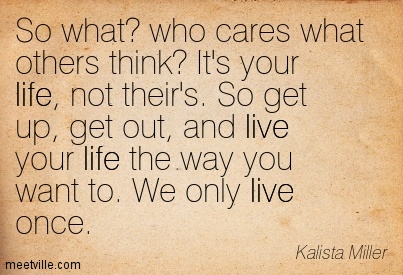
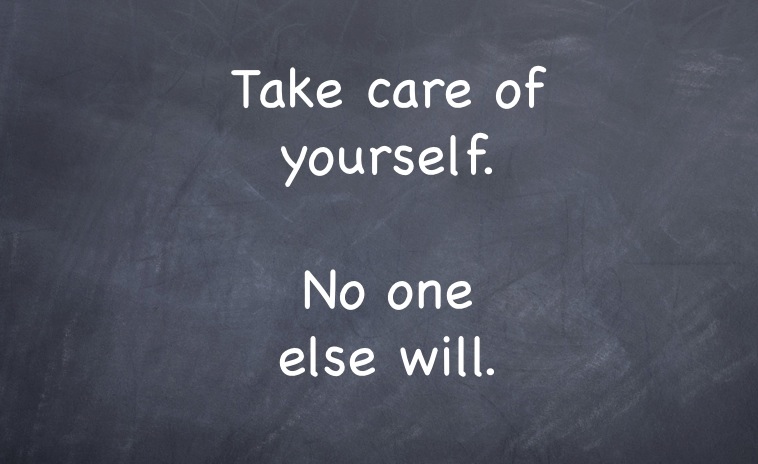
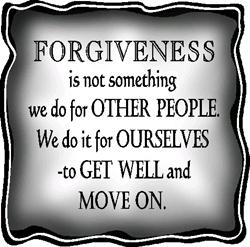
Lately I’ve been reading a lot of life advice on Facebook, and a huge majority of it centers on living for yourself, doing what you want, letting people go who don’t improve your life, forgiving others in order to move on with your own life, and not letting others determine how you live your life. It seems selfishness is the new black. Of course, all of this can be good advice under certain circumstances, but it struck me that taking this literally as a mantra by which to live your life is a good way to be alone for the rest of your life.
There is nothing wrong with being alone if that’s what you choose, and if you really feel like you can’t compromise in the details of your life, then it’s probably a good choice. But if you happen to fall in love, you may need to rethink the whole “living for yourself” thing.
I am a very independent woman, who does not like to be told what to do. I consider myself a feminist. When I divorced my first husband, I reveled in the freedom to do whatever I wanted, make choices without considering what anyone else thought, and being able to completely change my life if I wanted without worrying about how it affected someone else. I was happy, and I vowed never to tie myself down with anyone again. And that is a valid choice. It didn’t make me selfish or shallow. However, “living for yourself” while in a relationship is selfish and shallow and is guaranteed to end in disaster.
Even before I met my current husband, I realized that the secret to a good relationship with anyone is unselfishness. When I fell in love with him, I decided I would always consider his needs above my own because I love him. Of course, if he did not respond to me in the same way, we would have had problems, and eventually, I may have felt differently about him because of it. But he does put me before himself. I believe that when someone you love puts you first, it’s a natural reaction to reciprocate in kind, and when this happens, both people’s needs are met and both people feel loved and valued. In contrast, acting out of self-serving motives and without considering the needs and desires of your mate leads to arguments, resentment, and eventually a break-up. When someone who is supposed to love you, cares more about himself, you feel unloved and unimportant, and then the tendency is to react by protecting yourself, becoming selfish in response. When you protect yourself from someone you love, you lose intimacy, and eventually love.
Sometimes it is necessary to act selfishly. Sometimes it is survival. As I said above, under certain circumstances, taking care of yourself first is good advice, but it is never good advice for making a relationship work. Sometimes you need to leave people behind, let them go, but adopting a permanent attitude of self-protection and complete independence means choosing to be alone or in constant conflict.
As far as forgiving others so that you can move on, I think this is terrible advice. If you merely forgive others for your own sake, you probably haven’t really forgiven them at all. You’ve just moved on, and put whatever they’ve done to you out of your head. Forgiveness should always be a gift to someone out of love. You love who hurt you more than you dislike what they’ve done, and you love them enough to give them a clean slate. You love them enough to be vulnerable to the possibly of them hurting you again in the same way. You don’t hold it against them, expect them to repeat the mistake, or ever bring it up again. If you can’t risk it, don’t forgive them, but let them go and forget about it. You don’t need to forgive them for you; they need it if they want to stay in a relationship with you.
When I fell in love with my husband, I knew I had a choice to make. I knew I had to give up making all the decisions myself; I had to give up the freedom to do whatever I wanted, whenever I wanted. I decided that what I was gaining was better than anything I was giving up, and I’ve been lucky because being unselfish is easy with him. He treats me with such concern, such unselfish love, that I automatically care more about his needs and desires than my own. Sure there are times when I want my way, and it’s not the same as his, but all we have to do is realize how important something is to the other, and then it’s easy to compromise. That is love, and love is unselfish.
So I don’t think I’ll be utilizing any ten-second psychology from Facebook any time soon. These sage-sounding aphorisms make good memes, but not good relationships. There is enough selfishness in the world; I don’t want it in my relationship with my husband or anyone else I care about.—Christina Knowles
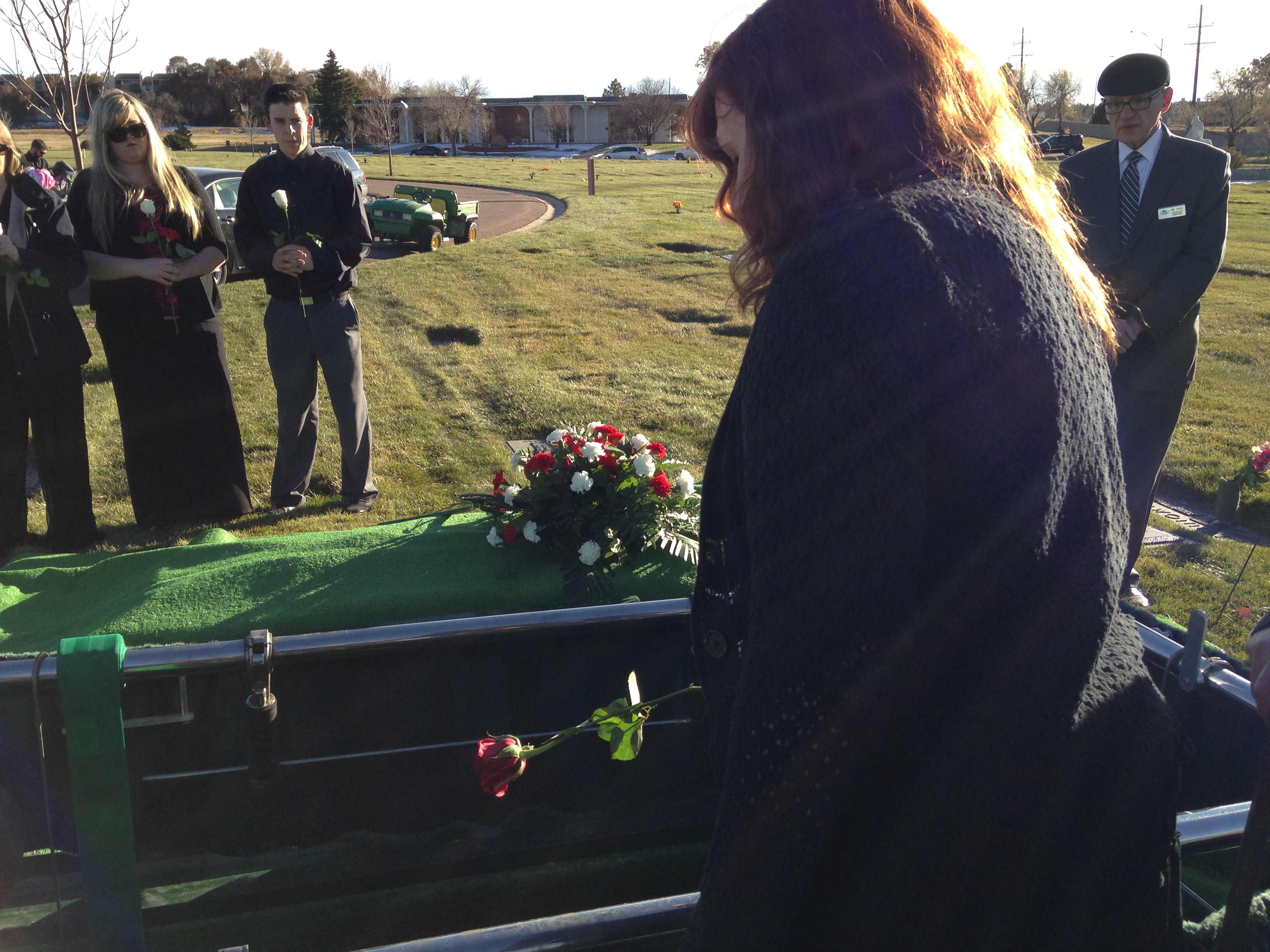
We buried our mother today, my family and I. She was a wonderful mother—loving, strong, kind, principled, and dedicated. I don’t know what I’m going to do without her.
Losing a mother is a unique kind of pain. It’s different than losing a father, a spouse, a sibling, or a child. I’m thankful that I haven’t experienced all these different types of devastating loss, but I just know that it has to be different. I’m not saying it’s worse, just different. In fact, I’m pretty sure losing a child would be the worst.
But losing a mother is the ultimate severing of the umbilical cord. When you lose a mother, you feel lost, insecure. I haven’t depended on my mother for many years, but I guess I knew she was always there if I needed her. Knowing she is gone makes me feel all alone in the world even though I know I am not. I feel a primal need for her. I wake up in the middle of the night calling for my mommy, and I don’t care that I am a grown woman, a grandmother even. I want my mommy.
Losing a mother makes a person grow up instantly. You are no longer the child, and having already lost my father, I am no longer anybody’s child. That’s a strange feeling. I am the mother now. I feel this more now than ever, even though I have been a mother for 26 years. Not being someone’s child is a lonely feeling. It makes me want to pour myself into being a mother to my children. Unfortunately, they’ve grown and left home, and I don’t see them as often as I’d like.
Being without a mother makes me feel different. I am different. My husband warned me that losing parents changes a person, but I didn’t really understand before. Losing a mother leaves a void that nothing else can fill. Really losing anyone you love does, but to whom will I go for advice? Who will be proud of me for absolutely no reason? Who is capable of unconditional love besides a mother?
That’s what’s really missing. It’s knowing I will never be loved unconditionally by anyone again. My husband loves me almost that much, but I know I could make him lose his love for me if I tried. Of course, I won’t. My brothers, my sisters—that’s close. They have loved me through everything so far. My kids—I’d love to think that they love me unconditionally, but even though some part of them may need me or love me no matter what, it’s just not that same I’d-die-for-you kind of love. I know this is true because the only people in the world that I would love under any circumstances are my children, the only ones I could forgive anything.
My pain sounds so selfish. It’s all about what I will no longer have. But isn’t that what grief usually is? We miss the people we lose; we will no longer enjoy their love, their presence. My mother was a wonderful person. She left the world a much better place than she found it. But even if she didn’t, today I would still be an orphan. I suppose her goodness just intensifies it.
So today I said goodbye to my mother and to a love I will never experience again. At 49 years old, I just grew up.—Christina Knowles
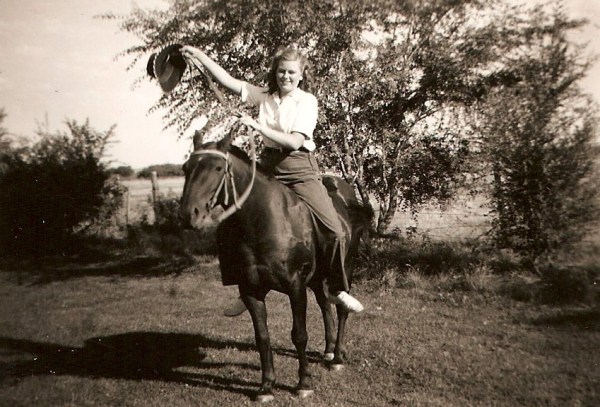
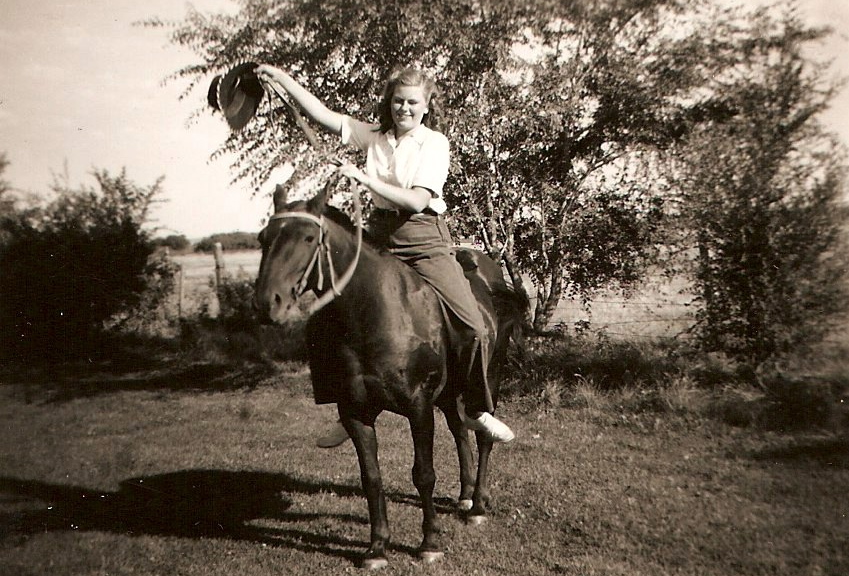
My beautiful mother died last night, so here is a poem I wrote about her precious life. She always told me about a horse that she loved when she was a girl. She didn’t have a saddle, so she would ride bareback.
“Bareback in the Meadow”
Softly in a meadow, brushing back his mane
Bareback rider, farm girl among the golden grain
Growing in her faith, overcome with dreams
A vision of a life, within her eye it gleams
She swears her vows one cold December day
Knowing there’ll be struggles that will come their way
With only hope and true love to keep her warm
With strength and poise, she faces every storm
Raising up a family, five to call her own
Colorful blocks of fabric, lovingly she’s sewn
A close-knit mosaic, a family replete
Heirloom of a mother, a priceless quilt complete
Ever she is working, sacrificing to provide
Surrounded by her progeny, life is simplified
Always she is faithful and takes the time to pray
For cares to be forgotten and blessings for the day
When days are long, but time grows short
Together they support; they quietly exhort
A heritage of devotion she continues to convey
Her lasting legacy, a magnificent array
She says farewell to her love until they meet again
Until that day that she will go and meet her love and when
She’ll live forever with her Lord and pain will go its way
No worries to escape and all burdens fly away
She struggles through the seasons without him at her side
And when it’s time to join him, all before is justified
She leaves her clan with memories of her tender heart
Tears she shed in worry, prayers said when they’re apart
And many more of joyful days, her love they testify
Of birthday get-togethers and stories of days gone by,
Christmas mornings filled with love, baking just for fun
And homemade ice cream on the porch in the summer sun
So, she says farewell to her loves until they meet again
Waiting for the reunion, when she will be with them
She spends her days with her groom and her Lord by her side
And softly in the meadow, her dreams are realized
Among the golden grain, they ride side by side
Bareback in the meadow and across the countryside.—Christina Knowles (2014)
As a teacher, my students often ask me what my favorite book is, and I easily reply, “Winter Garden by Kristen Hannah,” but after that, it gets tough to narrow it down to a list of essentials. I would love to just list ten, but I find it impossible to limit it that much when I begin to write. Here are my absolute must-reads:
Winter Garden by Kristin Hannah: I love this book because it is the most beautiful novel I have ever read. It’s about regrets, misunderstandings, and relationships—relationships between sisters, mothers and daughters, fathers and daughters, and husbands and wives. It is thought-provoking, poignant, and reads like poetry. Within the contemporary story, lives a fairytale, so sweet and tragic that it captured my inner child, and I fell in love with this book. Hannah understands the dynamics of our closest relationships and how the ones we love most, have the most power to wound us, but also have the power to heal. I could read this book a thousand times, and I just might.
Fahrenheit 451 by Ray Bradbury: Ray Bradbury is a genius of the written word. This book is probably my favorite science fiction novel because the dystopian world Bradbury creates is startling real, dark, and symbolic, and yet it is written like poetry, each word carefully crafted with the next; its evocative beauty remains with the reader long after the cover is closed.
Slaughterhouse Five by Kurt Vonnegut: This strange and tragic novel blew my mind. It is weirdly surreal and unique in its delivery of the horrors of war and their effect on the human psyche.
Brave New World by Aldous Huxley: This was my favorite book for many, many years because its dystopian world is not only filled with scientific and sociological predictions (two of my favorite subjects), but it is also filled with Shakespeare (another favorite subject). One of the novel’s main characters constantly quotes Shakespeare, and the book parallels one of my favorite plays, The Tempest. Incredibly deep, insightful, and startlingly accurate in many of its predictions.
The Drawing of the Three by Stephen King: This is my favorite of the Dark Tower series. Stephen King always amazes me, but this novel (and the series) transports me to a surrealistic world filled with danger, magic, and loyalty, an epic quest on the scale of The Lord of the Rings, but modernized and on steroids!
Les Miserables by Victor Hugo: This book is heartbreakingly beautiful, about pain, suffering, mercy, and forgiveness. This book contains the secrets of life.
East of Eden by John Steinbeck: This book was my first experience with real literature. I first read it in middle school, and I was enchanted with the discovery that a novel could be so filled with symbolism, allegory, epiphany, imagery, and the meaning of life. I think this book is quite possibly the reason why I became a literature major, and it began a life-long love of John Steinbeck novels.
The Fault in Our Stars by John Green: This book is not just another angsty teen novel. It is a masterpiece of Existentialism, and like Brave New World, it is filled with allusions to my favorite literary works. This book is intellectual and emotional, and it had me hooked when the main character, Hazel Grace, started quoting from my favorite poem, “The Love Song of J. Alfred Prufrock” by TS Eliot. See my full review at: https://disturbingtheuniverseblog.com/2014/06/06/book-review-the-fault-in-our-stars-by-john-green/
The Complete Poems of TS Eliot: His modernist outlook is deeply cynical, anti-traditional, heartbreakingly poignant, and most of all, lyrically beautiful. My favorite poet. Dare he disturb the universe? Oh yes, please.
A Christmas Carol by Charles Dickens: Not just a Christmas classic, this story is symbolic and meaningful, and in Dickens’ style, blunt in its message of charity to the poor and the necessity of prioritizing in life. It never ceases to amaze me that even the most staunchly anti-Socialist people love this work, even while they continue to hoard their riches and look down upon the poor.
The Pigman by Paul Zindel: I love just about any story concerning a friendship between teenagers and the elderly, but this one is the cream of the crop. I think I love this book so much because I lived this experience when I was young. Two teenagers accidentally befriend an elderly widower when they make a prank phone call to his house one day. They never imagine that he will mean so much to them or change their lives forever.
The Crucible by Arthur Miller: Every time I read this play, I am hanging on every word of John Proctor. Miller creates a protagonist that grows from a selfish, lying adulterer to a heroic, self-sacrificing man of integrity in four dramatic and realistic acts, and manages to make a political statement at the same time. Brilliant.
Walden by Henry David Thoreau: Elegant and Transcendent words of wisdom to live by. Enough said.
Wuthering Heights by Emily Bronte: Haunting, creepy, and beautiful written.
Lord of the Flies by William Golding: Horrifyingly realistic. This book takes a look at the horrifying social behavior of children left to their own devices on an island, which is a microcosm of all of humanity, and it isn’t a pretty sight.
1984 by George Orwell: A quintessential sci-fi novel at its best. Full of dark warnings against Totalitarianism and the importance of words to thought.
The Canterbury Tales by Geoffrey Chaucer: These are moral tales that accurately cover just about every type of personality, virtue, and vice with both humor and severity.
For One More Day by Mitch Albom: This book is a magically transcendent exploration of a mother’s love through a bizarrely surreal visit with the other side. I love all his books, but this one is definitely my favorite.
On Writing by Stephen King: I love everything about this book. It’s not only sage advice given openly from the guru of suspense, but packed with personality and real life stories along with the lessons on writing.
To Kill a Mockingbird by Harper Lee: Lee has wonderful voice, creates characters you won’t be able to forget, and addresses issues of racial prejudice, justice, and moral integrity.
Of Mice and Men by John Steinbeck: I love this tragic tale of friendship, fate, and the harsh realities of life.
The Black Stallion by Walter Farley: I never had a horse, but I could relate to this story of a boy and his horse, their love, and their loyalty because it reminds me of having a wonderful dog. I love books about the love between humans and animals, and this one is one of the best. Full of action and adventure too. I read the whole series.
Strangers by Dean Koontz: Koontz expertly weaves the lives and experiences of several seemingly unrelated characters into one crazy and unexpected plot. You’ll never believe that it could be rationally explained in the end, but it is! My favorite Koontz novel.
Le Morte D’Arthur by Sir Thomas Mallory: The one that started it all. This is considered the definitive King Arthur story. I love the Knight life.
Paradise Lost by John Milton: Milton makes Lucifer shockingly relatable, or maybe it’s just me. I think I’ve said too much.
Don Quixote by Miguel de Cervantes: Chivalry, knights, quests, love, and friendship. I love this tale of knightly adventure.
The Book Thief by Markus Zusak: Dark, poignant, and unique. Death is the narrator, a neutral observer, telling the story of a young German girl who loves to read as things fall apart around her in Nazi Germany.
Rebecca by Daphne DuMaurier: Creepy, gothic, and suspenseful with a scary head housekeeper, Mrs. Danvers, who tries to sabotage the happiness of a young bride. Who can Mrs. DeWinter trust? Certainly not her husband, a widower whose wife, Rebecca, died under suspicious circumstances.
The Island of Dr. Moreau by HG Wells: I love everything by HG Wells, but this one is particularly good. It’s science fiction, bordering on horror, and makes us question all kinds of scientific ethics.
The Complete Works of Sir Arthur Conan Doyle: Observation, logic, and reasoning are paramount to a very flawed, ego-maniacal protagonist, Sherlock Holmes.
Meditations on First Philosophy by Rene Descartes: Mind-blowing philosophical theory, questioning the very essence of reality.
Beyond Good & Evil by Friedrich Nietzche: Brilliant thoughts on mankind, the origin of evil, and the purpose of life.
The Giver by Lois Lowry: A classic dystopian novel, written for children, but with such depth, and done so well, everyone loves it. Many layers of meaning and unforgettable characters.
Bag of Bones by Stephen King: Haunting, mysteriously beautiful, romantic, and creepy. I love this book. Again, don’t judge it by the movie.
Duma Key by Stephen King: I loved this book because it combines three things I find interesting— a haunted house, a stormy ocean setting, and an artist. I couldn’t put this one down.
The Street Lawyer by John Grisham: This book will renew your belief in the goodness of people. It’s quite different from Grisham’s other legal thrillers, but still a page-turner.
The Handmaid’s Tale by Margaret Atwood: This book is hard to read. A difficult look at the oppression of women in a dark sci-fi story in a not-too far-fetched Totalitarian and faux-religious future. Definitely worth a trip to the dark side.
The Angry Woman Suite by Lee Fullbright: Fullbright hooked me on the first page with her intricately woven plot and complex characters. The novel is a combination of historical fiction and mystery, wherein, Fullbright manages to use multiple first person narrators and jumps around in time without losing the reader, connecting all the times and characters seamlessly and hurtling them to the insanely climactic ending. Love this book.
The Kite Runner by Khaled Hosseini: Shocking and powerful, this book will open your eyes to another culture and draw you in. This book touched me in its gripping portrayal of tortured minds, one by guilt, and another by tragedy, cruelty, and betrayal.
Game of Thrones by George RR Martin: Graphic, complicated, shocking, and pure bliss! Martin is a master of complexity in both character and plot. One minute I despise a character, and the next I am masterfully manipulated into sympathizing with him.
Childhood’s End by Arthur C. Clarke: This book about an alien race helping the human race evolve, unbeknownst to them, is magnificent! Clarke explores numerous themes such as history, art, and what gives life meaning, just to name a few.
The Space Between Us by Thrity Umrigar: This book is lovely and poignant from beginning to end. It’s a beautiful and heart-rending look at friendship and love in a world of inequality, addressing the issues of religious difference, poverty, and caste systems in modern Bombay.
A Dog’s Purpose by W. Bruce Cameron: See life through a dog’s eyes. It’s a tear-jerker, but you’ll never look at your dog without imagining what he’s thinking again.
Leaves of Grass by Walt Whitman: Beautiful, poetic, and profound. “Song of Myself” and “O Me! O Life” are some of the most quoted lines of wisdom still today, and it is no wonder. He could be writing about the world right now. Like Walden, these are words to live by.
Symposium by Plato: Wisdom from the ancients. I always love Plato, including The Allegory of the Cave.
Metaphysics by Aristotle: I really like Aristotle’s reasoning about learning through experience and the physical world. He could be a modern-day scientist.
The God Delusion by Richard Dawkins. An intellectual argument on why there is probably no god and how the major religions of the world are flawed. Dawkins breaks down the basics of evolution and punches undeniable holes in theology and philosophy.
The Demon-Haunted World: Science as a Candle in the Dark by Carl Sagan: Sagan convincingly destroys all illusions about the supernatural world in this book. It’s fabulously done, but at the same time, being disillusioned is kind of depressing.
So that’s where I will stop. I could literally continue writing about my favorite books all night, but I won’t put you through that. If you read all the way to the end, I wish I could give you some kind of reward, but why not pick up one of these fabulous books and enjoy? That will be a reward in itself.—Christina Knowles






 Disturbing the Universe
Recent Comments