Author of the suspense novel, The Ezekiel Project and Signs of Life: A Memoir in Poems
Biography
Christina Knowles lives in Salem, Oregon with her musician husband, Randy Knowles, their dog, Walter, and their cat, Pyewacket. Christina also writes novels, short stories, poetry, and screenplays.
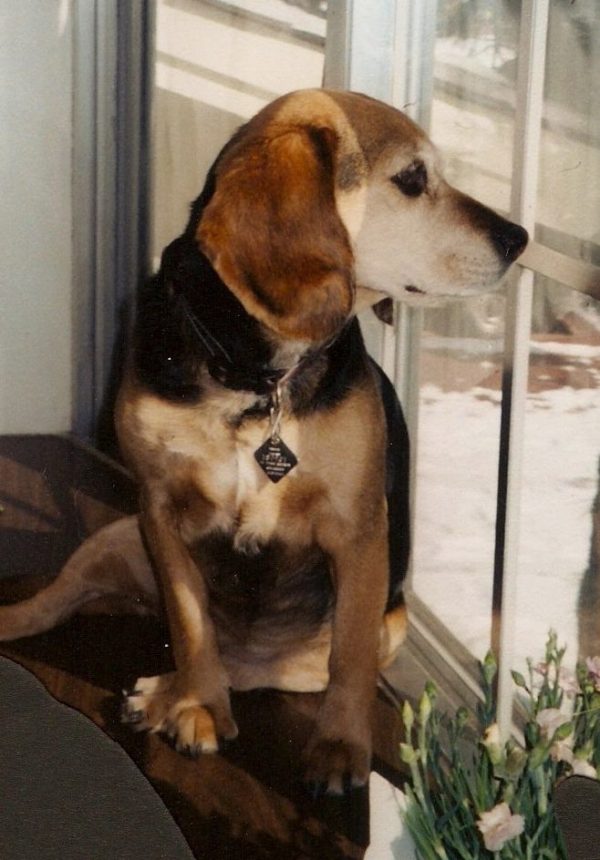
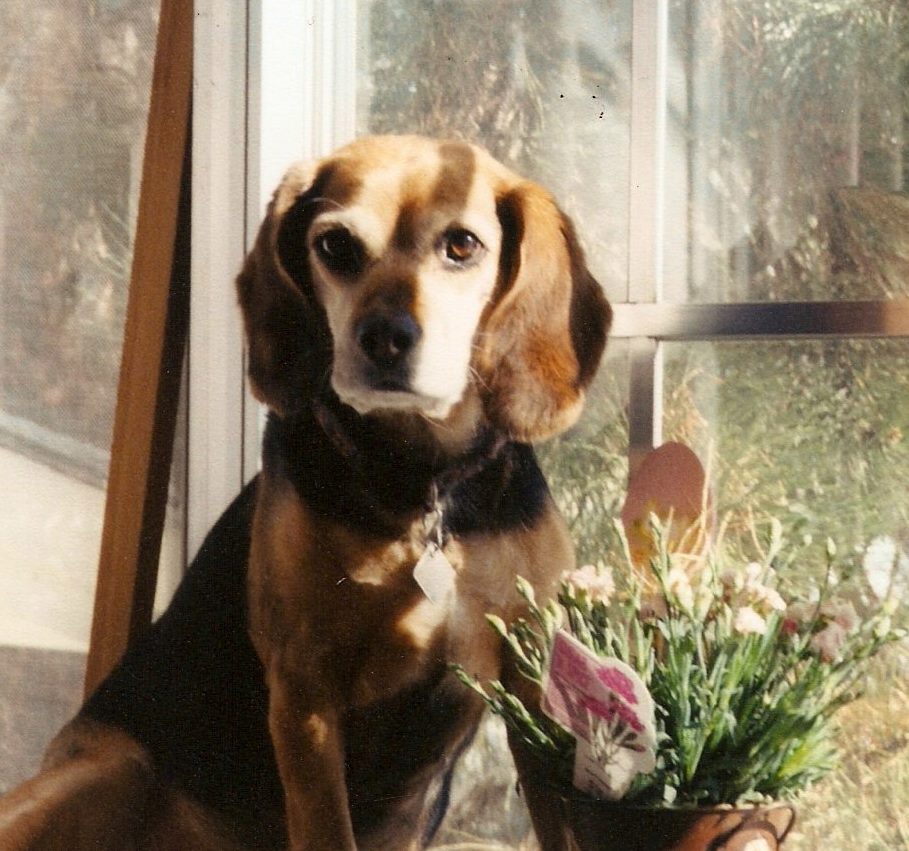
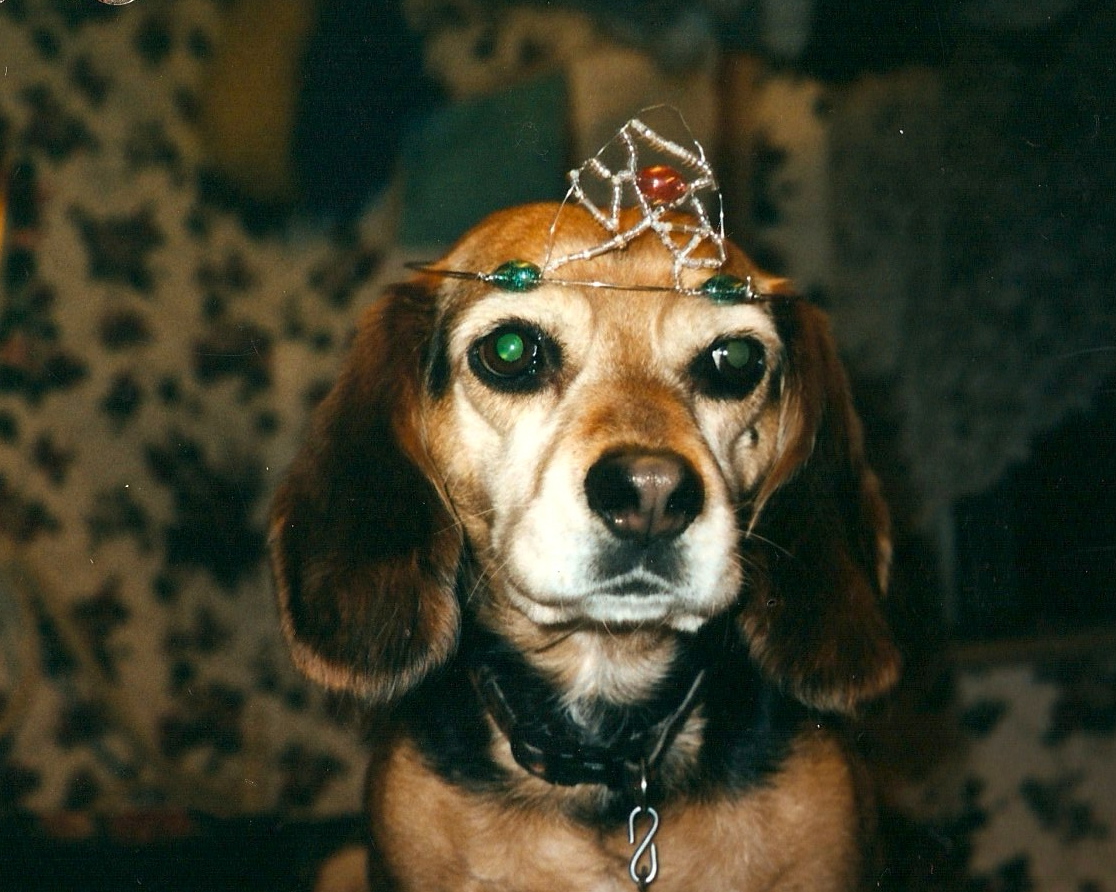
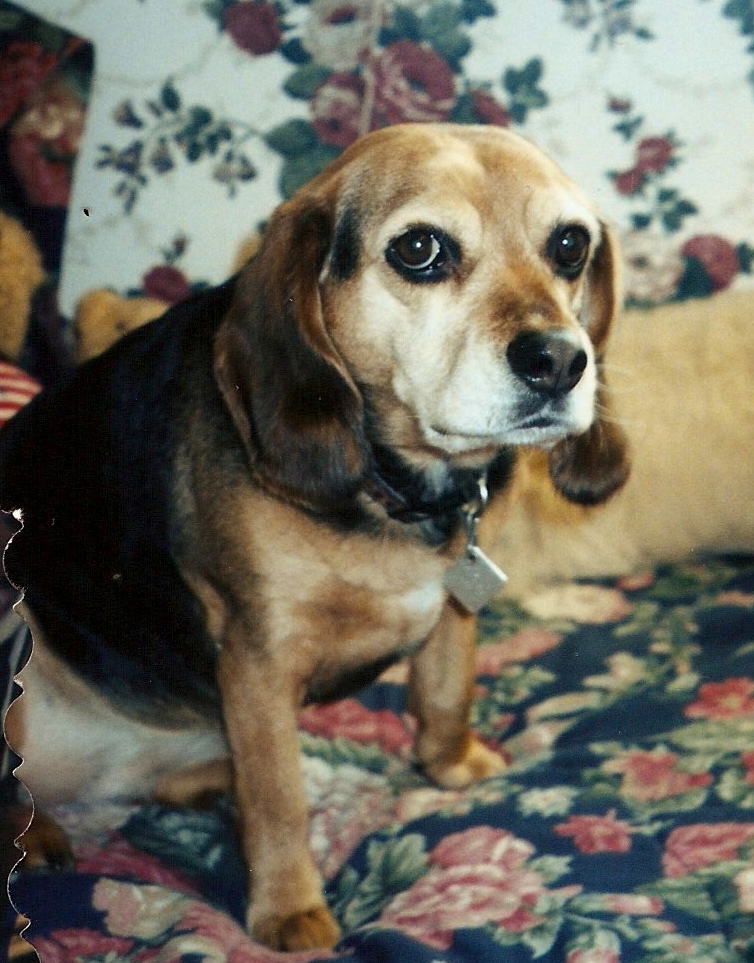
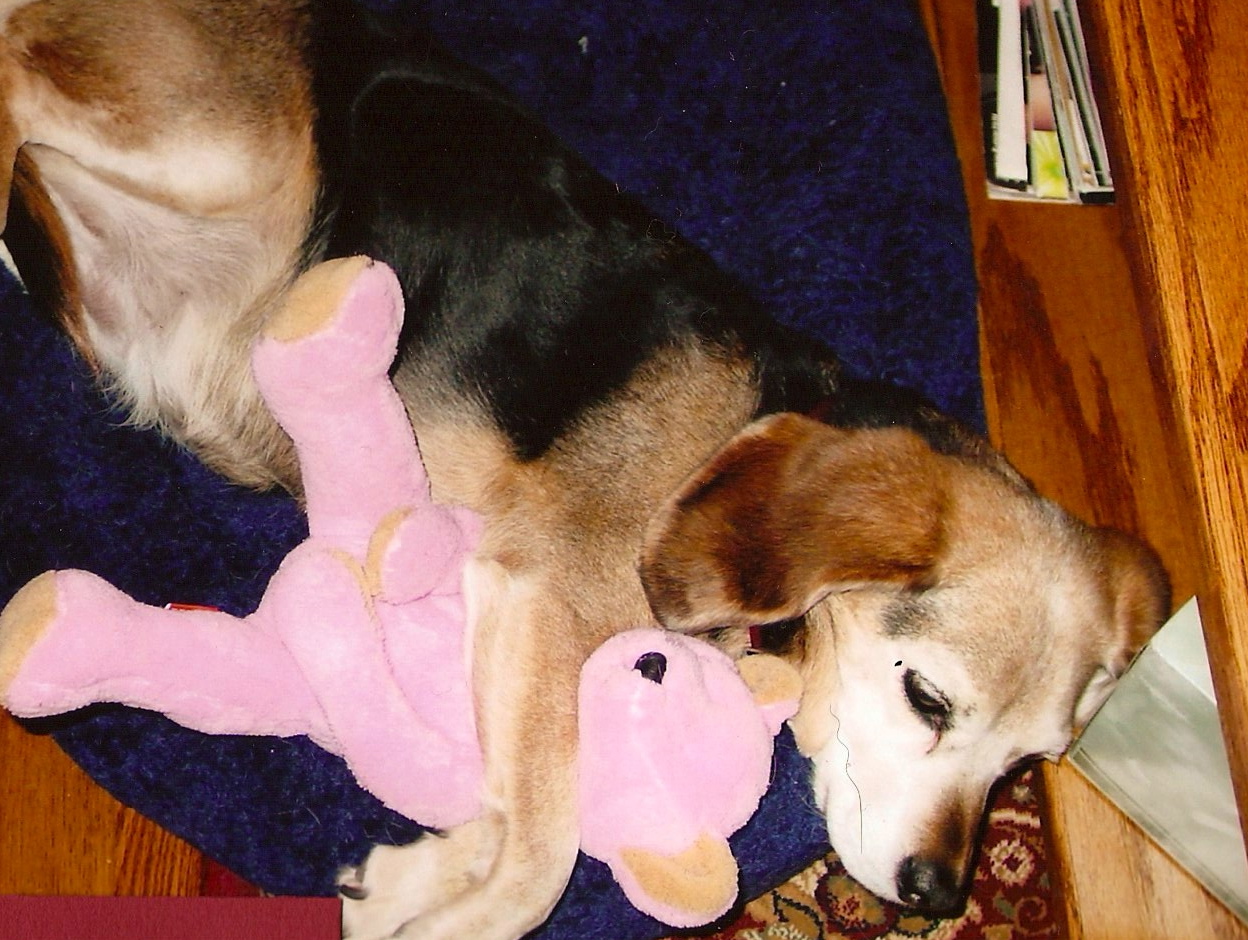
Everyone knows I’m a dog lover, but not many know that I owe a big part of who I am to one special dog. I’ve tried putting these feelings into words so many times and have given up every time, but it is long overdue, so here goes. Mulder Pitman-Knowles passed away in May of 2008 at the age of fifteen, and broke my heart in a way I didn’t know was possible. I put off writing this memoir to honor her because I was afraid, afraid to feel the emotions again, the grief, the gut-wrenching loss. You may, but I hope you don’t, think that that is an over-dramatic reaction to the death of a pet, but Mulder was not a pet. She was my friend, and I loved her as much as any other friend I’ve ever had. I know some people won’t understand what she was to me, but those of you who have had the privilege of loving and being loved by at least one extraordinary animal, will know what I mean.
You see, Mulder unexpectedly changed my life. She saved me, really.
I adopted Mulder in 1994 from the Humane Society, or rather, she adopted me. The week before, I took my kids there to look at the animals, and we saw an adorable little male beagle. He was sweet and friendly, but he was a stray, not owner-surrendered, so I had to put my name on a list and wait five days to see if the owner came for him. When I called to check five days later, they said I could come and pick him up. I was so excited and had already picked out his name, Mulder, after the main character on my favorite TV show, The X-Files. In nervous anticipation, I followed as a staff member led me in to the dog holding area, but she couldn’t find the male beagle. She told me that the one I wanted must have mistakenly been given to someone else. I was terribly disappointed, but just then I saw the most beautiful beagle I had ever seen. The staff member told me she was a female who had been owner-surrendered because she was “un-trainable” and hated cats. The cat part turned out to be true. I didn’t care what her previous family said; I knew this was supposed to be my Mulder. She immediately came to me and laid her head on my bent knee and gazed at me with her huge soulful eyes. It was like we connected instantly. There was an intelligence and wisdom in those eyes, and I knew she was meant for me.
I was a little anxious when I took her home because my ex-husband (current at the time) did not want a dog in the house. We had a golden retriever, Clancy, that he wanted basically for hunting, but he insisted that the dog be kept in a small dog run because Clancy had a thing for digging holes. It broke my heart, and every day I would let him out all day until my ex came home from work, but then one day, a man I hired to paint the house fell in love with Clancy. Every time this painter took a break, he would chase Clancy, then roll in the grass, wrestling him. This went on for a week, and on the last day, I asked the man if he wanted to take Clancy for his own. He had ten acres in the forest, and he was thrilled at the offer. He promised to never lock him up. I cried my eyes out as I said goodbye to my golden retriever that day, but I knew I did the right thing. I couldn’t live long without a dog, and I never wanted to put another dog through what Clancy experienced, so I talked my ex into letting me get a small dog that we could keep in the house. My ex agreed to let Mulder live in the house as long she didn’t do anything wrong-ever; however, he insisted on locking her in a kennel at night or whenever we left the house.
I don’t know why her previous family thought she was un-trainable because Mulder was house-trained within a week; she learned to sit, lie down, and stay in the first week as well. Right away she was “my” dog. She followed me everywhere. We ran three miles every morning, rain or shine; she did whatever I said, but listened to others only when she wanted to. She curled up on my lap every evening, and she knew exactly what she could do when my ex wasn’t around. When he wasn’t home, which was most of the time, she could sleep on the furniture or the bed, and she had free run of the house. As soon as she heard the door open in the evening, and he walked in, she would jump off the couch and take her place on her pillow. He never knew because she was so good. She never chewed up anything that wasn’t hers. She wouldn’t even touch a toy until I told her it was hers to play with.
During those years, Mulder was my solace. My ex-husband was manipulative, controlling, angry, and intolerant. Nothing I did was correct, but Mulder thought everything I did was right. She accepted me with no make-up on, wearing old sweatpants, and she was okay with whatever I wanted to do—going for a run, snuggling on the couch while I read, sitting on my lap watching TV. She was good with my kids too. I remember one year my daughter wanted to make a calendar of Mulder pictures. She dressed Mulder up in a different costume for every season and took pictures of her. Mulder was not happy, but she didn’t complain once.
In 2004 I left my ex-husband and filed for divorce. By this time, I was pretty beat down from seventeen years of being screamed at, seventeen years of being told to change who I was, seventeen years of being controlled like a child, used, humiliated, and devalued. I was tired of walking on eggshells just to make sure he didn’t get upset. He was okay with the kids. I was always the target of his anger. I told him I wanted fifty-fifty custody of the children because I knew he would never give me full custody without a fight, and I couldn’t afford a lawyer. I told him he could have virtually everything we owned if I could just have Mulder. I was so afraid that he would try to keep full custody of the kids or take Mulder away from me just to get back at me. He didn’t want the divorce, but he agreed.
I bought a townhouse with a little yard for Mulder, and we moved in before I even bought any furniture. The custody agreement ended up being one week on, one week off, so every other week, it was just Mulder and I. Mulder was never locked in a kennel again, but had free rein throughout the house and was allowed on all the furniture. It was then, these times alone with Mulder, that she made me realize what kind of life I wanted, the person I wanted to be, and how to live and love the way we are meant to. She loved me unconditionally, she never expected me to be anything other than what I was, she listened to me quietly, she comforted me when I cried, she never judged me, she never screamed at me, or told me to change. She showed me how peaceful and calm a home could be, how to look forward to coming home, how to love without selfish expectations, how to accept people exactly as they are. She healed me and made me strong. She looked up to me and found me worthy. She made me realize I never had to settle for less than unreserved love and acceptance ever again.
When I met my soul-mate, Randy, Mulder’s approval was paramount. Mulder loved Randy instantly, and Randy loved her. Mulder accepted Randy into our home with surprising ease. Because of this, I knew he must be a good person. Randy and I lived there with Mulder for two years, blissfully happy. I remember when Randy first moved in after we married, he asked if he should put up his slippers, so Mulder wouldn’t chew them up. I was so insulted that he would assume she would do that! I told him Mulder never chewed up anything that wasn’t her own personal property.
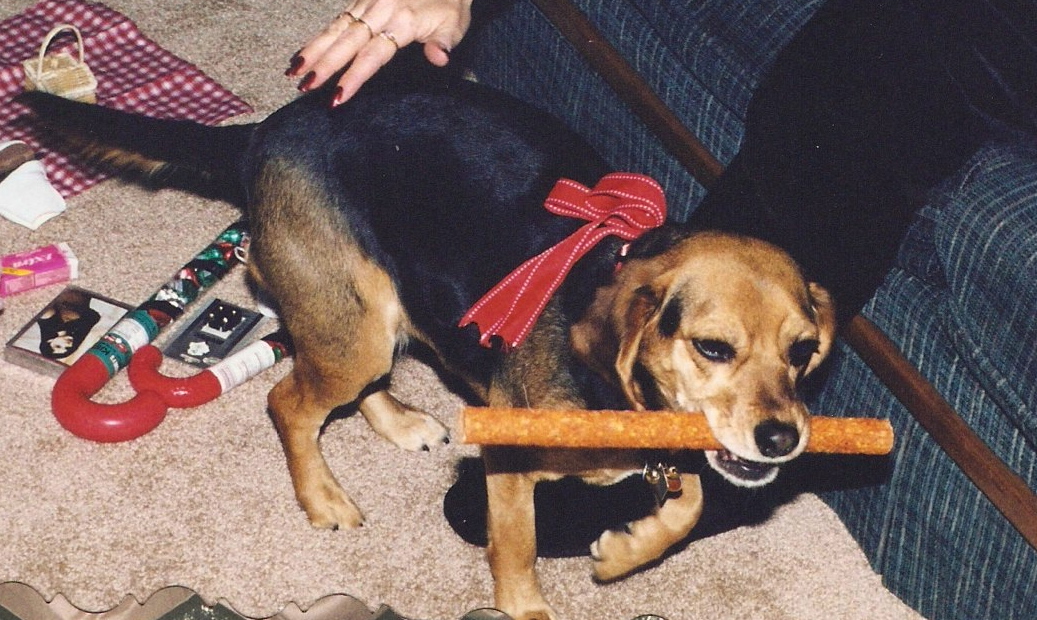
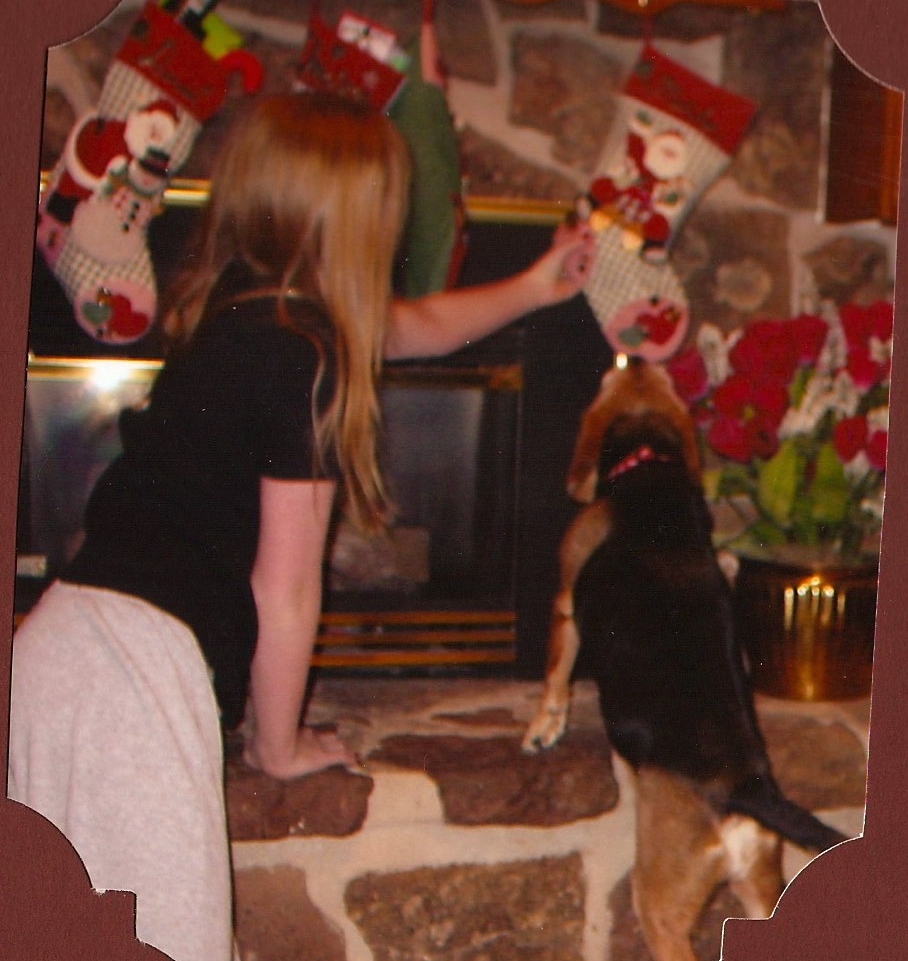
She did get into mischief once in a while though. She was an avid rabbit hunter, and she was fast. More than once, I found her eating her kill, much to my dismay. She also learned how to open the cupboard where we kept her treats. One time she pulled them out and dumped them on the kitchen floor and ate her fill. I came home to the remnants of broken treats on the floor. And Mulder loved Christmas, particularly the stockings. She got excited when we hung them and even knew which one was hers. I’m not making this up. Ask my husband. She would be so excited on Christmas morning when her stocking was full. She’d go straight to it and jump at it. But one year, a week before Christmas, while we were gone, Mulder found her bag of treats and toys in the closet, the ones that were to go in her stocking. She obviously knew they were meant for her because they were dog treats and toys. Anyway, she dragged the whole bag out of the closet and halfway down the stairs when, apparently, guilt overwhelmed her, and she abandoned the entire bag on the stairs and hid in the bedroom. We came home, found the bag on the stairs, contents spilling out, but no Mulder to be seen. I called and called her, and finally she slowly emerged, head hung low, and tail down, completely ashamed of herself. Of course, I just thought it was adorable and wasn’t upset at all, but she so wanted to please me and couldn’t stand disappointing me. She just couldn’t contain her Christmas anticipation. I’m the same way. That is one of my fondest memories of her.
It was because of Mulder that I was ready for someone like Randy in my life, someone kind, easygoing, loving, and honest. So many times I’ve seen people enter into the same type of relationships over and over because they haven’t worked out their issues or figured out what they want, what they need. Mulder taught me I was enough. If I was to let someone into my life, it would be only because they added something, but that I was just fine by myself, and I knew when I fell in love with Randy that, just like with Mulder, I never had to be anyone but me ever again. I would be loved and accepted just the way I was, and I could be that way for someone else in return. There never had to be any yelling, name-calling, any manipulation. No lies and attempts to control, only complete honesty and respect. Mulder showed me I deserved that and how wonderful and peaceful life could be. She taught me how to live again.
That sounds like a lot to learn from a dog, but then Mulder wasn’t just any dog. She was my friend, she loved me, and I loved her. I had loved her before, a lot, but after I left my ex and moved out on my own, we bonded so extensively, probably because of the trauma I had been through, and because she was the only one there for me. I’m glad she was the one there for me. I miss her all the time. I will be forever grateful to her, and I will cherish her memory in my heart always. I love you, Mulder, and thank you.—Christina Knowles
In anticipation of the return of The Walking Dead series on AMC this October, I decided to make my “Necessary for Survival” list, not really for a zombie apocalypse, but just to survive the banality of everyday existence. Keeping in mind Maslow’s Hierarchy of Needs, I decided to put basic needs first, and then move on to higher-self needs.
Food and water
Shelter, including an atmosphere free from danger in which to sleep
Clothing
Method of cleanliness/hygiene
A means of protecting oneself from predators
A method with which to obtain goods and services
Peace
Love/Social interaction
Honesty
Goodness
Intellectual stimulation
Meaningful and creative work
Occasional distracting escapes
Purpose (I mean on a deeper level than #12)
Art (Poetry, Books, Music, Visual Arts, Film)
Universal Truth
Numbers 6 and 16 are the only ones that give me any trouble. Number 6 is an unfortunate by-product of needing 1-5, 13, and 15. I am lucky enough to be gainfully employed, and it is meaningful and creative work, but it does not allow much time for numbers 8, 13, or enough of 15. Number 16 is always elusive.
Again I am reminded of The Walking Dead. I believe this show’s popularity owes its success to more than a great concept and good solid writing and characterization. The show represents our unconscious desire to abandon all but the basic necessities of life—that which is “Necessary for Survival.” Paring things down to the bare bones of living, returning to simplicity is the appeal of the show, I believe, for many people.
How many of us long to quit the daily, mind-numbing servitude to someone else’s dreams? To forget the house payments and credit card bills, forget that remodeling project, dump the textbooks in the trash, never ride another subway again? And I’m not even going to mention the freedom to embrace our own vision of justice as if we lived in the Old West, to handle matters as we see fit without the pesky interference of law enforcement or government agencies. We long to rid ourselves of the stress of modern convenience to which we have become enslaved.
But we are just too practical and too scared to do it. So we fantasize about a world that requires us to do it, where we have nothing to lose, no decision over which to agonize. It’s been forced upon us, but we imagine we are up to the challenge, not grown fat and lazy through civilization. We imagine that we can hold on to our humanity without the stress and complexities of civilization, so we root for those characters on The Walking Dead who refuse to completely lose their compassion, their civility, even while being free to be barbaric. It is today’s Walden. After all, we are not some hippie Transcendentalists. We want to be in control of our own lives, free to live how we want, not answer to anyone, get back to the simple things, but we are too ADHD to retire to a cabin in the woods, unless of course, there are zombies beating on the door. Maybe I should have added conflict to my “Necessary for Survival” list.—Christina Knowles
The soul clings to its impressions
A deeper seed it plants
There are no answers to my questions
Searching for release of its expressions
In adoration the soul will dance
As it clings to its impressions
Powerless and prone to take suggestions
Promised such beauty, it’s entranced
Yet, there are no answers to my questions
Lost in amazement, the processions
Gather at the feet of Romance
The soul clings to its impressions
Diminishing material possessions
Quenching spring, the soul’s desire it grants
Still, there are no answers to my questions
No remedy for our transgressions
No vague emptiness it supplants,
But the soul clings to its impressions,
And there are no answers to my questions.–Christina Knowles
What is truth? “That which is in accordance with fact or reality” (free dictionary.com). The problem with truth is that, just like reality, we don’t really know that we know it. We experience truth just as we do any other experience in life. Experientially. When we know a thing through our sensory input, and it is not contradicted by another one of our senses, we consider it to be true. However, scientists and doctors know that there are conditions, which can cause the senses to completely misinterpret or mistake a thing we are sure we know from experience. For example, certain nerve conditions cause a person to feel pain at a soft touch, or heat when there is none.
Whenever I broach this subject, I always think of Aristotle’s Metaphysics. Aristotelian philosophy on the true nature of a thing is based on a few principles, and this is only a very simplified version of his massive theory: There is the Law of Non-Contradiction, which means that a thing cannot ‘be’ and ‘not be’ at the same time. That makes sense to me. He also posited that there are three types of things: “changeable and perishable,” “changeable and eternal,” and “immutable” (Metaphysics IV, 3-6). But even if we accept that, what about the fact that two people can experience the same event or stimuli and interpret it differently? Obviously, this is due to a number of factors, including but not limited to, the background, previous experiences, mental capacity, personality, beliefs, and possibly even genetics of the people interpreting the information. How then, can anyone know truth if it must be filtered through these varying and uncontrolled factors?
This is the problem with truth. We think we can know truth, but we cannot. Therefore, the meaning of truth becomes that which we think corresponds to reality, as we understand it. —Christina Knowles
Sources
Aristotle’s Metaphysics. Trans. Joe Sachs. 2nd ed. Santa Fe, N.M.: Green Lion, 2002.
In seeking to define my worldview, I have found myself consistently drawn to seemingly oppositional philosophical viewpoints: Existentialism and Transcendentalism. At least they seem juxtaposed in most ways. My definition of Existentialism is the belief that life has no intrinsic meaning; we create the meaning in our own lives. There is no divine. Transcendentalism, on the other hand, is believing the divine is all around us and in us. We are in nature and nature is in us, and through communion with nature, we connect with the divine soul and are one with everything. This connection is the meaning of life.
Why do I bother defining my worldview? Why do I feel the need to label it? I’ve asked myself this question a thousand times. I believe it is because in order to live consciously, deliberately, and according to a personal value standard, which I desire to do, I need to make choices all the time that fall within certain parameters, and to be vigilant in that, they must be defined. Life is short, and to live it fully aware, one cannot blindly stumble through it.
I read extensively and eclectically, and in my reading, I come across wisdom that speaks to me what I recognize as truth. But is that which seems true, truth? Ah, the age old question asked by every ancient philosopher, and Pilate asked this to Jesus, and at some point, every thinking person must ask themselves, “What is truth?” In forming our worldviews, I find that we latch on to bits of wisdom that seem true because we recognize their wisdom according to our already established values, in which we have internalized throughout our lives from various experiences, both internally and externally. I believe we are even born with some of these values.
I have found many things that seem true in Existentialism. I love Existentialism. People say it is pessimistic and depressing. I don’t see it that way at all. I think it is liberating and comforting. Here are some of my favorite Existential aphorisms:
“I saw that my life was a vast glowing empty page and I could do anything I wanted.”—Jack Kerouac
“All that remains is a fate whose outcome alone is fatal. Outside of that single fatality of death, everything, joy or happiness, is liberty. A world remains of which man is the sole master. What bound him was the illusion of another world.” –Albert Camus
“Life begins on the other side of despair.”—Jean-Paul Sarte
“Man is condemned to be free; because once thrown into the world, he is responsible for everything he does.” —Jean-Paul Sarte
“It’s only after you’ve lost everything, that you’re free to do anything.”—Tyler Durden
“Every true faith is infallible. It performs what the believing person hopes to find in it. But it does not offer the least support for the establishing of an objective truth. Here the ways of men divide. If you want to achieve peace of mind and happiness, have faith. If you want to be a disciple of truth, then search.”—Friedrich Nietzsche
“Memento mori—remember death! These are important words. If we kept in mind that we will soon inevitably die, our lives would be completely different. If a person knows that he will die in a half hour, he certainly will not bother doing trivial, stupid, or, especially, bad things during this half hour. Perhaps you have half a century before you die—what makes this any different from a half hour?”—Leo Tolstoy
“We fear death, we shudder at life’s instability, we grieve to see the flowers wilt again and again, and the leaves fall, and in our hearts we know that we, too, are transitory and will soon disappear. When artists create pictures and thinkers search for laws and formulate thoughts, it is in order to salvage something from the great dance of death, to make something last longer than we do.”—Hermann Hesse
“As if the blind rage had washed me clean, rid me of hope; for the first time, in that night alive with signs and stars, I opened myself to the gentle indifference of the world.”—Albert Camus
When I read Existentialist philosophy, I want it to be true. I think it is beautiful and carefree. Unfortunately, I don’t quite buy it.
So I turn to Transcendentalism. After all, I have practiced yoga all my life. Some of my favorite works of literature are Transcendentalist works, and although I see them as contradicting Existentialist views, I see them also as containing profound truths, and one cannot help but be inspired by the idealism. Here are some of my favorite Transcendental pearls:
“To laugh often and much; to win the respect of intelligent people and the affection of children; to earn the appreciation of honest critics and endure the betrayal of false friends; to appreciate beauty; to find the best in others; to leave the world a bit better, whether by a healthy child, a garden patch or a redeemed social condition; to know even one life has breathed easier because you have lived. This is to have succeeded.”—Ralph Waldo Emerson
“I learned this, at least, by my experiment: that if one advances confidently in the direction of his dreams, and endeavors to live the life which he had imagined, he will meet with a success unexpected in common hours.”—Henry David Thoreau
“The mass of men lead lives of quiet desperation. What is called resignation is confirmed desperation.”—Henry David Thoreau
“Rather than love, than money, than fame, give me truth.”—Henry David Thoreau
“So behave that the odor of your actions may enhance the general sweetness of the atmosphere, that when we behold or scent a flower, we may not be reminded how inconsistent your deeds are with it; for all odor is but one form of advertisement of a moral quality, and if fair actions had not been performed, the lily would not smell sweet. The foul slime stands for the sloth and vice of man, the decay of humanity; the fragrant flower that springs from it, for the purity and courage which are immortal.”—Henry David Thoreau
“Wherever a man goes, men will pursue him and paw him with their dirty institutions, and, if they can, constrain him to belong to their desperate oddfellow society.”—Henry David Thoreau
“Many go fishing all their lives without knowing that it is not fish they are after.”—Henry David Thoreau
“Simplicity is the glory of expression.”–Walt Whitman
“Be curious, not judgmental.”—Walt Whitman
“Re-examine all that you have been told… dismiss that which insults your soul.”—Walt Whitman
“I cannot be awake for nothing looks to me as it did before, Or else I am awake for the first time, and all before has been a mean sleep.”—Walt Whitman
“To me, every hour of the day and night is an unspeakably perfect miracle.”–Walt Whitman
“Stop this day and night with me and you shall possess the origin of all poems. You shall possess the good of the earth and sun . . . . there are millions of suns left. You shall no longer take things at second or third hand . . . . nor look through the eyes of the dead . . . . nor feed on the spectres in books. You shall not look through my eyes either, nor take things from me. You shall listen to all sides and filter them from yourself.”
“There was never any more inception than there is now, nor any more youth or age than there is now; and will never be any more perfection than there is now, nor any more heaven or hell than there is now.”–“Song of Myself,” Leaves of Grass, Walt Whitman
“I wanted to live deep and suck out all the marrow of life, to live so sturdily and Spartan-like as to put to rout all that was not life, to cut a broad swath and shave close, to drive life into a corner, and reduce it to its lowest terms, and, if it proved to be mean, whythen to get the whole and genuine meanness of it, and publish its meanness to the world; or if it were sublime, to know it by experience, and be able to give a true account of it in my next excursion. For most men, it appears to me, are in a strange uncertainty about it, whether it is of the devil or of God, and have somewhat hastily concluded that is the chief end of man here to “glorify God and enjoy him forever.”
“An honest man has hardly need to count more than his ten fingers, or in extreme cases he may add his ten toes, and lump the rest. Simplicity, simplicity, simplicity! I say, let your affairs be as two or three, and not a hundred or a thousand; instead of a million count half a dozen, and keep your accounts on your thumbnail.”–Walden, Henry David Thoreau
“Make your own Bible. Select and collect all the words and sentences that in all your readings have been to you like the blast of a trumpet.”― Ralph Waldo Emerson
“The purpose of life is not to be happy. It is to be useful, to be honorable, to be compassionate, to have it make some difference that you have lived and lived well.” ― Ralph Waldo Emerson
“Dare to live the life you have dreamed for yourself. Go forward and make your dreams come true.” ― Ralph Waldo Emerson
“Once you make a decision, the universe conspires to make it happen.” ―Ralph Waldo Emerson
“The only person you are destined to become is the person you decide to be.”― Ralph Waldo Emerson
Obviously, the commonality in these two modes of thinking is the idea that we are the masters of our own destinies; we are the captains of our ships. The only thing holding us back is ourselves. This is the fundamental appeal of these beliefs for me. I love these beautiful ideas; I revel in the wisdom of these two philosophies. The practical advice they give for surviving in a savage world that seems hopeless, gives me hope–Yet, I don’t really believe any of it for a minute. Something deep inside of me says I am not completely in control, I am not the center of my universe, I am not in charge of today, let alone tomorrow. So, I turn to Modernism, Deism, maybe even some Buddhism. The effort to define life’s truths continues. Perhaps I’ll start my own philosophical movement to incorporate bits and pieces of all these things, but that sounds a lot like something an Existential-Transcendentalist would do.—Christina Knowles





















 Disturbing the Universe
Recent Comments