Review: The Storyteller by Jodi Picoult

15753740 The Storyteller by Jodi Picoult hooked me from the beginning. Sage, the grand-daughter of Minka, a Holocaust survivor, befriends an old man in a grief group. Sage is battling guilt of her own when she meets 95 year old Josef, who is dealing with his own demons. When he confesses he was a Nazi war criminal in his previous life, she is torn between helping him die as he requests, or turning him in to the FBI. Her real struggle, of course, is dealing with her own ideas of guilt, forgiveness, and moving on with life. I loved the alternating narration from the different characters, the voices from the past, as well as the interweaving of Minka’s vampire story told by her character, Ania. Coming from the standpoint of an author, I can’t imagine what kind of planning, research, and editing this book required to achieve this flawless final product.

My favorite aspect of this book was the allegory of the vampire story-within-the-story, which attempted to work out the complicated moral issues of Aleks, the vampire, who was evil, not by his own choice, but because of circumstances which paralleled Josef’s life experiences. The almost supernatural way, Minka, recognized these issues when everything in her experience should have closed her off to these nuances of character dilemmas, and how she incorporated them into her story almost unconsciously was a nice touch. However, the suggestion that Aleks could not help his murderous instincts, and relating this to boys who were recruited by the Nazis being conditioned to become killers against their wills, was a disturbing, and I’m not sure fair, comparison.

I also liked how the detailed description of the baking of bread was a metaphor for life, love, and even death. The love Minka’s father exhibited in his careful baking for Minka, how he fed the community, the community’s soul-starvation when he is gone, despite the presence of other food, the actual physical need for bread as sustenance, paralleled with Sage’s own drive to express what is going on in her heart and soul with her baking all serve as a beautiful, and at times subliminal, undercurrent of meaning in the story.

Minka’s narrative section in the novel was difficult to read. It took me a long time to get through it because it was so well-told and intense that I had to take frequent breaks from it. Picoult does, however, handle this narrative with sensitivity, insight, and respect. The plot twists are done smoothly and can be predicted if the reader is paying attention, but are no less satisfying in the end.

All in all, I appreciate the literary value of this novel. It asks important questions such as what creates a monster? Can they be redeemed? Should they be forgiven? Or is that disrespectful to their victims? What is justice? Is it in our hands? How do we move on from tragedy? How do we dispense justice without becoming the monster ourselves? Is everyone both good and evil? This book requires an honest look at these issues, and frankly, may muddy the water more than clarify it, but it accomplishes what great literature should do; it makes you think about it. 5 out of 5 stars.–Christina Knowles

My Brother’s Keeper

As a high school English teacher, I have my students write essays on controversial topics to teach persuasive argument.  It has come to my attention throughout discussions regarding various issues on which they are writing, that many of the next generation of voters are startlingly selfish, uncaring, and downright hostile to the idea of helping others. Of course, it is not true of all of them, but many of them express this hostility openly, and it scares me. Is this a result of the current political climate, in light of such hot-button topics as the Affordable Health Care Act, the increasing deficit, or the bleak outlook of the economic situation in America? Are they simply regurgitating frustrations voiced by discouraged and over-stressed parents?

Apparently, these students do not believe in helping the poor, the elderly, or the disadvantaged in any way. This lack of compassion made me curious as to the cause. It seems to come down to a misguided sense of fair-play.  Kids, in my experience, seem to be concerned with fairness and justice; however, their ideas of fairness too often only include what is fair for them, not others, and only if the fair treatment is in their favor. In other words, they are not interested in getting what they deserve unless it is good.

Increasingly, I’ve seen a general attitude in America that has gone from the Individualism, which has always been a trademark of our society, to a worldview that states, “What’s mine is mine, no one deserves to share in anything that I have earned, regardless of help I have received to obtain it, and if you are poor, you deserve it because you are not ambitious enough to get what you need for yourself.” Oddly enough, most of these same students receive cars, smart phones, iPads, expensive wardrobes, and countless other luxuries from their parents without accepting any responsibilities, such as turning in homework, keeping a decent G.P.A., or treating others with respect. I have noticed that the students who work for their own things and receive less help from their parents have a similar disdain for anyone who needs help, as they see themselves as being able to provide for themselves already.

Discussion after discussion of these issues has led me to believe that it all comes down to a worldview of selfishness. These students believe that 1) the primary purpose for living and the highest good is to be happy, 2) they have no responsibility to anyone other than themselves or their families, and 3) the dignity, quality of life, or happiness of others is irrelevant to them. This shockingly cold and compassionless trend is quite disturbing to me. Call me crazy, but I think we are responsible for each other, and as unpopular as it may be to say, nobody makes it on their own. Sure, people vary in ability and ambition, and the choices we make, and the fortitude with which we approach the challenges in life, make a decisive impact on the outcomes we achieve, but we still had some help or advantage, which we owe to others along the way.

I do understand the sentiment of most Americans who think that things should be fair, and that there is something inherently right about those who work the hardest enjoying the results of that labor. However, this basic notion of justice has taken on an insidious life of its own that now resembles something more akin to radical Ayn Rand Individualism. When did Americans get so hateful? When did all human compassion disappear into extreme selfishness that is actually heralded as being patriotically American? I was raised to believe that we were a compassionate, humanitarian nation, who stood up for the underdog and welcomed the downtrodden and abused into a better life. Everywhere people are accusing others of expecting entitlements, yet they expect their own entitlements. Are we not entitled to certain basic things just by virtue of being born? We absolutely treat our children as if they are.

I believe all people are entitled to dignity, food, shelter, kindness, compassion, and medical treatment simply because they were born. They should be required to work in return for these things unless they are incapable. If they cannot, then they should be helped to learn how to acquire these basic necessities for themselves. If we can, we are responsible for helping them. At the very least, we are responsible for making sure there is a fair and reasonable path to these necessities. Why? Because they are our brothers and sisters, because they are God’s creation, because it is inhumane not to, because helping them is the best thing we can do for ourselves, our children, our country, the people we help, and for God.

Let me interrupt myself to attempt to dispel a myth. I believe America is the “Land of Opportunity,” but not equal opportunity. Anyone who believes that everyone has the same shot at success as anyone else, probably hasn’t looked at the situation of inner city kids. Do they have the same opportunity to attend a good college when their neighborhood school can’t keep a qualified teacher for more than a few months? When their K-12 education doesn’t even remotely resemble that of even the public school in the more affluent neighborhoods? Sure, there are scholarships and grants available, but will they qualify if this is where they got their education? Even if they were able to go, would they have the academic, social, and professional skills necessary to succeed? Of course, there are always the rare exceptions who manage to defeat the odds, not despite them, but because of the tenacity being underprivileged inspired in them. Unfortunately, this is not the norm. I’m tired of an America that worships the successful corporate executive, who inherited a business or the money to start it, had his parents pay for his Harvard education, which he was only allowed to attend because his grandfather paid for the new wing, treats his employees like commodities, puts profit above all else, moves his company to China to make even more billions of dollars, not because his business is failing, but because it is never enough. But we blame taxes for de-incentivizing him to hire Americans. No, I’m sorry; he’s just greedy. The love of money is supposed to be the root of all evil, but in America, it is cause for hero-worship and emulation.

Don’t get me wrong. I don’t think it’s fair that I have to go to work all day when I’d rather be doing something else, while someone else refuses to work and lives off of the system. Call me idealistic or naïve, but I don’t think it’s that simple. I think almost everyone would rather take care of themselves and have a sense of pride in their accomplishments if they had the skills they needed to do it. These might be technical, academic, social, emotional, medical, or psychological skills that they lack.

“Teach a man to fish,” they say, “and he will eat forever.” But do we teach him to fish? Or do we just tell him to go fish? This past week I was listening to a Christian radio talk show, and a representative of the Denver Rescue Mission was being interviewed. I didn’t catch his name, but in this interview, one of the employees, a former refugee from the Congo, described how he now heads up the branch of the mission that mentors refugees and helps them to get established in their new country. He explained that when political or religious refugees come to this country, they are given a small amount of money and pretty much are on their own to figure out what to do. They often do not speak English, do not understand our business system, housing system, they may not know how to get a bank account, fill out an application, or anything that they need to do to survive. When one of these refugees comes into the mission, they get a mentor to show them how things work in America, help them to learn English, and they provide them with long-term help in getting established here.  Don’t they deserve this basic help just on the merit of being a fellow human being in need? Many people think not.

Another service the Denver Rescue Mission provides is for people who are trapped in the “cycle of poverty.” They have one to two year programs where a person can focus on working on self-improvement without having to worry about paying rent or buying food. They are able to train for jobs, work on emotional issues, or whatever is keeping them trapped in poverty, so that when they are done with the program, they can be self-sufficient. It’s charities like this one, and other para-church organizations and secular charities who make a real difference in people’s lives and in our communities.

What scares me is that this trend among the youth toward self-absorption and disdain for helping others signifies a bleak future for this type of humanitarianism. Additionally, what kind of harsh and unkind world will we be living in if we allow this trend to continue? We can and should give what we can to these types of organizations, but perhaps the most important thing we can do for others is to teach our children to care about their fellow man again. Teach empathy, compassion, and kindness, and put less emphasis on getting a good paying job and a stock portfolio. Let them know that choosing a profession that helps people and makes the world a kinder place is even more admirable and worthy of praise than a six-figure income and five thousand square foot house. Teach them that if the world is going to be a place worth living in, then we must be our brother’s keeper. –Christina Knowles

“The Denver Rescue Mission is the oldest, full-service Christian charity in the Rocky Mountain region. Thriving today as non-denominational organization; no one is denied services because of gender, race, color, creed, national origin, religion, age, handicap, political affiliation, sex, sexual orientation, or marital, parental or military status.”

How can you help? Visit The Denver Rescue Mission online: http://www.denverrescuemission.org

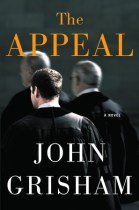
Review: The Appeal by John Grisham (Warning: Spoilers)


I w1248179as very disappointed in this book. I love John Grisham, but I did not like this book at all. It was nothing more than a political statement, which would have been far better received had he just written it in essay form.

The novel explores the seedy underbelly of Supreme Court judicial elections and, of course, corporate greed. A large, conscious-less organization irresponsibly, and downright villainously, destroys the water supply of a small town, resulting in numerous cases of cancer and deaths of innocent residents. When the lower courts stick it, deservedly so, to the corporation, they pick a suitably naive candidate to run for Supreme Court justice and buy the election to insure the judgement is overturned.

This all sounds typically Grisham, and it usually results in an action-packed legal thriller. However, there is no action, no thrills, no heroic defeating of the bad guys, just boredom. Grisham reduced this plot to nothing but a rant against the corporate elite and their ability to control the political arena, and do whatever they want. And I agree with everything Grisham had to say, but I still couldn’t stand his blatant proselytizing.

The book ended horribly, just to further emphasize his point. It was very disappointing. I am really anticipating “Sycamore Row,” the sequel to ” A Time to Kill,” in hopes of restoring my faith in Grisham’s ability to hook me on the first page and hold me captive until his normally satisfying and righteous endings, unlike “The Appeal,” which left me confused and frustrated, wondering if the last chapter had somehow been left out of my copy. 2 out of 5 stars.

HOW DID SOMEONE LIKE ME COME FROM SOMEONE LIKE HER?

487621_10200758992491296_159329911_n

I love my mom SO much it hurts.  Her name is Nora, and she is in a nursing home by herself since my father, the love of her life, Harold, passed away last April. Before he died, they lived in there together. The staff of the nursing home thought they were so cute because they had been married 61 years and looked out for each other in every way. When he passed away, no one thought my mother would hang on much longer. Especially since the doctors told us she had only about three months to live over a year ago.

Last night I went to visit her. I try to go twice a week, but I confess, sometimes I only make it once a week.  I justify it because I’m busy with a full-time job as a teacher and a part-time job as a writer. I leave work late, work long into the evening, and work on weekends. She has visitors everyday because I have a big family who all visit regularly. But that’s no excuse. She deserves better. She never complains when she hasn’t seen me in a week. Instead she tells me how proud she is of me and how she loves me so much.

As I said, last night I went to see her. Suddenly she teared up and told me she was worried about the staff of the home, the nurses, the CNAs, the janitors. My mom has always been a very religious person, a Christian. My brothers and sisters and I were raised in the Baptist church, and my mom took it seriously. I, on the other hand, have always struggled with faith and had trouble believing the bible. I always hid this from my mom because I wouldn’t hurt her or worry her for the world. And she does worry–because she cares so much. She was crying over her worry that all the CNAs, nurses, and other staff might not be saved. She told me she asks everyone if they know Jesus and if they have given their lives to him. Sometimes they say yes, and other times they talk to her in depth about what they do believe. She prays for them, she cries for them. She tells them that Jesus died for them and that he loves them. This is typical of my mom because she always thinks of everyone else’s needs before her own. My mom told me that she believes that the only reason God has not taken her home to be with her beloved Harold is because she is supposed to tell the people in the home about Jesus. This is the first time my mom mentioned to me wanting to go to be with my dad. She is always cheerful and sweet, kind to the staff and to everyone. She doesn’t complain, so much so that the staff says they don’t even know when she is having a medical issue until she is really in pain because she doesn’t say anything.

She isn’t concerned for them out of any sense of superiority or condemnation. She cares. She loves them. She hurts for them. She tries to make their lives easier. She once told me that they have a terrible job, cleaning up accidents, bathing and dressing the residents, lifting them out of bed, helping them on and off the toilet. She said she wants to make their lives easier and happier by always saying thank you and being nice, polite, and not complaining. Personally, I think they are lucky to take care of her.

No matter what your personal beliefs are about Christianity and people who “witness,” sharing their views with others who may not want to hear them, you have to give her credit for her love. My mom loves them, regardless of their beliefs, with a true and sincere love. She is in this nursing home, crying for people, for some who are not always as nice and gentle as they could be, who are not always kind or helpful. This is her amazing gift, her soft heart, her unselfish love for others. She is an amazing example of love to me. She is true Christianity. She is being Jesus to the world. When I look at her, I am in awe of her. Then I ask myself how someone like me came from someone like her.–Christina Knowles

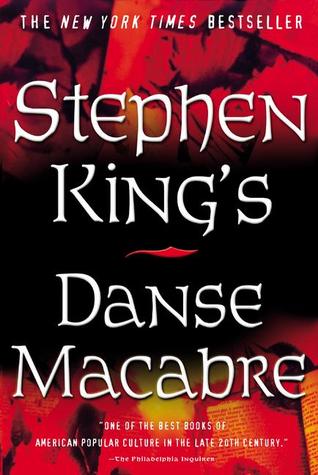
Review: Danse Macabre by Stephen King

11563

I loved reading this book again after so many years. I did not realize how much of his analyses I have stolen for use in my classes I teach. I have learned so much about not only literature from Stephen King, but about writing as well. What I would have given to be sitting in one of those few classes he taught. But that is what this book is-it is sitting in a Stephen King lecture on the horror/science fiction/fantasy genres. It may even be a film class as well. His insight into the socio-political messages in these works, and his relating it to the current social situation of the times add so much more depth to understanding this genre.

I did, however, find myself disappointed that this book had not been updated in more than just the foreword though. It seemed very dated and, of course, did not include analyses of more modern works. I can certainly understand why King only added the foreword, rather than re-writing the whole book. That would have been an undertaking. My only other complaint about this novel, and the reason it did not receive a 5-star rating, is that King is quite repetitive throughout the novel. It seemed like he belabored his points on many occasions. I think this book could have been much shorter, even with King’s tangents and asides (which I love by the way). All in all, it is a grade read and even an education. Four out of five stars.

C.S. Lewis on Socialism

Recently, upon sharing that I had lost my faith in God, and even the belief in God, several people suggested that I read Mere Christianity by CS Lewis. Although I do not find his rhetorical argument for the existence of God sound, I found his arguments about free will intriguing and definitely his critique of the modern Christian.  I know when I was a Christian, this is how I interpreted the ideas of social behavior in the New Testament. It is very curious, then, as CS Lewis is admired by many modern Christians, and this very book recommended by them, that they choose to ignore this part of his argument as well as this part of the New Testament.  Socialism is the great evil according to many Christians. Capitalism and financial success are literally worshipped in this society, and by none more so than Christians. From CS Lewis’ Mere Christianity:  

“The New Testament, without going into details, gives us a pretty clear hint of what a fully Christian society would be like . . .a Christian society would be what we now call Leftist . . .If there were such a society in existence and you or I visited it, I think we should come away with a curious impression.  We should feel that its economic life was very socialistic and, in that sense, ‘advanced,’ but that its family life and its code of manners were rather old fashioned. . .That is just what one would expect if Christianity is the total plan for the human machine.  We have all departed from that total plan in different ways, and each of us wants to make out those bits and pieces and leave the rest.  That is why we do not get much further; and that is why people who are fighting for quite opposite things can both say they are fighting for Christianity.

Now another point.  There is one bit of advice given to us by the ancient heathen Greeks, and by the Jews in the Old Testament, and by the great Christian teachers of the Middle Ages, which the modern economic system has completely disobeyed.  All these people told us not to lend money at interest: and lending money at interest—what we call investment—is the basis of our whole system” (Lewis, pp. 65-66).

To Elucidate Further on the Feeling of Awe in Beauty

A while back, on another page, I quoted CEM Joad (philosopher) on the inability of science to account for the appreciation of beauty.  By appreciation of beauty, I mean specifically, the awe or wonder beauty inspires, which as far as I can work it out in my mind, has no specific purpose in evolution.  I do not attempt to discredit evolution in general, but it occurs to me that it might not be all that explains us.  Joad makes some good points in this regard, which actually led me to further explore these ideas in the ancient writings of Plato, which in my opinion, further supports this conclusion. I should not say conclusion, exactly, in that these are just beginnings of ideas in me so far. Although I have read Plato before, I did not read it with the same interest or thought as I do now.  Because this book, The Recovery of Belief, is rare and hard to find, I would like to quote directly from Joad, who illustrates this feeling more than I am able.

On the three Values of Truth, Goodness, and Beauty:

“They include the experience of a sunset or of a great view from a mountaintop; they include, also, some great act of heroism or self-sacrifice, and they are illustrated by a life which is devoted to the disinterested pursuit of Truth.

Of these experiences, four characteristics may be predicated. First, they are not merely contingent but convey a sense of their necessity; we realize, in fact, that they could not be other than they are, the universe being what it is.

Secondly, they are not arbitrary but are felt to be significant, significant of something beyond themselves. We feel that the reason why they could not be other than they are is that they reveal something of the nature of the universe. . . Now these experiences, when we have them are strangely moving.

Thirdly, they bring with them a sense of release, release from the needs and desires, the wants and cravings, the driving impulses of daily life. . .Wishing, fearing, craving, hoping, and willing, we may never, except in the rare moments of aesthetic enjoyment or the secure possession of truth, be at rest. We must be forever doing and stirring, meddling, changing, and improving.  But in the appreciation of pictures, of great music or of nature . . . we get a momentary and fleeting glimpse of the nature of that, the full knowledge of which may be conceived as constituting at least in part our true end. For that moment, and for so long as the glimpse persists, we realize in anticipation and almost, as it were, illicitly, the nature of the end. We are, if I may so put it, for the moment there, just as a traveler may obtain a fleeting glimpse of a distant country from a height passed on the way, and cease for a space from his journey to enjoy the view. And since we are for the moment there, we experience, while the moment lasts, that sense of liberation from the drive of life, which has been noted as one of the special characteristics of aesthetic experience. We, who are part and parcel of the evolutionary stream, are permitted for a moment to be withdrawn from the thrust and play of impulse and desire. We feel neither need nor want and, losing ourselves in the contemplation of a reality which is other than ourselves, become for the moment selfless. When we experience those significant combinations of forms or sounds to which we give the name of beautiful in art, our contemplation is, in a word, will-less in its character.

But, fourthly. . .Beauty often takes us by surprise, whether it comes to us as a sudden view of a landscape, as a harmony of shape and line, or, it may be, as music accidentally heard from an open window in the street.  Nor is the reason far to seek.  Aesthetic appreciation is unconditioned by considerations of time and space and, while it lasts, lifts us out of the arena of moral struggle and conflict in which our daily lives are passed. For this reason we are not allowed to indulge it overmuch. And so, before we are even fully assured that the vision of beauty is ours, we are caught up and thrust back into the whirlpool of want and need, of striving, loving, and fearing which is our day-to-day experience as individuals.  This no doubt is the reason for the fleeting and ephemeral nature of even the most lasting aesthetic experience; to this it owes its unsatisfactory and tantalizing character. . . The soul is at once gladdened and disappointed. The veil is lifted so quickly that we have scarcely time to know that it has gone before it has fallen again. But during the moment of lifting we get a vision of a something behind and beyond which passes, before it is clearly seen, and which in passing leaves behind a feeling of indefinable longing and regret. . .

And strangely, the longing and regret are for what is somehow familiar. There is an element of nostalgia in aesthetic experience which finds expression in philosophies of pre-existence from Plato’s theory of Reminiscence onwards. . .

These characteristics of our highest experiences, characteristics which I have tried to convey in terms of aesthetic experience, though they are by no means confined to this, are, I believe, most plausibly to be explained on the assumption that in them we obtain a fleeting glimpse,a foretaste, as it were, of the nature of that reality which is God.” –CEM Joad.

While I am sure that that there will be many who have thought of reasons to attribute these experiences to Natural Selection (I, too, have entertained some theories), this theory resonates with me, and I intend to think on it at length.

Review: The Shining by Stephen King

The ShiningI have to re-read this book every so often because I forget how very amazing it is. I, for some disturbing reason, tend to blend the absolutely hideous rendering of Stanley Kubrick’s vision of The Shining and Jack Nicholson’s dreadful, over-the-top, and unsympathetic interpretation of Jack Torrance with the much better TV mini-series version with Stephen Weber as Jack. I think I’ve seen them too many times. However, reading Stephen King’s original novel manages to erase these images, albeit temporarily. His descriptions are that good. I get a completely different picture of Danny, Jack, Wendy, and Hallorann.

This book amazes me so much because, not only is it beautifully written, chocked full of imagery, figurative language, and symbolism, but it is done subtlety, never once trying too hard. The characterization is done with such sleight-of-hand intonation, dialects, and attitudes that I don’t even have to try and imagine them. They are real.

The best thing about this book, however, is King’s ability to parallel the personality changes one experiences in the descent into alcoholism with the slow takeover of the hotel’s malevolent presences. At times, it is not clear which is worse, living with a severe alcoholic or these haunting spirits. King manages to manipulate you into fearing and despising Jack one moment and then into sympathetic compassion the next, something completely lacking in Kubrick’s version, sadly, because this gives the novel its depth and literary value.

This is definitely one of Stephen King’s best! Five out of five stars!–Christina Knowles

Read my review of Doctor Sleep.

The Island of Dr. Moreau by HG Wells

In this exciting and creepy classic, HG Wells asks us to look at ourselves and reevaluate what it means to be human and what is truly primitive. He suggests we are not separate from the natural world, and that deep inside we are still primitive, no matter how many cities we build or the advances we make. If we abandon our arbitrary morals and “law,” we will surely sink into our animalistic nature once again. In addition to these important themes, this book is just a great story and a fun read. Four out of five stars.

The Man in the High Castle by Phillip K. Dick

216363I really enjoyed this book. This is an alternate history science fiction novel that contains a story within a story. This story’s setting and premise is that Japan and Germany won WWII, and each controls a part of the former USA. “The Man in The High Castle” wrote a dangerously controversial book which is an alternate history where America and England won WWII. Various characters are all interwoven into the story and give their opinions on this book and what they think would have happened. The interesting thing is that the high castle author tells a story different from our reality.

Another common theme in the book is the use of the I Ching to foretell the future and guide the characters in the story. It is widely used by the characters, used by the high castle author to write the story within the story, and used by Dick himself to write this book. Mind-warping.

I was impressed how Dick tied all the characters together, showed themes as diverse as racism, cultural differences, war, and nationalism all the way to finding our own inner peace, spirituality, and integrity despite expectations and survival instincts.

However, I gave it three stars because I really disliked the anti-climactic ending, the unclear meaning of Julianna’s (one of the main characters who had the last scene in the novel) final words, the lack of resolution regarding two characters who I was very interested in, Frank Frink and Robert Childon. I want to know what happened to them! I do love how Tagomi’s last scene was played, however.

This is definitely one you need to read twice. I may give it four stars next time! P.S. Ignore the choppy sentence structure and lack of article adjectives in his writing! You get used to it, and adds something to the tension of the novel, I believe. Three out of five stars.

Blog at WordPress.com.

Up ↑