“Yes, whenever my worldview shifts and things become clear and my life changes as a result, I consider my mind bent. “
Source: 10 Mind-Bending Epiphanies That Changed My Life by Christina Knowles
The musings of author Christina Knowles
“Yes, whenever my worldview shifts and things become clear and my life changes as a result, I consider my mind bent. “
Source: 10 Mind-Bending Epiphanies That Changed My Life by Christina Knowles


For the past few years, I’ve been struggling to find balance and contentment in the midst of my busy life of responsibilities. A couple of years ago, I wrote a blog describing my struggle called, Balance, Yeah Right, basically feeling lost regarding making significant changes. Well, since then, much to my surprise, I’ve actually made real progress. I feel happier and more relaxed than I have in years. No, I did not quit my jobs—any of them. I still teach college, high school; I still write my blog—in fact, now I have two. I’m publishing a collection of poetry, working on a short story collection, and writing another suspense thriller. So, what’s different? How can you takes steps to a happier, more balanced life too? Well, here’s what I did. Maybe it will work for you too.
We hired a trustworthy, bonded maid service to come when we aren’t home, we cut our grocery shopping down to every other week, and I gave up cooking all single ingredient homemade organic meals. We still eat healthy foods, but now I buy a few easy-to-prepare organic foods like premade sauces and deli-made meals or something similar. Not cooking everything from scratch has given me my life back! We had to compromise a little, but we still make sure we are eating healthy, natural foods, and I still make the homemade stuff, but only when I feel like it. What’s more is I actually enjoy cooking again!
I had to relax and be okay with the fact that my house may not be cleaned exactly as I would do it, but they still do a great job. Only shopping every two weeks has saved us money as well, so it kind of balances out, and that’s what it’s all about.
So, this is what I’ve done and what is working for me. I’m no life coach, but I know what it is like to struggle with stress, busyness, and discontentment, and I also know what it feels like to be free, joyful, to love my job and home life, and to finally feel relaxed. I hope you find this same contentment in your life. Peace. –Christina Knowles
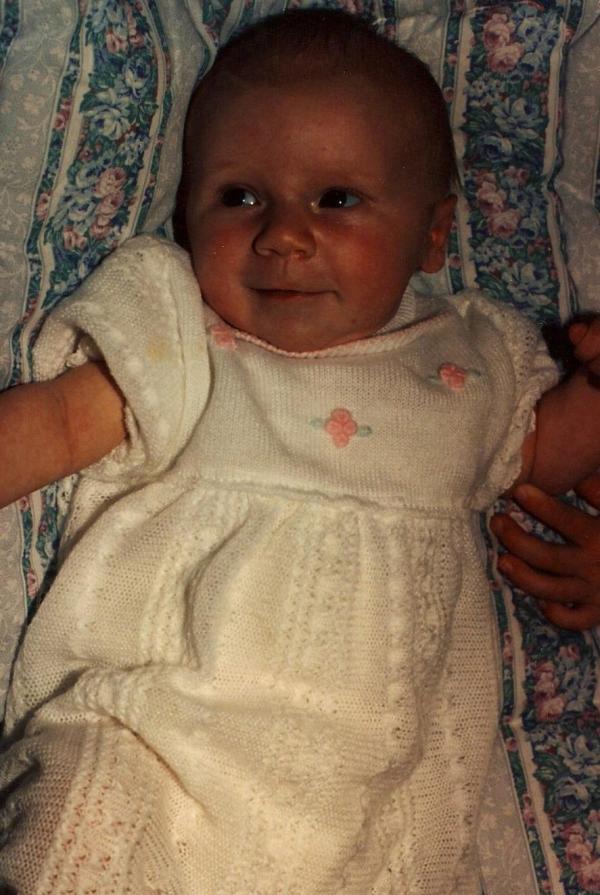
 “Nothing’s Ever Been the Same”
The sun shone brighter
When you were born
The world got lighter
The cold grew warm
Flowers bloomed larger
Joy was realized
You became a harbor
For hope idealized
You’re uniquely independent
Curious and strong-willed
Resolutely ascendant
With dreams to fulfill
Somewhat of a loner
No one could tell you what to do
I’ve always known there
Was no stopping you
The world grew fuller
With you in it
Filled with color
And promise within it
Creative and artistic
And lovingly attentive
Empathetic, altruistic
Imaginatively inventive
Love unimagined
Began the day you came
Beauty happened
And nothing’s ever been the same
–Christina Knowles

I paint a masterpiece
My soul, a brush
Loving colors
Brilliant with love
A glorious metaphor
You appear surreal
A shimmering impression
A vibrant smattering
All of you a landscape
Free
Alive and individual
My love, a palette
To paint the beauty
Of my emotion
My impression
You
A masterpiece
—Christina Knowles
Photo via artmajeur.com

 In 1982, while still in high school, I first read Stephen King’s “Rita Hayworth and the Shawshank Redemption” in a short story collection called Different Seasons and have been hooked on King ever since. Then came the movie version: Frank Darabont’s The Shawshank Redemption, starring Tim Robbins and Morgan Freeman, two of my favorite actors. It has been my favorite movie since the first time I saw it in 1994. If you haven’t seen it, where have you been? A movie about hope, friendship, and the indomitable human spirit, it’s still the highest rated movie of all time according to the IMBD. If you haven’t seen the movie, you need to stop reading and watch it now. Get ready to “get busy living or get busy dying.”
Synopsis: The Shawshank Redemption, set in a harsh 1940s prison, is about two prisoners, Andy and Red, one innocent and one guilty, who become true friends behind bars, share hopes, dreams, and the cares of daily life in the system. Andy, wrongly imprisoned for the death of his wife and her lover, will not allow his spirit to be broken. Red, who killed a man when he was young and angry and a very different person, has a broken spirit but is not beyond the healing reach of Andy’s eternal optimism.
*SPOILER ALERT* If you’ve never seen it, you might want to stop here.
The movie is slightly different than the short story. In the story Red is an Irish guy with graying red hair, there are a few different wardens during Andy’s incarceration, and the last one is forced to retire instead of getting busted and committing suicide. Tommy, who had new evidence of Andy’s innocence, was bribed with minimum-security prison instead of getting shot, and Brooks played a slightly more minor role in the story than in the movie. Also, the story ends with Red getting ready to go meet Andy instead of arriving in Mexico. However, minor differences aside, Darabont held closely to King’s original story and was true to the integrity of the characters. Even many of the lines from the movie are dialogue taken directly from the story. This story is so poignant, so profound, and so universal that I don’t know anyone who sees it without feeling like they just got schooled on life and how to live it. The basic premise is that prison is a metaphor for life and, no matter what life gives us, how we handle it makes all the difference. But there are so many life-lessons in this movie that it’s worth taking a closer look at them.
The Lessons: One of the first things I get from this movie is that life is just not fair. Just get used to it—bad things happen to good people all the time. Not only did Andy’s wife cheat on him, but he is blamed for her murder as well as her boyfriend’s. He got two consecutive life sentences, and he didn’t do anything. Life’s not fair, but Andy did not let even that ruin his life because not only can suffering be endured, you never know when things will suddenly turn around. Time is going to pass anyway. Will it be good time or bad?
Andy went through some serious suffering at the hands of the “sisters” in prison as well as at the hands of the guards and the warden. But Andy doesn’t let anything in he doesn’t want in. We see that the body can be broken but not the spirit. No one can take away what is inside you. The human spirit cannot be contained within the walls of any prison if you don’t let it. We have control over our inner life, and no one can affect us in any significant way unless we let them.
Andy always had hope, which is the main theme of the movie, but not only did he have it, he shared it with everyone around him. Hope is essential to human endurance. A lot of long-term prisoners at Shawshank didn’t have a lot of hope. Red said hope was a dangerous thing, but Andy didn’t see it that way. He thought losing hope was more dangerous. Hope kept him going when he didn’t think he had the strength and hope led to action. He was willing to take the biggest risks because of hope. Andy also gave hope to Red, who might have ended up like Brooks if not for him.
Brooks, another inmate and friend, had become institutionalized and committed suicide after trying to make it on the outside. The thing that struck me about Brooks was how we can so gradually get used to the way things are, even if they’re terrible, that we become immobile from fear of change. When Brooks was released after serving over thirty years in prison, he couldn’t take it on the outside. He lost hope because he let fear paralyze him.
Red didn’t want to become like Brooks. He learned to take risks from Andy. What did he have to lose? When Andy had had enough, when he decided he couldn’t take it anymore, he took a risk, and it paid off. There was no point in playing it safe because time was passing rapidly, and if you just play it safe, you’re just waiting to die. Andy said, “Get busy living or get busy dying,” and taking risks is part of living. Time is going to pass either way, so we may as well spend it living. He successfully taught this lesson to Red because when the time came, Red was willing to take a risk to jump parole and take a bus to join Andy and start living rather than ending up like Brooks.
But before Andy ever took this biggest risk, he planned ahead and used his skills that he already possessed. Before Andy went to prison, he set up an account under a pseudonym with some money in it. He hid a fake passport and ID under a rock in the middle of a field under an old oak tree—just in case. It was there waiting for him when he needed it. When he was in prison, he used his skills with accounting and his knowledge of tax law to become a valued and necessary person in the prison. Eventually his skills led him to successfully escape. He was also educated and intelligent. His cleverness led to his freedom, but along the way he shared his knowledge with others and showed them how important knowledge and ingenuity is to survival. He had self-worth and persistence as well. No one could make Andy feel like he was worthless or take away his belief in himself. He endured, knowing he deserved better, and set about to make it happen. The squeaky wheel gets the oil, as the saying goes, and Andy wrote letters every week to the prison board until they funded his new prison library.
Eventually his persistence led to his freedom too. If you chip away at a problem a little at a time, it will yield big results. Andy picked away at the crumbling concrete walls of his cell for years, hiding his work behind a series of pin-up girl posters, smuggling the powdered remains out into the yard on a daily basis. He took his time (he had plenty) and kept up the pressure. Eventually, he had his path to freedom. He never could have gotten away with it if he tried to do it all at once or had given up because it was taking too long.
Andy always had purpose. Immediately upon arriving at Shawshank, Andy took up hobbies. He collected rocks, carved figurines, built up a great library within the prison, and got a job doctoring the books for the warden. He even tutored a fellow inmate, helping him pass his GED. Keeping busy, whether in prison or in life, makes the difficult times go faster, gives us purpose, and can even be enjoyable.
He noticed beauty even in prison, and it made his time go easier. He read books, carved beautiful figurines, appreciated his pin-up girls, and let awe-inspiring music take him away from the prison in transcendent bliss. Beauty would be easy to ignore in a place like Shawshank, but Andy let it help him rise above his surroundings.
Andy made friends and took care of them. He helped Tommy get his GED, he was a loyal confidante to Red, he finagled a deal to get beers for his work crew, he brought culture and beauty to his fellow inmates, and he offered his help in financial matters to several people at the prison. As a result, Andy was well-liked, respected, made real friends, and put himself in a position to accomplish his goals. But the most important thing he did for everyone was to remind them that the human spirit can never be imprisoned. He genuinely cared for others, rejoiced in their successes, and was loyal and kind to those who earned his friendship. He realized that people need to feel free and have dignity and respect. If we have this, we don’t need much else. When Andy got the guard to buy his work crew beer, and they sat on the roof enjoying the suds on a summer afternoon, it was like all of them had been set free for just a little while.
Andy teaches us that sometimes you just have to take a stand for what you believe in. When Andy found an old record album of beautiful opera, he locked himself in the office and broadcasted the beautiful music over the loudspeakers, so that all the inmates could experience a moment of beauty. He knew he would be punished, but it was worth the cost.
Andy shows us that we might have to be willing to go through some shit to get what we need. Andy knew that freedom meant wading and crawling through 500 yards of sewer to get to the other side, so he bucked up and just did it. The lesson here: Suck it up and do what’s necessary.
Next, we learned that transformation is possible. People can change if they learn how. Andy changed a lot of lives, but he probably had the biggest effect on Red. He changed Red’s outlook, and he taught Red not to be institutionalized and to have hope. Red also was rehabilitated. He was a different person than the brash young man who entered Shawshank.
Being real is another theme. Red sat in front of the parole board time and time again, giving them the stock answers about how he was rehabilitated, not a threat to society, had learned his lesson, and he was always denied release. When Red didn’t care enough anymore to say what he thought they wanted to hear, he was just honest. He talked about the young man he was when he committed his crime, he talked about what he’d learned through the years, about his regrets, and about how he wished he could go back and talk to his younger self. Recognizing his sincerity and his true rehabilitation, the parole board finally approved his release.
Another important lesson from Shawshank is not to be bitter. In the end, Andy claims responsibility for driving his wife away, and even feels bad for putting her in the position she was when she was murdered even though he spent more than twenty years in prison, paying the penalty for a crime of which he was innocent. He wasn’t bitter. Instead of dwelling on others and things he could not control, he reflected on himself and how he could learn and change and be a better person.
And finally, we learn that it’s good to take a rest. Andy headed to Mexico to live a better life. He earned it, he deserved it, so he took it. He didn’t spend the rest of his life regretting his mistakes. He forgives himself and the universe and moves on. At the end, we are left with the impression that Andy is going to spend the rest of his days living out the hopes and dreams of his long and unjust incarceration. He isn’t going to punish himself, living in fear or anger. He’s going to “get busy living.”
So, I apologize for going on so long on this topic, but this story is so rich with meaning and deeply insightful that I just couldn’t help myself. That’s why it’s my personal favorite, and why I consider King, who has an intuitive understanding of the human condition even in its most degraded state, the Charles Dickens of our era. So, what will it be? Good time or bad? Will you get busy living or get busy dying?—Christina Knowles

I heard a melody so sweet
Sweet as the words you once whispered to me
A fragrant sound
A tender and unexpected chord
That at once lifts my soul
And tears my heart
A tinge of melancholy among the smiles
Suddenly invades me
Measure by measure
A symphony of memories
My whole being recalls you
Not a particular day
A certain event
But the entirety of you
Inseparable the parts
Existing in a timeless encapsulation
Of every sweet experience
And simultaneously
The deep hollowness
The absence of you
—Christina Knowles

To be suddenly liberated by my own hands
Is the purest joy
Lightness fills me
With every clean, icy breath
For the first time
Free
Tearing the tethers from my limbs
I run on open ground
I cannot see the end
Only infinite panoramas
Every possibility stretching before me
Twilight emerges, but darkness is hours away
There is time
Even a moment is enough
To exist in my own skin
To decide every detail
To roll playfully in the grass
And shout my true thoughts to the universe
Refusing ever to be muted
Once colorless and paper-thin
Each day a pretense
Quietly placating
I caught myself on the brink of death
And revived myself
Breathed in a new life
I am my own savior
Now I live
Free
—Christina Knowles (2004)
Image: https://www.reachingforsoul.com

Free (#2, Letting Go)
Letting go
I let myself be who I am
Wandering alone through a jungle
Of contradictory claims
The skeptic
Ye of little faith
Actually none
Bouncing from one fiction to another
Grasping at scrawny tree limbs
Too dry and brittle to hold the weight of inspection
Of critical scrutiny
I hung on too long
Even while twigs snapped at a touch
Letting go
I should have done it long ago
Free-falling, uninjured
Floating peacefully on the unknown
It’s never too soon to be free
At last, free to live
The reality, a genuine life
On undiscovered details
Letting go
Of the need to know
Content
Free from the fairy tale
The false hope
Hope that meant nothing
More than an interesting dream
An afternoon of storytelling
An evening of Shakespeare
Both tragic and comedic
An epic battle between good and evil
Only to realize there is no difference
According to this dramatist
Letting go
And realizing the freedom
The relief
The ability to breathe deeply
Of the infinite, if only for a moment
A blip on the radar of the universe
A breath so pure and clean
I’d never miss the toxic perfume of lies
So I exhale completely
Letting go—Christina Knowles
Photo via Pinterest, source unknown

It’s mid-January, and that means Valentine’s Day is just a month away, and with that comes something I dread—social media flooded with pictures of daddy-daughter dates and the ultimate gross-out, the father-daughter dance. These don’t always happen in February, but the fact that this seems to be the most common time for these activities, adds to my revulsion.
Now before you get too offended, I know that the fathers who take their daughters to father-daughter dances and on “dates” have the best intentions. I’ve heard the explanation that these dates teach your daughter what to expect from the men in her future—that she should be treated gently and with respect. Unfortunately, many psychologists disagree with this logic, and I think we intuitively know that. Just think about it for a minute.
Your daughter probably watches Disney movies where the princess wins the prince, often after competing with another female character. Little girls in our culture are predisposed to think they have to compete for male attention. Your daughter may know you love your wife, and she sees you dress up and go out together. She idealizes you, and if your relationship with your wife is good, she may envy it. She may want to win you from her mother. This is a normal stage of development, but should not be encouraged to linger. If she thinks she has a chance, this can cause an unhealthy dynamic between all three of you. When the daughter becomes confused about her place in the relationship, this phenomenon is called the Electra Complex.
According to educational psychologist, Kendra Cherry, “The Electra complex is a psychoanalytic term used to describe a girl’s sense of competition with her mother for the affections of her father. It is comparable to the Oedipus Complex” (Cherry). Wikipedia defines it this way, “In Neo-Freudian psychology, the Electra complex, as proposed by Carl Gustav Jung, is a girl’s psychosexual competition with her mother for possession of her father” (Wikipedia). The origin of the phrase (coined by Carl Jung) comes from Greek mythology. Electra conspired to kill her mother after discovering her mother was plotting against her father. As an allusion, the term has come to generally mean a woman whose love for her father is inappropriate, and therefore, unresolved, so she transfers these feelings to other men, thus harming her ability to have healthy relationships with others, often dating older or unavailable men to unconsciously resolve the desire for her father.
It is my contention, and I think this is common sense (I don’t pretend to be a psychologist), that dating your daughter, especially the formal father-daughter dances, confuses the relationship between parent and child, may cause competition between mother and daughter, and may result in resentment towards the mother, possibly leading to the daughter trying to resolve these issues in future relationships. This is the opposite of the message you are trying to send to her.
If you don’t see how this practice is romanticizing the father-daughter relationship, think about the connotations of the terms we use. Most men would never say they were taking their son on a father-son date. They just “hang out” with their sons. Why the confusing romantic terminology when it comes to daughters? Face it; it’s creepy.
Do you really want to create friction between your daughter and her mother? Do you think it’s healthy for your daughter to romantically idealize you and resent the attention you pay her mother? To be in direct competition with her mother for her father’s attention? You don’t have to agree with Jung or Freud on everything to realize that this is not only unhealthy, it’s actually kind of gross.
If the goal of dating your daughter is to teach her to expect gentlemanly behavior and respect from a man, then the best way to teach her this is to simply treat your wife that way in front of her. Date your wife, not your daughter. Treat your wife like a princess, and your daughter will learn the lessons you want her to without all of the confusion and conflicted emotions.
It is not confusing for her to see you treat her mother romantically. She will have more respect for her mother, and she will desire the type of relationship you have with her, but she won’t be fantasizing about you being her prince. You have to admit that the idea creeps you out a bit. At least I hope it does.
Listen to that feeling in the pit of your stomach; listen to your intuition. Date your wife and hang out with your daughter.—Christina Knowles
Sources:
Cherry, Kendra. “What Is the Electra Complex?” About Health. Updated 16 Dec. 2014. Web. 15 Jan. 2016.
“Electra Complex.” Wikipedia.org Updated 15 Jan. 2016. Web. 15 Jan. 2016.
Father-daughter photo. Finding justice.org [http://findingjustice.org/father-daughter-dance-violates-the-law/]

 She loved me with those eyes
Large and brown staring up at me
The wisdom of the ages implied
Whether to apologize
Or merely out of curiosity
It was always with love in those eyes
Her soft gaze intensified
Watching over me carefully
The wisdom of the ages implied
Always she sympathized
Laying her head on my knee
Loving me with those eyes
Patiently she sighed
Waiting on me dutifully
The wisdom of the ages implied
Short are the days love multiplies
She spent them on loyalty, joyfully
Loving me with those eyes
The wisdom of the ages implied
—Christina Knowles
 Disturbing the Universe
Recent Comments