Twenty Spectacular Films According to Christina Knowles

I’ve wanted to write a favorites list for a while now, but I haven’t until now for two reasons: 1) I am no authority on movies. I just love them, and 2) I didn’t know how I would be able to narrow it down to a reasonable number in which to write about. But everybody likes to read about good movies, and chances are some of my favorites will be yours too, and even if they aren’t, maybe it will make you think of the movies you love and why, and that’s good too. I decided I could narrow it down to my top twenty favorite movies, and then just list some honorable mentions with no detail. I am not trying to judge these movies on any criteria other than that I loved them. There may be better movies, but either I haven’t seen them, or these just had a bigger emotional impact on me. Here they are:

minority_report#20: The Minority Report: (2002) Directed by Steven Spielberg, starring Tom Cruise, adapted from the short story of the same name by Phillip K. Dick.This is a film exploring the theme of free will versus determinism as well as the social/political theme of the power of the state. In the future, “precogs,” who see the future, report crime and citizens are arrested before they break the law in order to prevent crime. The main character, a pre-crime cop, is the next reported for a murder he has not yet committed. This movie is intense and thought-provoking with edge-of-your-seat action.

cru11#19: The Crucible: (1996)Directed by Nicholas Hytner, starring Daniel Day-Lewis and Winona Ryder. The film was written by Arthur Miller and based on his play of the same name. This is the story compiled from actual historical research and the diaries found in Salem, Massachusetts regarding the witch trial hysteria of the time. Daniel Day-Lewis portrays the dynamic character of John Proctor powerfully, revealing a very human, flawed, but good man who wishes to be better than he is. He stands strong in the end, revealing a deep character growth. I love this version of Arthur Miller’s play because it is accurate to the original, except for the final scene, which has an even bigger impact than the play.

#18: In the Valley of Elah, (2007) Written and directed by Paul Haggis, starring Tommy Lee Jones, Charlize Theron, and Susan Sarandon. “The film’s title refers to the Biblical valley where the battle between David and Goliath is said to have taken place. It portrays a military father’s search for his son and, after finding his body, subsequent hunt for his son’s killers. The film explores themes including the Iraq war, abuse of prisoners, and post-traumatic stress disorder (PTSD) following active combat” (Wikipedia).

In-the-Valley-of-Elah2I love this movie because it realistically shows the consequences of modern warfare and the trauma dishonorable behavior during war and the dehumanization of the enemy causes to ordinary people. This movie had a huge emotional impact on me. Watch this movie if you don’t believe in glorifying war or the military, but want to see the reality of wars’ effect on the human psyche.

_59724584_91890b22-2cef-4e82-8d3d-a3904f1972e2#17: Titanic: (1997) Directed by Richard Cameron, starring Leonardo DiCaprio and Kate Winslet. This movie is an epic disaster film and a fictionalized account of the sinking of the ship, Titanic. Some may find this movie cheesy, but no can deny its cinematic beauty, intense suspense, and dramatic love story. I love this movie because of how this incredible tragedy is depicted in excruciating detail. One of my favorite things about this movie is when the orchestra continues playing as the ship sinks with people dying all around them. I also appreciate its depiction of how the wealthy were treated versus the third class travelers. This movie makes me cry every time I see it, and I love a good cry.

#16: The Matrix: (1999) Directed by The Wachowski Brothers, starring Keanu Reeves. This film is set in a future where people, who are actually acting as a power source for the fake world around them, think they are living in the real world. What they see is actually a computer construct of a world similar to ours. The actual world is a desolate and barren place destroyed by wars and pollution.The_Matrix_Neo_and_Morpheus_Construct

This movie is often seen as an allegory for the “real” world and the spiritual world, implying that the spiritual world is more real than the world we live in. The Matrix works on so many levels though. It is also a comment on how we are willing participants in our own deception. We need to wake up and see things how they really are. This movie is a masterpiece of filming and special effects, but what I love most about it is the philosophical wisdom dispensed throughout the film, mostly by Morpheus (Laurence Fishburne) and its references to famous philosophical and religious works. The Matrix is more than an action film. It is a deeply thoughtful movie, which will open your eyes to the realities of our culture’s systems of mind control.

crash#15: Crash (2004) Directed by Paul Haggis. This movie is a drama with a huge ensemble cast, wherein, seemingly unrelated people and incidents all seamlessly coincide or “crash” into each other in an intricately woven story about racial prejudice in Los Angeles, California. This movie is an intense, at times hard to watch, movie that explores the origins of hate, mistrust, and ignorance, and poignantly shows that we are all flawed, and the same person capable of extreme cruelty one moment, can, in the next, be capable of heroism and selfless compassion.

Ringstrilogyposter#14: The Lord of the Rings Trilogy. Directed by Peter Jackson, ensemble cast. I couldn’t separate these movies in my mind, so I lumped them into one selection. Based on the novels by JRR Tolkien, these three movies are better than the books, in my opinion. While Tolkien is a genius of story-telling, he tends to go on and on with details of setting, which are necessary to the creation of this world. However, obviously in a film, we can instantly see this detail and get straight to the action and story, which is amazing. I love this series because it explores good versus evil through the archetypal hero’s journey or quest for a higher cause, ideals of friendship, loyalty, selflessness, overcoming evil, and finishing strong. This series will inspire you to face evil and adversity.

forrest-gump-220857#13: Forrest Gump (1994) Directed by Robert Zemeckis, starring Tom Hanks, Robin Wright, Sally Field, and Gary Senise, and based on the novel by Winston Groom. This epic movie about a developmentally challenged man, who is accidentally present at numerous important historical events, often inadvertently influencing them, is a touching story of the beauty of life and overcoming obstacles. This movie is funny and poignant. I can’t remember how many times I’ve seen this movie, and still, whenever I am flipping channels and run across it, I have to stop and watch.

lib1#12: Life is Beautiful. (1997) Directed by Roberto Benigni. This is an Italian movie with English subtitles about a Jewish man during the Nazi occupation, who protects his son from the horrors of a concentration camp with humor and make-believe scenarios. I love this movie because it shows the power of attitude and love. If this man can make the best of a situation like a Nazi concentration camp just to make things better for his son, then who are we to complain about anything? This movie will make you laugh and cry and celebrates this beautiful life.

#11: Les Miserables (1998 and 2012) I still can’t decide which version I love more–the 1998 version starring Liam Neeson or the 2012 musical starring Hugh Jackman. Both of these wonderful movies, based on the amazing book of the same name by Victor Hugo, are absolutely beautifully acted and have a life-altering quality about them. These movies are about a man imprisoned for stealing bread, Jean ValJean, and an investigator obsessed with justice, Javert. It is a story of change, compassion, justice, the desperation of poverty, mercy, and forgiveness. Many people see this story as an allegory for Christianity. Jean ValJean receives mercy that changes his life, and he in turn, shows that mercy and forgiveness to others. Javert, on the other hand, is unable to accept mercy and doesn’t believe in forgiveness, but believes only in justice. In the end, he cannot even accept mercy for himself. Both of these movies are superbly acted, and make the viewer look at the juxtaposition of justice and mercy in a new way. Life-changing with a huge emotional impact.


Les-Miserables-Jean-Valjean-4

540#10: A Walk in the Clouds (1995) Directed by Alfonso Arau, starring Keanu Reeves, Aitana Sánchez-Gijón, and Anthony Quinn. In this movie, a young man returning from the service in WWII meets a pregnant woman on a bus, who is afraid of returning home to her father’s vineyard unmarried. The man agrees to pose as her husband with a plan to stage an argument and leave her, so that her Old World parents from Mexico will not expel her from their home. Of course, they fall in love for real, but the beautiful thing about this movie is the depiction of the depth of love for family, tradition, and the need for a home. The man not only falls in love with the woman, he falls in love with her family, her home, their traditions, and their lives. The acting is superb, especially that of the father, Don Pedro Aragon, played by Anthony Quinn. This movie is beautiful and poignant.
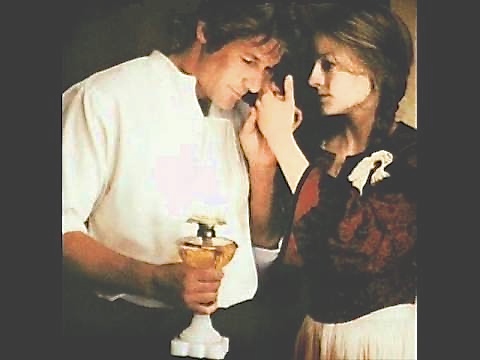
0#9: Sommersby (1993) Directed by Jon Amiel, starring Jodi Foster and Richard Gere. “Set in the south of the United States just after the Civil War, Laurel Sommersby is just managing to work the farm without her husband Jack, believed killed in the Civil War. By all accounts, Jack Sommersby was not a pleasant man, thus when he returns, Laurel has mixed emotions. It appears that Jack has changed a great deal, leading some people to believe that this is not actually Jack but an impostor. Laurel herself is unsure, but willing to take the man into her home, and perhaps later into her heart…” (Murray Chapman, IMDB). This is a romantic drama with a mysterious twist. I love this movie because what it is really about is choosing to become the kind of person you want to be, even if it costs you everything. Grab several boxes of tissue to watch this film.

#8: It’s a Wonderful Life (1946) Directed by Frank Capra, starring Jimmy Stewart and Donna Reed. This movie needs no synopsis. If you haven’t seen this movie, you live under a rock or are very young. A Christmas classic, I love this movie because it makes you realize how perception is everything. Its-a-wonderful-lifeLessons from this movie: Appreciate what you have, know you have value, and know that if you have people who love you, you are the luckiest you could ever hope to be. Oh, and stand up for the common man, help your neighbor, and money is not all that important. I could watch this movie a million times.

#7: National Lampoon’s Christmas Vacation (1989) Directed by Jeremiah Chechik, starring Chevy Chase and Beverly D’Angelo. A bumbling father insists on going to extreme measures to have a wonderful Griswold family Christmas even though everything is conspiring to ruin it. Another Christmas classic. I watch this one every year, and although it may seem a little out of place on this list, it made it into my top ten because this movie makes me happy. Everyone needs a good belly laugh from time to time, and this one makes me laugh out loud to the point of snorting, no matter how many times I see it. Slap-stick at times, extremely quotable, and even a little heart-warming, this movie is a Christmas staple.430849_orig

file_200263_0_Psycho_Norman_Bates#6: Psycho (1960) Directed by Alfred Hitchcock, starring Anthony Perkins, Janet Leigh, and Vera Miles. Norman Bates goes “a little crazy sometimes” in this classic horror film with heart. Norman Bates is probably the most likable psychotic serial killer in film history. I love this film because Norman is a sympathetic character in this story that explores the psychology of multiple personality disorder and the trauma of childhood abuse and mother fixation. Very Freudian, but wonderfully intense.

#5: Big Fish (2003) Directed by Tim Burton, starring Ewan McGregor and Albert Finney. This beautiful and surreal story told through a series of tall-tales by a dying father to his son, not only teach the son about his father, but about life itself. Full of symbolism, this movie explores forgiveness, understanding, dreams unfulfilled, and a host of other important themes. It is deeply meaningful, funny, fantastical, and imaginative. Love it!

Big_Fish_The_Movie_by_AnnieMusse

936full-dead-poets-society-screenshot#4: Dead Poets Society (1989) Directed by Peter Weir, starring Robin Williams, Robert Sean Leonard, and Ethan Hawke. A quirky prep-school English teacher inspires his troubled students with literature, and breaking all the rules, he teaches them to “seize the day” and live lives worthy of being remembered. As an English teacher, I think it is a requirement that I adore this movie, but anyone who loves insightful and poetic words, philosophy, and high ideals will appreciate the inspiration of the literary greats quoted in this film. And, of course, everyone loves an inspiring teacher who cares more for his students than for staying out of trouble. In addition to exploring the Transcendental themes of “sucking the marrow” out of life, this movie does justice to showing the realities of realizing these ideals in the midst of expectations and responsibilities. Deeply moving and inspiring.

#3: Magnolia (1999) Directed by Paul Thomas Anderson, starring Tom Cruise and Julianne Moore as well as a huge and  famous ensemble cast. This masterpiece of filmmaking, like Crash, threads the separate lives of many different characters together, connecting them in surprising ways. However, this movie explores fate, coincidence, regret, compassion, loneliness, forgiveness, love, death, acceptance, abuse, and grief in strange and symbolic ways. I won’t even try to give a synopsis because there are too many different stories going on in this film, but I will say that the characters are realistic, flawed, beautiful, and complex. I loved almost all of them, and even the one I didn’t, I felt something for. I love everything about this movie and am left sitting stunned and in awe every time I see it. The acting is superb, especially by Phillip Seymour Hoffman and Tom Cruise. In my opinion, this is absolutely Tom Cruise’s best acting. He convincingly goes from a despicable, disgusting pig to a hurt little boy that we want to hold and comfort in the course of 189 minutes of perfection in filmmaking.TOM-CRUISE-MAGNOLIA

braveheart_27_robert#2: Braveheart (1995) Directed by Mel Gibson, starring Mel Gibson and Angus MacFadyen. “When his secret bride is executed for assaulting an English soldier who tried to rape her, a commoner begins a revolt and leads Scottish warriors against the cruel English tyrant who rules Scotland with an iron fist” (IMDB). The story of William Wallace is one of courage, loyalty, and freedom, but the character that had the most impact on me was that of Robert, the Bruce. My favorite scene in the movie is when after the Bruce has been convinced to betray Wallace and it has led to tragedy, the Bruce confronts his evil father and states, “I don’t want to lose heart. I want to believe as he does … I will never be on the wrong side again.” To me the most important themes are tied up in this character and in these lines. This movie asks you what you believe in, what you are willing to do to stand up for that belief, and challenges you to decide, once and for all, if you will have the courage to stand on the right side, regardless of the cost. This movie makes me want to be a better person. The acting is superb, especially by Angus MacFadyen, who plays the Bruce. This movie is highly quoted because it is filled with high ideals and pearls of wisdom. I love, love, love this movie. “FREEDOM!”

MV5BODU4MjU4NjIwNl5BMl5BanBnXkFtZTgwMDU2MjEyMDE@._V1_SX640_SY720_#1: The Shawshank Redemption (1994) Directed by Frank Darabont of The Walking Dead fame, starring Tim Robbins and Morgan Freeman, adapted from the short story by Stephen King, “Rita Hayworth and the Shawshank Redemption.” My all-time favorite movie ever, this film is the only film that has actually done justice to King’s work. I loved the story when it was first published and couldn’t have been more pleased when it was made it into this fabulous film, starring two of my favorite actors.  Shawshank_Redemption_

The Shawshank Redemption, set in a harsh 1940s prison, is about hope, perseverance, friendship, redemption, and the indomitable human spirit. Two prisoners, Andy and Red, one innocent and one guilty, who become true friends behind bars, share hopes, dreams, and the cares of daily life in the system. Andy brings hope, culture, and humanity to the prison inmates, and teaches Red that there is always hope, that the spirit can’t be crushed if you won’t let it, and that life isn’t fair, but there is always beauty to be found. This movie is profound, moving, funny, and leaves you with the feeling that no matter what, everything is going to be okay. Strength comes from within, and no one can take away what is inside of you. This movie deserves a million stars. I never get tired of watching and feeling uplifted by it. It gives me hope, and that is why it is my favorite movie.

Now, for some honorable mentions, although I am sure I will leave some important ones out:

Other Great Movies or Movies I Just Love Watching (in no particular order):

The Book of Eli, Terms of Endearment, Gattaca, Coma, Marnie, They Live, Cloud Atlas, The Stepford Wives, The Best Grand Budapest Hotel, The Silence of the Lambs, Prince of Tides, Fargo, Argo, Platoon, Saving Private Ryan, Schindler’s List, U-571, The Fugitive, Vertigo, Awakenings, Rebecca, The Shining (1997 mini-series), A Time to Kill, The Devil’s Advocate, Pulp Fiction, The Notebook, Message in a Bottle, A Christmas Story, Homeward Bound, My Dog Skip, The Breakfast Club, Gun Shy, K-Pax, Bladerunner, Star Wars Trilogy (original), Star Trek II: The Wrath of Khan, The Godfather, This Boy’s Life, What’s Eating Gilbert Grape, Raiders of the Lost Ark, Hush, Hush, Sweet Charlotte, Signs, The Sixth Sense, Whatever Happened to Baby Jane?, A Streetcar Named Desire, Rebel Without a Cause, Creator, Casablanca, To Kill a Mockingbird, Shutter Island, Young Guns, The Goonies, Ladyhawke, Deep Impact, Fatal Attraction, Legend, The Princess Bride, Ferris Bueller’s Day Off, The Time Traveler’s Wife, 12 Monkeys, The Terminator, The Book Thief, Clue, Life of Pi, and The Grey. And hundreds more I don’t have room to mention.

I apologize for the length of this blog. If you read to the end, thank you, and please leave me some suggestions if I left your favorite movies out. Happy movie viewing!–Christina Knowles


Balance? Yeah, Right by Christina Knowles

Snagged from  Jacinta-Yoga
Snagged from Jacinta-Yoga


I’ve always believed people should live balanced lives: you know, mind, body, spirit. I learned this was important through life-long yoga practice, reading philosophy, and talking to wise ones who successfully practiced this path to peace and contentment. However, I’ve NEVER been able to achieve it–not even for one whole week. I live a life of never-ending to-do lists, schedules, alarms, and obligations. I even make to-do lists and schedules to make sure I schedule time to relax, but no matter how hard I try, something important is always neglected.

I am naturally motivated to improve my mind. For this I need no prompting. I don’t have to try very hard to make time to learn something new, read, or write. I once spent an entire summer studying philosophy and theology. Because I am a teacher and a writer, it is easy to justify time spent on these activities. But I recognize that there is more to life than my intellectual pursuits. The first thing that drops off my list is usually physical exercise.

I wasn’t always a sedentary person. When I was younger, I was an enthusiastic runner, I took Karate, yoga, and figure skating lessons. I used to dance. I admit that I never liked team sports or traditional working out at the gym. Actually, I loathe it. But running and skating cleared my mind, yoga relaxed me, Karate–well, that kind of sucked, but I liked the idea of being able to defend myself. However, after four knee surgeries, my doctor told me that I was not allowed to run, skate, or do karate. Ever. To avoid major knee reconstruction (which would involve breaking my legs and sitting in a wheel chair for almost a year), I was told to take up cycling. The doctor told me that even swimming would be too hard on my knees, and walking should be kept to a normal strolling pace. So I bought an exercise bike and have been pretty good about riding it on a regular basis. The only thing that motivates me to do this is that I literally cannot walk if I stop for any length of time. I also still practice yoga, but not with any consistency. Needless to say, my daily 20-30 minutes on my exercise bike is not really meeting my aerobic needs.

As for the “spirit,” I tried meditating and yoga, which does relax my mind and body. I also nurture my inner self by spending time with people I care about and by pursuing my artistic interests. I think I need to spend time outside in nature as well, maybe even be a little adventurous. I need to spend quality time with my husband, family, and friends. I need to just do nothing sometimes. I long to do nothing, but I am really NOT good at it.

So, as usual, summer vacation from teaching was the time when I planned to regroup and get my life back in balance, as if it ever were. I immediately made preposterously unrealistic goals, to-do lists, and schedules to accomplish everything to attain this balance. Of course, I thought, it would be balanced because I made sure to include something from every area on which I wanted to work. It turned out to be the opposite of balance. Before I knew it, I signed up for three courses to help me with a new class I’ll be teaching in the fall, I started writing a new book, and I’m helping some students create an e-book short story anthology. I have about 15 books on my must-read list. I’m riding my bike (a real one) daily, spending time outside walking my dog and gardening, fitting in time with friends and family, staying up really late with my husband, trying to fit in a few hours of writing every day, re-organizing and cleaning my house, and basically going crazy trying to keep up. And there is never time to do nothing. This is worse than working full-time. Well, almost.

My husband tells me that I need to prioritize, that I can’t do it all. But isn’t that the point of balance? Doing it all–at least some of everything? Making sure that I meet the needs of all the different aspects of my being? When I try to prioritize, everything seems like a priority.  I don’t get this balance thing. I think I am incapable of it. Or perhaps I just need a better schedule. I’d better get right on that.–Christina Knowles



Choosing Contentment by Christina Knowles


Courtesy of Pinterest

I have decided to like my job. It just seems easier and far more pleasant than hating it. I am a high school English teacher, and I absolutely love my subject and really love and enjoy teenagers. But lately, the insane expectations placed upon teachers by the government, the critical blame-laying on teachers, the lack of accountability on students, the absence of respect for the profession, the inability to obtain fair compensation, and the sheer magnitude of the workload all soured me on my vocation. With all that weighing on me, it is all too easy to forget what I love about it. However, having fourteen years invested in this career and a huge student loan debt, I cannot just change careers or quit. Furthermore, I am a person who likes to be happy, and focusing on these negative, albeit real, aspects of my job won’t really get me there. I choose to be content, regardless of my circumstances. The best way to attain contentment is to be grateful for the wonderful things we have. With that in mind, here are the things I love about being an English teacher:

  • Reading: I love literature, just about every genre and time period. I read for enjoyment, and I read to learn new things or to understand things more deeply. I love to analyze it, speculate about it, interpret it, talk about it, and criticize it. I get to do this in my profession almost every day.
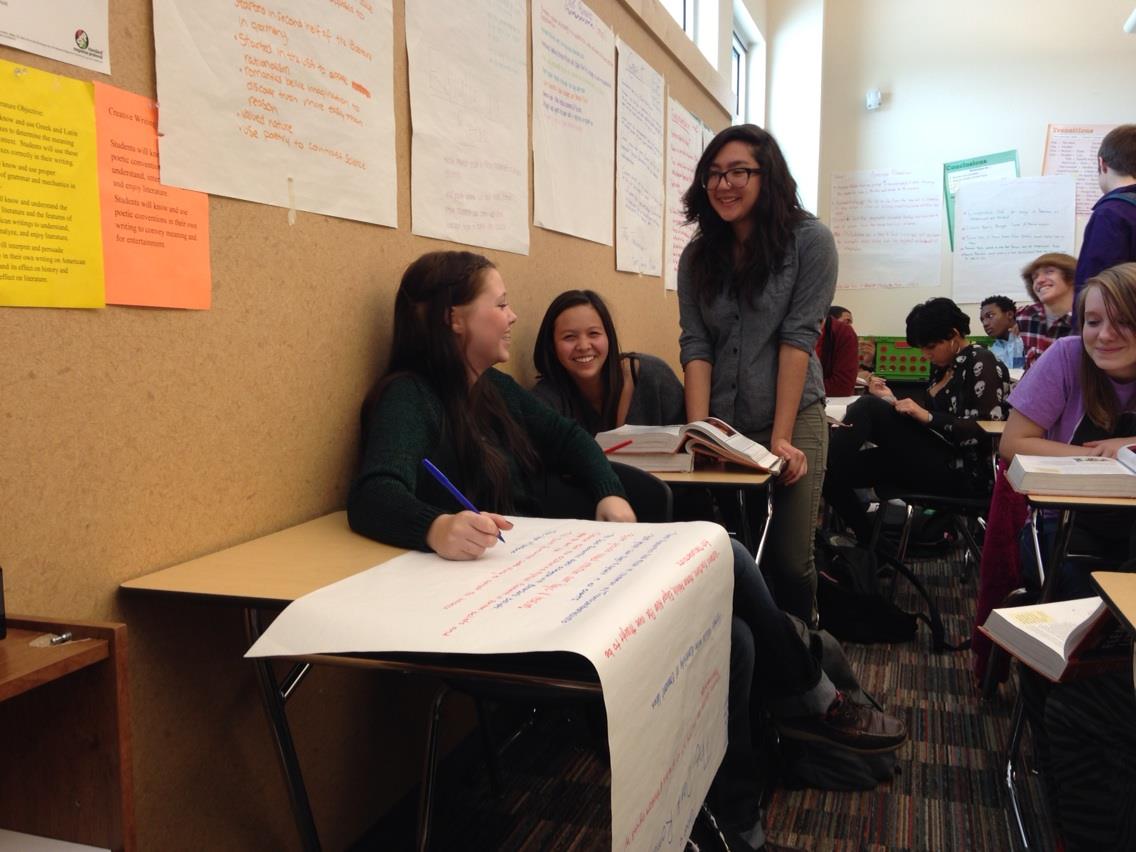
  • Writing: I love to write–fiction, non-fiction, poetry, anything. Most of us forget a lot of what we learned in college if we don’t use it, but teaching a writing class allows me to keep up good habits and practice the techniques I teach my students. Teaching keeps what I learned fresh in my mind and ready to use in my personal writing. I also love teaching my students what I know about writing and seeing their talent and creativity flourish. My creative writing students love my encouragement and get so excited about their writing. This enthusiasm is contagious and helps me to want to write every day as well. Right now my creative writing students and I are working on compiling short stories for a class anthology that we intend to publish as a free ebook. I love these kids. I feel like we are kindred spirits when I work with them.1492499_10202398236311367_1034169101_o
  • Grammar and Vocabulary: These are often considered to be the drudgery of English class, but I love them. I enjoy diagramming sentences and figuring out really difficult grammar questions. Learning new words along with the students is a benefit of my job. Having a large vocabulary makes me a better writer. It also just makes me feel intelligent. I like that feeling.
  • Argument and Reasoning: Discussing rhetoric, logical fallacies, and philosophical thought are extremely satisfying activities I am able to include in my lessons. One of my favorite things about my job is the journal topic discussion I have with my science fiction literature class every day. We discuss important and controversial philosophical, political, moral, and social issues daily. The students can voice any opinion they have as long as they can logically defend it. They love it, and so do I. Again, kindred spirits. All of my classes learn to logically support their arguments. Logic is good. I feel like it makes the world a better place. The world could use more logic.1500811_10203176068396683_1291760977947750353_o
  • Academic and Professional Environment: Working with an intelligent group of people who are all educated in the same discipline is a stimulating experience. There is never a lack of informed conversation, and we all are eager to help each other and share our ideas. The people in my department are a lot of fun as well. There is never a lack of clever author quotes, puns, double entendres, or witty aphorisms. We even take our practical jokes to the next level, academically, of course. Over lunch we dissect our favorite shows, such as The Walking Dead, and analyze them for plot and character development, and of course, thematic significance. What else would you expect from a room full of English teachers?

When we have to work evenings, with the exception of parent-teacher conferences, it is usually to supervise a concert, a play, attend a sporting event, or to participate in fun activities with the students, such as our Jeopardy-like competition, Knowledge Bowl. Working late is a regular occurrence for teachers, but I have to say it’s not as bad as other jobs I’ve had.

3895_1100358643309_3590249_n664364_10203176064396583_8123770742130859911_o

  • Students: I left this one until almost the end because it is truly the second most loved aspect of my job. I love my students. Well, most of them. I’d have to say that out of five classes, I have only a handful of students who are really a pain. Every year I think that my students are the best I ever had. Every year I meet such sweet, kind, funny, and engaging kids. They make me laugh and smile every day. I miss them when they graduate, and we often keep in touch, sometimes becoming good friends in their adulthood. I have to admit that they really do bring joy into my life, and I hope I do the same for them.
    IMG_0640
  • Breaks, Snow Days, and Holidays: The absolute best thing about my job! I work in a district with a modified year-round schedule, so I get two weeks off for fall break in October, two weeks off for Christmas break, two weeks off for spring break, and about six weeks off for summer (the students get eight, but teachers usually have training, staff development, and start a week early to get ready for the year). We don’t get paid for this time, but it is so worth it and necessary. I honestly could never do my job without this recovery time. But mostly, I need it to write, which is my passion. I don’t know of any other job for which I would be qualified that would allow me this uninterrupted stretch where I can focus totally on my personal writing consistently for several weeks at a time. A lot of teachers travel during the breaks, but I use it to work on my novels and spend more time with my husband.

Snow days are gifts from Heaven throughout the winter in Colorado. The thing I love most about snow days is that they are totally unexpected days off. I don’t have any plans, nothing I was counting on doing at home, so it really is a day off. If I take a day off, it is always to get something done, but a snow day is perfect for watching movies or reading with no guilt–and no sub plans! The worst thing about taking a day off when you are a teacher is planning for a substitute, and then coming back and finding that they didn’t do anything you asked, and now you are behind. I do have to admit, though, I often grade papers on snow days to catch up, but the beauty is that I don’t have to. If I didn’t, I wouldn’t be any worse off than if I had to work. In addition to that, we get all the major holidays off with pay. Having worked retail in the past, I can really appreciate this benefit. Without breaks, I don’t think any teacher could endure the rigor and demands of the job. At many low times in my career, the thought of upcoming breaks was the only thing that kept me from quitting.4599_1112432185140_818882_n

So there you have it, or should I say, there I have it? After all, this was really about convincing me that I love my job in order to obtain contentment in my life. I think it worked! I really do. Focusing on the positive is more than a mind trick. The good things in life are always there all the time. They just become obscured when we pile on the negativity so thickly that we can no longer see through the dark haze we created. I don’t mean we actually create the negative things–oh, they’re really there, believe me. But we don’t have to let them obliterate the beauty and joy that is also there. At least I choose not to, not anymore. Life is too valuable and wonderful to live like that, so from now on, I choose contentment.–Christina Knowles

Throwing the First Stone: The Scourging of Dan Haseltine by Christina Knowles

 

Courtesy of Google Images

One of my favorite bands is Jars of Clay. When I first became a Christian, Redemption Songs was the first CD I bought. I learned to worship God listening to this CD. Then I bought their self-titled debut album, which contained the song “World’s Apart.” This song speaks to me deeply still to this day. In fact Jars of Clay is a huge part of my daily worship of God.

If you follow Twitter’s trends, then you know that a big scandal erupted when Dan Haseltine, of Jars of Clay, tweeted some questions he was wrestling with regarding how Christians should approach the topic of gay marriage. Obviously these questions just could not be discussed adequately on a platform like Twitter. In his blog he explains what caused the biggest offense and what he actually meant:

“I don’t particularly care about Scriptures stance on what is ‘wrong.’ I care more about how it says we should treat people.”

“In the heat of discussion, I communicated poorly and thus unintentionally wrote that I did not care about what scripture said.  Thus, the tsunami hit.  It was picked up by bloggers and written into editorials before I could blink.  And rightly so, people were shocked and offended by my statement dismissing the value of scripture.  I got it. And possibly, I got what that combination of statements warranted for response. I should’ve chosen my words more wisely” (Dan Haseltine)

You can read the full explanation and apology here at his website: http://danhaseltine.com/blog/2014/4/25/reset-contexttangentapology.html

To me this is an obvious mistake. Have you ever told your child, “I don’t care what you think! Just do it!”? You don’t mean that you really don’t care; you just mean that it is beside the point or not relevant to the discussion. Whether or not it was a sin was irrelevant to the topic of how we treat people. Clearly, Twitter is not an appropriate platform for complex discussions.

When I read his tweets, I immediately thought that he was working through some complicated issues and needed to discuss them–nothing more. Personally, if he did decide that he did not oppose gay marriage, that would not make me assume he is denouncing the faith or anything else. Some Christians believe that they have no right to impose their beliefs on those who do not share their convictions. Other Christians do not believe that it is actually a sin the way they interpret the Bible. Lots of Christians are confused by these issues and have to struggle with passages in the Bible that go against what our culture accepts.

But what seems worse to me is the mean and, in my opinion, Pharisaical response directed toward the band as a result of a few tweets. A couple of days ago, I started seeing shocking posts about “throwing out your Jars of Clay CDs” and all manner of name-calling, “heretic,” “apostate,” “false prophet,” along with accusations that they have always just been “in it for the money.” Shocked, I immediately went to Haseltine’s tweets and waded through more of the insanity, searching for a lucid explanation.

As a person who openly struggles with my faith, the tendency for some Christians to lash out and attack their own scares me. It is one thing to point out a mistake or ask what was meant by a certain remark, but why the knee-jerk attack on his beliefs? Just from listening to the lyrics Jars of Clay write, and what they choose to record led me to believe that this was either a new crisis of faith or more probably a misworded expression of frustration in getting his point across, the latter turning out to be the truth. Why are people so quick to jump to conclusions? Doesn’t anyone ever ask questions and wait peacefully for a reply anymore?

In my opinion, indignant Christians did more damage to the faith by attacking Dan Haseltine than his misspoken tweets could ever do. I believe there are many reasonable and unruffled Christians who do not immediately turn every mistake into a platform to attack those who disagree with them, but unfortunately, the ones who do are much more visible.

While reading the comment thread on Michael Brown’s article “The Shattering of Jars of Clay” on CharismaNews and on Twitter, I could not stop the image of the Pharisees self-righteously throwing accusations at Jesus while harboring murder in their hearts. Granted, Dan Haseltine is not Jesus, but he certainly was not deserving of their hypocritical scorn. By their very words they reveal the redwood tree lodged in their own eyes while they attempt to gouge out the speck in Haseltine’s.

The irony of this situation is glaring. While attempting to rescue Christianity from Haseltine’s innocent solecism, the whole point being that Christians should treat others with love first and foremost, they batter and abuse Haseltine, treating him with anything but love. Who is really guilty of the greater error here? — Christina Knowles

Quiet Desperation–Okay, Maybe Not So Quiet by Christina Knowles

I’ve watched a lot of movies and read a lot of stories about people who have had a great awakening or an epiphany and completely rebooted their lives after finding out they have a terminal illness or after almost dying in an accident. I seriously want a reboot. Do I have to get sick or get in a major accident to do it? I hope not.

il_340x270.500752422_4gcv
http://www.etsy.com340 × 270Search by image Photo of Retro Bicycle in Front of Cafe – Fine Art Photo Entitled Quaint – 8. Photo of Retro Bicycle in Front of Cafe – Fine Art Photo Entitled Quaint

If I found out I had a terminal illness and was told I had six months, or even a year to live, I would change my life immediately. So, why don’t I do it now? Why not live the life I want while I am still healthy and able to enjoy it? It seems I am in the majority with this one. The wisdom of Thoreau comes to mind. What’s the famous quote from Walden? “Most men lead lives of quiet desperation and go to the grave with the song still in them.”

I don’t think I would go that far. In fact, for the most part I love my life. I think, herein, lies the actual problem. I should clarify–I love my home life. I want more time being with the people I love and doing the things that matter. You see, like many people, I am sick of my job. It is slowly, maybe quickly, now that I think about it, sucking the life out of me. It is overwhelmingly stressful. I am not exaggerating when I say that I think it is literally killing me. Isn’t that kind of like having a terminal illness?

That is a bit of an exaggeration. I don’t feel ill, and I am not in any physical pain, unless you count the anxiety attacks that keep me awake at night. I don’t have the emotional trauma of knowing how little time I have left. But even though I don’t have a doctor giving me a time frame, I could die tomorrow or next week. With my luck, it would be on a Friday right after work.

But the truth is that this slow death is not traumatic enough for me to take a risk. Why don’t I have the guts to live the life I want to live? Am I enslaved by my own comfort? Like many Americans, I work to pay for things to make me happy because my work makes me unhappy. It’s a trap. I have thousands of dollars of student loans to get an education, so I can pay back my student loans. Sometimes I wish I never had a college education and a career. Yes, I know. There are homeless and starving people who would love to trade places with me. Maybe that’s what I’m afraid of–I know my life could be so much worse, but is that any way to live? Afraid that things could be worse? Am I afraid to give up the material luxuries to which I’ve become accustomed to the point that I would kill myself working to keep them? How important are they that now my daydreams consist of working in a little flower shop and going home carefree to a tiny two-room house, riding my bike because I can’t afford a car that is likely to break down at any moment. And I will sleep well in my tiny house, nothing to panic about. Like Thoreau, I want to “live deliberately . . .and not, when I [come] to die, discover that I had not lived . . . I [want] to live deep and suck out all the marrow of life.”

But I am rudely awakened from this fantasy by the thought of health insurance and retirement accounts and veterinary bills. There is no such thing as carefree. Were we even meant for that kind of life? Isn’t it conflict and struggle that make us thrive? Or at the very least give us the contrasts that make us appreciate the good times? I mean, would I even love being at home so much if I hadn’t just left work? I don’t know, but I would like to try. It’s not like I want to quit working and striving. I just want something that doesn’t feel like it’s hurtling me at full-speed toward the grave.

So I again turn to Thoreau for advice: “I learned this, at least, by my experiment: that if one advances confidently in the direction of his dreams, and endeavors to live the life which he has imagined, he will meet with a success unexpected in common hours.” But I have never been good at taking advice.I find that I am not really a risk-taker when it comes down to it. Although I have intermittent lapses, I am practical and responsible. I also fear the unknown. Even if what I have seems intolerable at times, I suspect that the alternative is more intolerable. Maybe this is just a mid-life crisis, but if it is, it’s a little late. I see the hourglass emptying, and I know if I’m going to change, it has to be now. But I don’t have the courage or faith or maybe enough desperation, so I guess I have no choice but to go to the grave with the song still in me.–Christina Knowles

All quotes from Henry David Thoreau’s “Walden: Or Life in the Woods”

Photo of Retro Bicycle in Front of Cafe – Fine Art Photo Entitled Quaint – 8. Photo of Retro Bicycle in Front of Cafe – Fine Art Photo Entitled Quaint www.etsy.com

15 Things I Will Never Do Again by Christina Knowles

Earlier today I was reflecting on some things that I wish I would not keep doing, so I thought I would make a list of things that I will never do again. But then, while I was making a serious list, I realized that it is almost a certainty that I would, in fact, fall victim to these behaviors again at some point in my life. So instead, I came up with a list that I think I can actually stick to.

I will never again:

  1.  Go on an amusement park ride that I don’t like. Why do people feel they have to persuade, plead, and demean others into going on rides they do not like? I don’t like rides that spin or go backwards, and I’m done being talked into them. If I go to an amusement park, I want to be amused. It is not amusing leaning over trash cans the rest of the day. Never again. I do want I want.
  2. Get a puppy. Only adult dogs for me from now on. I am done training puppies. It is too stressful, and I care too much about my house to do that ever again. I’ve found that one can train an adult dog in about a week to follow the rules in one’s home. That works for me.
  3. Buy an unflippable mattress. Don’t believe the lie. You need to be able to flip your mattress. Also, do not believe the warranty has any validity whatsoever. I’ve found that jumping off the roof onto a mattress does not cause sufficient damage for the manufacturer to consider the springs sagging. If you don’t completely disappear into the depression in the mattress, don’t bother filing a warranty claim.
  4. Stay in friendships with people who don’t respect me, my time, my feelings, or just want to use me when they need help. I don’t have enough hours in the day to waste on these friendships. I prefer to spend my time with people who care about me as much as I care about them.
  5. Plant a giant garden that needs tending when I plan to write a book. Or start any other major project when I need to be writing a book. Just write the damn book!
  6. Engage in meaningless small talk. Instead of answering “Fine,” to questions about how things are going to people who don’t really want to know how things are going, I will give them personal and exhaustive details to ensure that they never attempt to force me into small talk again. If you don’t want to know, don’t ask.
  7. Buy clothes that are too small, hoping to fit in to them in the future. It’s better to have cute clothes that fit than to have cute clothes going out of style with the tags still on, taunting me for years every time I open the closet.
  8. Lend a valued possession to anyone without writing down who I lent it to.
  9. Lend a valued possession at all. If I do lend it, I will just consider it gone forever.
  10. Tell something I don’t want a lot of people to know to someone I know cannot be trusted. I will learn this lesson. I will learn this lesson. I will.
  11. Stay up all night engaged in an argument. Maybe one should never go to bed mad, but one should never stay up all night mad either. Better to be mad and well-rested than to be mad and exhausted. Also, after a certain hour, one begins to lose the ability to recall injuries from the past to throw in the face of the person to whom one is arguing.
  12. Get dressed for hosting a dinner party before cooking dinner. I always have to change after cooking. Maybe I should invest in an apron.
  13. Stand on something that was not meant to be stood upon. I always forget that I don’t weigh 97 pounds anymore.
  14. Fill my plate at a party without sampling the food first. I have yet to master the subtle plate dump in the midst of a group of friends and family.
  15. Trust a hairdresser to understand what I want in one explanation. The older one gets, the longer it takes to grow one’s hair back. Pictures don’t work either. I find forcing them to look into my eyes for at least ten seconds before threatening their first born children the most helpful.

I think that is just about all I can commit to at the moment. Until next time–Christina Knowles

What My Daughter Taught Me by Christina Knowles

4842_1117003739426_7812007_nTwenty-three years ago today (March 7, 1991) I gave birth to the most precious and beautiful little girl in the world. Her name is Valerie Elise Knoche. Little did I know then the power she would possess over me for my entire life. Children have a way of doing that. You bring them into the world, you care for them, you love them, you teach them, and try to raise them to be good people, but somewhere along the way, they become completely their own individuals, separate from you with their own ideas, ways of doing things, their own hopes, dreams, maybe even beliefs that differ from your own. Children are the only people in the world that you love utterly unconditionally. It doesn’t matter what they do, you will still love them. They could grow up to be serial killers, and most parents would be right there in the prison visiting them and bringing them cookies.  Well, luckily, my children both grew up to be everything I could have ever hoped for or dreamed they would be.BabyValerie

IMG_0298 Having a daughter is a unique experience. When Valerie was little, she was already independent, a little bit of a loner. Unlike her brother, Daniel, she needed her time alone for her imagination to flourish, and it did. She was always creative and still is to this day. She used to cut up her clothes (much to my dismay) and sew them into doll clothes when she was only four years old. They came out pretty well too. She made 3-D cities out of paper and tape and wrote poems as soon as she could write. Valerie loved to shut herself in her room and play by herself when she had too much of everyone else. She would stand up to anyone and didn’t often give into peer pressure. It was sometimes a struggle to get her to compromise with other children.

IMG_0223 Valerie always had a mind of her own, and I always respected her for this. I could see that she would grow into a strong and independent woman, a woman who could and would do anything she wanted. As she grew up, she became a bit of a tomboy. Her favorite clothes were her brother’s cast-offs, jeans and over-sized t-shirts. Even when she became a teenager and began dressing like a girl, I never had to tell her she couldn’t wear something out in public because she was always modest. She was athletic and crazy strong, especially for someone who was always tiny. She would carry her brother or me around the house just to show us how strong she was.

970869_10200967292378663_715244954_n

Surprisingly, Valerie liked to do a lot of the same things I did. We both love to draw and paint, make crafty things, love dogs and nature, we like many of the same TV shows and movies. We are both loners. I say it is surprising because, unlike most kids with their parents, it seems like she liked being compared to me, which is the greatest compliment I could have. I like being compared to her too. She is friendly, polite, talented, funny, and kind–she has a sweet heart, loves fiercely, and gives generously. Valerie is intelligent and determined. She’s a hard worker, has dreams, and works relentlessly toward their realization. I am proud to be her mother, and love the fact that we are friends as well.

I love to spend time with her, and she loves to spend time with me. She often comes over and spends the entire day with me on weekends. Sometimes we just talk and watch movies. Other times we hike, take a bike ride, go out for tea at Montague’s, shopping in Old Colorado City, or make crafts or scrapbook together. I visit her at the fire station and we hang out watching movies. Did I mention she is a firefighter?206050_2110461455248_4633097_n

1003003_10201202319854203_1877843792_n She is a certified firefighter and an EMT with a local station, and she also works in customer service with a phone company. Valerie has always had two or three jobs at a time, constantly, since she got out of high school. She plans on going back to school to continue in the medical field in some way–paramedic, nurse, maybe even a doctor someday. She has always been interested in medicine and healing. She likes to help people, stays calm under pressure, and once she saved a newborn baby’s life on a call. I told you I was proud.

OldColoradoCityValerie and I also have a love of holidays in common. We have traditions that we try not to miss each year. Every Halloween she comes over, and we watch scary movies and pass out candy to kids who come to the door. We elaborately decorate the house for all the different holidays. At Christmas time, she comes over and we bake Christmas cookies and watch the holiday classics: The Year Without a Santa Claus, Frosty, the Snowman, and Rudolph, the Red Nosed Reindeer. Every year we brave the cold to go to Old Colorado City to Christmas shop in all the little indie stores and tourist shops. Even though she doesn’t live with me, she comes over first thing Christmas morning to open her stocking, which I fill every year. In the summer we roast marshmallows in the fire pit in the backyard and make s’mores.  We’ve done it in the fireplace as well when it was too cold outside.S'mores

It isn’t always perfect between us. We’ve had a few times when we argued and hurt each other. One time she was mad at me for six months and didn’t talk to me the whole time. That just about killed me. I think I cried myself to sleep more times during that six-month period than I have in my entire life. That’s what I mean about the power that children possess. When you have a child, they own a piece of your heart that you will never have control of again. They can cause you more sorrow than anyone on earth. When they hurt, you hurt. When they’re crushed, you’re crushed. When they’re joyful, you’re joyful. And when they say they hate you, it feels like you will die. When they’re teenagers, you feel like strangling them, but you would die in their place without a second thought.IMG_0512

Having a daughter like Valerie has taught me a great deal about myself, about unconditional love, about pain, about determination, and about dreams. Having children taught me that my capacity for love, joy, and heartbreak is limitless. Having a daughter has increased my love for my own mother as well. Maybe we don’t ever really understand our parents until we have children of our own. Maybe we don’t really understand what unconditional love is until we love a child. I love you, Valerie, my Petrushka. Happy birthday. –Momma

IMG_0782

Pediarchal Culture: The True Causes of the Downward Spiral of American Education (Part III of III) by Christina Knowles

601288_10151639540830639_216435886_n

This is the final installment of a three-part article on the causes of the deterioration of American education from a teacher’s point of view. Part I discussed how a cultural shift has taken place in American families, wherein the desires of the children and their happiness have become the primary goal of parents, resulting in a “pediarchal culture,” a society ruled by children and devoted to their contentment at the cost of doing what would actually benefit them in the long term. The inevitable backlash of this cultural change is that parents become angry with the schools when their child fails due to the the child’s learned lack of responsibility, blaming the teacher for the failure. Part II of this article begins the discussion of the school administration’s response as well as the government takeover of education in reaction to parental demands for student success. This has resulted in constant upheaval and numerous changes to methods and requirements for teachers to accommodate theses families, effectively removing all responsibility from the students and placing it unfairly on the shoulders of the teachers. It has resulted in a barrage of new legislation such as No Child Left Behind, individual state standards, Colorado’s Senate Bill 191, and the new Common Core standards adopted by 45 states so far. It is my contention that none of these things will do anything to improve education, but will, in fact, make things even worse because teachers and the way they teach were never the core problem. The core issue is parents refusing to hold their children accountable for what they do in school. This reactionary revamping of schools will drive more and more qualified and committed teachers from education, even though this constant fusillade of government interference is highly controversial.

Here is an excerpt from The Denver Post by Krista Kafar that illustrates this government over-reaching: “The federal government has taken an active role in promoting Common Core by awarding millions of dollars to states that have, among other things, adopted the national standards. Although the government is barred by law from exercising ‘direction, supervision, or control over the curriculum,’ its financial incentives (the $4.35 billion Race to the Top fund was a pretty big carrot) and continuous bully pulpit have been quite persuasive” (Kafar, The Denver Post).

In theory, I have absolutely no problem with common standards, or even standardized testing, for that matter. What I do take exception to is the teacher being made to shoulder the sole responsiblity, while at the same time, removing all control of the classroom from said teacher, and demanding so much from the teacher that no human being, even working 24 hours per day could meet these requirements.

If you have not read Parts I and II, I suggest that you read those first before continuing.

Part I: https://disturbingtheuniverseblog.com/2014/02/15/pediarchal-culture-the-true-causes-of-the-downward-spiral-of-american-education-part-i-by-christina-knowles/

Part II: https://disturbingtheuniverseblog.com/2014/02/22/pediarchal-culture-the-true-causes-of-the-downward-spiral-of-american-education-part-ii-of-iii-by-christina-knowles/

Part III will continue examining the new teacher evaluation rubric for Colorado teachers based on the Common Core standards, which proves how teachers are unfairly held accountable for things out of their control.

The new teacher evaluation rubric idealistically grades the teacher on, not only the children’s behavior, but the behavior of the family. Take a look at these items for which teachers are now responsible for their students’ families:

FAMILIES AND SIGNIFICANT ADULTS WILL:

–Discuss student performance with the teacher.

–Participate in school-based activities (How can I possibly be responsible for this?)

–Partner with the teacher to support student strengths and address next steps for learning.

I cannot force families to do any of these things, yet my job depends on their cooperation.

 Now let’s look at some things for which the teacher could be responsible, if we lived in a world with 48 hour days. Unfortunately, we are held responsible for these things in an average 8 hour day:

 THE TEACHER:

–Monitors and evaluates personal behavioral changes to determine what works for individual students.

–Advocates for the inclusion of teachers and families in education and government decision-making processes.

–Collaborates with professional, governmental, and/or community agencies to advocate for curricular, school and instructional improvements. (Obviously this would have to be on the teacher’s personal time)

Advocates for students and the school to external agencies and groups.  

–Participates in school activities expected of all teachers.

–Supports school goals and initiatives. (whether or not they agree with them, often knowing that they will not work)

–Contributes to school committees and teams (on their own time).

–Collaborates with school-based teams to leverage the skills and knowledge of colleagues and families.

–Initiates and leads collaborative activities that partner with families to coordinate learning between home and school.

–Collaborates with professional, governmental, and/or community agencies to advocate for curricular, school, and instructional improvements (on their own time).

Yes, all of this is required to keep my $47,000 a year job in addition to my responsibilities of instructing in front of a class for 5 hours per day, planning lessons, creating tests and assignments, copying them, and attending meetings for 2 to 3 hours per day, grading papers for 3 to 4 hours per day (which is not nearly enough time to complete them), after-school tutoring for 1 hour, contacting parents and documenting evidence for 2 hours, inputting and calculating grades 2 to 3 hours, reading required books, continuing education to keep my license, and on and on. As you can see, my job REQUIRES a minimum of 15 hours per day to do only the essentials, but these other tasks have been added as if we had unlimited time to devote to our jobs, and even if we did, many of these things are impossible because their completion assumes the cooperation of third, fourth, and sometimes fifth parties. In addition, Colorado may well find itself in some legal hot water because I believe holding teachers to the contents of this evaluation rubric violates existing labor laws, and I am at a loss as to why union representatives have not sued to remove it altogether.

All of these things standards are ideal, but to believe that one teacher can control or would even have the time to attempt to control all of these things is unimaginable. But it is now state law that I am to be held accountable for all these things in my yearly evaluation, in addition to my students’ achieving good grades and state testing scores. Added on to that, it is my task alone to provide the hundreds of documents to prove I have met all of these impossible tasks, which in itself would be a full-time job. And all of this does not take into account behavior issues for which the teacher is solely responsible, managing with less and less support from administration every year. If a child is disruptive, disrespectful, or even violent, it is a strike against the teacher for failing to manage discipline, even though we do not hold the power to affect or enforce any consequences on the students, such as suspension, detention, or any other disciplinary measure. Often students return from the office after being referred by the teacher and brag how no consequences were given. Once a student returned to my class ten minutes after throwing a desk at me with no disciplinary consequences. The level of disciplinary support differs with every administration; however, to tie the hands of the teacher, and also expect him to control his classroom is irrational. It is even more ludicrous to expect learning to occur in a classroom where there is no disciplinary support for the teacher. This level of support changes from year to year as principals come and go.

Teachers are increasingly losing control over the curriculum and the grading method employed in their classrooms as well.  With the advent of Standards Based Grading in many schools across the country, teachers have to prove they are testing in the exact same manner as another teacher regardless of teaching style or level of students, even when there are several learning disabled students in the classroom. Standards Based Grading put an end to holding students responsible for homework or other formative activities. They are graded solely on meeting the standards on summative tests and projects, but the issue of motivating students to participate in formative activities with no grade attached is a persistent problem. Even though teachers can demonstrate to students that those who complete formatives and receive feedback achieve higher grades on summative assignments, this is little incentive to a hormonal teenager given the choice to do their homework or not. In addition, students are allowed to do nothing for weeks and then turn in assignments for full credit, essentially reducing motivation for keeping up with learning throughout the semester. Standards Based Grading is a nightmare of grading for the teacher as well because students are allowed to re-do everything, even tests, so most students do not even try the first time, knowing they can re-take it after they have had a chance to see it. This effectively doubles grading. If the teacher does not want the student to take the exact same test after the student has had a chance to memorize which answers are incorrect, then she has to write an alternate test, again, effectively doubling the teacher’s work. However, in my opinion, the worst problem with Standards Based Grading is that a student is only held accountable for what they know, not what they do. This is a dangerous lesson because nowhere else in life does anyone care if you are as smart as Einstein if you refuse to contribute anything to society with that knowledge. Standards Based Grading teaches students that behavior and responsibility do not matter; only knowledge matters, which creates an impossible learning environment. Without disciplined behavior and responsibility, knowledge is not acquired.

Supporters of Standards Based Grading like to quote statistics from obscure studies done in areas that do not represent the typical American school to say that students’ test scores went up, but these studies are not representative, as I said, of the general population, and they do not take into consideration real-life skills in the work place, such as meeting deadlines and studying for tests, nor do they prepare a child for the demands of college. Quite the opposite. Our students are in culture shock when they go to college, and when they have to take their own notes, pass the test the first time, and turn in their essays on time with no chance of re-doing them for full credit. These studies do not follow these students to college to see if this method has really benefited them in any meaningful way. However, the toll on the teacher is obvious every day. It is no wonder that more and more qualified teachers leave the profession every year.

It is popular to say that teachers don’t do it for the money; however, with so little respect, reward, or support, teachers are increasingly opting out for more lucrative positions where the workload is manageable, efforts are appreciated, and expectations are realistic. I recently got my W-2. I went up a “step” in pay for another year of experience, which used to be about $900 in a year. I was frozen in pay for four years, so I was happy to finally get a step raise. However, before the district gave us a step, they lowered the pay of all the steps. According to my tax return, I made $100 more for the entire year. Somehow I don’t think that’s kept up with inflation and cost of living or my insurance increases. Through all the years of being frozen for one reason or another, I am paid as a teacher with seven years experience, even though I have taught for fourteen years. Every year my classroom sizes get bigger, I am required to shoulder more responsibility for things out of my control, forced to implement methods of grading and teaching with which I may not agree, and it is literally impossible to complete my required tasks in a 10-12 hour day, even though I am paid for an 8 hour day. And if you might be thinking that at least teachers get all that paid time off, you are wrong. We have zero paid vacation. We are paid for the number of contracted days in a school year, and then it is disbursed in twelve equal payments. We are not paid for summer break, spring break, fall break, or Christmas break, although most teachers use their breaks to catch up on work that is impossible to finish at any other time. Despite all this, most teachers struggle to do the impossible because they care about kids and don’t want to punish them for a failing system.

Indeed the situation is grim, and I have very little hope in it turning around. It is highly unlikely that this pediarchal culture will reverse itself anytime soon, but it will inevitably run its course, and the pendulum will begin to move in the other direction, but probably not in my lifetime. However, I do believe there is an answer. The government needs to give control back to education professionals, and those education professionals, specifically school administrators, need to allow teachers to do what they were originally intended to do. They need to be able to use their time to plan, create, and implement engaging lessons, and give the necessary feedback to students. They need to empower the teachers, so that they have control over their classrooms, to support them in matters of discipline, grades, and accountability of students. If they want to judge our efficacy on standardized test scores, so be it, but if we are to be held accountable for test scores, let us teach in the way we know works, rather than experimenting with some logic-defying new method every year. I am perfectly willing to be judged on test scores if I have control over my curriculum, my methods, my discipline, and my grading. I know what works for my kids, and I don’t want my job constantly threatened by people who have no idea what they’re talking about, and I do not think it is fair to be held accountable for the success of something I knew would not work from the beginning.

Speaking of useless efforts, I heard on the news the other day that the government is considering spending a proposed $100 million dollars on teacher evaluation. You have heard me complain about a lot of things in our education system, but you have not heard me mention the lack of funding. That’s because although everyone wants to focus on money, all the money in the world will not fix our deteriorating educational system. Yes, our class sizes are a problem, technology is limited, schools are old and in need of renovation, new schools are needed, and teachers are underpaid, but that is not the source problem. We need to counter our pediarchal culture by standing up to parents to do what we know is right for students. Parents will either realize that their child has to live up to expectations or fail, or they will have to find alternative education. Let them. When the scores come up, and students begin achieving, they will be clamoring to get back in. As for money, cutting waste and reducing extraneous administrative staff (and schools are full of them) would solve the money problem. Every year, as we suffer through another year without a raise, our district adds another useless administrative position. If schools were responsible with their money, residents would pass more of their bond measures.

As for me, I am considering leaving education like most teachers I know. I doubt the pendulum swing will happen soon enough for me. Until then I will try and do my best for students and enjoy them for who they are, and attempt to set personal boundaries, leaving work at work whenever possible, regardless of the insane expectations.–Christina Knowles

Sources

COLORADO STATE MODEL EVALUATION SYSTEM FOR TEACHERS . Colorado Department of Education. http://www.cde.state.co.us/sites/default/files/TeacherRubric.pdf Accessed: 2/14/14

Kafar, Krista.  “Kafer: We may be too hasty in instituting Common Core.” The Denver      Post http://www.denverpost.com/opinion/ci_25201453/we-may-be-too-hasty-instituting-common-core#ixzz2ufsrwZRO  Posted: 2/22/14. Accessed: 2/28/14.

Pediarchal Culture: The True Causes of the Downward Spiral of American Education (Part II of III) by Christina Knowles

601288_10151639540830639_216435886_n In Part I of this blog, I put forth the theory of pediarchal culture as the root cause of the deterioration of America’s educational system. Pediarchal culture is a culture wherein children rule society. Children rule their parents, usually through love and guilt, and parents cater to the happiness, desires, and whims of their children to their own detriment, especially where education is concerned. Discipline, patience, and respect are sacrificed for instant gratification and excuses replace life-lessons and wisdom. If you missed Part I, I suggest reading it before you continue. This blog, Part II, concerns the reactionary response of school administrative bodies and the excessive and clueless interference by governmental agencies, grasping-at-straws in order to fix a system that wasn’t initially broken (but now is) and to pacify a growing and increasingly angry and controlling population of parents.

But before we get into all that the schools are doing wrong, I’d like to point out a fact that is not commonly taken into consideration regarding the ranking of American schools compared to the rest of the world. Statistics that compare the skill level and test scores of American students with students from high-scoring countries are apples-to-oranges comparisons. The United States is the only country in most of these comparisons to test all students and to consider every student on an academic track bound for college. In many other countries including Norway, Denmark, and Korea, students are split at the high school level into academic tracks and vocational tracks with the best scoring children going into college prep classes and the others not included in the testing. So when we see rankings compared to other countries, it is equivalent to testing all of our students (including students with no interest in college, with disabilities, or with behavior problems affecting learning) with only the honor students of other countries. Now it is true that cultural differences also affect the value of education perceived by students, which in turn affects their level of learning. Certain cultures put a higher societal emphasis on education, grades, and discipline of children. However, it is unfair to judge our school system based on these unequal comparisons.

With that said, our educational system is most certainly in trouble. So whose fault is it? As I said, it is my assertion that a pediarchal cultural shift is the root cause, but because no one is willing to admit this, or take responsibility for changing it, the obvious choice for a scapegoat is the teacher. Parents, more than ever before, are quick to side with their children and blame teachers for failing grades and even behavior problems. Because we now live in a pediarchal culture, parents feel the need to guarantee the success of their child and ensure the child’s happiness at all costs, and if they cannot, which of course they cannot, because it is out of their control, they demand results from the teacher, who in the eyes of the parents, is the only thing standing in the way of their child’s success. To take any responsibility for the failure of their child, would be catastrophic to the image they have built for themselves as “good” parents. To lay the responsibility on the child may hurt their self-esteem, and if they have raised them “right,” the child would never have difficulty with material or behavior problems unless some outside source was causing it. The class must be boring, too difficult, they have a learning disability, ADD, the teacher doesn’t like them, the teacher is not qualified, she is not giving the child individual attention, the teacher is lazy, and on and on it goes.

At first, the administrators and teachers of schools looked inward. Maybe these students were different from students in previous generations. Their lives were more complicated, busy, and full of technology, so maybe they needed to be taught differently. So year after year, one method after another was implemented to reach these students. Administrators demanded teachers learn and teach to every individual student’s “learning style.” Teachers were made to go to training after training to learn how to reach the new generation of students. We were forced to let students with ADD listen to headphones while we taught, or wander about the room because they could not sit still. I’ll never forget the first time a parent told me that their child with ADD had no trouble focusing on things that interested him, but had trouble with things he didn’t care for. Wow! Me too! I think that is called being normal, not having ADD. The difference is that I have self-discipline, so I can force myself to endure what I don’t like, which is how I made it through the remainder of that meeting.

The next trend teachers were forced to implement was the elimination of “tracking,” which has been a disaster. We combined all levels of kids in one classroom to avoid labeling students as low, regular, and high. Teachers were required to plan, implement, and provide feedback on three different types of curriculum in one class. That didn’t work, so now teachers are forced to teach differently and accommodate each individual student. Needless to say, this is utterly impossible, even for an elementary school teacher with 25 students, and beyond the realm of imagination in the reality of a high school teacher who may have anywhere from 170 to 250 students for which they are responsible. And it does not even solve the problem of labeling students. Don’t you think it is obvious who is receiving special treatment when a few students are using notes on a test when no one else can, or has half the questions as everyone else? Everyone knows who is receiving accommodations anyway. If I had all the low kids in one class, I could tailor the lesson to their needs without sacrificing the education of the higher students.

Speaking of higher students, we are forced to write an Alternative Learning Plan for gifted students. This has also been a disaster. These students are usually identified as gifted around 3rd grade. After years of being told that they are gifted, these students often fall behind regular students because they assume they already know everything. We are told that they do not achieve because they find our classes too easy and too boring. It is my job to create something exciting, high-level, and interesting for them to do instead of the boring work at which they are failing. Last year my American Literature classes were exploring how the idea of the American Dream has evolved since the beginning of our country. My regular students were reading The Great Gatsby and writing essays on the subject of the evolving American Dream and whether or not is was achievable. I had one failing but “gifted” student who had to have a special plan. I created an assignment for him to make a “video diary” or “digital storytelling,” a short movie discussing the American Dream today versus times past. He didn’t want to do it alone, so I allowed three other very high-achieving “regular” students to join him in the library to work independently for several weeks. Finally, when it was due, the regular students said the gifted boy refused to work on it at all. After talking to him, he admitted that it was too boring for him, and he would rather write the papers the other students were writing. He threw one together really quickly, turned it in, and failed it. The regular students in the group created a decent project, but on the whole, did not understand as much about the topic as the ones who just stayed in the class and did our “boring” work.

In my opinion, every new trend moves us further in the wrong direction. Maybe students need a break from video games, cell phones, and activities that stimulate them constantly. When I traveled to Barbados, I was surprised that they had a very good school system. I guess I assumed that things would be rather laid back on an island, but that was not the case. In one school, everything was very traditional. Students wore uniforms and sat at a desk while the teacher lectured, they took notes, wrote papers, read books, had recess, repeat. If a student got caught with a cell phone, the administration confiscated it and kept it the rest of the year. Caught twice and the phone was never given back. Education is taken seriously, and parents don’t care if their kids don’t like it because it is good for them. These kids are just as modern and in to technology as ours, but they strangely don’t have a problem with ADD or disrespect.

Not only are teachers constantly forced to learn and implement methods they don’t necessarily believe in, but their workloads have become astronomically time-consuming and time-wasting.  In addition to being responsible for stacks of Individual Education Plans, Response to Intervention plans, Individual Literacy Plans, 504s, and other legal documents requiring teachers to do the impossible, teachers are expected to update grades immediately, post them on the internet, update class web sites, send out progress reports, and because it is too much to expect a parent to go online and check on their own child’s progress after a teacher went to all the trouble of posting it, the teacher is then required to personally contact each parent of any student receiving a D or F grade, and to report any behavior problems that may occur. Keeping up with parent contacts alone would easily consume 5 or 6 hours a week of the teacher’s time.

Yet school administrators and the Department of Education continue to put ridiculous requirements on teachers, a workload that is clearly impossible to keep up with, while simultaneously removing all responsibility from students and parents. Government interventions such as the No Child Left Behind Act and the recent onslaught of teacher evaluation bills such as Colorado’s Senate Bill 191 continue to shift the responsibility from student to teacher. However, it is my opinion that these government interventions do nothing to resolve the situation. They are focused on “fixing” the teacher, and the teacher was never the problem. I don’t mean to claim that there are not teachers who lack abilities, knowledge, or motivation to properly teach, but in my opinion, these teachers are the rare exception. By focusing on the teacher, and ignoring the root problem, they are making it worse by robbing good teachers of the time spent in creating good lesson plans and giving effective feedback to students in addition to driving excellently qualified teachers from the profession altogether.

Every year teachers face new expectations, new required methods of teaching, new evaluations, sometimes new state standards, and numerous new requirements in regards to producing evidence to prove they are doing their jobs. Not only does this take valuable time away from already stretched-to-the-breaking-point teachers who are underpaid to the point that many have to find other work to supplement their incomes in order to provide for their families, but it places all of the accountability on the teachers and removes it from both parents and students. By only holding the teacher accountable for student success, it ensures its failure. How many self-motivated teenagers do you know that would take responsibility for their own learning if there were no consequences for refusing to take it? If they knew they were guaranteed to pass anyway, and that someone else would be taking the blame for their refusal to cooperate in their own education? I know there are some, but they are few and far between. Even with the best teachers who have the ability to motivate and inspire students beyond the average, high school students are often un-inspirable. They are too caught up in work, relationships, or even sleeping to care. Many times they are not thinking about the future, and are too immature to realize they are only hurting themselves. They are a product of our culture. Our children have often been given too much too easily, and expect that to continue into their adult lives. Again, there are exceptions, but this is the rule. Recently I gave my juniors a practice ACT test to prepare for upcoming ACTs in April. When many of them failed to receive scores even close to college expectations, their responses were typical. A few of them were concerned and asked what we could do to improve before actual ACTs. Several said they didn’t care because they weren’t planning on attending college anyway, and the rest said it was no problem because they would just attend a junior college that would take anyone. So how is one teacher supposed to motivate 220 students when their own parents cannot? Even in my most popular classes where we engage in meaningful discussion and the topics are easily applicable to their real lives, there will be some students completely uninterested in participating.

Because of this relatively new tendency to place the responsibility solely on the shoulders of teachers, educators are required to jump through ridiculous hoops to prove their effectiveness in the classroom, while at the same time, their hands are tied when it comes to affecting any real change in the system. Teachers no longer have the support of administration in dealing with parents. If a particularly angry parent complains of a grade, it is the teacher who must prove he/she has done everything short of coming home with the student and doing their work for them to ensure their success. When a student is failing, a teacher must put in personal time away from his or her family to tutor the student, type up notes for the student, re-write tests, verbally test, re-test, re-grade, call the parents, meet with the parents, administrators, and special educators to alter the curriculum, and fill out mounds of paperwork to prove that they have exhausted all avenues to help the student succeed. All on top of the regular lesson planning, grading, meetings, committees, activities, and staff development that each teacher is required to attend. If the teacher still gives the student a failing grade, this affects the teacher’s evaluation because “failure is not an option.” Well, unfortunately students know that failure is not an option in most cases because it is not worth the teacher’s time or employment to go through all that and sacrifice the education of the rest just for the students who refuse to take part in their own education. Why wouldn’t the teacher just pass the student? Many do; however, there are also many teachers who are too ethical to do this, so the teacher continues to suffer.

If you believe that the accountability is not primarily on the teacher for results that are out of their control, take a look at Colorado’s teacher evaluation rubric related to the new Common Core Standards. Here are just a few of the ridiculous expectations for which the classroom teacher is responsible even though they have absolutely no control of these outcomes, nor should they have any responsibility for such things.

 STUDENTS will routinely:

–Choose challenging tasks and instructional materials.

–Encourage fellow students to participate and challenge themselves.

Apply coping skills to classroom situations.

–Share coping strategies with fellow students.

–Help fellow classmates by offering support.

–Accept responsibility for their behavior and use of time.

–Help other students stay on task.

–Assume ownership for monitoring their progress, setting learning goals, and

applying teacher feedback to improve performance and accelerate their learning.

 STUDENTS Demonstrate:

–Honesty
–Respect for others.

–Monitor their level of engagement.

–Stay on task during class periods.

–Work without interruption.

–Abide by school and class rules.

–Communicate freely and openly with teachers.

–Respect the uniqueness of fellow students.

–Respect their classmates and teacher(s).

Is it just me, or do these things seem like they should be on a STUDENT evaluation rubric? Unfortunately, I am responsible for these things, not my students, even though it is their behavior.

I realize now that this topic is too in-depth for two parts, and I will post Part III separately. Part III will begin by further examining the teacher evaluation rubric for Colorado, including a list of things that the students’ families will do, except I am the one who is judged on whether or not they do them. Until next time–Christina Knowles

Sources

COLORADO STATE MODEL EVALUATION SYSTEM FOR TEACHERS . Colorado Department of Education. http://www.cde.state.co.us/sites/default/files/TeacherRubric.pdf Accessed: 2/14/14

Pediarchal Culture: The True Causes of the Downward Spiral of American Education (Part I of III) by Christina Knowles

601288_10151639540830639_216435886_nI have been an English teacher for 14 years. I was a middle school teacher for ten, and a high school teacher for four. When I started, I believed I had found my calling. I love my students, I am passionate about my subject, but I have become increasingly disenchanted with the system of education in this country. I have witnessed, first-hand, the deterioration of this system over the past several years, despite, in fact because of, the constant efforts of both educators and government agencies to revamp the system and “fix” this seemingly insurmountable problem. Why doesn’t anything we do work? Why are we in a constant state of change? And why are we driving experienced and qualified teachers out of education faster than we can graduate naïve young idealists to replace them? Well, there are a number of reasons, in my humble opinion, and that is just what this is, an opinion. I haven’t done double-blind studies or charted any statistical analyses. But I have observed trends over the course of 14 years of teaching that are undeniable to common sense. I will attempt to relate those observations and interpretations to you in the least offensive way I know how. Why would it be offensive, you may ask? Because there is going to be some blame, and as Americans, we all share in this catastrophic cultural shift in one way or another. The recent trend is to lay the blame at the foot of the teachers. This is clear by the implementation of recent laws such as Colorado’s Senate Bill 191, which basically holds the teacher accountable (and only the teacher) for the success or failure of each student, and is responsible for the requirement of a new, insane teacher evaluation rubric. If you don’t believe me, just wait, and I will show you exactly how ridiculous this rubric is. However, that will be covered in Part II and III of this blog because this topic is so large that, out of necessity, I have divided it into three parts. So for now let us focus on the main problem because the second is merely a grasping-at-straws-reaction to the first. The main problem is America’s transition from a patriarchal society to a “pediarchal” society, a society ruled by and existing for the pleasure of children.

I may not have conducted and documented my own studies, but I have done a little research into this subject and was not surprised to find evidence that confirmed my belief that a cultural shift in the way we treat and view children is at the source of the problem with education in this country. Here is how the Center for Excellent Living describes this shift in values:

“Traditionally most cultures have given authority to the elders, who through experience and  education have become wiser people and more discerning when making decisions. However, our western society has become both “pediarchal” and hedonistic. We’ve given family authority over to the children, and our desires are for their “happiness” at all costs.

The flaw in this is that our parents have become fearful of a child’s sorrow. Children are permitted to make decisions that counter the parent’s wisdom because it may infringe on the child’s happiness. This creates conflict and struggle; a home of tension and frustration” (Center for Excellent Living).

How this shift affects education should be obvious, but I will go into detail later. But first, more research.

According to an interview with Jennifer Senior, author of All Joy and No Fun: The Paradox of Modern Parenthood, conducted by Terry Gross on NPR’s Fresh Air, there was a significant shift in the culture of parenting beginning around the late 19th and early 20th century, that was necessary, but has gone so far in the opposite direction as to redefine parenting. Senior describes this historic transformation as beginning with the protesting of child labor laws. Historically, in many cultures, children were seen as a source of income. Of course, most parents loved their children, but they often purposefully planned to have them to help run the business, farm, or add to the financial stability of the family (Senior). No one denies that these reforms were good and necessary, or that children should not be servants brought into the world in order to prosper their parents, but this pendulum has swung back the other way so far that now parents have become indentured to the fulfillment of every whim and desire of their children. It is not uncommon, in fact it is normal, to hear parents complaining of working second jobs, extra hours, or foregoing their needs to buy the latest in designer clothing, the most popular gaming system, or to purchase a new car for their children. Parents often sacrifice their own retirement funds or go into debt to foot the bill for their child’s education. Somehow they think they owe it to their child because the child never asked to be brought into this world, and therefore, it is the parents’ responsibility to ensure the happiness and success of their children. Does this sound ludicrous to anyone but me? How about being grateful that you were brought into the world at all? That you were fed, clothed, and sheltered until adulthood?

According to Senior, who quoted Princeton sociologist Vivian Zelizer, after the legislation regarding child labor, “Children became ‘economically worthless and emotionally priceless,’ exalted creatures at the center of our lives,” which sentimentalized children in a way that has progressed through the years into the child worship we see today. Senior goes on to say that before this trend, parents would expect to provide food, shelter, and childhood education because there were no public schools.  Of course, the well-to-do might send their children to college, but this was rarely the case.  It was not until the 1940s that the majority of American children even began to graduate from high school in a public setting.

Gradually over time, parents began to see their roles as parents become more child-focused. We see popular trends today of parents “dating” their children, in an innocent effort to model how a girl should be treated by dating her father, but which strangely elevates the child to equality and indirectly puts her in competition with the mother. These parents are obviously not familiar with Oedipus. This modeling used to come from the child observing the father treating her mother with respect and kindness, not being “dated” by her father herself.  We also see this shift in the term “housewife” becoming “stay-at-home-mom,” and mothers in the home shifted their focus from creating a stable home environment, being in the background but available if her children needed her, providing time for creative play and allowing imagination to flourish, encouraging independence, allowing their children to struggle through their homework before offering assistance, to the other end of the spectrum, feeling as if she had to spend every waking moment catering to the children, playing with them, driving them constantly to practices and activities day and night, and sitting at the table “helping” with homework, that more often than not, is actually doing the child’s homework (Senior).

As a result children do not even expect to have to think anymore. They want information spoon-fed to them, and anything that does not come instantly is too hard. I see this daily in my classroom, perfectly intelligent 17 and 18 year-olds who want the stories read to them, interpreted for them, and when given the task to critically think or analyze a piece of literature, they simply sit and stare, ask me repeatedly for the answer, or turn to their neighbor for help before even trying. When I refuse to give in, guiding them in the direction of how to begin, asking them leading questions, trying to spur actual thought, they give up and say they will take it home and do it, which is not an option in my class. I have even had juniors and seniors, when receiving poor grades on a homework project, say indignantly, “Well, my mom made it,” without even seeming to realize that this is cheating. Then the parents demand special accommodations, modified testing, type-written notes handed to the child, and open-note tests, using the notes that the teacher provided. Special education used to be about helping the children learn, but now it is about ensuring that the student passes, so the children don’t feel bad and ruin their self-esteem. In my opinion, there is not one intervention of which I am forced to implement that does anything other than enable the student to do nothing and still pass. And now anyone and everyone can get accommodations just by having their parent complain about the work. I have so many students on accommodations and modifications that I cannot keep track of who they are. God forbid that their children have to struggle through figuring out how to solve a problem. And if all this doesn’t result in excellent standardized test scores, and why would it? then it must be an inadequate or lazy teacher’s fault.

But I digress. As time went on, this trend metamorphosed the duties of the parent. It became the parents’ job to nurture their children, then they became responsible for instilling self-esteem, and finally for making them happy, which is an impossible task as happiness is an elusive goal at best, and much more so for a spoiled child. But this began to be an expectation for parents. In fact, if you are not willing to sacrifice your happiness for your child’s today, you are considered a deficient person. Centuries ago, they would have found this notion absurd, and it seems to me that their children were probably happier, and most assuredly better educated, at least in life, if not calculus. Children now see themselves as entitled to happiness, and we as parents, are required to deliver. Sociologist William White coined the term “Philiarchy” to describe how children rule us through our love for them (Senior). The trend in this direction has continued to the point where we are seeing a significant backlash in our society; the consequences are a disrespectful, unhappy, and undisciplined generation, who don’t know how to make themselves happy and will not take responsibility for their own learning. The obvious result of a parenting style that demands that the child be protected from all negative experience, the self-esteem be protected at all costs, and states that the child’s happiness is the utmost good is that the teacher will bear all responsibility for any deficiency in a child’s performance at school. Holding the child accountable may damage their self-esteem.

Now, I realize that this is not true of every child or family; however, it affects every child because they are still influenced by the culture surrounding them. It is true that there a couple of uncharacteristically curious children in every class, who are motivated to learn or perform despite these influences, and there is, once in a while, a legitimately learning disabled child in a class who needs a different learning environment to succeed, but for the vast majority this isn’t the case. The few children who buckle down and put actual effort into school despite their average abilities invariably come from homes where parents put discipline and expectations above the child’s happiness, and ironically, these children seem happier than the others who have the freedom to fail and blame the teacher. These children will be prepared for life, they know how to work for success, to problem-solve, and accept their mistakes, so which parent actually is showing more love for their child?

Schools, at a loss to explain how they are keeping up with changing times and equipping themselves with new strategies to educate the modern student who supposedly learns differently (as if this were the challenge), frantically implement one completely absurd and logic-defying plan after another in a vain attempt to pacify the angry parents who demand that their children receive the education he/she is entitled to, even though they are not willing to put any effort into the obtainment of said education. This reactionary system of school administration will be the focus of Pediarchal Culture: The True Causes of the Downward Spiral of American Education, Part II.

Sources:

“Are We Having Fun Yet? New Book Explores The Paradox Of Parenting,” Fresh Air, Interview by Terry Gross with Jennifer Senior. Accessed: http://www.npr.org/2014/02/04/271416048/are-we-having-fun-yet-new-book-explores-the-paradox-of-parenting  Date Accessed: 2/14/14.

Center for Excellent Living. http://excellentliving.net/98days-2/parenting/. Accessed 2/14/14

Senior, Jennifer. All Joy and No Fun: The Paradox of Modern Parenthood.  New York: HarperCollins, 2014. Book link: https://play.google.com/store/books/details?id=xTgHAQAAQBAJ&source=productsearch&utm_source=HA_Desktop_US&utm_medium=SEM&utm_campaign=PLA&pcampaignid=MKTAD0930BO1

Blog at WordPress.com.

Up ↑