“Lucky” by Christina Knowles

LuckyEverything leads to tragedy

It seems to compound

But in the in-between

I am lucky

Fate smiles smugly

While I frown

But in the darkness, I am found

I am lucky

A little fussy

But I am bound

To this life

I am lucky

Heartfelt and enigmatic

I am rife

With friends all around me

I am lucky

In tenderness abounding

I swim through the sorrow

Willingly pursuing tomorrow

I am lucky

The knell has sounded

To set me free

But I ignore it, naturally

With troubles I am hounded

But I am lucky

In the midst of falling leaves

I am surrounded

An abundance of tears deceives

I’m inclined to opine

But still I’m lucky

Flowers lose their petals

The foundation finally settles

But all around me I am grounded

In love, I’m astounded

And I’m so lucky

There’s a chance to amend

Love enough to spend

And I am lucky

Between the calm and the calamity

Lies the beauty

The artistic and the altruistic

Human duty; I’m in for a pound

Yet finally unbound, I am free

To be fairly optimistic

After all

I am so lucky.

–Christina Knowles (2015)

Photo snagged from newartcolorz.com

“I Dreamed of You Again Last Night” by Christina Knowles

a-searching_for_you-152345I dreamed of you again last night

As always, I searched for you despite

The distracting crowd of others gone

Desperate for just a glimpse in the throng

Above the heart-crushing mob

My hollowness behind a façade

Of going about my ordinary life

But my longing remains a knife

I hide behind all the day

But when the light gives way to gray

I submerge in the slumbering hope

In my subconscious relief, grope

Wondering why, always why

Do you know I cry

Every night whether I see you

Fall in your arms and believe you

When you say you still love me

Or times when you are no where I see

When I wake, my face wet

With tears, unable to forget?

I’m starting to think I never will

The silence from you still

Batters me in the truthful dark

My memory of you leaves a mark

Do you ever dream of me, I wonder

When we meet in our slumber?

Are you really there somehow?

Or do I cross your mind at all now?

Sometimes your face interrupts the dawn

Just a glimpse and then you’re gone

I know it’s me who hides you in the light

But I’ll search for you in my dreams tonight.—Christina Knowles (2015)

Photo retrieved from wallpapersinhq.com

How to Be Happy, Part 2 by Christina Knowles

HappyEveryone wants to be happy, right? Well, at least most of us do. A few months ago, I published a blog called, “How to Be Happy,” which has been something I’ve really been considering lately. When I first decided to write a blog about being happy, I just went with my own life experiences and gut feelings, but recently I’ve been reading books, articles, research studies, and watching lots of documentaries on the subject, and I’ve learned about some things that make a lot of sense.

In my last article, I mentioned things like being part of a community, being grateful, not getting angry over insignificant things, doing meaningful work, being humble, laughing, being honest and thoughtful, enjoying time alone, eating right, spending time in nature, enjoying the arts, giving to charity, loving animals, and cultivating relationships. After studying the subject in more depth, I found that many of these things I noticed that made me happy were found to be true in cultures around the world, but there were also some things I didn’t mention that I think are quite profound. For one thing, things like our job, income, and life situations have little to do with how happy we are. As long as we have enough to eat, a warm shelter in which to live, and have moderate security, external sources have little lasting effect on happiness. But there are some things that we can do, in addition to what I wrote in my last article, that can have a great impact on our happiness. Here is what I found:

Do something different—Studies show that people, even the ones who think they like routine (like me), benefit from changing things up and doing something completely outside what they normally do (Happy). Novelty and experiences make us happy, and are often the source of our best memories. I really do need to work on this one.

Help people—In my last blog on this subject, I mentioned giving to charity, which does make you happy, but now I am talking about doing something more tangible. Instead of merely giving money, which is helpful, physically do something to help someone. I think it makes a person even more happy because giving money is too easy, but getting your hands dirty feels like you did something bigger, something personal. Helping people always makes you feel good, but only if you don’t expect anything in return. Expectations lead to disappointment and bitterness. But knowing how you made someone feel because you were willing to give up actual time to help him always leads to happiness.

Do things that create flow—Flow is that elated mental state caused by letting go of the mind and just experiencing an almost unconscious state of action that seems effortless (Happy). It’s that feeling of being in “the zone.” Runners experience this as “runner’s high” when they reach a point where they feel they can’t go on, and then endorphins kick in, and they feel like they could go on forever. I’ve experienced runner’s high and a similar feeling while figure skating. I also felt this while writing my novel. After hours of writing, it seemed like the book began writing itself. It was effortless. I’ve heard chefs on the line experience this flow. Anything that you enjoy and do for an extended period of uninterrupted time can become like a zero-point focus, totally absorbing, and all worries and conscious thoughts seem to let go, and you become completely at peace. Apparently, many people achieve this through meditation, but I’ve never been able to properly meditate. Maybe someday.

Exercise—Exercising releases endorphins, making us healthier and happier over all. Exercise often leads to experiencing flow. It makes us healthier, which also adds to contentment, and it can be fun—at least, I’m trying to convince myself.

Sleep—Everyone knows that lack of sleep makes you irritable and unhealthy, but getting enough rest makes you mentally healthier. Some psychologists believe that dreaming is necessary to sanity, but it is commonly known that a lack of sleep can cause depression, weight gain, emotional instability, and an inability to think clearly. Having enough sleep is important to maintain health and happiness. I could definitely use more sleep.

Don’t work too much–This is the hardest thing for most of us, I think. I know I work almost all the time–days, nights, weekends. There have been numerous studies that show countries whose people work 30 hours or less per week, have the most happy citizens, or Gross National Happiness. According to the latest studies, Japan is now the least happiest country due to overwork. They are literally working themselves to death (Happy). I’m sure Americans are not far behind. If you think about it, this one issue can affect all the rest. If we are busy working, trying to pay to keep up a lifestyle that will never make us happy, then we don’t have time for community, volunteering, exercise, sleep, relationships, etc. We won’t have time to do the things that will actually make us happy. But we have to work 40 hours just to survive. For many of us, our jobs require unpaid hours at home just to keep up. It’s a conundrum.

Realize that everything and everyone is connected—Whether we believe we are connected transcendentally, spiritually, or just through energy and commonality as Einstein realized, we affect each other and everything around us (I Am). When we war with each other, hate, steal, treat animals with cruelty, destroy our environment, we are doing this to ourselves. The same is true when we do good. If we realize this connection, we are less likely to harm each other. This makes everyone happier.

Don’t believe in artificial constructs—like the economy, success, and competition. I mean really, what is the “economy?” It’s something we created that seems to enslave most people and elevates a few. Money, the stock market–it only exists because we made it important for survival. It is completely artificial in itself. Success is defined by marketing companies, television and movies, corporations, and school boards. And competition? Isn’t it natural? Doesn’t it provide motivation? Make us feel happy when we win? Not really. Don’t buy into the idea that these constructs are natural and good, and that these are the things we should be most concerned with. People who do, often live with regret and waste most of their lives. Sure, we have to live in the world in which we were born, we have to survive in this system, but we don’t have to buy into the idea that these are the primary areas in which to strive. These things never lead to happiness.

Don’t compete—Human beings are always better off sharing, cooperating, and quite often, compromising. It makes us happier, so why are we so competitive? Our personal selfishness is always reinforced in our culture, as is standing out, being number one, and crushing the competition. But competition leads to stress and disappointment most of the time. It always leaves someone feeling bad.

But standing out—or better put, feeling special, is usually pleasant. Well, the best way to feel special is to be loved, and competition is not good for loving relationships. According to Thom Hartmann, author of The Last Hours of Ancient Sunlight, in Aboriginal and indigenous cultures, cooperation is given a much higher value than competition and “competition beyond certain boundaries is considered mental illness” (I Am). He studies cultures and animals to determine what is natural to us and what is a societal construct. He asks if democracies or hierarchies are more natural. He found that not only do animals rely on cooperation to survive, nature never takes more than it needs, or it dies off, as Darwin also realized. I think there is certainly a lesson for us in this. Even Darwin talked more about love and cooperation among mammals than “survival of the fittest.” Often the fittest is the one who will cooperate. Darwin also said that sympathy is one of the strongest impulses of humans (I Am).

Be empathetic and compassionate—We all share the ability for empathy. When we witness heroism, something touching, or empathize with someone going through something particularly emotional, we experience “elation” (I Am). We recognize this feeling of innate compassion for fellow beings as love and as good. This feeling makes us happy even while at the same time, we may be sad. This altruistic impulse is natural and inborn in every human, and the evidence overwhelmingly shows this tendency in other mammals as well within their own social groups, and sometimes even outside it. I prefer this “human nature” to that of the ruthless competitive “nature” that began as a flaw in childhood and was reinforced by our society. Compassion even makes us healthier, while competitiveness makes us sicker in the form of stress-related illness.

Think and be positive, and act positively—I’ve always scoffed at “positive thinkers.” I’ve never believed that we could change physical matter merely by thinking it into existence; however, more and more scientists are exploring this as a potentiality. I’ll wait for the evidence, but even if positive thinking cannot alter a physical situation, it certainly has an effect on how we perceive it—whether we take it as good or bad, and of course, our emotions in dealing with it. Acting positively will affect how others act toward us, which can positively alter our circumstances as well.

Finally, live in a way that causes the least harm to anyone or anything—If, every day, in every interaction, we consider what harm we may cause and choose the least harmful, the whole world would be a better place. We cannot avoid harm—just by existing, we cause harm to our environment. We eat plants and some of us eat animals, we live in houses, we drive cars, and produce waste. We get careless, and we say hurtful things or treat others with unkindness. However, we can choose the least harmful in every interaction with our world. We can plant gardens and use natural ways to keep pests away, we can refuse to consume meat that was raised inhumanely, we can use environmentally friendly materials and not take more than we need, we can conserve, and not waste. We can be responsible and kind. If we lived like this, how could we not be happy?Purpose
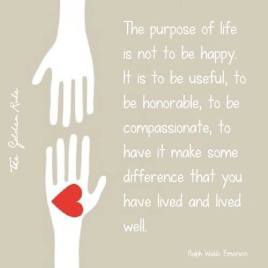
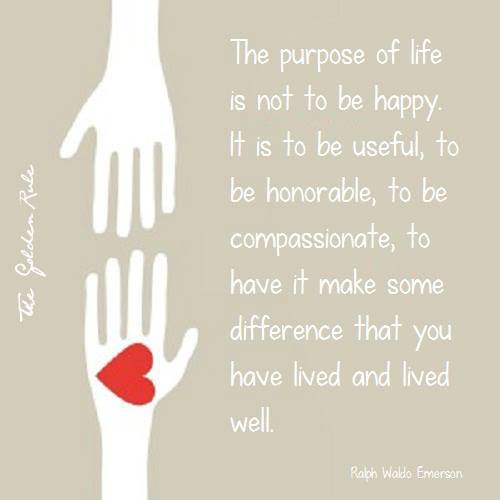
I’ve heard that our purpose, if we have one, on this planet is not to “be happy” and maybe it’s not, but it seems that we are driven to pursue it. What if being responsible, kind, and loving human beings was our purpose, and precisely because it is our purpose, it also makes us happy? Not the fleeting excitement of a new toy-kind of happiness, but joy, the deep, soul-contentment of being who we should be, who we are capable of becoming. —Christina Knowles

Sources

  • Happy. Wadi Rum Films, 2012. Film.
  • Happy Photo. yhponline.com. Web.15 May 2015.
  • Purpose Photo. Hippie Peace Freaks. Facebook. Web.15 May 2015.
  • I Am. Tom Shadyac. Flying Eye Productions, Homemade Canvas Production, and Shady Acres Films, 2010. Film.

“I Grieve” by Christina Knowles

“I Grieve”

BRITTANY_ALLEN_SCREAM1

Lost and faltering

Floundering in the sea

Of my indispensable need

Need that intensifies in the darkness

Unlimited and unending

How can I describe

The hollowness of loss?

Do I speak?

Will I risk the words

That once released

Continue out of control

Throughout the breath of eternity?

Shall I know the result

Of these intemperate thoughts?

Or slumber in the oblivion of the dead?

O, tranquil are the deaf

To the choruses of loss

For to speak, to give voice

To that which is in reality

A scream

Would spin this wheel interminably

Or if it be little more than a squeak

Choked and muffled by grief

Stutter and trip

to a premature conclusion

How then do I proceed

When lost and faltering, I grieve?

—Christina Knowles (2015)

Photo snagged from trulynet.com

“An Ocean of Possibility” by Christina Knowles

“An Ocean of Possibility”

fishes-underwater-on-a-tropical-beach-wallpaper_3960

Language in a thousand pieces

Inadequate to express

An ocean in a million directions

Overwhelmed but not afraid

The obvious creates meaning

Without limitations

Another recognizes the idea

As my mind reconsiders beauty

A jungle of first impressions

I dream of the possibility

I compose it

This silhouette

From my desires

The passion in me

Turns my reality into

Dreams

—Christina Knowles (2006)

Photo courtesy of Bing Images.

10 Mind-Bending Epiphanies That Changed My Life by Christina Knowles

epiphany1) I’ll never be all caught up. Getting caught up in getting caught up is like a hamster running in a wheel. It’s pointless, so stop trying so hard. Now I make a few daily goals, but getting done with everything is no longer on the list. Knowing it is impossible sets me free to just stop and relax once in a while.

2) Pain is our friend. Whether it is physical pain or emotional pain, it is a signal that we need to do something different. It is the catalyst for change. Embrace it.

3) To some extent, you are already doing what you want to do, or you wouldn’t be doing it. Let’s be honest for a second. We can’t make ourselves do anything we don’t want to do for any length of time. Otherwise, we’d all be thin, healthy, and adept at meditation. So, the fact that I’ve been a teacher for 15 years must mean that some part of me actually wants to be a teacher. The same is true for all the rest of my habitual behavior.

4) I’ve believed lies most of my life, but because of this, I don’t know if my current beliefs are also lies. We grow up listening to and believing everything our parents or authority figures tell us. Then we find out that much of what we learned and believed is not true. We read, discover, and form our own ideas and teach them to other people who grow up and realize that much of what we taught them is not true. Who really knows the truth?

5) Marriage doesn’t have to be work, and shouldn’t be. People who tell you how hard marriage is and how much effort you have to put into it have bad marriages, so don’t listen to anything they say. Who would want to be married if it made your life more difficult? Evolutionarily speaking, the whole point of marriage is to make life easier. Don’t fight nature. Marry someone who is easy to be married to.

6) You don’t have to worry—I’m serious, you really don’t. Worrying is a choice. Sometimes we unconsciously begin to worry, but as soon as we realize we’re doing it, we can choose to stop. I know it’s cliché, but worrying never changed anything except your mood and physical health for the worse. There’s no point, and I’m too busy for pointless things. Whenever I start to worry, I allow myself to imagine the worse thing that can happen. It’s pretty ridiculous and funny, so it snaps me out of worrying pretty quickly, which leads me to number 7.

7) The only people who are stressed are people who care too much. I love the saying, “I don’t know about my bucket list, but my fucket list is getting pretty long.” The quickest way to stress-free living is shockingly not meditation—I’ve tried that. It’s saying, “Fuck it.” If something is going to cause my stomach to turn to knots, I realize that it must be something over which I have very little control, so I choose to not care about it anymore. I realize this is not possible in every case, especially when it comes to the health of loved ones, but as I understand number 6, there’s nothing I can do about it anyway.

8) We can love or hate anyone, regardless of what they are like. Almost 50 years of life has taught me that loving or hating someone is more about me than it is about them. I have learned that I am capable of loving the most unlovable person once I learn enough about them to understand their perspectives, what made them like they are, what is important to them, what they fear and for what they hope, and see them as they see themselves. Conversely, I can despise wonderful people if I choose to see them only through their faults, mistakes, or little annoyances.

9) Everyone is mentally ill, but then mental illness is normal, so no one is mentally ill. It seems like everyone has some sort of neuroses, depression, or anxiety today, so much so, that it’s hard to find someone who is not depressed, bi-polar, who does not have OCD, ADHD, addictive behavior, or some nervous disorder. It’s like allergies. Almost everyone has one. So doesn’t that make it the norm? And if it’s normal to have these brain malfunctions, then are they malfunctions? I’m not talking about serial killers here—serious sociopaths. I’m speaking of all the little idiosyncrasies that are now so common. Didn’t we always have them? We just didn’t label them and medicate them in the past. Get over it; you’re normal.

10) Death is not a big deal to the person who is dead. As a person who has serious doubts about the existence of an afterlife, I’m not worried about it. When I’m dead, I won’t know it, so what’s the big deal? Bury me, cremate me, throw me in a ditch. Who cares? I’m not there anymore. Sure, my life will be over along with all my potential, all my hopes and dreams, but again, I won’t know it, so what’s all the fuss about?

11) We choose friends in whom we see what we like about ourselves. People say that when we dislike something in another person, we are really seeing something in them which is negative about ourselves. I don’t know if that’s true, but the converse is most assuredly true. We really do choose friends in whom we see what we like about ourselves. We like them because we have these things in common, and because of them, we notice the best in ourselves.

12) People continue to lie when the best thing in the world is to be known, known by self and others, truly known. In an effort to be accepted, they never can be, and they are subconsciously preventing their own happiness.

Yes, I can count. I said there were 10 epiphanies that changed my life, but then I wrote 12. Well, as a person about to turn 50, I refuse to be constrained by a number. I am a rebel, and 10 sounded better than 12 in the title. But seriously, when I realized each one of these things, it changed my whole outlook on life, for the better, I’d like to think. So mind-bending? Yes, whenever my worldview shifts and things become clear and my life changes as a result, I consider my mind bent. —Christina Knowles

Photo courtesy of cloudfront.net

All You Need Is Love–and a Few Ground Rules by Christina Knowles

savingslifestyle.com

Everyday I am stunned by another friend getting a divorce. Sometimes it’s a good thing, but more often than not, it is a tragedy that could have been prevented. I’m all for leaving oppressive, abusive relationships. I can even concede that once in a while a couple has grown apart to the extent that there is no reason to put it back together again. What I don’t get is how someone can walk away from someone they once loved without really trying to make it work, especially when there is still love, when hearts will be broken, and when there are children who will be irrevocably damaged.

We all walk down that aisle with high hopes and idealistic predictions, but how do we prevent our own relationship from deteriorating into just another statistic? There are hundreds of thousands of books written on the subject, some by marriage and family counselors, some by psychologists, and others by theologians and pastors, all giving their warnings, advice, and wisdom. It would seem someone who had been married for years and years would have some good suggestions from experience. I’ve been told you have to have a regular date night; you have to keep romance alive. I’ve heard many of them say, “Love is a choice,” and “You have to commit to stay even when you don’t want to,” and my personal favorite (insert sarcasm into the narrative voice in your head), “Marriage is hard work.” Yeah, that sounds like fun.

Before I embarked on my second marriage, I read all the books, talked to old successfully married couples, and even went to pre-marital counseling. I was ready for the struggle. But it never really came. True, I have not been married for that long—a little over eight years, but isn’t there supposed to be trouble around year seven? Another little tidbit I picked up somewhere. But certainly I would hesitate to give advice this early in the marital scheme of things, and yet, we are doing something right. I mean my husband and I have endured a lot of things since we first married, but our love has only gotten stronger, and I can honestly say that being with him has been the easiest part of my life ever since we got together. It’s never been difficult. Of course, we’ve had disagreements, even a few fights, but we quickly got over it, and they were nothing that caused any damage at all. Honestly, I was really surprised how easy marriage could be.

Maybe because we’d both been divorced, we made our expectations clear, or maybe it is all the ground rules we established. Maybe it’s our work schedules or just our personalities. When we got married, we set certain rules in place to protect our marriage. One of the things we established is that neither one of us would have close friends of the opposite sex in whom we confided. Hanging out with friends of the opposite sex would be limited to group settings, preferably with our spouse present. We even have social media rules for Facebook in particular. We do not friend anyone whom we previously dated. If we are friends with single people of the opposite sex on Facebook, we encourage our spouse to friend them too. We don’t ever cathartically complain about our spouse to a friend of the opposite sex. We share our passwords, so we have access to each other’s emails, texts, and Facebook page. It’s not that we don’t trust each other. But things could change. Knowing we have no secrets from each other gives us security and keeps us from making foolish mistakes. And it isn’t just about preventing jealousy or cheating.  By limiting emotional intimacy to your partner, it keeps the emotional intimacy where it belongs, in the relationship. I have only one confidant who knows all my innermost feelings and fears. Doing this creates complete trust and deepens the level of attachment. Which brings me to honesty, the most important trait of a good marriage.

Without honesty, we’re just strangers. I want my husband to know me. I want to know him. I want to share the embarrassing, the unflattering and humiliating mistakes that I don’t want anyone to know about me. Because when he loves me despite them, I am experiencing true acceptance, and we grow even closer together. And being this transparent with another individual creates the truest form of intimacy I can imagine. It also means that we don’t store up resentments. We talk about something as soon as it bothers us. We solve it and move on.

We also try to put each other’s needs before our own. It is almost impossible to not love someone who treats you better than they treat themselves, when they care more about your happiness than their own. Which means we never stoop to name-calling or lashing out in anger. The one thing that is okay to hold back is words spoken in anger. No matter how mad you get, be careful what you say. When you are putting someone before yourself, his feelings are more important than your need to vent your anger.

One piece of advice sticks with me. I think it was Benjamin Franklin’s wise little aphorism that states, “Keep your eyes wide open before marriage, half shut afterwards.” When you’ve chosen your life partner, don’t look for things to drive you crazy. Purposefully ignore them. Tell yourself that in the scheme of things, they don’t even matter. I remember once hearing a story of a woman who was so disgusted by the little hairs her husband would carelessly leave in the bottom of the sink after trimming his mustache. She always nagged him about it, and they’d even had some fights over it. After he passed away unexpectedly, she would cry every time she looked down at her clean sink.

Which brings me to that piece of advice that says, “Love is a choice, not a feeling.” Well, I think it is definitely a feeling, an emotion, and it should be, but it is also a choice. I choose to love my husband. That means overlooking his flaws, looking for the best in him, recognizing his highest qualities, being careful with his heart, and being willing to share all of myself with him, and accept all of him in return. And if we keep this up, we won’t grow apart. We will change, but the change doesn’t have to distance us if we share all the minuscule changes along the way.

My husband and I have been through the death of four parents, estrangement from family members, depression, illness, job stress, and several changes in core religious beliefs on my part, but we have only grown closer together. Leaving him now would mean ripping a part of myself in two.

But we do give each other space. We both enjoy being alone and doing our own things. I write, read, paint, and do many other solitary activities. He writes music and plays guitar. We are not threatened by time alone. It makes us that much more anxious to be together. When we are together, we really enjoy it. We look forward to it—just like when we were dating, except without all that nervous excitement. Now it is a peaceful, comforting feeling, but it’s actually better than when we were dating. It’s richer, deeper. The butterflies in my stomach have been replaced with something else—a swelling in my heart that feels, at times, like it will burst with how much I love him. That’s the only difficult thing about being married to him—realizing what it would feel like to lose him. He feels the same about me, and so we protect our marriage in every way we can.

So, I’m not saying we have it all figured out, or that we are some kind of experts on marriage after eight years, but these things work for us—love and a few ground rules.—Christina Knowles

All Grown Up by Christina Knowles

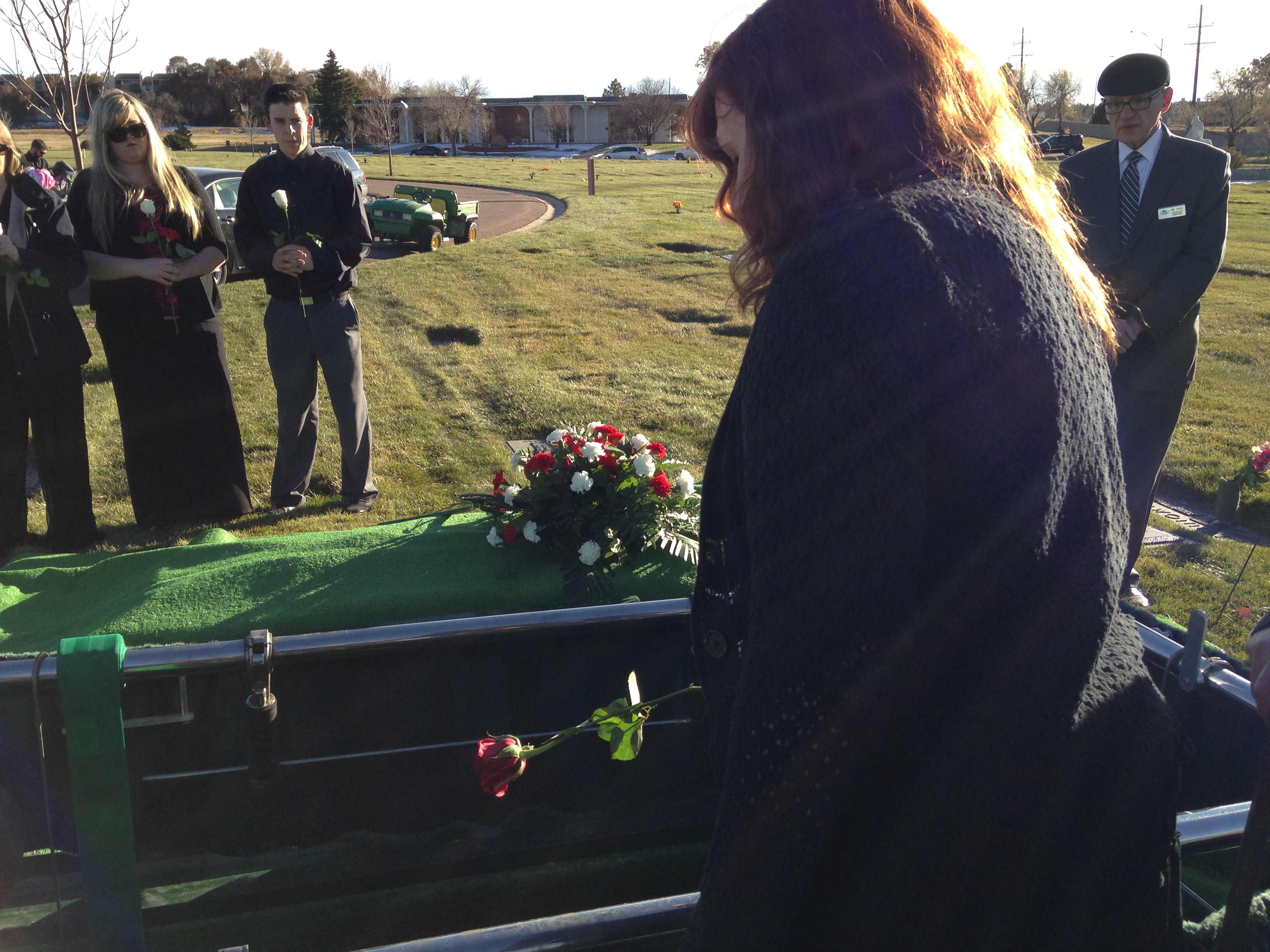
IMG_2659We buried our mother today, my family and I. She was a wonderful mother—loving, strong, kind, principled, and dedicated. I don’t know what I’m going to do without her.

Losing a mother is a unique kind of pain. It’s different than losing a father, a spouse, a sibling, or a child. I’m thankful that I haven’t experienced all these different types of devastating loss, but I just know that it has to be different. I’m not saying it’s worse, just different. In fact, I’m pretty sure losing a child would be the worst.

But losing a mother is the ultimate severing of the umbilical cord. When you lose a mother, you feel lost, insecure. I haven’t depended on my mother for many years, but I guess I knew she was always there if I needed her. Knowing she is gone makes me feel all alone in the world even though I know I am not. I feel a primal need for her. I wake up in the middle of the night calling for my mommy, and I don’t care that I am a grown woman, a grandmother even. I want my mommy.

Losing a mother makes a person grow up instantly. You are no longer the child, and having already lost my father, I am no longer anybody’s child. That’s a strange feeling. I am the mother now. I feel this more now than ever, even though I have been a mother for 26 years. Not being someone’s child is a lonely feeling. It makes me want to pour myself into being a mother to my children. Unfortunately, they’ve grown and left home, and I don’t see them as often as I’d like.

Being without a mother makes me feel different. I am different. My husband warned me that losing parents changes a person, but I didn’t really understand before. Losing a mother leaves a void that nothing else can fill. Really losing anyone you love does, but to whom will I go for advice? Who will be proud of me for absolutely no reason? Who is capable of unconditional love besides a mother?

That’s what’s really missing. It’s knowing I will never be loved unconditionally by anyone again. My husband loves me almost that much, but I know I could make him lose his love for me if I tried. Of course, I won’t. My brothers, my sisters—that’s close. They have loved me through everything so far. My kids—I’d love to think that they love me unconditionally, but even though some part of them may need me or love me no matter what, it’s just not that same I’d-die-for-you kind of love. I know this is true because the only people in the world that I would love under any circumstances are my children, the only ones I could forgive anything.

My pain sounds so selfish. It’s all about what I will no longer have. But isn’t that what grief usually is? We miss the people we lose; we will no longer enjoy their love, their presence. My mother was a wonderful person. She left the world a much better place than she found it. But even if she didn’t, today I would still be an orphan. I suppose her goodness just intensifies it.

So today I said goodbye to my mother and to a love I will never experience again. At 49 years old, I just grew up.—Christina Knowles

“Music” by Christina Knowles

music-thinking“Music”

Music wraps his arms around me

And tells me he knows what I’m about

He shows me I’m not alone and speaks to me

In ways you couldn’t even shout

He squeals and strums and screams to me

And then quietly whispers he accepts

All that you could never see in me

And all that you reject.—Christina Knowles (2007)

The Definition of Dignity by Christina Knowles

Snagged from deviant art.com

According to the Oxford English Dictionary, the definition of dignity is “the state or quality of being worthy of honor or respect.”

Death has been on my mind lately. We see it every day in the news, pandemics, violence, cancer, but mainly it’s been at the forefront of my mind recently because my mother is dying. She is less than a month away from being 83 years old, so it is not surprising that she suffers from a variety of maladies due to age. I lost my father about a year and a half ago, and honestly, most of us (my brothers and sisters) did not expect her to live much longer after she lost him. They were together 61 years, and she took it pretty hard. He was the love of her life.

My mother is a strong believer in God and follower of the Christian faith, so she fully expects to be reunited with my father in heaven when she dies. I’m not so sure I share this belief, but I’m glad she has it. I do believe, however, that each person’s death is extremely important, and can be one of the most beautiful things we ever experience in our lives.

First let me preface this with a clarification of the kind of death to which I refer. I’m talking about the kind of death that is expected, somewhat drawn out, and is actually positively anticipated. Tragedies that steal lives long before their time suddenly with no preparation, no chance for goodbyes; those are terribly catastrophic, or deaths which come far too soon in a life yet unlived, those who should have had many more years to come. I would also like to clarify that I am not suggesting that people should needlessly suffer. But for those people who know their deaths are imminent, are able to put their affairs in order, say goodbye to loved ones, and whose pain is managed, the knowing, and even the experience, can be a gift.

Of course, I can only imagine since I have never been diagnosed with a terminal illness, but I have witnessed death first-hand and found it beautiful and profound for both the dying and those who were present in the end. I had the privilege of helping my husband care for his dying mother in her last days, and it was indeed a privilege. We often hear stories of people who want to avoid prolonged death, who say they do not want to be a burden, endure the humiliation of being incapable of doing even the simplest things for themselves, or do not want to put their relatives through that kind of pain. I can understand fear, fear of pain, fear of the unknown, fear of what the afterlife, if there is one, holds, but facing these fears could be the most important thing we’ve ever done. However, I do not understand the common fears regarding the humiliation and the burdening of loved ones. It’s simply not true from my perspective.

From what I have witnessed, knowing those who’ve died with loved ones nearby and from those who’ve cared for them, these fears are unwarranted. A dying loved one is not a burden, not in the slightest. It is hard, it is exhausting, it is painful, but it is also wonderful. Being present to hear those last words of wisdom or just words of love and to impart them yourself is precious beyond words. Caring for someone you love in the most intimate of ways, doing everything for them that they cannot do themselves is beautiful beyond comparison. There is nothing humiliating about it for the person receiving or for the person giving. Never in my life have I been so close to my mother as when I bathed her, never have I been so close to my father as when I spoon-fed him his dinner, never have I felt so much love flowing from me to another person through a simple act. The smile on the face of my mother as I bathed her, the smile on the face of my father as I fed him, tell me they felt the same. I wouldn’t trade these experiences for the world.

wordsrhymesandrhythm.files.wordpress

And then there are the words. For days before my father died, my whole family sat by his side, hanging on his every word, knowing whatever he said in those moments, knowing he could go at any moment, would likely be the most important things he would ever say. He spoke to each of us individually, saying what he loved about us, calling us by our special names. We asked him questions, things we knew we’d never have another chance to ask. Moments of incoherence happened, yes, but those about to die have surprising moments of clarity as well. I am honored to have been there for his last days.

My mother has had many close calls, so we are always hesitant to start the process of acceptance. Right now she has congestive heart failure; her heart rate drops to 20 and goes back up. She is refusing any care except comfort measures. She is ready to go be with her love. Knowing it can be any time is a gift. We don’t waste a moment. Sitting by her side, I ask her to tell me the stories of her childhood, to clarify things for me so I can have an accurate memory of her life. She enjoys this as well, recounting a life well-lived. Mostly I get to hold her hand and talk about how much I love her and how she has always been the best mother anyone could have.

I think death can even be this way for younger people with terminal illness although it is infinitely more unfair and tragic. I also know what it’s like to lose someone long before they should go, and what it’s like to be left behind. I know what it feels like to grieve so long it seems you’ll never stop. But knowing when, or approximately when we will die, makes us zero in on what’s important; it magnifies every moment, it makes every word precious and every touch significant.

Brittany Maynard, recently in the news for choosing a date to end her life to avoid a long drawn out and painful death in hospice care, says she would rather “die with dignity.” Although I support her right to make the choice and understand wanting to avoid the worst, I think it is a mistake. There is nothing undignified about dying surrounded by loved ones in hospice care. Her loved ones don’t care about her “singed off hair” and they would be able to keep her comfortable. However, I do believe it is her choice.

This may sound strange coming from someone who isn’t even sure if there is an afterlife, but I know if there is a heaven, my mother is surely going there, and if there isn’t, she’ll never know, so she won’t be disappointed. As for me, I don’t hold out hope to see my loved ones again after this life, which is all the more reason why I cherish every moment with them and treasure the privilege of helping to care for them; witnessing the so-called undignified—it couldn’t be further from the truth. And hopefully when I am very old and my death is just around the bend, I will remember that the very fact that there is someone willing to care for me through till the end is the very definition of dignity, and I will participate in every profound moment of my dying experience without guilt or reservation.—Christina Knowles

Blog at WordPress.com.

Up ↑