Is There Hope for the Human Race? by Christina Knowles

Snagged from www.vox.com
Snagged from http://www.vox.com

It has been a depressing week. Refugee children from South America continue to suffer, the Israeli-Hamas conflict is far from over, even though they are experiencing a temporary ceasefire, the Ebola virus is spreading across many African countries, tensions are rising as the radical Sunni threaten the Kurdish region, Robin Williams tragically committed suicide, Lauren Bacall died as well, and protests and riots erupted in Ferguson, Missouri after the unarmed Michael Brown was shot by the police, and then the militarized police force moved on protestors with armored vehicles, assault rifles, and tear gas. And that’s just what I can think of off the top of my head. Like I said, a very depressing week.

Snagged from www.vox.com.
Snagged from http://www.vox.com.

One might wonder if there is even any hope left for the human race. This week I asked myself that question. It would seem, if one were listening to the news, that everything is spiraling out of control, and we are on a fast trip downward toward annihilation. But is everything really getting worse? Or is this just the perception we have from an ever-increasing saturation of instant news coverage via cable news, Twitter, and Facebook? Although I am thankful for social media for its ability to provide a platform for the average person to report what they see, rather than relying on our somewhat (understatement) biased news sources, are we letting our access to hastily reported news prejudice us against our own futures? Perhaps.

Snagged from www.vox.com.
Snagged from http://www.vox.com.

Let’s look at history to get some perspective. According to longevity expert, Sharon Basaraba, “From the 1500s to around the year 1800, life expectancy throughout Europe hovered between the ages of 30 and 40” (Basaraba). Today our life expectancy has more than doubled since that time. Obviously, advances in medical care and hygiene make our world a better, safer place. We have vaccines, regulated hospitals, and most developed countries enjoy clean water. We also see improvements in food and environmental protections. Prior to the 1950s, corporations could dump toxic waste without fear of penalties, poisoning fish and water sources, as well as the surrounding agriculture. Since then food inspection and labeling has advanced, and even twenty years ago, people didn’t take the idea of avoiding GMOs and eating organic seriously, but today it is widely accepted. Okay, but what about all the violence and terrorism in the world?

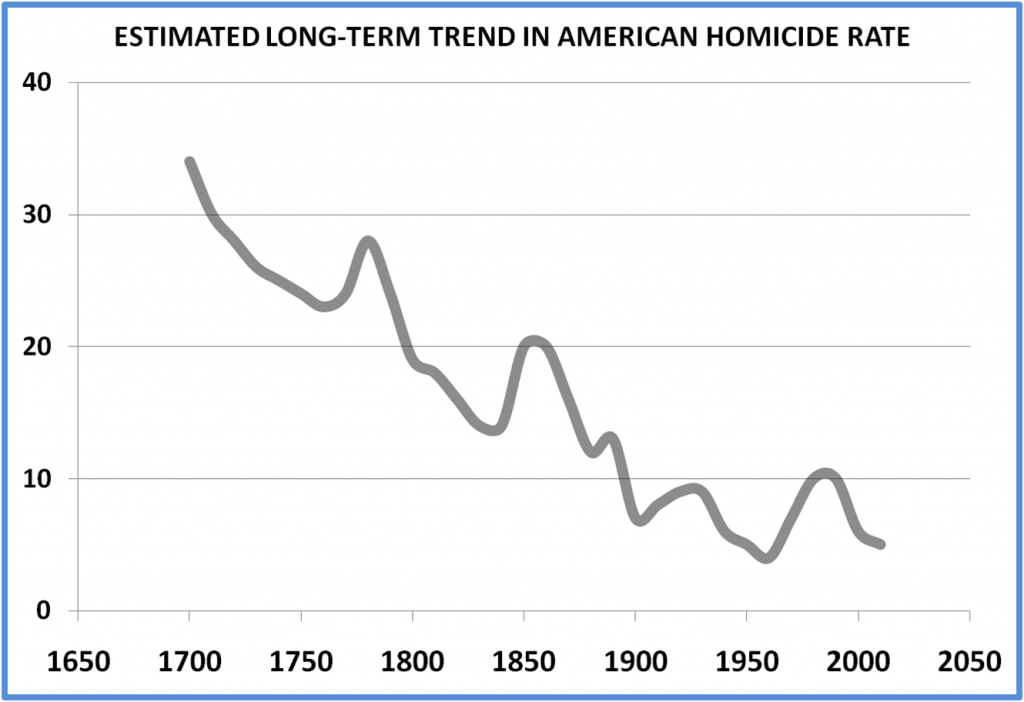
According to a 2011 Huffington Post article, statistics show violence is down worldwide, despite global conflicts. “The rate of genocide deaths per world population was 1,400 times higher in 1942 than in 2008.

Snagged from marginalrevolution.com

“There were fewer than 20 democracies in 1946. Now there are close to 100. Meanwhile, the number of authoritarian countries has dropped from a high of almost 90 in 1976 to about 25 now. Rape in the United States is down 80 percent since 1973. Lynchings, which used to occur at a rate of 150 a year, have disappeared.

“Discrimination against blacks and gays is down, as is capital punishment, the spanking of children, and child abuse” (Seth Borenstein). But despite the data, most people I know believe violence is at an all-time high. Why? Because we hear about it, see it in graphic detail on the evening news and on our Twitter feed.

And what about civil rights? Although there are human rights violations daily all over the planet, more countries now have civil rights laws than ever before. Minorities and women in our country enjoy much more freedom and less prejudice than in the early 20th century although there is obviously a long way to go. Accommodations for the disabled have come very far. We’re seeing the right to marry for homosexuals granted in more and more states all the time. Working conditions are better thanks to unions and the 40-hour work week, there are no more sweat shops, at least in most developed countries, and there are child labor laws to protect the young. There are fewer injuries on the job and education is more available than 100 years ago, although rising costs of college are beginning to turn the trend back the other way. But weren’t people just happier in the past?

Not necessarily. Some people argue that we are in a recession, and people tend to be less happy in economic down-cycles. However, other research shows that people today are more likely to follow their dreams and opt for an emotionally fulfilling career over money, as long as they are somewhat secure. Perhaps because not many jobs today are secure, there is actually more perceived freedom to follow your dreams. Another reason people may be happier is because they are healthier or because they have more freedom to be themselves. Shana Lebowitz reports that a study in 2013 by The National Institute on Aging found that people are indeed happier than the same people were when they were younger, probably because people tend to get happier as they age. The study also found that people born after the Baby Boomers are happier than the Baby Boomers themselves (Lebowitz). As an English teacher, I read a lot of old books, and people do just seem nicer, more sensitive now, than portrayals of people hundreds of years ago. I have noticed that children seem less respectful; however, children also have gained more freedom and autonomy, which would explain a greater freedom to express themselves, especially in negative ways.

So are we truly spiraling the drain? Or is it just our perception?

I guess I am trying to say that although things seem horrible—and they are sometimes, as bad as it is, we do seem to be learning something. We are progressing even though we don’t hear about that on the evening news. All it takes is a little research to put things into perspective. I know we all expected to be driving hover cars and colonizing the moon, while reading about eradicated disease and something called war in the history books, but change is slow and we can’t see something grow while we are staring at it. So chin up—there is hope for the human race after all.—Christina Knowles

Sources:

Basaraba, Sharon. “Longevity Throughout History: How has human life expectancy changed over time?” April 21, 2013. Available: http://longevity.about.com/od/longevitystatsandnumbers/a/Longevity-Throughout-History.htm Accessed: August 15, 2014.

Borenstein, Seth. Huffington Post. “World Becoming Less Violent: Despite Global Conflict, Statistics Show Violence In Steady Decline” October, 22, 2011. Available: http://www.huffingtonpost.com/2011/10/22/world-less-violent-stats_n_1026723.html Accessed: August 15, 2014.

Hoegen, Monika. “Statistics and the quality of life: Measuring progress – a world beyond GDP.” Edited by Thomas Wollnik. Available: http://www.oecd.org/site/progresskorea/globalproject/44227733.pdf Accessed: August 15, 2014.

Tabarrok, Alex. “Long Term Trends in Homicide Rates” June 1, 2011.Available: http://marginalrevolution.com/marginalrevolution/2011/06/long-term-trend-in-homicide-rates.html#sthash.JQAecZHp.dpufhttp://marginalrevolution.com/marginalrevolution/2011/06/long-term-trend-in-homicide-rates.html Accessed: August 15, 2014. 

You Know Who You Are by Christina Knowles

grumpy catPeople often mention their pet peeves. I really didn’t think I had very many until I started to think about it. I mean, I’m pretty easy to get along with, and I don’t usually get upset about little things. I do have a touch of OCD about a few things, and I’m kind of particular about how I like things done, but I don’t believe I really put that burden on the people around me—at least I try not to. I don’t expect the same things that bother me to bother other people. With that said, there are some things I consider to be more than slight irritants, and I apologize in advance if I sound rude or snippy, but once I started listing them, I started to feel a little annoyed. But what did you expect? Pet peeves do that to people. Here they are:

1. Napkins stuffed inside glasses. I’ve known a lot of people who do this. I find it utterly repulsive, mainly because I can’t help imagining the person who has to pull it out.

2. Leaving used tissues anywhere but the trash. Even my own used tissues disgust me. It makes me want to sterilize whatever surface they’ve touched.

3. Students who stick their gum under their desks or stuff trash into my cabinets. Seriously? There is a trashcan less than 15 feet from any desk in the room. Do teenagers shove their trash in their cupboards at home? Or is this some type of protest behavior, and I’m missing the point?

4. Vandalism other than protest graffiti. If you aren’t Banksy, you have no reason to deface any property that is not your own. Vandalism is truly the most senseless crime, and you probably aren’t as talented as Banksy anyway.

5. Giant flagpoles in the middle of the front yards of residential homes. Your house is not the White House, and you are not the president. Buy a regular size flag and mount it on your porch like a normal person.

6. Closet and cupboard doors left open. This is definitely an OCD thing, but come on, how hard is it to shut the cupboard after you take out the cereal? Someone could bump their head or be driven insane until they are forced to get up in the middle of dinner to shut it and then have to explain that they have OCD.

7. People not flushing toilets. You aren’t saving the planet because someone will have to flush it before they use it anyway, so it is still getting flushed the same number of times. Stay until you see it go down. Repeat if necessary. Thanks.

8. People who have road rage. You are either way too stressed out before you ever get into the car, or you are leaving way too late for a job that you fear you are about to lose. Set your alarm for half an hour earlier, put on some classical music, and get a more laid-back job.

9. People whose only posts on Facebook are cryptic remarks that don’t say what they really mean, or who post suicidal song lyrics without saying they are quoting song lyrics. Want attention much? If you don’t want me knocking on your door in the middle of the night to see if I need to call an ambulance, please use quotation marks and credit the author. Even then, you may want to mention that you are not thinking of taking your life. I don’t need that kind of stress.

10. Speaking of Facebook, people who post ridiculous stories or claims from satirical sites because they think they are actually real, then get upset at you for posting a Snopes link on their wall. And while I’m on the subject, people who post false and mean-spirited memes that dehumanize or demoralize a person just because they disagree with his politics. Attack the issue, not the person, and by the way, the more preposterous the libel, the crazier they seem.

11. People who expound on issues as some kind of intellectual authority, but do so in run-on sentences, littered with homophones and with no commas, way too many commas, or no punctuation whatsoever. If you cannot write using accepted conventions of your native tongue, I’m not likely to consider you an expert on anything intellectual. Disclaimer: I don’t judge every post this harshly. Sometimes a person is quickly posting something funny or replying briefly in a casual conversation, but if you are attempting to persuade someone of something with your wealth of knowledge, please demonstrate a wealth of knowledge.

It sounds much worse than it is. I rarely am bothered by any of these, which is why it took me some time to think of them. What it did for me, though, was make me realize that sitting around thinking of what annoys me, annoys me. It is not really a good idea . . . unless it causes a certain someone to stop leaving the cupboard doors open. You know who you are. —Christina Knowles

Be Careful; Your Character Is Showing by Christina Knowles

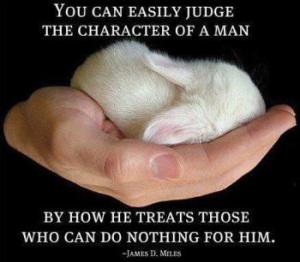
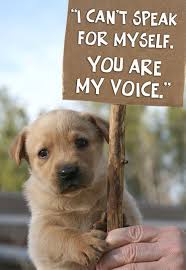
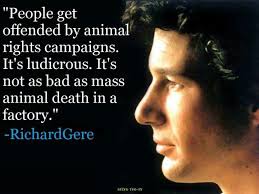
CharacterDo all animals deserve to be treated with respect and compassion? How you answer this question will say a lot about your character. This topic has been boiling just under the surface of my mind for some time now. When I hear someone say something, which, in my opinion, is cruel about animals, I automatically think less of them as a person. This has been on my mind lately because I have recently been exposed to many shocking comments regarding animals from people I never would have suspected would think such things or consider them appropriate to say.

Here are some examples of the shocking things I’ve heard come from the mouths of seemingly ordinary people:

  • Regarding an elephant chained to a stake in the ground for its entire life: “Who cares? It’s just an animal, not like it’s a person or anything.”
  • Regarding a dog that faithfully stayed put when the “owner’s” fence blew down: “I was hoping it’d run away.”
  • Regarding two pet dogs in a family of three children: “I always forget to feed them, but it doesn’t matter because they snatch stuff from the kids.”
  • Regarding two dogs belonging to a family with two small children: “They’re not allowed in the house. I don’t care how hot or cold it is. If they die, they die. I can’t stand to have dogs in the house.”
  • Regarding a conversation on skeet shooting: “I don’t have a clay shooter. I practice shooting on birds ‘cause a moving target is best. No, I don’t eat ‘em. They’re too small and gamey.”
  • Regarding a conversation on testing make-up products on animals. “They should test it on animals before I put it on my face.”Unknown-1
  • Regarding some questionable looking meat: “I give it to the dog, and if it doesn’t make him sick, then I’ll serve it.”
  • Regarding a faithful 14 year-old dog that had been with a family her whole life: “I can’t afford an old dog if it gets sick. It’s not human. I’m not spending that kind of money on a dog. The kids need a dog to play with, so I’m taking this one to the pound and picking up a puppy.”
  • Regarding a conversation about illegal immigration that turned into a pro-choice vs. pro-life conversation: Them: “They’ll march and pay to save a dumb animal, but they don’t care about murdered babies.” Me: “Why can’t we care about unborn humans, children already born, and animals all at the same time?”
  • Regarding a time when I saw a child tormenting a tired old dog with a clothespin in front of his parents. Me: “He doesn’t like that.” Parents: “He’s not hurting him; the dog’s here for him to play with,” as if the dog were an inanimate toy for their child’s cruel pleasure.
  • Regarding a man I know who has land in a rural area: “I need a cat to put in the barn to catch mice. He won’t make it long out here though. I have to replace them every couple of months.”
  • Regarding a dog who was going to die, so his family could move conveniently: “She’s old and we’re moving, so we’re just going to put her down.”
  • Regarding cruelty to cows in 8 by 8 pens 24 hours per day, standing in their own mess and so sick that they have to be hoisted out to slaughter: “I don’t care. It’s just a dumb cow. God put them here for us to eat. Cheeseburgers are good.”
  • Previous neighbor regarding his German Shepherd, who was chained to a tree in the middle of a dirt yard with no shade but the house for a couple of hours a day, his fur rubbed off his neck, and receiving no attention except for a bowl of food and water shoved out to him once a day: “If I don’t chain him up, he jumps the fence, and the neighbors will complain.” I complained, but apparently he was receiving “adequate care” according to authorities.
  • Regarding a supposedly beloved pet (I’ve heard this one more times than I can count): “Our new house doesn’t allow pets, so we need to find them a new home.” What if they don’t allow children? Are you going to give them away?
  • Regarding moving across the state: “We’re moving and a dog and a cat are too much trouble to move with.”
  • Regarding a former coworker who was never home: “I don’t have time to spend with him, so we’re putting him down.”
  • Regarding animal testing: “What’s the difference? It’s only a mouse.”
  • Regarding animal testing: “Animals don’t have souls, and they aren’t as smart as people. That’s what they’re for. God put them here for our use and gave us dominion over them.”
  • Regarding a vicious and cruel child: “Better that he take his anger out on the dog than on his brother.” Really? How about counseling as an option? 360982957641_1
  • Regarding grieving over a beloved pet: “Get over it. It was just a dog. You can get another one.” No one had better ever say that to me.
  • Regarding a heartbroken girl who had to sell her old horse: “We had to sell my horse because he can’t jump anymore. I barrel race, and we can’t afford to keep him if he can’t race.”
  • Regarding a discussion of particularly cruel tests on animals for the safety of household cleaners: “Animal rights activists care more about animals than they do people.” Gee, I wonder why?

Unknown-2Hearing these same type of remarks over and over from people who claim to be caring, compassionate, and moral people caused me to wonder why we, as humans in general, think we are so much more valuable than animals because that’s what all these statements have in common. We see animals as objects existing for the use of people. Why else would people who supposedly try and teach their children right from wrong not feel the need to instill in their children respect and compassion for animals?

I could write this entire blog about the importance to humans of being kind and respectful to animals. For example, children who are allowed to treat animals with disrespect and cruelty often move on to bully others and become abusive adults. Treating an animal with kindness and respect teaches empathy, responsibility, humility, and compassion. Prisons have experienced very high rehabilitation success with animal programs for violent inmates. Torturing animals is a pre-cursor to violent crimes and is even known to be a profiling marker for serial killers. People who value animals tend to value human life more, are kinder, more humanitarian, and volunteer to help humans more. People who stand up against animal cruelty, also tend to stand up against mistreatment of humans. We all know this, yet we still think this abhorrent behavior is socially acceptable and even brag about it. Why?

It strikes me as quite arrogant to think we have more value than another living being. I know it is natural for most of us to prefer our own species in matters of life and death–we will choose our own child to save over the family dog, but I’m not talking about choosing animals over people in life-threatening situations. I’m talking about assuming, in general, that we are so superior to them that we have the right to do with them whatever we choose, regardless of their pain, loss of dignity, disregarding their inherent rights as living beings. I believe many people do not even believe they have rights; some do not see them as having feelings or thoughts, or they consider animals as undeserving because of their brain capacity or lack of their ability to use tools. Pets are seen as possessions to be owned, and therefore, can be disposed of whenever convenient.  Why do otherwise moral people think this is okay?Unknown

After considering these attitudes, I have narrowed it down to three different possible reasons why they may feel this way about animals:

  1. Many people think humans have a soul and animals do not–this somehow makes the animal into an object to them, rather than a living being with a right to happiness, a normal environment specific to their needs, and respect as a fellow inhabitant of the earth.
  2. Some people believe that it is an evolutionary trait that we prefer our species and denigrate “lower” species as means of survival.
  3. Many people think that human intelligence is so much higher than that of most animals, and this, in their minds, is a reason to care more for people than animals. Hence, “It’s just a dumb cow,” as if the intelligence level of an animal means they hurt any less from torture. This thought process also tends to include the idea of them deserving to wield power over a weaker species. We are smarter and more powerful, so we can do what we choose to them.

Let me address these attitudes one by one. Cultures who believe animals have souls, tend to respect them more, even if they use them for food. They may follow rituals to show respect for the animal’s sacrifice, such as some Native American tribes. But what if they don’t have a soul? Does it matter? Do they feel pain any less? Do they not deserve to a have a happy, peaceful life, or whatever life is natural to them while they are here? How do we know anyone has a soul or that they don’t anyway? Regardless, it should not matter whether they have a soul or not. I am not a vegetarian, but I do believe in only purchasing small locally-farmed free-range meat and cage-free eggs from reputable organic farms because the animals live a normal farm animal life before they are slaughtered. They are not caged, they graze, roam, enjoy the sunshine, are not shot full of drugs, or abused in any way. If I am going to eat meat, I want to know that no animal was treated with disrespect or cruelty just to provide me with a meal, whether it has a soul or not.

Evolutionary preference: This one is a no-brainer, no pun intended. People have all sorts of instincts that we must daily overcome to be more humanitarian. We are not locked into a behavior when we consciously can overcome it. Supposedly, that’s what evolution has done for us–given us the brain power to think. Let’s use it for kindness.

We are more intelligent than “lower” species. This one is, perhaps, the vilest excuse of all. I mean, do we seriously think it is excusable to be cruel based on intelligence levels? How would this theory transfer if we said it was okay to torture or use for experimentation people with Down Syndrome? It’s an abhorrent thought. Of course, it is not okay. This is exactly the mentality of people who allow their children to kick the dog, tease him, and withhold food. It should be no surprise when the child learns his lesson very well, and at school, sees it as perfectly acceptable to bully the weak and defenseless because he sees them as a lower species, and that he believes he is morally justified in assuming that power or intelligence makes one superior. Do we really believe that? Is someone less valuable because they have less physical or mental power? I don’t personally believe they are.

I choose to believe that all living creatures are born deserving respect, compassion, and kindness to the extent that we are able to show it. If a tiger was attacking me, I would appreciate someone shooting it with a tranquilizer dart, or even a gun if that was all that was available. However, I would not capture the tiger, put it in a cage, chain it up, or experiment on it.

As for pets–I hate the term–I believe we should not adopt an animal unless we intend to bring it in as a member of the family. Dogs and cats, horses, or any other family animal, should be cared for with dignity and kindness. They should be allowed to roam freely without chains or cages. They should have healthy, enticing meals, fresh water, regular exercise, a warm bed, and a place to cool off. They should not be forced to be a toy for a child. They should have some decision-making power over their own lives. If they want to go to another room and be left alone, respect that. They deserve preventative medical care and medical treatment when they are sick. They have rights as living beings with feelings, emotions, desires, and personalities, and if you don’t think they have these things, then you have never properly observed them. And most of all, they deserve to have the stability of growing old without fear of abandonment. They deserve to live out their days being pampered and loved after a lifetime of devotion to their family. We don’t, or at least we shouldn’t, throw out our elderly into the street and exchange them for the young. I can’t imagine anything more cruel than an animal faithfully loving his family, just to be thrown away as if they never valued him at all. Horses, cats, and dogs will willingly give their lives for families, and it is beyond cruel to be cast out like a worn out shoe by the only family they have ever known. There is no excuse for it. Think about what we are teaching children when we do this. Do not be surprised when they do not value you in your old age either.

RescueMe001_smThere may be circumstances that require someone to re-home their animal friend, such as a death in the family or physical illness where the human cannot provide a healthy atmosphere for the animal. In these cases, all other options should be exhausted and obstacles should be overcome if possible to avoid the trauma to the animal. In these cases the animal should be re-homed carefully through an interview process that determines the ability of the new family to provide a loving home and for the needs of the animal. Under no circumstances should a healthy animal be put down or taken to a kill shelter because his family can no longer provide for him. There are lots of organizations willing to help.

Mulder Pitman Knowles

If you are unwilling or not ready to make this type of commitment to an animal, please, don’t get one. When and if you decide to adopt, please rescue an animal from a shelter or take one from a friend, but do not patronize pet stores or puppy mills. I have not even touched on the horrors of puppy mills or the dog fighting or racing industries, but hopefully, people are aware of how wrong this is. Consider adopting an older dog. Contrary to the old saying, “You can’t teach an old dog new tricks,” old dogs are actually quite easy to train, much easier than a puppy. They are so grateful for a loving home and people whom they can love while living out their days that they are usually quite amenable to how things are done in their new home. And, in my opinion, there is no more noble a creature than an old dog.

You may be wondering where I stand on insects and rodents since I say I believe all living creature deserve kindness and respect. My belief applies to them much in the same way as it does to wild animals. I will not purposely and needlessly harm them if they are not bothering me. If I need to protect my home and family from their disease-carrying presence, I will do so in the most humane way possible. I would not allow my child to torture a bug anymore than I would allow her to torture any other living creature.

I’m sure there will be some who read this who still refuse to look at animals as anything other than a lower species to be handled any way we see fit, but keep this in mind, by and large, people who treat animals with compassion and respect, treat people with compassion and respect. If we want a better world for people, we need to be concerned with the treatment of all living creatures. Also, realize that when you make these heartless statements about animals to animal lovers, you have significantly diminished in our esteem, and your character is now in question because how we treat and think about animals says volumes about what kind of people we really are.–Christina KnowlesCharacter

All images courtesy of Google Images, except Mulder Pitman Knowles. Mulder was my beloved dog from 1993-2008 when she passed away after a long and beautiful life, but not long enough. A dog never lives long enough.  She was rescued from a kill shelter and became my best friend. I was proud to stay by her side, caring for her in her old age.

Sick of Happiness Yet? by Christina Knowles

Snagged from peanutbutterbananana.files.wordpress.com


I am. About four months ago, I jumped on the 100 Happy Days bandwagon. I thought I would get something positive out of it because the last couple of Novembers, I really enjoyed the Thankfulness Challenge, wherein I posted what I was thankful for every day of the month of November. It was a poignant and affirming experience, and I even wrote a blog about it, Being Thankful Is Pure Joy.  So when I read about this one, I was really on board with it. The idea, I assume, is that if we take time each day to notice something that gives us joy for 100 days in a row, we will get in the habit of noticing the positive things in our lives and be happier in general. Sounds like a good idea, right?  Well, this may have worked for some people, but for me it was a total disaster. The challenge actually made me significantly less happy. The happiest moment of it was when it was over. Let me explain.

I’ve always snapped a lot of pictures. I love to scrapbook, and I really enjoy going through picture albums, remembering all the beautiful times I’ve had with family, friends, and especially, my husband. I keep play bills and movie ticket stubs from our dates to put in my scrapbooks. So as technology advanced, it was convenient to start using my iPhone as my primary camera. I started uploading pictures to Facebook and Instagram and making albums online. I enjoyed sharing my life with others, and I enjoyed seeing my friends and family’s posts as well.  It all started out rather innocuously, but lately it’s gotten to be a problem.  I never really noticed how obsessed with social media I was until this 100 Happy Days nonsense took over my life.

At first it was all right. I hardly had to think to come up with some cheerful thing to post. Sometimes it was quite a task to get a picture of it, especially if it was something abstract, and since I was posting to Instagram, I needed photographic evidence of my happiness. Photographic evidence–that should’ve been my first clue that it was more about who was seeing it than about me appreciating it. It didn’t take long to realize that I had begun doing things just to get a picture that would look happy.  I didn’t set out to stage happiness, but it started to become just that.

At first, I just didn’t want to repost the same old thing every day and bore everyone, even if the same thing made me happy. Sometimes the day was nearly over, and I still had nothing to post, so I would just post anything, whether it made me happy or not.  I would tell my husband, “I still don’t know what made me happy today, and I need a happy post.” He must have thought I was crazy. Most people would probably just skip the day if it was that difficult to come up with something, but I am OCD about stuff like this. If I commit to a challenge, I WILL finish it. But somewhere along the line, it became more about what people would see on Instagram and Facebook and less about what really brought me joy that day.

Don’t get me wrong. Most of my postings were genuine, enjoyable experiences that I wanted to share, but a couple of days, I really was not even happy, at all, about anything. I didn’t even want to be happy. I was depressed, and I didn’t want to pretend to be happy, but I did. And I regret it because I am not the type of person who only portrays my life as being perfect. I don’t just post positive things or try to make my life seem better than it is. I try to be real. I post way too much, but at least it had always been authentic up to this point. I was becoming fake as a result of what I perceived this challenge to be. But then it had an even more detrimental effect on me. I became obsessed with capturing these experiences to the point that I didn’t care so much about experiencing the moments any longer; I just wanted to document the fact that I did something, something totally for the benefit of people who probably couldn’t care less because they were busy having their own experiences and probably documenting them as well.

One example that comes to mind is regarding yet a different challenge in which I am involved, a challenge to be active this summer. This has been, for the most part, very beneficial for me. I committed to doing at least 30 minutes of exercise every day, but of course, I have to post it. Well, I am not all that adventurous or athletic (understatement), so I get tired of posting that I used an exercise machine or practiced yoga every single day. I wondered how I could possibly get a better picture of this mundane activity that would be more interesting or more inspiring.  So this week my friend invited me to water Zumba at her gym. I straightaway said yes because I would be able to post something active that looked enjoyable and different! I actually got more enthusiastic over the fact that I wouldn’t have to post yet another workout machine picture that day, than I did over the idea of spending time doing something fun with a good friend whose company I always enjoy. I knew at this point that I had passed from eccentricity to obsession.

However, the aspect that disturbed me even more about my posting mania was that I have begun disregarding my in-person relationships. (I refuse to call them “real” relationships because I actually know, like, and interact with almost my entire friend list in real life, and the few I have not met in person, I actually do care about and intend to meet some day.) The fact of the matter is that I am too often engrossed, nose down in my phone or tablet, oblivious to the people around me whom I love with all my heart. And to add insult to injury, I have begun making my activities with them about my next post.

My husband and I used to take short breaks from what we were doing to check email, surf the net, read the news, or check in on our friends online, and then come back together and really be together.  But a couple of five minute breaks interrupting our time extended to several minutes throughout the evening once I got an iPad, and then my use became almost constant. I was consumed with it. Now I miss what is going on in movies and am only half in conversations. My husband pointed it out once in a while, but I didn’t realize how perpetual it had become until he started engaging in the same behavior. Suddenly, he was on his phone reading during a movie or while I was talking. Recently, he said he wanted an iPad for his birthday, and I thought, Oh no, he’s going to be just like me, and we’ll never talk again. It was then that I realized that I have to break the habit of constantly reporting to and checking on social media. No more challenges; I’m going to do things because I want to do them. When I am with someone, I will not be staring at my phone or iPad, I will be with them, making eye contact, listening fully. I will still take photographs, but I won’t post them until I’m alone, and we are done with whatever we were doing.

Why not stop altogether?  Because social media has actually improved some of my relationships. Because of Facebook, I am friends with people at work whom I didn’t even know before except by name. It put more than a face to a name for me. I know if they have kids, what their hobbies are, what they think about, how they live, even some of their beliefs. We chat with each other, something we don’t have time to do at work. I actually know who they are in a way that I would never have time to discover in the busyness of the workday. The same is true for people at church. I know people at church better from Facebook than from the few minutes we’ve spoken when we pass each other before and after a service. The comfort level for making friends is higher online than in person, especially for shy or introverted people.  We can see what interests them and what we have in common, and strike up a conversation based on that easier than simply introducing ourselves and making meaningless small talk. I have even become “in-person” friends as a result of getting to know people better on Facebook.

I also have met people in other states and countries with whom I share a great deal in common, and I feel like we have truly become friends, no less than if I saw them at work every day. And I have reconnected and kept up with old friends whom I rarely see or that have moved away.  I am interested in their daily posts and pictures, but only if they are showing their real selves, rather than an artificial representation of what they think would entertain us.

Check out this particularly apropos video:  “What’s on Your Mind?

For me the solution is not to give up social media altogether or to go on a technology fast for a couple of weeks, but to put limits on when I use it.  I intend to keep posting what’s going on in my life, what makes me happy, what has me down, but only what’s genuine, and only when I want to. I will not be forced into it by a happiness challenge or any other kind of challenge.  I don’t mean to disparage any of theses challenges for people who enjoy them and get some positive effect from them. If it really makes you happy, go for it.  For me, it changed my sincere sharing to meaningless tasks and took me away from being present with people and activities that used to truly make me happy.  So starting today, I will only peruse social media when I am not with a real person. I will not ignore the people I am with in favor of staring at a device any longer. So here’s my happiness challenge: Do what actually makes you happy and share it if you want to–I’d like to see it, but be fully in the experience of what you are doing and with whom you are spending time. Use social media to enhance your relationships and to reach out to those with whom you cannot be physically present; use it when you are alone and don’t want to be, but don’t use it to be alone when you are not.–Christina Knowles3021307-inline-fb-thumbsup-printpackaging

The Accessibility of Art by Christina Knowles

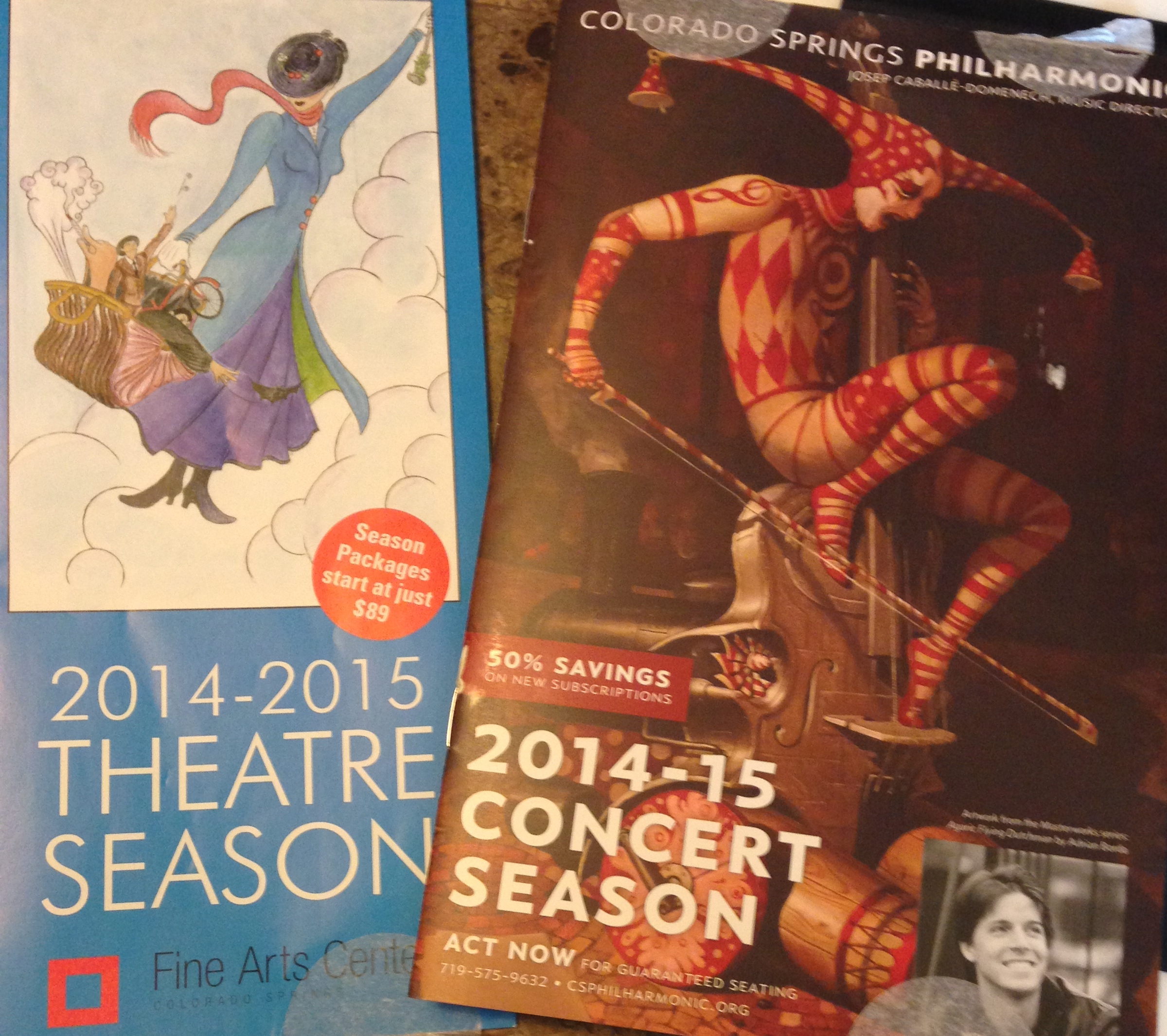
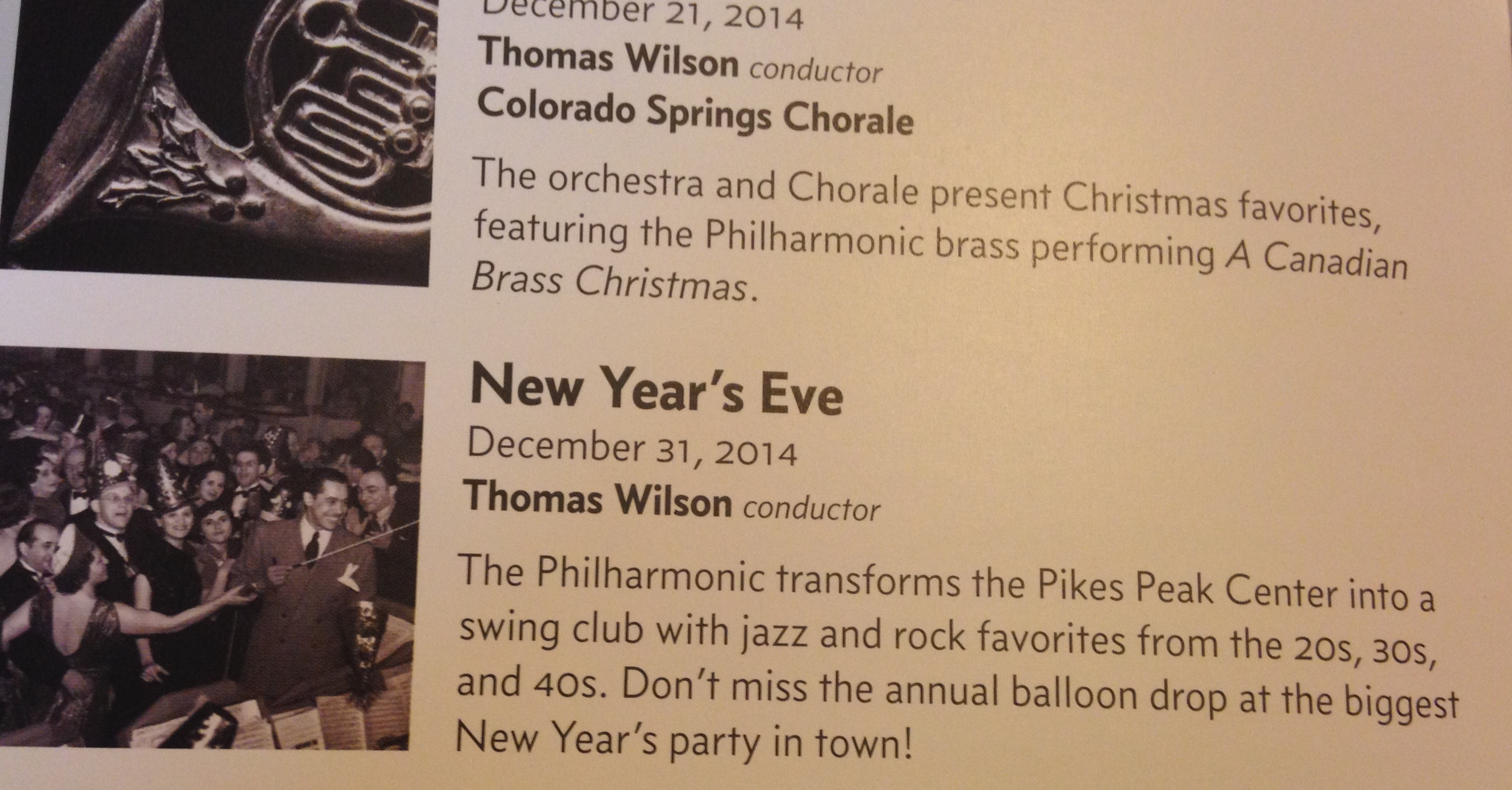
IMG_1599Recently I received the 2014-15 Theatre Season and 2014-15 Concert Season brochures in the mail. I get these every year, and every year I am stirred with excitement for the upcoming performances–right before I look at the prices and realize I will be lucky to perhaps see one or two of them. Still, I drool over them and imagine how uplifting their presentations will be, and I try to narrow it down to the one or two shows that I cannot possibly miss.

You see, I have a passion for high culture art on a middle class budget. By the way, high culture is not my term. I find the term very uppity, only because it connotes that it is the culture of the upper classes, but really it is simply elevated art because of its quality. Anyway, I adore the ballet, and I’m not talking about The Nutcracker. I want to see the New York City Ballet perform Balanchine, Twyla Tharp, and Christopher Wheeldon. I want to attend the symphony and the Philharmonic. The cello, violin, viola, and double bass all take me to a place that transcends the mundanity of my ordinary life. However, listening to Itzhak Perlman or Yo Yo Ma in person is little more than a fantasy. Then, of course, there is drama. I love it all–Shakespeare in the Theatre-in-the-Round, a Sondheim musical, or perhaps Gershwin or Bernstein, Post-Modern Drama, or even Interactive Drama. How about the opera? I’ve never been to a live performance, but I think I would love it because I am entranced by the voices of Luciano Pavarotti and Placido Domingo. IMG_1600

Unfortunately, living in Colorado Springs offers little opportunity to experience high culture; however, living on a teacher’s income offers even less. It made me wonder how many of my students would ever get a chance to be exposed to this culture. How would they ever even know if they liked it or not? Most cities adequately present opportunities to visit art museums at a reasonable, and at times, no expense. Children are taken by bus to see famous art exhibits and are, hopefully, taught its significance and how to appreciate it (Many students need no such lesson; for them the art speaks for itself). In Colorado Springs, the symphony also makes this effort, periodically offering free concerts to the public. But by and large,  the lower to middle classes do not have affordable access to premiere orchestra and symphonies, quality theatre and ballet, or the opera.

Of course, it is a matter of necessity that it is costly. Performers deserve to be paid. Often they must be flown in and put up in a hotel. Lighting and stage crews, sets, and a host of other expenses must be met in addition to the venue. Foundations have been helpful in bringing the arts to the general public, but opportunities are still very limited.

However, without previous exposure to this culture, these opportunities are often ignored. Because of the contrast of high art to pop culture, the comfort level and appreciation is not there among those who do not patronize the symphony, the opera, the ballet. Sometimes it can be an acquired taste. The average person is conditioned to enjoy the simple and reject the complicated. I believe exposing children to high art early is the key to its appreciation. Because high art is complicated, it is good for the mind. You’ve probably heard that listening to classical music makes one smarter.

In college I was taught that all children should be exposed to art, classical music, theatre, and ballet. My professors quoted studies that show children who are exposed to high culture get higher grades, have more social skills, and aspire to go to college more than students who never experience this culture. I was just talking to a friend, recently, who was trying to get a grant to take her students to an opera. What an amazing chance for them! Yet, I wonder how many of them will have to be dragged, kicking and screaming.

IMG_1601Even without research data, it seems obvious to me that children who are exposed to fine art, the symphony, the opera, and the ballet would be more comfortable as adults in the social situations they might encounter. They would be more culturally knowledgeable, which would give them more social currency. Social currency is helpful in business networking, interviewing, and in successful career movement. Beyond that though, it seems to me that the arts provide so much more than social value and mobility. The arts, specifically that known as high culture, provide humanity with beauty in a world often devoid of it. As the old saying goes, “Science is the how of life, but art is the why.”

Professor John McKean agrees that the time to expose people to high culture is when they are children, and these children have a right to the arts, which he calls “civilisation.” Referring to Liz Forgan, former managing director of the BBC, McKean states, “Amid the unending and unedifying turge of recent days, how wonderful to see Liz Forgan’s spirited attack on the dumbing down of musical culture among young children . . .Throwing them alive into a boiling vat of great painting, architecture and sculpture would be an added bonus. . .Forgan’s ‘Above all, don’t apologise’ is the key to the unwritten children’s right: the right of access to civilisation. (The BBC’s Culture Show is one among many examples that in our culture today, adults seem beyond conversion.) If Forgan had been forced to start with clapping games, she says, she might have turned to crime . . . Young children are never scared by great culture – it is only inaccessible to adults” (Professor John McKean, Brighton). According to McKean, children are ready for high culture, but by the time they are adults, they are intimidated by it. I believe they are uncomfortable with it merely because they have had no experience with it, and the common man has begun to see high culture as “high class” or even worse, as “upper class.”IMG_1602IMG_1603

Public broadcasting networks like the BBC, PBS, and NPR are the frontrunners in the accessibility of high culture to the general public. Indeed, without them I would not have discovered a love for ballet, opera, and the arts in general. It was on PBS (one of the few channels my family could receive with our rabbit ears) that I discovered Mikhail Baryshnikov, Balanchine, Pavarotti, and so many others on Great Performances. Where else would I have gotten this education in the 1970s, growing up in a lower income home? My public school offered no such opportunity. My parents never showed an interest in the arts, and even if they had, we would not have been able to afford to attend a performance. My older sister exposed me to classical music. She very nearly pursued a career in the symphony before she decided on a career as a chemist. I’m not sure where she discovered classical music. This is one reason why I believe in supporting public broadcasting. I would like to see more programs to bring high culture arts to children, but not only to children. The average citizen has a “right” to civilization as well, and not all adults are scared by it. I’m not. Maybe someday there will be a program to garner interest in high culture among middle class adults. I’ll be the first to sign up. Until then I will attend as many free concerts and art shows as I can, scrounge together enough money for a premiere performance or two, and tune my television to PBS.–Christina KnowlesIMG_1604


Sources: McKean, John. The Guardian. Available online: http://www.theguardian.com/culture/2009/may/16/letters-high-culture-young-children Accessed: June 26, 2014

Book Review: White Walls by HMC

51bx1tkoTmL._SS300_White Walls, a suspense-thriller, by HMC drew me in instantly with an assortment of interesting characters. As the book opens, we get a peek at the possibly paranoid delusions of a very disturbed man, George Barter, an artist who won’t leave his home even to purchase art supplies. I knew I liked this book immediately when I could easily picture George arguing with the store clerk on the phone and then, in an angry tirade, tearing up his own art with a pair of scissors. Each character has a definitive voice that comes through in HMC’s artful and realistic dialogue.

HMC alternates the third person viewpoint skillfully to give readers a glimpse into the minds of several characters quickly. We meet Samantha Phillips, a young woman and daughter of a notable psychiatrist with a personality disorder, Dr. Jade Thatcher, the main character with issues from her own past, Anne, a light-hearted and friendly nurse, Freddie, a patient who has childlike tendencies, Dr. Clancy Green, a crotchety stickler for the rules, and Morty, a kind easy-going nurse, just to name a few, who will all have one thing in common, the mysterious Rowan’s Home Psychiatric Institution.

Without giving too much away, I will say that Jade Thatcher finds herself in a great deal of trouble, which she did not anticipate when she came home to Fairholmes, Australia to make a fresh start after her divorce. With the best intentions, she is soon immersed in Rowan’s shadowy past, unsure of whom to trust, and struggling to survive long enough to uncover the secrets that will allow her to finally help her patients to heal.

The more I read, the more intriguing the plot became. This book made me speculate about what was really going on and to challenge myself to figure it out before the end of the book. This book was great fun to read, and I didn’t want to put it down. HMC has a degree in psychology, which adds to the realism of the novel, but is also the source of my only complaint. I wish she would have given more details regarding the psychological aspects in the resolution of the book. Nevertheless, a great read, and I highly recommend it. 4 out of 5 stars. –Christina Knowles

Twenty Spectacular Films According to Christina Knowles

I’ve wanted to write a favorites list for a while now, but I haven’t until now for two reasons: 1) I am no authority on movies. I just love them, and 2) I didn’t know how I would be able to narrow it down to a reasonable number in which to write about. But everybody likes to read about good movies, and chances are some of my favorites will be yours too, and even if they aren’t, maybe it will make you think of the movies you love and why, and that’s good too. I decided I could narrow it down to my top twenty favorite movies, and then just list some honorable mentions with no detail. I am not trying to judge these movies on any criteria other than that I loved them. There may be better movies, but either I haven’t seen them, or these just had a bigger emotional impact on me. Here they are:
minority_report#20: The Minority Report: (2002) Directed by Steven Spielberg, starring Tom Cruise, adapted from the short story of the same name by Phillip K. Dick.This is a film exploring the theme of free will versus determinism as well as the social/political theme of the power of the state. In the future, “precogs,” who see the future, report crime and citizens are arrested before they break the law in order to prevent crime. The main character, a pre-crime cop, is the next reported for a murder he has not yet committed. This movie is intense and thought-provoking with edge-of-your-seat action.

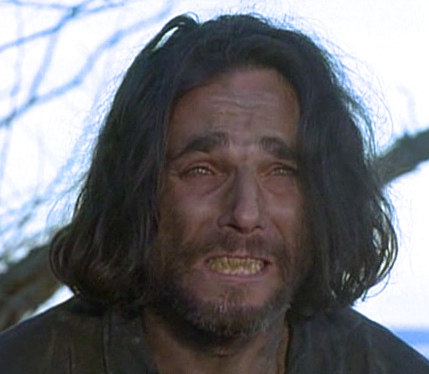
cru11#19: The Crucible: (1996)Directed by Nicholas Hytner, starring Daniel Day-Lewis and Winona Ryder. The film was written by Arthur Miller and based on his play of the same name. This is the story compiled from actual historical research and the diaries found in Salem, Massachusetts regarding the witch trial hysteria of the time. Daniel Day-Lewis portrays the dynamic character of John Proctor powerfully, revealing a very human, flawed, but good man who wishes to be better than he is. He stands strong in the end, revealing a deep character growth. I love this version of Arthur Miller’s play because it is accurate to the original, except for the final scene, which has an even bigger impact than the play.

#18: In the Valley of Elah, (2007) Written and directed by Paul Haggis, starring Tommy Lee Jones, Charlize Theron, and Susan Sarandon. “The film’s title refers to the Biblical valley where the battle between David and Goliath is said to have taken place. It portrays a military father’s search for his son and, after finding his body, subsequent hunt for his son’s killers. The film explores themes including the Iraq war, abuse of prisoners, and post-traumatic stress disorder (PTSD) following active combat” (Wikipedia).
In-the-Valley-of-Elah2I love this movie because it realistically shows the consequences of modern warfare and the trauma dishonorable behavior during war and the dehumanization of the enemy causes to ordinary people. This movie had a huge emotional impact on me. Watch this movie if you don’t believe in glorifying war or the military, but want to see the reality of wars’ effect on the human psyche.

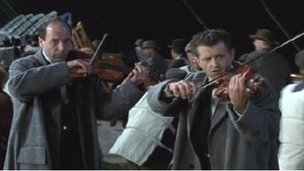
_59724584_91890b22-2cef-4e82-8d3d-a3904f1972e2#17: Titanic: (1997) Directed by Richard Cameron, starring Leonardo DiCaprio and Kate Winslet. This movie is an epic disaster film and a fictionalized account of the sinking of the ship, Titanic. Some may find this movie cheesy, but no can deny its cinematic beauty, intense suspense, and dramatic love story. I love this movie because of how this incredible tragedy is depicted in excruciating detail. One of my favorite things about this movie is when the orchestra continues playing as the ship sinks with people dying all around them. I also appreciate its depiction of how the wealthy were treated versus the third class travelers. This movie makes me cry every time I see it, and I love a good cry.

#16: The Matrix: (1999) Directed by The Wachowski Brothers, starring Keanu Reeves. This film is set in a future where people, who are actually acting as a power source for the fake world around them, think they are living in the real world. What they see is actually a computer construct of a world similar to ours. The actual world is a desolate and barren place destroyed by wars and pollution.The_Matrix_Neo_and_Morpheus_Construct

This movie is often seen as an allegory for the “real” world and the spiritual world, implying that the spiritual world is more real than the world we live in. The Matrix works on so many levels though. It is also a comment on how we are willing participants in our own deception. We need to wake up and see things how they really are. This movie is a masterpiece of filming and special effects, but what I love most about it is the philosophical wisdom dispensed throughout the film, mostly by Morpheus (Laurence Fishburne) and its references to famous philosophical and religious works. The Matrix is more than an action film. It is a deeply thoughtful movie, which will open your eyes to the realities of our culture’s systems of mind control.

crash#15: Crash (2004) Directed by Paul Haggis. This movie is a drama with a huge ensemble cast, wherein, seemingly unrelated people and incidents all seamlessly coincide or “crash” into each other in an intricately woven story about racial prejudice in Los Angeles, California. This movie is an intense, at times hard to watch, movie that explores the origins of hate, mistrust, and ignorance, and poignantly shows that we are all flawed, and the same person capable of extreme cruelty one moment, can, in the next, be capable of heroism and selfless compassion.
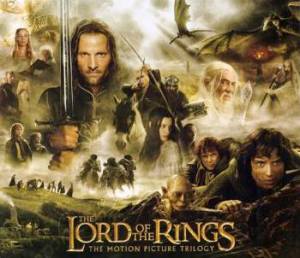
Ringstrilogyposter#14: The Lord of the Rings Trilogy. Directed by Peter Jackson, ensemble cast. I couldn’t separate these movies in my mind, so I lumped them into one selection. Based on the novels by JRR Tolkien, these three movies are better than the books, in my opinion. While Tolkien is a genius of story-telling, he tends to go on and on with details of setting, which are necessary to the creation of this world. However, obviously in a film, we can instantly see this detail and get straight to the action and story, which is amazing. I love this series because it explores good versus evil through the archetypal hero’s journey or quest for a higher cause, ideals of friendship, loyalty, selflessness, overcoming evil, and finishing strong. This series will inspire you to face evil and adversity.

forrest-gump-220857#13: Forrest Gump (1994) Directed by Robert Zemeckis, starring Tom Hanks, Robin Wright, Sally Field, and Gary Senise, and based on the novel by Winston Groom. This epic movie about a developmentally challenged man, who is accidentally present at numerous important historical events, often inadvertently influencing them, is a touching story of the beauty of life and overcoming obstacles. This movie is funny and poignant. I can’t remember how many times I’ve seen this movie, and still, whenever I am flipping channels and run across it, I have to stop and watch.
lib1#12: Life is Beautiful. (1997) Directed by Roberto Benigni. This is an Italian movie with English subtitles about a Jewish man during the Nazi occupation, who protects his son from the horrors of a concentration camp with humor and make-believe scenarios. I love this movie because it shows the power of attitude and love. If this man can make the best of a situation like a Nazi concentration camp just to make things better for his son, then who are we to complain about anything? This movie will make you laugh and cry and celebrates this beautiful life.

#11: Les Miserables (1998 and 2012) I still can’t decide which version I love more–the 1998 version starring Liam Neeson or the 2012 musical starring Hugh Jackman. Both of these wonderful movies, based on the amazing book of the same name by Victor Hugo, are absolutely beautifully acted and have a life-altering quality about them. These movies are about a man imprisoned for stealing bread, Jean ValJean, and an investigator obsessed with justice, Javert. It is a story of change, compassion, justice, the desperation of poverty, mercy, and forgiveness. Many people see this story as an allegory for Christianity. Jean ValJean receives mercy that changes his life, and he in turn, shows that mercy and forgiveness to others. Javert, on the other hand, is unable to accept mercy and doesn’t believe in forgiveness, but believes only in justice. In the end, he cannot even accept mercy for himself. Both of these movies are superbly acted, and make the viewer look at the juxtaposition of justice and mercy in a new way. Life-changing with a huge emotional impact.
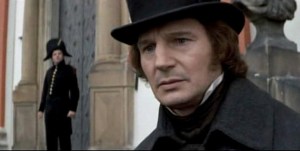
Les-Miserables-Jean-Valjean-4

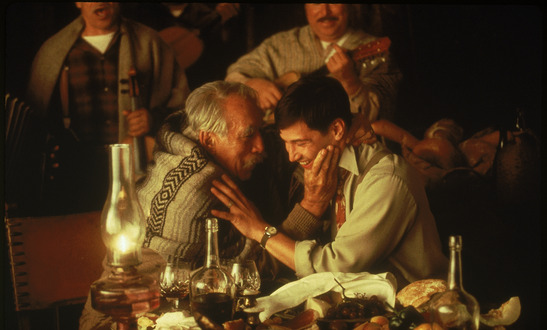
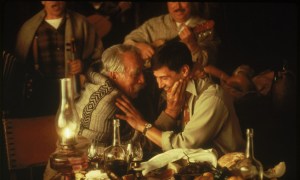
540#10: A Walk in the Clouds (1995) Directed by Alfonso Arau, starring Keanu Reeves, Aitana Sánchez-Gijón, and Anthony Quinn. In this movie, a young man returning from the service in WWII meets a pregnant woman on a bus, who is afraid of returning home to her father’s vineyard unmarried. The man agrees to pose as her husband with a plan to stage an argument and leave her, so that her Old World parents from Mexico will not expel her from their home. Of course, they fall in love for real, but the beautiful thing about this movie is the depiction of the depth of love for family, tradition, and the need for a home. The man not only falls in love with the woman, he falls in love with her family, her home, their traditions, and their lives. The acting is superb, especially that of the father, Don Pedro Aragon, played by Anthony Quinn. This movie is beautiful and poignant.
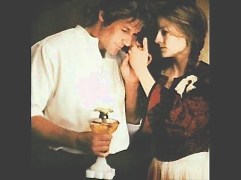
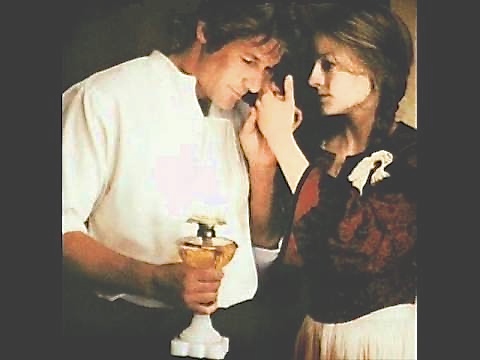
0#9: Sommersby (1993) Directed by Jon Amiel, starring Jodi Foster and Richard Gere. “Set in the south of the United States just after the Civil War, Laurel Sommersby is just managing to work the farm without her husband Jack, believed killed in the Civil War. By all accounts, Jack Sommersby was not a pleasant man, thus when he returns, Laurel has mixed emotions. It appears that Jack has changed a great deal, leading some people to believe that this is not actually Jack but an impostor. Laurel herself is unsure, but willing to take the man into her home, and perhaps later into her heart…” (Murray Chapman, IMDB). This is a romantic drama with a mysterious twist. I love this movie because what it is really about is choosing to become the kind of person you want to be, even if it costs you everything. Grab several boxes of tissue to watch this film.

#8: It’s a Wonderful Life (1946) Directed by Frank Capra, starring Jimmy Stewart and Donna Reed. This movie needs no synopsis. If you haven’t seen this movie, you live under a rock or are very young. A Christmas classic, I love this movie because it makes you realize how perception is everything. Its-a-wonderful-lifeLessons from this movie: Appreciate what you have, know you have value, and know that if you have people who love you, you are the luckiest you could ever hope to be. Oh, and stand up for the common man, help your neighbor, and money is not all that important. I could watch this movie a million times.

#7: National Lampoon’s Christmas Vacation (1989) Directed by Jeremiah Chechik, starring Chevy Chase and Beverly D’Angelo. A bumbling father insists on going to extreme measures to have a wonderful Griswold family Christmas even though everything is conspiring to ruin it. Another Christmas classic. I watch this one every year, and although it may seem a little out of place on this list, it made it into my top ten because this movie makes me happy. Everyone needs a good belly laugh from time to time, and this one makes me laugh out loud to the point of snorting, no matter how many times I see it. Slap-stick at times, extremely quotable, and even a little heart-warming, this movie is a Christmas staple.430849_orig

file_200263_0_Psycho_Norman_Bates#6: Psycho (1960) Directed by Alfred Hitchcock, starring Anthony Perkins, Janet Leigh, and Vera Miles. Norman Bates goes “a little crazy sometimes” in this classic horror film with heart. Norman Bates is probably the most likable psychotic serial killer in film history. I love this film because Norman is a sympathetic character in this story that explores the psychology of multiple personality disorder and the trauma of childhood abuse and mother fixation. Very Freudian, but wonderfully intense.

#5: Big Fish (2003) Directed by Tim Burton, starring Ewan McGregor and Albert Finney. This beautiful and surreal story told through a series of tall-tales by a dying father to his son, not only teach the son about his father, but about life itself. Full of symbolism, this movie explores forgiveness, understanding, dreams unfulfilled, and a host of other important themes. It is deeply meaningful, funny, fantastical, and imaginative. Love it!
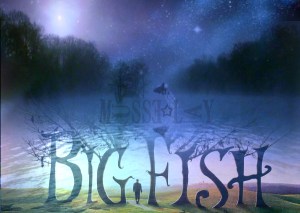
Big_Fish_The_Movie_by_AnnieMusse

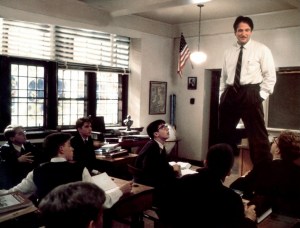
936full-dead-poets-society-screenshot#4: Dead Poets Society (1989) Directed by Peter Weir, starring Robin Williams, Robert Sean Leonard, and Ethan Hawke. A quirky prep-school English teacher inspires his troubled students with literature, and breaking all the rules, he teaches them to “seize the day” and live lives worthy of being remembered. As an English teacher, I think it is a requirement that I adore this movie, but anyone who loves insightful and poetic words, philosophy, and high ideals will appreciate the inspiration of the literary greats quoted in this film. And, of course, everyone loves an inspiring teacher who cares more for his students than for staying out of trouble. In addition to exploring the Transcendental themes of “sucking the marrow” out of life, this movie does justice to showing the realities of realizing these ideals in the midst of expectations and responsibilities. Deeply moving and inspiring.

#3: Magnolia (1999) Directed by Paul Thomas Anderson, starring Tom Cruise and Julianne Moore as well as a huge and  famous ensemble cast. This masterpiece of filmmaking, like Crash, threads the separate lives of many different characters together, connecting them in surprising ways. However, this movie explores fate, coincidence, regret, compassion, loneliness, forgiveness, love, death, acceptance, abuse, and grief in strange and symbolic ways. I won’t even try to give a synopsis because there are too many different stories going on in this film, but I will say that the characters are realistic, flawed, beautiful, and complex. I loved almost all of them, and even the one I didn’t, I felt something for. I love everything about this movie and am left sitting stunned and in awe every time I see it. The acting is superb, especially by Phillip Seymour Hoffman and Tom Cruise. In my opinion, this is absolutely Tom Cruise’s best acting. He convincingly goes from a despicable, disgusting pig to a hurt little boy that we want to hold and comfort in the course of 189 minutes of perfection in filmmaking.TOM-CRUISE-MAGNOLIA

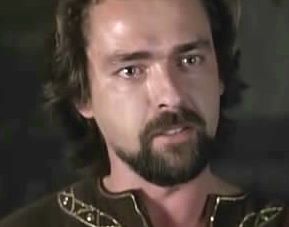
braveheart_27_robert#2: Braveheart (1995) Directed by Mel Gibson, starring Mel Gibson and Angus MacFadyen. “When his secret bride is executed for assaulting an English soldier who tried to rape her, a commoner begins a revolt and leads Scottish warriors against the cruel English tyrant who rules Scotland with an iron fist” (IMDB). The story of William Wallace is one of courage, loyalty, and freedom, but the character that had the most impact on me was that of Robert, the Bruce. My favorite scene in the movie is when after the Bruce has been convinced to betray Wallace and it has led to tragedy, the Bruce confronts his evil father and states, “I don’t want to lose heart. I want to believe as he does … I will never be on the wrong side again.” To me the most important themes are tied up in this character and in these lines. This movie asks you what you believe in, what you are willing to do to stand up for that belief, and challenges you to decide, once and for all, if you will have the courage to stand on the right side, regardless of the cost. This movie makes me want to be a better person. The acting is superb, especially by Angus MacFadyen, who plays the Bruce. This movie is highly quoted because it is filled with high ideals and pearls of wisdom. I love, love, love this movie. “FREEDOM!”

MV5BODU4MjU4NjIwNl5BMl5BanBnXkFtZTgwMDU2MjEyMDE@._V1_SX640_SY720_#1: The Shawshank Redemption (1994) Directed by Frank Darabont of The Walking Dead fame, starring Tim Robbins and Morgan Freeman, adapted from the short story by Stephen King, “Rita Hayworth and the Shawshank Redemption.” My all-time favorite movie ever, this film is the only film that has actually done justice to King’s work. I loved the story when it was first published and couldn’t have been more pleased when it was made it into this fabulous film, starring two of my favorite actors.  Shawshank_Redemption_

The Shawshank Redemption, set in a harsh 1940s prison, is about hope, perseverance, friendship, redemption, and the indomitable human spirit. Two prisoners, Andy and Red, one innocent and one guilty, who become true friends behind bars, share hopes, dreams, and the cares of daily life in the system. Andy brings hope, culture, and humanity to the prison inmates, and teaches Red that there is always hope, that the spirit can’t be crushed if you won’t let it, and that life isn’t fair, but there is always beauty to be found. This movie is profound, moving, funny, and leaves you with the feeling that no matter what, everything is going to be okay. Strength comes from within, and no one can take away what is inside of you. This movie deserves a million stars. I never get tired of watching and feeling uplifted by it. It gives me hope, and that is why it is my favorite movie.

Now, for some honorable mentions, although I am sure I will leave some important ones out:

Other Great Movies or Movies I Just Love Watching (in no particular order):

The Book of Eli, Terms of Endearment, Gattaca, Coma, Marnie, They Live, Cloud Atlas, The Stepford Wives, The Best Grand Budapest Hotel, The Silence of the Lambs, Prince of Tides, Fargo, Argo, Platoon, Saving Private Ryan, Schindler’s List, U-571, The Fugitive, Vertigo, Awakenings, Rebecca, The Shining (1997 mini-series), A Time to Kill, The Devil’s Advocate, Pulp Fiction, The Notebook, Message in a Bottle, A Christmas Story, Homeward Bound, My Dog Skip, The Breakfast Club, Gun Shy, K-Pax, Bladerunner, Star Wars Trilogy (original), Star Trek II: The Wrath of Khan, The Godfather, This Boy’s Life, What’s Eating Gilbert Grape, Raiders of the Lost Ark, Hush, Hush, Sweet Charlotte, Signs, The Sixth Sense, Whatever Happened to Baby Jane?, A Streetcar Named Desire, Rebel Without a Cause, Creator, Casablanca, To Kill a Mockingbird, Shutter Island, Young Guns, The Goonies, Ladyhawke, Deep Impact, Fatal Attraction, Legend, The Princess Bride, Ferris Bueller’s Day Off, The Time Traveler’s Wife, 12 Monkeys, The Terminator, The Book Thief, Clue, Life of Pi, and The Grey. And hundreds more I don’t have room to mention.

I apologize for the length of this blog. If you read to the end, thank you, and please leave me some suggestions if I left your favorite movies out. Happy movie viewing!–Christina Knowles


 

Balance? Yeah, Right by Christina Knowles

Snagged from  Jacinta-Yoga
Snagged from Jacinta-Yoga


I’ve always believed people should live balanced lives: you know, mind, body, spirit. I learned this was important through life-long yoga practice, reading philosophy, and talking to wise ones who successfully practiced this path to peace and contentment. However, I’ve NEVER been able to achieve it–not even for one whole week. I live a life of never-ending to-do lists, schedules, alarms, and obligations. I even make to-do lists and schedules to make sure I schedule time to relax, but no matter how hard I try, something important is always neglected.

I am naturally motivated to improve my mind. For this I need no prompting. I don’t have to try very hard to make time to learn something new, read, or write. I once spent an entire summer studying philosophy and theology. Because I am a teacher and a writer, it is easy to justify time spent on these activities. But I recognize that there is more to life than my intellectual pursuits. The first thing that drops off my list is usually physical exercise.

I wasn’t always a sedentary person. When I was younger, I was an enthusiastic runner, I took Karate, yoga, and figure skating lessons. I used to dance. I admit that I never liked team sports or traditional working out at the gym. Actually, I loathe it. But running and skating cleared my mind, yoga relaxed me, Karate–well, that kind of sucked, but I liked the idea of being able to defend myself. However, after four knee surgeries, my doctor told me that I was not allowed to run, skate, or do karate. Ever. To avoid major knee reconstruction (which would involve breaking my legs and sitting in a wheel chair for almost a year), I was told to take up cycling. The doctor told me that even swimming would be too hard on my knees, and walking should be kept to a normal strolling pace. So I bought an exercise bike and have been pretty good about riding it on a regular basis. The only thing that motivates me to do this is that I literally cannot walk if I stop for any length of time. I also still practice yoga, but not with any consistency. Needless to say, my daily 20-30 minutes on my exercise bike is not really meeting my aerobic needs.

As for the “spirit,” I tried meditating and yoga, which does relax my mind and body. I also nurture my inner self by spending time with people I care about and by pursuing my artistic interests. I think I need to spend time outside in nature as well, maybe even be a little adventurous. I need to spend quality time with my husband, family, and friends. I need to just do nothing sometimes. I long to do nothing, but I am really NOT good at it.

So, as usual, summer vacation from teaching was the time when I planned to regroup and get my life back in balance, as if it ever were. I immediately made preposterously unrealistic goals, to-do lists, and schedules to accomplish everything to attain this balance. Of course, I thought, it would be balanced because I made sure to include something from every area on which I wanted to work. It turned out to be the opposite of balance. Before I knew it, I signed up for three courses to help me with a new class I’ll be teaching in the fall, I started writing a new book, and I’m helping some students create an e-book short story anthology. I have about 15 books on my must-read list. I’m riding my bike (a real one) daily, spending time outside walking my dog and gardening, fitting in time with friends and family, staying up really late with my husband, trying to fit in a few hours of writing every day, re-organizing and cleaning my house, and basically going crazy trying to keep up. And there is never time to do nothing. This is worse than working full-time. Well, almost.

My husband tells me that I need to prioritize, that I can’t do it all. But isn’t that the point of balance? Doing it all–at least some of everything? Making sure that I meet the needs of all the different aspects of my being? When I try to prioritize, everything seems like a priority.  I don’t get this balance thing. I think I am incapable of it. Or perhaps I just need a better schedule. I’d better get right on that.–Christina Knowles


Book Review: The Fault in Our Stars by John Green

11870085Superb! I absolutely love this book, but before extolling its literary excellence, a brief synopsis: Three teenagers with cancer, Hazel Grace, Augustus, and Isaac, meet in a cancer support group. Hazel Grace is terminal, Augustus is in remission (but had one leg amputated), and Isaac must have his second eye removed due to his cancer returning, leaving him blind. It sounds depressing, but it is filled with humor, beautiful dialogue, numerous allusions to my favorite authors, and more importantly, profound truths.

Hazel and Augustus share the same sense of humor, ask the same questions of the universe, love the same book, and rival each other’s incredible vocabulary and IQ level. Isaac becomes a sort of lovable third wheel when his girlfriend leaves him because he is now blind after promising him “always.”

Hazel fears being a “grenade” in the lives of her friends and family. She knows it is inevitable that her parents will be inconsolable when she dies, but she hesitates to get involved with Augustus because she is afraid of breaking his heart, which she sees as avoidable. Augustus fears dying and fading into oblivion. He just wants to be remembered, and he wants his death to have a purpose. He longs to be a hero, but of course, dying of cancer is pretty purposeless.

Augustus spends his cancer-perk-wish on Hazel’s dream of meeting her favorite author, Van Houten, and finding out the unwritten ending to her favorite book, An Imperial Affliction, about a girl dying of cancer, which stops abruptly without any resolution. Hazel and Augustus have a romantic Dutch holiday even though Van Houten is a jerk. That’s all I can really say without giving away spoilers.

Although most people I know love this book, I’ve run across a few who have various complaints, and some who downright hate the book, so I’d like to address these criticisms and get them out of the way.

The Fault in Our Stars is beautifully written, some say too beautifully. Yes, it may seem corny to certain readers that Augustus speaks in long romantic monologues, and waxes philosophical, and that Hazel and Augustus are far too mature, and it is incredibly unlikely that too super-geniuses with terminal cancer would meet and fall in love, but so what? All these things actually make the book more interesting, in my opinion. Who wants to read a book with boring, ordinary, emotionally immature, and illiterate cancer patients? It is unlikely that people in Shakespeare’s day spoke in rhyming iambic pentameter, but we appreciate the art and beauty of it, and the truths that matter are there, as they are in The Fault in Our Stars. These truths are even more abundant because they are so eloquently delivered via metaphor, symbolism, and allusion. However, I will admit that I do agree with some readers that Augustus and Hazel are too similar, almost the same character. Hazel is more serious and more selfless, but it is strangely narcissistic that they fall in love.
Another grievance among the disparagers of this novel is that it is not comforting to cancer patients or their families. Well, it is my belief that this book is not primarily written for either cancer patients, or those they leave behind. I believe it is written mainly for the obliviously healthy, those living their lives appreciating little, caring for less, and noticing naught around them, to see life through the eyes of a terminal cancer patient and wake up. Reading TFiOS is contemplating the universe vicariously through the eyes of those that have the luxury of knowing this is all the time they have, the here and now, and it is short, way too short. I don’t mean to be disrespectful by calling it luxury–cancer is horrible, senseless, cruel, but in some ways Green is saying that it is a gift, a gift to know how much time you have left and how valuable that time is. The book’s existential message is that we give life whatever meaning we want to give it, and it is beautiful and worth living to the fullest, every minute of it. Hazel and Augustus are lucky in that they know they don’t have much time left. They realize the tragedy of their impending death; therefore; they live abundantly, “sucking the marrow out of life” as Thoreau put it. We don’t do that because we don’t know we are dying; we don’t know tomorrow could be our last day.

However, the most amazing thing about this novel is all the allusion to wonderful pieces of literature. The title comes from Shakespeare’s Julius Caesar, he quotes Robert Frost’s “Nothing Gold Can Stay,” names the hamster in Van Houten’s novel, Sisyphus, refers to Walt Whitman’s philosophical ideas, and he quotes my all-time, absolute personal favorite, The Love Song of J. Alfred Prufrock by T.S. Eliot, among many others. Being a book nerd, these allusions transported me to literary heaven. But Green does not quote and namedrop for no reason.

The title of the novel comes from Julius Caesar, wherein Cassius tells Brutus that it is not fate that is responsible for our misery, but our own failings are responsible for the tragedy in our lives. But when Van Houten writes in his letter to Augustus, “Never was Shakespeare more wrong than when he had Cassius note, ‘the fault, dear Brutus, is not in our stars/but in ourselves.’ Easy enough to say when you are a Roman nobleman (or Shakespeare!), but there is no shortage of fault to be found amid our stars” (Green, p. 111-112). By titling the book, The Fault in Our Stars, Green emphasizes his point that cancer is a purposeless disease that chooses its victims with no rhyme or reason. I LOVE the title.

I also love the allusion to Frost’s poem, “Nothing Gold Can Stay,” for a similar reason:

Nature’s first green is gold,

Her hardest hue to hold.

Her early leaf’s a flower;

But only so an hour.

Then leaf subsides to leaf,

So Eden sank to grief,

So dawn goes down to day

Nothing gold can stay. –Robert Frost


Again Green highlights the fact that everything is temporary, especially what is most beautiful, but that only makes us appreciate it more. Because this line is also associated with S.E. Hinton’s The Outsiders, which would be familiar to most teens, I think Green means to bring in the totality of meaning that S.E. Hinton intended in her novel. Hazel Grace and Augustus, like Pony Boy in The Outsiders, need to “Stay gold” even though they are losing their innocence while facing a cruel world.

The hamster in Hazel Grace and Augustus’s favorite novel, An Imperial Affliction (the meaning of this title is self-explanatory), is named Sisyphus. Sisyphus is an obvious allusion to the mythological Sisyphus who was required to roll a boulder up a hill over and over, just to watch it roll down again. Albert Camus’s essay, Myth of Sisyphus, uses Sisyphus as an example to put forth his philosophy of the Absurd. Camus tells of Sisyphus’s meaningless task to show how humans search for meaning where there is none. According to Camus, Sisyphus was happy because, to him, this meaningless activity had meaning. In other words, humans create our own meaning (Existentialism) and this quest to find meaning in meaningless things gives people meaning. Hazel Grace and Augustus realize this; they see the absurdity of the world. They don’t try to explain their illnesses or find meaning in it. It just sucks. They are not comforted by platitudes, even though Augustus commonly creates his own in his lengthy monologues; however, they do grudgingly accept the value in them to those who will be left behind.

Finally, I think it was pure brilliance to include the allusions to Eliot’s The Love Song of J. Alfred Prufrock. This most beautifully rhythmic and meaningful poem is a Modernist work, which by definition is cynical, self-reflective, and anti-traditional. Augustus is afraid to become Prufrock. Prufrock is fading into oblivion, not from disease, but from age. Nevertheless there are many similarities between Augustus and Prufrock. Prufrock has desires, but sees himself and his life as unremarkable, too unremarkable to reach out for the love for which he longs and has let slip away throughout his life. He is too careful, too reserved, a minor character–“no Prince Hamlet.” He asks the big questions, but is afraid to find the answer to his “overwhelming question.” At one point he asks, “Do I dare disturb the universe?” (This blog is named for this poem, in case you didn’t know.) Augustus wants to disturb the universe, needs to disturb the universe before he goes. His biggest fear is being like Prufrock, letting love slip away, life slip away, unnoticed, unremarkable, and for no heroic reason. One of the first lines Hazel quotes shows the bleak reality of life and the emptiness of searching for significance where there is none: “Let us go through certain half-deserted streets,/ The muttering retreats/ Of restless nights in one-night cheap hotels/ And sawdust restaurants with oyster shells:/ Streets that follow like a tedious argument/ Of insidious intent/ To lead you to an overwhelming question . . ./ Oh, do not ask, ‘What is it?’/ Let us go and make our visit” (Eliot, quoted from Green, p. 153). It is relevant that Augustus’s response to her delivering this quote is: “I’m in love with you” (p. 153). Augustus sees in Hazel a soul-mate, who recognizes the futility of asking that question. This book made it in to my top ten favorite books right then and there.

I love this book because it is the kind of book that makes me reconsider, makes me contemplate the big questions, and then encourages me to put all that aside and just live fully. It encourages me, but like Prufrock, I am constantly led to ask that question. Nevertheless, this is the kind of book that stays with me, but if it fades, I will read it again and again. It occurred to me that this book is saying the opposite of the providential message of The Goldfinch, which I also found extremely profound. Truthfully, I’ll never stop looking for answers, but it is important to be reminded to live in the spaces between questions.

So, I really don’t care if it isn’t probable that two brilliant cancer patients like Hazel Grace and Augustus would have their stars cross in real life because there are truths more important than how large the vocabulary of the average teenager is likely to be. Truths like cancer sucks, bad things happen for no reason, and life is a gift to be lived and cherished every minute without fear because no one is promised tomorrow, and we don’t have to figure it all out; we just get to live it. 5 out of 5 stars.–Christina Knowles

Book Review: Covet by Tracey Garvis-Graves

13481759I bought this book when it first came out because I absolutely loved Garvis-Graves’ book, On the Island. I hadn’t had time to read it, but then my book club chose it to read for the month of May. I eagerly anticipated getting lost in another intense story by Garvis-Graves and imagined that I would love the characters as I did in her first book.

That didn’t happen. This book was a bit disappointing. The first half of this book was quite boring as it slowly, very slowly, painted a picture of a suburban couple, Claire and Chris, whose marriage was falling apart due to Chris’s emotional issues and unwillingness to communicate after losing his lucrative job and his inability to find another for over a year. Claire meets a good looking police officer, Daniel, and a seemingly innocent friendship develops as Daniel meets Claire’s emotional needs in a way that Chris refuses to.  This sounds like a decent plot, full of possibility for conflict, but there really isn’t much. Even Claire’s internal conflict–there’s hardly any; she’s mostly in denial.

One reason I found this book rather unexciting, I think, is because I am not really interested in suburban housewives’ first world problems, such as boredom, vodka lunches, and not getting to shop at designer stores, and there was way too much of that in this book for my taste. It seemed very Desperate Housewives to me at first (without the quirky characters and conflict), and I didn’t like any of the characters, but I’m glad I stuck with it because it did get better.

However, one of the most annoying things about the book to me, and this is just a matter of taste, was the present tense narration. I find books written in the present tense very awkward, and because of this, I am constantly reminded that I am reading a story rather than experiencing the characters’ lives. Maybe it’s just because I am used to being told a story in the past tense. I’m not sure. Also, I really did not enjoy the first person alternating points of view. Most chapters were Claire’s, but every once in a while, we would get the perspective of Chris or Daniel. There was not enough from them to feel like I really got to know them, and I think it would have been better just to stick with Claire’s point of view if the others’ perspectives weren’t going to be well-developed.  For me, this is what really interfered with the character development.

Garvis-Graves’ character development in On the Island was probably my favorite thing about that book, but Covet really lacked in this area. It was not until after the first 200 pages that I actually began to have sympathy for Claire, and strangely, this sympathy came not from her own point of view, but from Daniel’s. And even then, it was through her dialogue and actions with Daniel that I started to care more about Claire, and the same was true for Daniel. When Claire spoke in the first person about her feelings, I was left cold and emotionless. They didn’t ring true for me, or somehow, she just didn’t seem like a real person. I felt the same thing when I read Daniel’s perspective. He seemed like an opportunistic creep when speaking in his own perspective, but seemed better in conversation with Claire and in his actions toward her. However, I never cared one whit for Chris, Claire’s husband, and for the remainder of the last half of the book, I just wanted her to divorce him. His perspective was always incredibly brief and uninformative. I felt like the author didn’t even know who he was, so how could I? And his behavior toward Claire just seemed childish and selfish. The author did not do an adequate job of making Chris sympathetic or justifying his behavior enough to make me want to see them work things out, or even care, for that matter. As for the minor characters, too much seemingly irrelevant information was given about them that just seemed superfluous.

The most interesting thing about the book to me was Claire’s Type 1 Diabetes. More than just a plot device, it made her a little more real to me. In addition to Claire’s diabetes, I liked the realism in which the gradual shift from friendship to romantic feelings that Claire and Daniel shared was portrayed. This made the whole book worth reading.  Although Claire should have clearly known better than to become so close to another man if she wanted to save her marriage, most affairs do start out this way.

I did end up kind of liking this book because I did like the message. This book clearly demonstrates the need for one’s spouse to be one’s best friend, to look for that companionship, conversation, emotional connection, and comfort from the person who should be closest. We need to constantly see our spouse as our best friend and share those things that we wouldn’t share with anyone else. We need transparency and vulnerability if we want true intimacy. Garvis-Graves did an excellent job of showing this in Claire and Chris’s life together.

However disappointing this book was to me, I will definitely look forward to more from this writer simply because On the Island was THAT good. Any writer who can pull me into a book as quickly and immerse me into the characters’ lives to the point where I miss them when they are gone, as I did when I finished On the Island, deserves another chance. 3 out of 5 stars. –Christina Knowles

Blog at WordPress.com.

Up ↑